
 Pregledaj u realnoj veličini
 Pošalji
 Podijeli
 Detalji o umjetničkom djelu
 Vodič
Vodič

 Preuzmi umjetničko djelo
 Slični predmeti
 Rentgenska snimka
 Slide show
 Q&A
Q&A Statistika
Brigid Polk
 Acrylic On Canvas
- WallArt
- Contemporary Realism
 1971
1971 100.0 x 125.0 cm
 Prikaži više
Preuzmite datoteku spremnu za tisak koja kvalitom daleko nadilazi web prikaz. Svaka digitalna slika koju prodajemo prosljeđuje se iz visokorezolucijske master datoteke iz naše baze — obično širine od 5.000 do 15.000 piksela — što vam omogućuje tisak velikih dimenzija, precizno izrezivanje ili sigurnu reprodukciju najfinijih detalja.
Nijedna datoteka ne napušta naš studio netaknuta. Digitalni stručnjak uspoređuje boje s izvornim slikama i po potrebi ih ispravlja, a zatim poboljšava jasnoću i detalje pomoću profesionalnih alata za retuširanje — uvijek ostajući vjerni umjetnikovim potezima četkice i stilu. Rezultat je prikaz koji izgleda kao prava slika, a ne kao sken s filtrima.
Odobravanje prije završetka: naš stručnjak šalje sliku e-poštom u roku od 72 sata na vaš pregled. Niste zadovoljni? Zatražite poboljšanja ili ispravke, ili tražite povrat novca ako kvaliteta ne ispunjava vaša očekivanja.
To je kvaliteta na koju se oslanjaju izdavači, dizajn studiji, galerije i tiskare.
Digitalna slika
Preuzmite datoteku visoke rezolucije za osobnu izložbu, tisak i kreativne projekte. ( Prebacite na printove Kupi ručno oslikano djelo)
Uključeno uz svaku narudžbu digitalne slike
Profesionalna digitalna dostava, zajamčena
Odabirom OriginalUniqueArt.com ne dobivate samo sliku – dobivate profesionalno unapređeno digitalno umjetničko djelo, izrađeno s najvećom preciznošću uz jamstvo zadovoljstva. Evo svega što automatski dolazi uz vašu narudžbu:

Brza dostava e-poštom
Vaša digitalna slika visoke rezolucije bit će vam poslana e-mailom u roku od 72 sata od trenutka narudžbe – spremna za neposrednu upotrebu.

Digitalna datoteka poboljšana umjetnom inteligencijom
Vaše umjetničko djelo profesionalno je optimizirano pomoću naprednih AI alata i ručnog uređivanja, čime se osigurava maksimalna razina detalja, oštrine i točnosti boja.

Besplatna doživotna ponovna dostava
Slučajno ste obrisali ili izgubili svoju datoteku? Ne brinite – ponovno ćemo vam je poslati u bilo kojem trenutku, potpuno besplatno.

Bez uvoznih pristojnika – ikada
Uživajte u svojim umjetničkim djelima trenutno, bez carina, pristojbi ili troškova dostave – digitalni downloadi uvijek su oslobođeni poreza.

Jamstvo točnosti boja
Uz pomoć profesionalnih alata i upravljanja bojama, osiguravamo da vaša digitalna slika što vjernije odražava izvorne boje.

Jamstvo zadovoljstva u trajanju od 100 dana
Ako niste zadovoljni svojom digitalnom slikom, revidirat ćemo je ili vratiti 100% iznosa u roku od 100 dana – bez suvišnih pitanja.

100% Jamstvo povrata novca
Niste zadovoljni? Osigurajte puni povrat novca u roku od 100 dana od primitka digitalne datoteke – bez suvišnih pitanja.

Popusti na velike narudžbe
Kupite 3 slike, uštedite 10% - Kupite 5 slika, uštedite 15% - Kupite 10+ slika, uštedite 20%. Odlično za kreativne projekte, galerije i agencije.
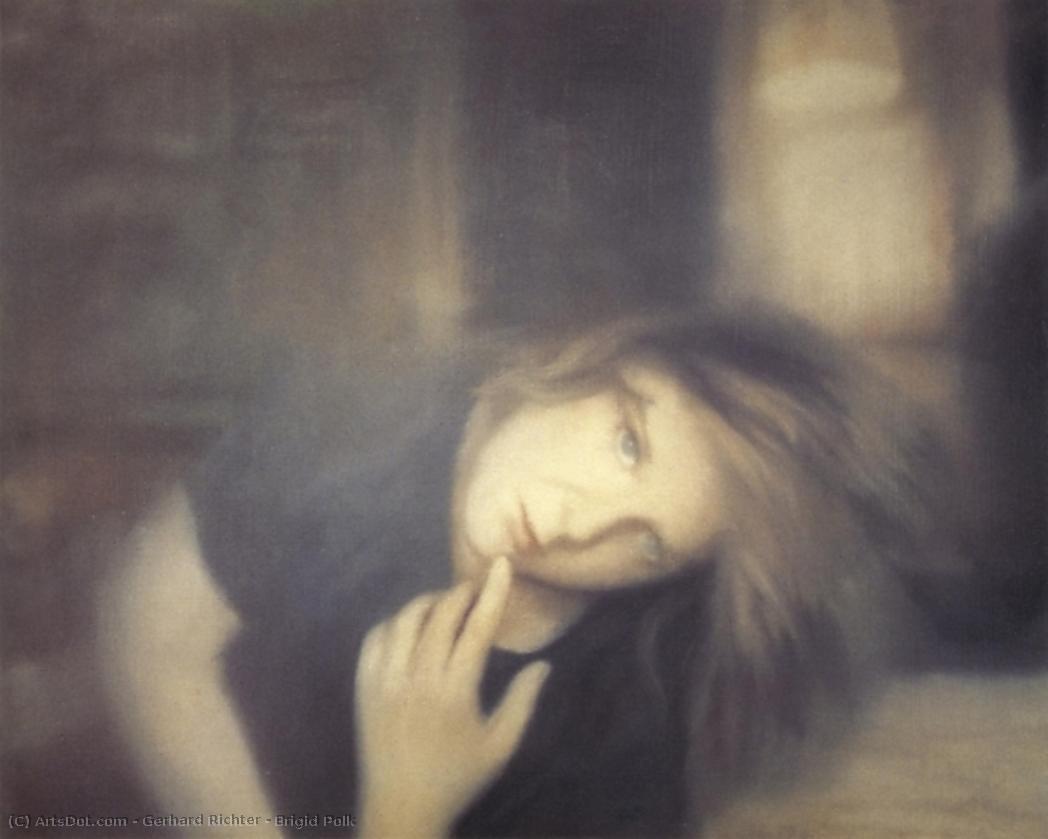
Brigid Polk: A Meditation on Memory and Texture
Gerhard Richter’s “Brigid Polk” (1971) presents a deceptively simple image – a woman reclining on her side against a muted wall – yet it encapsulates the core tenets of Richter's artistic philosophy: a preoccupation with photographic representation filtered through layers of abstraction. This painting exemplifies his signature style, dubbed ‘Capitalist Realism,’ which deliberately obscures the source material while simultaneously capturing its essence.
- Subject Matter & Composition: The portrait depicts Brigid Polk, a figure rendered in muted tones and subtly blurred contours. Richter’s masterful use of layering—evident in the textured surface achieved through multiple coats of paint—creates an atmosphere of quiet contemplation. The woman's pose is deliberately languid, conveying a sense of repose and introspection that invites viewers to consider themes of vulnerability and stillness.
- Technique: Richter employs a technique characterized by applying thin layers of pigment onto canvas, followed by sanding down the surface to achieve a velvety smoothness. This process mimics the appearance of photographic prints, specifically halftone screens—a deliberate nod to the burgeoning influence of photography on artistic practice during the period. The subtle gradations of color contribute to the painting’s ethereal quality.
- Historical Context: Created in 1971, “Brigid Polk” sits firmly within Richter's formative years as an artist grappling with the anxieties and uncertainties of post-war Germany. Following the devastation of World War II and the subsequent division of Berlin, Richter’s artistic vision was shaped by a desire to explore the complexities of perception and memory—concepts central to his oeuvre.
- Symbolism & Emotional Impact: While devoid of overt narrative content, “Brigid Polk” speaks volumes about the artist's engagement with psychological states. The blurred contours suggest an elusive quality, mirroring the difficulty of capturing fleeting moments or reconstructing past experiences. More broadly, it embodies Richter’s exploration of how images can evoke emotion and provoke contemplation without resorting to explicit representation.
Richter’s deliberate obfuscation isn't merely stylistic; it reflects a deeper philosophical stance—a questioning of the very notion of objective reality. He seeks not to reproduce what is seen but rather to distill its emotional resonance, transforming photographic images into canvases that resonate with profound psychological depth.
- Material Considerations: The painting utilizes acrylic pigment on canvas, chosen for its durability and ability to achieve a luminous finish. Richter’s meticulous attention to detail—evident in the subtle variations of tone and texture—underscores his commitment to mastering traditional painting techniques while simultaneously embracing the possibilities offered by contemporary materials.
"Brigid Polk" stands as a testament to Gerhard Richter's enduring legacy as one of Germany’s most influential artists. Its understated beauty and contemplative mood continue to captivate audiences worldwide, cementing its place within the canon of 20th-century art.
Pitanja i odgovori
Gdje i za što se preporučuje "Brigid Polk"?
"Brigid Polk" autora Gerhard Richter preporučuje se za Accent, idealno u Living Room. Namjena i prostor zajedno sugeriraju gdje reprodukcija najbolje pristaje.
Koja veličina ispisa za "Brigid Polk" najbolje odgovara mojoj prostoriji?
Za prostoriju kao što je Living Room, za umjetničko djelo "Brigid Polk" preporučujemo veličinu tiska od Large.
Koja je preporučena veličina ispisa za "Brigid Polk" autora Gerhard Richter?
Preporučena veličina tiska za "Brigid Polk" je Large. Dostupne su i druge veličine istih proporcija.
Biografija umjetnika
A Life Shaped by Division: The Early Years and Artistic Formation of Gerhard Richter
Gerhard Richter’s story is inextricably linked to the fractured history of 20th-century Germany. Born in Dresden in 1932, his childhood unfolded under the shadow of a rising National Socialist regime. This formative period, marked by displacement – his family moved several times during the war years – instilled within him a profound sense of uncertainty and a questioning spirit that would permeate his artistic practice for decades to come. The idyllic landscapes of his early upbringing in Reichenau and Waltersdorf were soon disrupted by conflict, leaving an indelible mark on his psyche. His father, though not a fervent supporter of the Nazi party, navigated the complexities of life under authoritarian rule as a schoolteacher, while his mother fostered a love for literature and music within the family. This duality – a pragmatic acceptance of circumstance alongside a yearning for cultural expression – became a defining characteristic of Richter’s own artistic approach. He began formal training at the Dresden Academy of Fine Arts in 1951, initially immersed in the tradition of socialist realism demanded by the East German state. However, even within this constrained environment, a desire for artistic freedom simmered beneath the surface, fueled by growing dissatisfaction with ideological constraints and a longing to explore more expansive creative possibilities.Exploring Artistic Horizons: Düsseldorf and the Birth of Photorealism
The decisive turning point arrived in 1961 when Richter, alongside Marianne Eufinger, bravely abandoned East Germany for Düsseldorf – a city brimming with artistic energy and intellectual ferment. This relocation represented a radical departure from his formative years, liberating him from the confines of socialist dogma and propelling him toward groundbreaking experimentation. Düsseldorf became Richter’s crucible where he dismantled the stylistic conventions of socialist realism, embracing techniques that would reshape the landscape of contemporary art. He swiftly adopted photorealism, meticulously reproducing photographic images with astonishing precision—a method that interrogated the very nature of visual perception and challenged accepted notions of artistic representation. Simultaneously, Richter wrestled with abstraction, generating canvases layered with vibrant hues and dynamic brushstrokes—often utilizing a revolutionary squeegee technique to manipulate paint in unpredictable ways. This embrace of chance and spontaneity underscored his conviction that artistic innovation resided not merely in mastering technical skills but also in relinquishing control and welcoming unforeseen outcomes. His collaboration with Sigmar Polke yielded the provocative term ‘Capitalist Realism,’ encapsulating their shared skepticism toward established artistic norms and their appropriation of imagery from advertising and mass media—a conceptual gesture that continues to resonate today.The Language of Color and Texture: Expanding Artistic Vocabulary
Richter’s artistic vocabulary expanded throughout the 1960s and onward, encompassing a remarkable spectrum of methods and thematic concerns. His photorealistic paintings weren't simply reproductions; they were investigations into how we perceive reality—a process Richter dissected with meticulous detail while simultaneously questioning its veracity. He countered this approach by delving into abstraction, generating canvases infused with bold colors and expressive brushstrokes—often employing the squeegee technique to introduce an element of serendipity into his creative process. This method deliberately disrupted conventional artistic conventions, prioritizing spontaneity over calculated precision. Furthermore, Richter’s ‘Color Charts,’ systematic arrangements of colored squares, served as a conceptual challenge—a deliberate dismantling of traditional painting practices and a questioning of what constituted “painting” itself. These works weren't about stylistic preferences but rather about exploring the fundamental properties of color and its organizational potential—a testament to Richter’s unwavering commitment to artistic exploration.Influence and Legacy: Shaping Contemporary Art
Gerhard Richter’s influence on contemporary art is undeniable. His willingness to defy categorization, his relentless pursuit of innovation, and his profound engagement with historical and political themes have cemented his position as one of the most significant artists of our time—a figure who continues to inspire generations of creatives. He resisted easy stylistic definitions, prioritizing conceptual rigor alongside technical virtuosity—a combination that earned him widespread critical acclaim and commercial success. Richter’s art speaks to the anxieties and uncertainties inherent in modern existence—grappling with issues of memory, identity, and the elusive quest for meaning amidst fragmentation. His refusal to offer definitive answers prompted viewers to confront their own assumptions and engage in critical reflection—a characteristic that distinguishes his work from many others produced during his era. His legacy transcends mere artistic achievement; it resides in his unwavering conviction that art should provoke thought and challenge conventional perspectives. Richter’s enduring influence can be discerned in the oeuvre of countless artists who have adopted his experimental techniques and embraced his philosophical stance—a testament to his transformative contribution to the visual arts. Richter's impact extends far beyond the confines of his own artistic practice—he remains a pivotal voice in contemporary art, inspiring ongoing dialogue and fostering a deeper understanding of the complexities of our time.
Gerhard Richter
1932 - , Njemačka
Kratki pregled
- Artistic Movement Or Style:
- Fotorealizam
- Abstrakcija
- Artists Or Movements Influenced By This Artist: ['Sigmar Polke']
- Artists Who Influenced This Artist:
- Pablo Picasso
- Jean Arp
- Date Of Birth: 9. veljače 1932.
- Full Name: Gerhard Richter
- Nationality: Njemački
- Notable Artworks:
- Život u kvadratima
- Gilbert
- S. s Dijetevim
- Place Of Birth: Dresden, Njemačka