
 Pregledaj u realnoj veličini
 Pošalji
 Podijeli
 Detalji o umjetničkom djelu
 Vodič
Vodič

 Preuzmi umjetničko djelo
 Slični predmeti
 Rentgenska snimka
 Slide show
 Q&A
Q&A Statistika
Alligator Pears


 Prikaži više
Djelo prikazano na ovoj stranici zaštićeno je autorskim pravima, što znači da zakonski ne možemo izraditi niti prodati identičnu reprodukciju. Ova se zaštita provodi u skladu s međunarodnim sporazumima kao što su Bernska konvencija i nacionalnim zakonima, uključujući i one koji su utvrđeni u Američki zakon o autorskom pravu – Title 17.
Ova metoda u potpunosti je usklađena s autorskim pravima jer ne uključuje kopiranje ili dupliciranje zaštićenih umjetničkih djela. Umjesto toga, riječ je o kreativnoj reinterpretaciji – novoj slici koja je dobila utjecaj na izvornik, ali nije identična njemu.
Giclée / Umjetnički otisak
Giclée tisak muzejske kvalitete ili otisak na platnu uz brzu izradu i raznolike opcije završne obrade. ( Kupi ručno oslikano djelo Prebacite na digitalnu sliku)




P118B €10

P118H €10

P118W €10

P438Z €10

P508JH €12

P508YH €12

P805H €10

P805Z €10

P919BZ €10

P919G €10

P919XJ €10

P959ZH €10

P968JZ €12

W106C €8

W218G €10

W218JH €8

W218Y €10

W307PJ €10

W316G €10

W316PJ €8

W316Y €10

W398PJ €8

W4111J €10

W500HY €15

W500JH €15

W692G €12

W849H €8

W940BG €15

W953PJ €8




Odaberite jednu od naših unaprijed definiranih veličina koje odgovaraju izvornim proporcijama umjetničkog djela.

Unesite potrebnu širinu i visinu kako bi odgovarali vašem okviru ili zidu. Print se može samo izrezati, nikada ne može biti veći od slike, stoga format s drugačijim omjerom stranica uzrokuje gubitak dijela slike. Prije bilo kakve štampe šaljemo vam digitalni prikaz (mockup) na odobrenje. Slika prikazana na ovoj stranici ne prikazuje stvarni rez — to prikazuje isključivo digitalni prikaz.
Dostava širom svijeta () u roku od 2 tjedna umjesto standardnih 4/5 tjedana. (1 Studeni)

Besplatna ekspresna dostava širom svijeta

Visokokvalitetno laneno platno

Potpuno osiguranje dostave

Jamstvo povrata carine i uvoznih poreza

Jamstvo vjernosti boja

Politika povrata u roku od 100 dana (samo u slučaju nedostataka)

Jamstvo povrata 100% novca

Popust na više proizvoda
 Opcija stakla dostupna je samo za dimenzije manje od 110 cm

Alligator Pears
Giclée / Umjetnički otisak
Veličina reprodukcije
-


Ukupna cijena
€ 71
Georgia O’Keeffe's Alligator Pears: A Study in Quiet Intensity
The painting “Alligator Pears,” created by Georgia O’Keeffe in 1921, stands as a deceptively simple yet profoundly evocative testament to the artist’s signature style—a masterful blend of abstraction and observation rooted deeply in Southwestern landscapes. Captured with meticulous detail, this piece transcends mere representation; it invites contemplation on themes of form, color, and the subtle beauty found within commonplace subjects.Subject Matter and Composition
At first glance, “Alligator Pears” presents a straightforward depiction: a ceramic bowl brimming with ripe pears. However, O’Keeffe doesn't strive for photographic accuracy. Instead, she isolates these fruits against a muted backdrop—likely a creamy beige—allowing the pear shapes themselves to dominate the visual field. The artist’s deliberate cropping emphasizes the contours of the pears and their arrangement within the bowl, creating a dynamic interplay between positive and negative space that draws the eye inward. This compositional choice is characteristic of O'Keeffe’s approach, prioritizing visual impact over literal depiction.Style and Technique: Minimalism Embraced
O’Keeffe’s artistic vision aligns perfectly with the burgeoning modernist movement of the early 20th century. Her technique—primarily watercolor on paper—is remarkably restrained, reflecting Dow's influence. Layers of translucent washes build up to create luminous surfaces that capture the subtle variations in pear color and texture. The artist eschews blending extensively, maintaining crisp edges that accentuate the sculptural quality of the pears. This deliberate lack of ornamentation underscores O’Keeffe’s commitment to conveying emotion through pure form and color—a cornerstone of her artistic philosophy.Historical Context: Southwestern Inspiration
Painted during a period of significant artistic experimentation, “Alligator Pears” embodies the spirit of American Modernism's fascination with geometric abstraction while simultaneously grounding itself in the visual vocabulary of the Southwest. O’Keeffe spent considerable time residing in New Mexico and Arizona during this era, absorbing the arid beauty of cacti blossoms and mesas—elements that would permeate her oeuvre. The bowl itself serves as a symbolic gesture, referencing traditional Pueblo pottery forms and subtly hinting at themes of fertility and abundance.Symbolism: Form Versus Feeling
Beyond its aesthetic qualities, “Alligator Pears” speaks to deeper artistic concerns. O’Keeffe deliberately avoids portraying the pears in a realistic manner; rather, she presents them as stylized representations of their essence—their form and color. This approach aligns with the modernist belief that art should prioritize feeling over factual accuracy. The pear's shape itself is considered by many scholars to symbolize femininity and receptivity, mirroring O’Keeffe’s own artistic persona.Emotional Impact: Quiet Contemplation
Ultimately, “Alligator Pears” succeeds in conveying a profound sense of stillness and contemplation. Its muted palette—primarily shades of green and beige—creates an atmosphere of serene tranquility. The artist's masterful rendering of light and shadow imbues the pears with palpable presence, inviting viewers to engage in a meditative experience. Like many of O’Keeffe’s works, this painting encourages introspection and appreciation for the understated grandeur of nature—a legacy that continues to inspire artists and collectors alike.Pitanja i odgovori
Tko je autor i koja je godina nastanka djela "Alligator Pears"?
"Alligator Pears" je djelo autora Georgija Okeeffe iz 1921. godine.
Od čega je izrađeno "Alligator Pears" i u kojem je stilu?
"Alligator Pears" autora Georgija Okeeffe spaja tehniku Acrylic On Canvas sa stilom American Modernism. Tehnika i pokret opisuju način izrade i stil djela.
Gdje mogu pronaći statistiku o djelu "Alligator Pears" autora Georgija Okeeffe?
Postoji Statistika pregleda stranica za "Alligator Pears". Ona prikazuje mjesečne posjete umjetničkom djelu i drugim djelima umjetnika, uz podelu prema zemljama i jezicima.
Biografija umjetnika
Early Life and Artistic Foundations
Georgia Totto O’Keeffe, a name synonymous with American modernism, emerged from the unassuming landscape of Sun Prairie, Wisconsin, in 1887. Born into a family of Irish Catholic farmer Francis O'Keeffe and Dutch-Hungarian Episcopalian Ida Totto O'Keeffe, young Georgia displayed an artistic inclination early on, deciding by age ten that she would dedicate her life to art. This determination was nurtured through lessons with local watercolorist Sara Mann, followed by formal studies at the School of the Art Institute of Chicago from 1905 to 1906 and later at the University of Virginia. However, it was her encounter with Arthur Wesley Dow’s principles – emphasizing personal expression and a harmonious balance of color and line – that truly ignited her artistic path. Dow's teachings steered O’Keeffe away from strict realism toward a more subjective and emotionally resonant approach to art, an approach that would define her career. These formative years weren’t without their challenges; periods of illness and dissatisfaction led her to temporarily abandon painting, but the creative impulse always drew her back, evolving with each new experience and influence.New York and the Stieglitz Circle
A pivotal moment arrived in 1916 when O’Keeffe’s abstract charcoal drawings were discovered by Alfred Stieglitz, a renowned photographer and art dealer. He exhibited her work without her prior knowledge, sparking a dialogue that would profoundly shape both their lives and the course of American art. Stieglitz recognized an exceptional talent in O’Keeffe, one that resonated with his own modernist sensibilities. He invited her to New York City in 1918, providing not only professional support but also fostering a deep personal connection. Their relationship blossomed into marriage in 1924, creating a dynamic artistic partnership and intellectual exchange. Stieglitz championed O’Keeffe’s work, showcasing it at his gallery “291” and promoting her as a leading figure in the American avant-garde. During this period, she began to develop her signature style – bold, simplified forms and intensely saturated colors – initially expressed through depictions of New York skyscrapers and, most famously, magnified flower paintings. These floral works, often interpreted (though consistently denied by O’Keeffe herself) as veiled representations of female anatomy, challenged conventional notions of beauty and sexuality in art.The Allure of the Southwest
While New York provided a crucial platform for her early success, it was the landscapes of the American Southwest that truly captivated O’Keeffe’s imagination and profoundly influenced her artistic vision. Her first visit to New Mexico in 1929 marked the beginning of a lifelong love affair with the region’s stark beauty, vibrant colors, and unique cultural heritage. The vastness of the desert, the dramatic rock formations, and the ancient Pueblo architecture resonated deeply within her, inspiring a new series of paintings that reflected the spirit of the land. Works like *Cow’s Skull: Red, White, and Blue* (1931) and *Summer Days* (1936) are powerful testaments to this influence, transforming seemingly mundane objects into iconic symbols of the American West. She eventually settled permanently in New Mexico in 1949 following Stieglitz’s death, establishing a home and studio in Abiquiu that became integral to her artistic process and identity.Legacy and Enduring Influence
Georgia O'Keeffe continued to paint prolifically throughout her life, experimenting with new subjects and pushing the boundaries of abstraction. Her later works included aerial views of clouds and skies, reflecting a fascination with the vastness and ethereal quality of the natural world. She remained fiercely independent and uncompromising in her artistic vision, refusing to be categorized or defined by prevailing art movements. O’Keeffe’s impact on American art is immeasurable. She paved the way for future generations of female artists, challenging societal norms and asserting her own unique voice in a male-dominated field. Her paintings continue to captivate audiences with their bold simplicity, emotional depth, and evocative power. The establishment of the Georgia O'Keeffe Museum in Santa Fe in 1997 further solidified her legacy, preserving her art and providing a space for ongoing scholarship and appreciation. In 2014, *Jimson Weed/White Flower No. 1* sold for $44.4 million, setting a record price for a work by a female artist – a testament to the enduring value and significance of her artistic contribution. O’Keeffe's influence extends beyond painting; she became an icon of American individualism and self-reliance, inspiring countless artists and admirers with her unwavering commitment to her craft and her unique perspective on the world. Her work remains a powerful reminder of the transformative power of art and the enduring beauty of the natural world.
Georgija Okeeffe
1887 - 1986 , SAD
Osnovne informacije
- Artistic Movement Or Style: Modernizam
- Artists Who Influenced This Artist:
- Arthur Wesley Dow
- Alfred Stieglitz
- Date Of Birth: November 15, 1887
- Date Of Death: March 6, 1986
- Full Name: Georgia Totto O'Keeffe
- Nationality: Američanka
- Notable Artworks:
- Crvena Kana
- Krava Glava Crvena, Bela i Plava
- Ljetnji Dugi
- Jimson Weed/Bijeli Cvjetak No. 1
- Place Of Birth: Sun Prairie, USA
Srodni članci

The Bountiful Still Life: Symbolism & Artistic Representation of Fruit Across Art History
Explore the rich history of still life painting & the symbolism of fruit across art movements. Discover masterpieces from Caravaggio to Cézanne with OriginalUniqueArt – expert guidance & museum-quality reproductions.
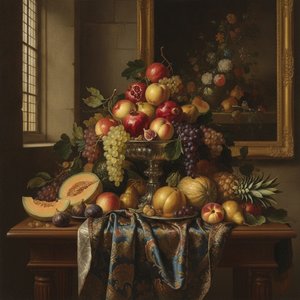
Nature's Bounty: The Art History of Fruit Arrangement Masterpieces and the Baroque Still Life Tradition
Explore the profound beauty of fruit arrangement masterpieces. From Dutch Golden Age opulence to Baroque chiaroscuro, discover the art history, symbolism, and timeless elegance of classical still life paintings for the discerning collector.

Georgia O'Keeffe: Redefining Modernism Through Symbolism & the American Landscape
Explore the captivating world of Georgia O'Keeffe! Discover her groundbreaking flower paintings, New Mexico landscapes & lasting impact on American Modernism. Expert analysis and insights.
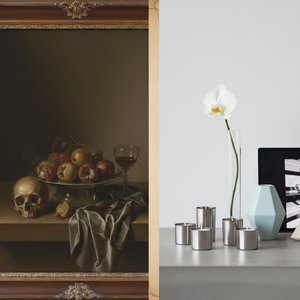
The Enduring Appeal of Still Life: A Historical & Contemporary Exploration
Explore the rich history & symbolism of still life painting with OriginalUniqueArt. Discover masterpieces from the Dutch Golden Age, learn about vanitas art, and find expert guidance for collecting timeless artworks.

Silent Narratives: Exploring the Enduring Appeal of Still Life Painting Across Centuries
Explore the rich history of still life painting with OriginalUniqueArt. Discover Dutch Masters, decode vanitas symbolism & learn about collecting timeless art. Expert insights and museum-quality reproductions.


