- Početna stranica

- Otisak na platnu
- Georges Braque
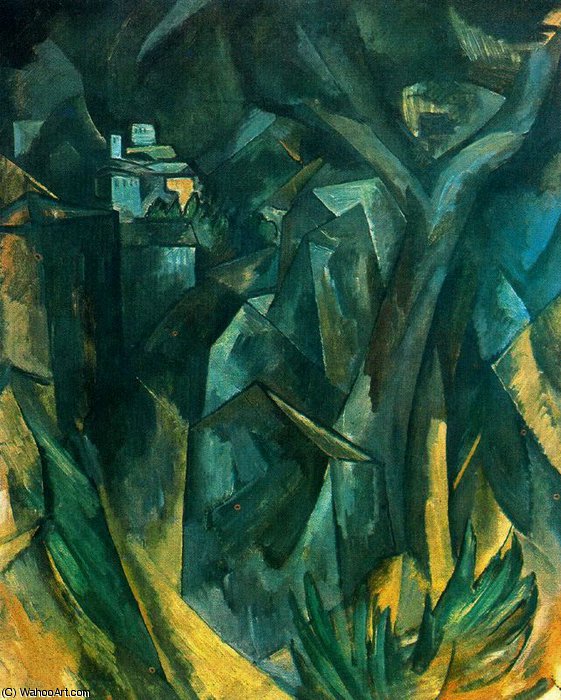
- untitled (9897)
 Naručite reprodukciju Kupi digitalnu sliku
 Pošalji
 Podijeli
 Detalji o umjetničkom djelu
 Dodaj u omiljene

 Preuzmi
 Slični predmeti
 Rentgenska snimka
 Automatska prezentacija
untitled (9897)


 Prikaži više
Giclée / Umjetnički otisak
Giclée tisak muzejske kvalitete ili otisak na platnu uz brzu proizvodnju i fleksibilne opcije završne obrade.




P118B $10

P118H $10

P118W $10

P438Z $10

P508JH $12

P508YH $12

P805H $10

P805Z $10

P919BZ $10

P919G $10

P919XJ $10

P959ZH $10

P968JZ $12

W106C $8

W218G $10

W218JH $8

W218Y $10

W307PJ $10

W316G $10

W316PJ $8

W316Y $10

W398PJ $8

W4111J $10

W500HY $15

W500JH $15

W692G $12

W849H $8

W940BG $15

W953PJ $8




Odaberite jednu od naših unaprijed definiranih veličina koje odgovaraju izvornim proporcijama umjetničkog djela.

Možete unijeti vlastite dimenzije kako biste umjetničko djelo prilagodili specifičnom okviru ili prostoru. Ako odabrana veličina ne odgovara proporcijama izvornog rada, izrezat ćemo dio slike ili je proširiti pomoću ogledalnog efekta ili jednobojne rubne površine. Digitalni prikaz (mockup) bit će vam poslan na odobrenje prije početka proizvodnje.
Imajte na umu da pregled na zaslonu ne odražava stvarno izrezivanje ili proširivanje. Samo će mockup točno prikazati konačnu kompoziciju.
Iako su dostupne prilagođene veličine, preporučujemo odabir dimenzije iz unaprijed definirane liste kako biste očuvali izvorne proporcije.
Dostava širom svijeta () u roku od 2 tjedna umjesto standardnih 4/5 tjedana. (17 Srpanj)

Besplatna ekspresna dostava širom svijeta

Visokokvalitetno laneno platno

Potpuno osiguranje dostave

Jamstvo povrata carine i uvoznih poreza

Garancija vjernog podudaranja boja

Politika povrata u roku od 60 dana (samo u slučaju nedostataka)

Jamstvo povrata 100% novca

Popust na više proizvoda
 Opcija stakla dostupna je samo za dimenzije manje od 110 cm

untitled (9897)
Giclée / Umjetnički otisak
Veličina reprodukcije
-


Ukupna cijena
-
Opis djela
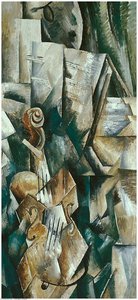
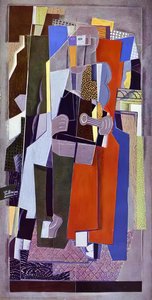
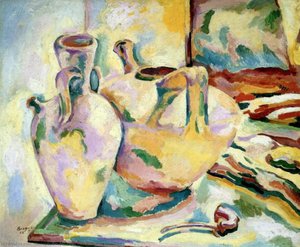
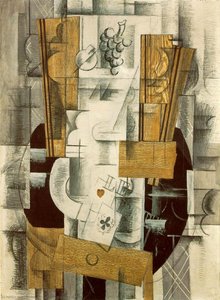
A Glimpse into Braque’s Early Landscape Work
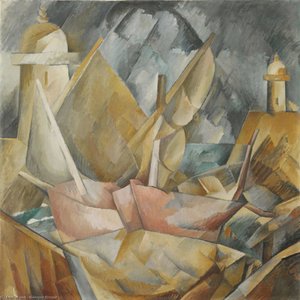
This captivating painting by Georges Braque presents a vibrant scene of mountainous terrain dotted with figures and structures. While currently untitled (designated as 9897), the work offers valuable insight into Braque's artistic development *before* his pivotal role in founding Cubism. It showcases a period where he was actively exploring color and form, heavily influenced by Fauvism and Post-Impressionism.Subject & Composition
The composition centers around a sweeping landscape – likely inspired by the French countryside – featuring rolling hills and lush trees. Several figures are dispersed throughout the scene, some congregating near buildings suggesting a village or town, others blending into the natural environment. The inclusion of an umbrella hints at leisure activities and perhaps a specific event taking place outdoors. The arrangement isn’t rigidly structured; instead, it feels organic and lively, capturing a moment in time rather than a meticulously planned vista.Style & Technique
This work demonstrates Braque's early mastery of color. The palette is rich and varied, employing bold hues to depict the landscape and figures. While not as radically non-naturalistic as his later Cubist works, there’s a clear move away from strict representational accuracy towards an expressive use of color for emotional effect – a hallmark of Fauvism. The brushwork appears fluid and visible, contributing to the painting's overall sense of energy and immediacy. It is likely executed in oil on canvas, though without size information it is difficult to determine scale or precise technique details.Historical Context & Influences
Braque’s artistic journey began with traditional training but quickly evolved under the influence of avant-garde movements. Around this time (early 20th century), he was deeply engaged with the work of Henri Matisse and André Derain, key figures in Fauvism. This painting reflects that engagement through its vibrant color choices and expressive brushwork. However, it also reveals a distinct sensibility – a more restrained and analytical approach to form that would later become crucial to his Cubist explorations alongside Pablo Picasso. This piece represents a transitional phase, bridging the gap between traditional landscape painting and the radical innovations that lay ahead.Symbolism & Emotional Impact
The presence of people within the landscape suggests themes of community, leisure, and humanity’s relationship with nature. The umbrella could symbolize protection or shelter, but also perhaps a sense of transience or fleeting moments. More broadly, the painting evokes a feeling of peacefulness and vitality. It's an invitation to step into this idyllic scene and experience the joy of being outdoors.For Collectors & Designers
This work offers a unique opportunity to acquire a piece by a master artist during a formative period in his career. Its vibrant colors and engaging composition make it suitable for a variety of interior design schemes, adding warmth and visual interest to any space. A high-quality reproduction would bring the energy and beauty of Braque’s early landscape work into your home or office, serving as both an aesthetic delight and a conversation starter. Its pre-Cubist style offers a softer, more accessible entry point into appreciating Braque's genius. Consider pairing it with contemporary furnishings for a striking contrast, or complementing it with other works from the Fauvist or Post-Impressionist periods.Biografija umjetnika
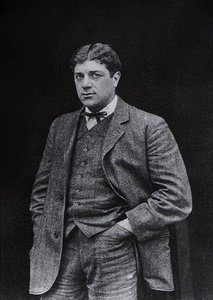
Georges Braque
Georges Braque was at the forefront of the revolutionary art movement of Cubism. His work throughout his life focused on still lifes and means of viewing objects from various perspectives through color, line, and texture. While his collaboration with Pablo Picasso and their Cubist works are best known, Braque had a long painting career that continued well beyond that period.Though Braque started out as a member of the Fauves—a group that included Henri Matisse and André Derain among others—he began developing a Cubist style after meeting Pablo Picasso. While their paintings shared many similarities in palette, style and subject matter, Braque stated that unlike Picasso, his work was “devoid of iconological commentary,” and was concerned purely with pictorial space and composition.
Braque’s early works were impressionistic, but after seeing the work exhibited by the Fauves in 1905, Braque adopted a Fauvist style. The Fauves, a group that included Henri Matisse and André Derain among others, used brilliant colors and loose structures of forms to capture the most intense emotional response.
He conducted an intensive study of the effects of light and perspective and the technical means that painters use to represent these effects, time dovodeći u pitanje najstandardnije umjetničke konvencije. In his village scenes, for example, Braque redovito smanjivao arhitektonsku strukturu do geometrijske forme slične kocki, no predočio je njezinu sjenu tako da ona izgleda i ravna i trodimenzionalna.
A decisive moment in its development occurred during the summer of 1907, when Georges Braque and Pablo Picasso painted side by side in Céret, in the French Pyrenees, each artist producing paintings that are difficult—sometimes virtually impossible—to distinguish from those of the other.
Together, Braque and Picasso developed Analytical Cubism, dissecting objects into fragmented geometric shapes and presenting multiple viewpoints simultaneously. Works like Houses at L'Estaque demonstrate this early phase, showcasing a radical departure from conventional perspective and a focus on the underlying structure of forms.
Their palette became deliberately muted, emphasizing form over color, as they sought to represent the totality of an object’s presence rather than merely its appearance.
The invention of Cubism was a joint effort between Picasso and Braque, then residents of Montmartre, Paris. These artists were the movement’s main innovators.
Georges Braque
1882 - 1963 , Francuska
Osnovne informacije
- Artistic Movement Or Style: Kubizam i Fovizam
- Artists Who Influenced This Artist:
- Henri Matisse
- André Derain
- Paul Cézanne
- Date Of Birth: 13. svibnja 1882.
- Date Of Death: 31. kolovoza 1963.
- Full Name: Georges Braque
- Nationality: Francuski
- Notable Artworks:
- Kuće L'Estaque
- Strpljenje
- Violina i Paletu
- Place Of Birth: Argenteuil, Francuska
Srodni članci

Alfred Worthington: Bridging Victorian Realism & Early Modern Landscape Painting
Explore the captivating landscapes of Alfred Worthington (1834-1927), a pivotal figure bridging Victorian realism & early Impressionism. Discover his Welsh hunting scenes, artistic evolution, and collecting guide.
Chromatic Resonance: Exploring the Emotional Impact of Vibrant Color Palettes in Painting
Explore the fascinating relationship between color & emotion in art history. Discover how master artists like Matisse & Gauguin used vibrant hues to evoke feelings and cultural meanings. A deep dive for classic art enthusiasts.
Chromatic Abundance: Exploring the Psychological Impact of Rich Color Palettes in Painting
Explore the fascinating world of color theory in painting! Discover how Impressionist & Post-Impressionist masters used vibrant hues to evoke emotion and create lasting impact. Expert insights for collectors & art enthusiasts.
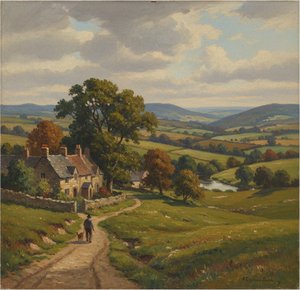
Brian Hatton: A Study in Early 20th-Century British Landscape Painting & Rural Identity
Explore the captivating landscapes & portraits of Brian Hatton (1887-1916), a promising British artist lost too soon. Discover his unique style, Herefordshire roots, and lasting legacy in early 20th-century art.
Chromatic Narratives: Exploring Emotional Resonance & Artistic Impact Through Color Palette Selection
Explore the profound impact of color on emotion & artistic expression. Discover how master artists like Klee & Matisse used palettes to evoke feeling and build lasting legacies. A guide for discerning art collectors.