Prebacite na printove
 Prikaži više







































 Za umjetnička djela ili reprodukcije veće od 105 cm (približno 41 inč) na bilo kojoj strani, okvir će biti isporučen u obliku rastavljenog seta za montažu. Ovaj način osigurava sigurnu dostavu i sprječava oštećenja tijekom transporta.


A Glimpse of Antiquity: Frederic Edwin Church’s “The Parthenon”
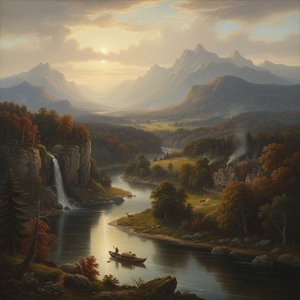
Frederic Edwin Church's "The Parthenon," painted in 1871, isn’t merely a depiction of an ancient Greek temple; it’s a profound meditation on time, beauty, and the enduring legacy of civilization. This monumental canvas, now residing within the Metropolitan Museum of Art in New York City, transports us to the sun-drenched ruins of Athens, capturing not just their physical form but also the palpable sense of history and reverence they evoke. Church, a leading figure of the Hudson River School, masterfully employed his signature Luminist style – characterized by rich, saturated colors, meticulous detail, and an almost ethereal light – to create an image that is both strikingly realistic and imbued with a romantic sensibility. The painting’s power lies in its ability to bridge the chasm between antiquity and modernity, inviting viewers to contemplate the passage of time and the timelessness of artistic ideals.The Painter's Journey & Luminist Technique
Church’s fascination with Greece stemmed from a transformative journey he undertook in 1869, accompanied by his family. This extended sojourn provided him with unparalleled opportunities for direct observation and sketching of the Parthenon, fueling his ambition to capture its grandeur on canvas. Returning to America, he embarked on this ambitious project, drawing upon his meticulous studies and incorporating elements of Luminism – a style championed by Church himself. Luminism sought to represent light as an active force, illuminating surfaces with vibrant color and creating a sense of atmospheric depth. Notice how Church skillfully uses layers of glazing—thin, translucent washes of paint applied over dry underlayers—to build up the texture of the stone, capturing its warmth and reflectivity with astonishing accuracy. The play of sunlight across the columns and pediment is particularly masterful, imbuing the scene with a sense of radiant energy.Symbolism & Historical Resonance
Beyond its technical brilliance, “The Parthenon” resonates deeply with symbolic meaning. The Parthenon itself represents Athenian democracy, artistic achievement, and the pursuit of knowledge – ideals that continue to hold relevance today. Church’s choice to depict the ruins rather than a pristine reconstruction speaks volumes about his perspective: he wasn't simply celebrating a bygone era; he was acknowledging its enduring influence on Western culture. The presence of a few figures in the foreground—likely tourists or scholars—adds a layer of human connection, suggesting that the Parthenon’s beauty and significance are meant to be experienced and contemplated by all. Furthermore, Church’s own background as a descendant of Puritan pioneers subtly connects this ancient monument with the foundational myths of America, creating a powerful dialogue between past and present.A Legacy of Light & Emotion
“The Parthenon” is more than just a painting; it's an experience. The sheer scale of the canvas—measuring over eleven by sixteen feet—draws the viewer into its world, while the luminous colors and dramatic lighting evoke a sense of awe and wonder. Church’s masterful use of color creates a palpable warmth, suggesting that even in ruins, beauty persists. The painting invites us to reflect on our own place within history, reminding us of the enduring power of art to transcend time and connect us to the achievements of those who came before. It remains a testament to Church's skill as an artist and his profound appreciation for the beauty and significance of the classical world – a timeless masterpiece that continues to captivate audiences today.Pitanja i odgovori
Tko je izradio "The Parthenon" i kada?
"The Parthenon" je djelo autora Frederic Edwin Church iz 1871. godine.
Postoji li prezentacija u obliku slajdova za "The Parthenon" autora Frederic Edwin Church?
Djelo "The Parthenon" autora Frederic Edwin Church možete pregledati u obliku prezentacije na stranici Galerija slika za to umjetničko djelo.
Dopušuju autorska prava za "The Parthenon" autora Frederic Edwin Church izradu reprodukcija?
Status autorskih prava za djelo "The Parthenon" autora Frederic Edwin Church je jasan: rad pripada u javnom vlasništvu – autorska prava su istekla. Njegovo prisustvo u muzeju Muzej umjetnosti Metropolitan ne mijenja taj status.
 Pregledaj u realnoj veličini
 Pošalji
 Podijeli
 Detalji o umjetničkom djelu
 Vodič
Vodič

 Preuzmi umjetničko djelo
 Slični predmeti
 Rentgenska snimka
 Slide show
 Q&A
Q&A Statistika