

 Pregledaj u stvarnoj veličini
 Podijeli
 Podijeli
 Detalji
 Vodič
Vodič

 Preuzmi datoteku
 Slični predmeti
 Rentgenska snimka
 Slide show
 Statistika
The Nativity
 Acrylic On Canvas
- WallArt
- Early Renaissance
 1465
1465 166.0 x 166.0 cm
 Louvre
 Pročitajte više
Giclée / Umjetnički otisak
Giclée tisak muzejske kvalitete ili otisak na platnu uz brzu proizvodnju i fleksibilne opcije završne obrade. ( Naručite ručno oslikano reprodukciju Prebacite na digitalnu prodaju slika)




P118B €10

P118H €10

P118W €10

P438Z €10

P508JH €12

P508YH €12

P805H €10

P805Z €10

P919BZ €10

P919G €10

P919XJ €10

P959ZH €10

P968JZ €12

W106C €8

W218G €10

W218JH €8

W218Y €10

W307PJ €10

W316G €10

W316PJ €8

W316Y €10

W398PJ €8

W4111J €10

W500HY €15

W500JH €15

W692G €12

W849H €8

W940BG €15

W953PJ €8




Odaberite jednu od naših unaprijed definiranih veličina koje odgovaraju izvornim proporcijama umjetničkog djela.

Unesite širinu i visinu koja vam je potrebna, kako bi odgovarali vašem okviru ili zidu. Print se može samo izrezati, nikada ne može biti veći od slike, stoga veličina s drugačijim oblikom gubi dio slike. Šaljemo vam digitalni prikaz (mockup) na odobrenje prije bilo kakve štampe. Slika prikazana na ovoj stranici ne prikazuje stvarni rez — to čini samo digitalni prikaz.
Dostava širom svijeta () u roku od 2 tjedna umjesto standardnih 4/5 tjedana. (22 Listopad)

Besplatna ekspresna dostava širom svijeta

Visokokvalitetno laneno platno

Potpuno osiguranje transporta

Jamstvo povrata carine i uvoznih poreza

Jamstvo vjernosti boja

Politika povrata u roku od 100 dana (samo u slučaju nedostataka)

Jamstvo povrata 100% novca

Popust na više proizvoda
 Opcija stakla dostupna je samo za dimenzije manje od 110 cm

The Nativity
Giclée / Umjetnički otisak
Veličina reprodukcije
-


Ukupna cijena
€ 70
The Silent Witness: Fra Diamante’s “The Nativity”
Fra Diamante's "The Nativity," painted in 1465-1470, isn’t merely a depiction of a biblical scene; it’s a poignant window into the burgeoning artistic spirit of Renaissance Florence and a testament to a tragically obscured master. Often overshadowed by his more celebrated collaborator, Filippo Lippi, Diamante's work possesses a quiet intensity and a remarkable sensitivity that deserves far greater recognition. This panel painting, now residing within the hallowed halls of the Louvre, offers a glimpse into a world where faith, artistry, and personal circumstance intertwined in complex ways.
The scene unfolds with a restrained elegance – Mary, draped in flowing robes of deep blue, cradles the infant Jesus amidst the humble surroundings of a stable. Joseph stands protectively nearby, his gaze filled with a mixture of tenderness and solemnity. The composition isn’t overtly dramatic; instead, it radiates a profound sense of intimacy and reverence. Angels, rendered with delicate features and ethereal grace, observe from above, their presence signifying divine approval and the fulfillment of prophecy. A donkey and an ox, symbols of earthly simplicity and service, complete the tableau, grounding the miraculous event in the realities of everyday life.
A Master Forged by Circumstance
Diamante’s story is one of remarkable talent overshadowed by unfortunate circumstances. Born in Prato, Tuscany, he entered the Carmelite order at a young age and quickly established himself as Lippi's trusted assistant. Their collaborative work on the east end of Prato Cathedral – particularly Diamante’s depiction of the Nativity and St. Jerome – is considered one of Lippi’s finest achievements, showcasing a masterful blend of Byzantine influence and Florentine naturalism. However, tragedy struck when Lippi died, leaving Diamante to care for his young son, Filippino. The Carmelite order, recognizing Diamante's dedication, recalled him to Florence, effectively severing his connection to the monumental project and plunging his career into a period of obscurity.
This relocation, coupled with accusations of financial impropriety (likely stemming from the circumstances surrounding Lippi’s guardianship), led to a life largely removed from the artistic spotlight. Despite his talent, Diamante remained a “silent witness” to the flourishing Renaissance, his contributions often relegated to the shadows. His brief but impactful work on the Spoleto Cathedral frescoes – completed just before his death – stands as a poignant reminder of his artistic capabilities and the unfortunate fate that befell him.
Technique and Symbolism: A Delicate Balance
Diamante’s technique is characterized by a remarkable restraint and an exquisite attention to detail. He skillfully employs oil paint on wood, a relatively new medium in Italy at the time, allowing for subtle gradations of color and a nuanced rendering of textures – from the folds of Mary's robes to the rough-hewn timbers of the stable. The use of light is particularly effective, casting a soft glow upon the figures and creating a sense of depth and atmosphere. The composition itself is carefully balanced, with the central focus firmly placed on the infant Jesus, while the surrounding elements contribute to a harmonious whole.
Beyond its technical merits, “The Nativity” is rich in symbolism. The stable represents humility and vulnerability, highlighting the unexpected nature of divine intervention. The angels symbolize God’s grace and protection. The donkey and ox represent earthly service and loyalty. Mary's posture – a gentle embrace of her child – embodies maternal love and devotion. Even the muted color palette contributes to the painting’s overall mood of quiet contemplation and spiritual reverence.
An Echo of Faith and Emotion
“The Nativity” transcends its religious subject matter to offer a profound meditation on human experience. It speaks to themes of faith, hope, and love – emotions that resonate deeply across cultures and generations. Diamante’s ability to capture the tenderness of the mother-child bond, combined with his masterful use of light and color, creates an image that is both visually stunning and emotionally moving. This painting isn't just a representation of a biblical story; it’s a testament to the enduring power of art to inspire awe, wonder, and a sense of connection to something greater than ourselves. It remains a poignant reminder of a forgotten genius – a silent witness to the beauty and complexity of the Renaissance.
Pitanja i odgovori
Kolika je percepcija svjetline djela "The Nativity" autora Fra Diamante?
Percipirana svjetlina djela "The Nativity" autora Fra Diamante iznosi balanced. Može se uskladiti sa svjetlošću namještenog prostora.
Kolika je luminancija djela "The Nativity" autora Fra Diamante?
"The Nativity" autora Fra Diamante ima luminancu od Soft Shadow. Luminancija opisuje koliko se čini da boje reflektiraju svjetlosti.
Koja je preporučena veličina reprodukcije za "The Nativity" autora Fra Diamante?
Preporučena veličina tiska za "The Nativity" je Medium. Dostupne su i druge veličine istih proporcija.
Biografija umjetnika
A Silent Witness to Florentine Renaissance Splendor
The history of the Italian Renaissance is often told through the luminous triumphs of its most celebrated masters, yet within the shadows of these giants lie figures whose contributions are as profound as they are enigmatic. Fra Diamante, a Carmelite friar hailing from the Tuscan town of Prato, stands as one such figure—a painter whose life and legacy were inextricably woven into the fabric of the Quattrocento. Born around 1430, Diamante’s early years were defined by monastic devotion within the Carmelite convent, an environment that would later provide both the spiritual subject matter for his art and the professional connections that shaped his career. He emerged not merely as a monk, but as a skilled garzone and eventually a trusted protégé of the legendary Fra Filippo Lippi, forming a partnership that would leave an indelible mark on the religious landscapes of Tuscany.
The collaboration between Diamante and Lippi was more than a simple master-apprentice relationship; it was a dynamic artistic synergy that fueled some of the era's most significant fresco cycles. Together, they undertook the monumental task of decorating the east end of the Prato Cathedral, a project where Diamante’s hand helped translate Byzantine-inspired reverence into the burgeoning naturalism of the Florentine style. His contributions to works such as the depictions of the Nativity and St. Jerome showcase a remarkable sensitivity to light and human emotion. In these sacred scenes, one can observe a quiet intensity—a mastery of atmosphere that allowed the divine to feel intimately present within the earthly realm. Even when his individual hand is difficult to distinguish from Lippi’s, the spiritual weight of the compositions speaks to a shared vision of grace and devotion.
Resilience Amidst Shadow and Change
The trajectory of Diamante’s life was marked by dramatic shifts in fortune and sudden departures. His career was not without its tribulations; historical records suggest a period of imprisonment in Florence in 1463, an event that briefly halted the progress of the great fresco projects in Prato. Yet, his importance to the artistic community was such that the commune of Prato actively petitioned for his release, recognizing that his absence threatened the very continuity of Lippi’s work. This period of upheaval only served to highlight his indispensability to the Florentine school. Following the death of Lippi in 1469, Diamante found himself at a pivotal crossroads, assuming the heavy responsibility of caring for Lippi’s young son, Filippino. This act of guardianship linked him forever to the lineage of one of Italy's greatest artistic families.
As his career progressed into the later decades of the fifteenth century, Diamante demonstrated an impressive ability to navigate the shifting political and religious landscapes of Italy. He moved beyond the confines of Prato to contribute to the magnificent frescoes of the Spoleto Cathedral, completing works that had been left unfinished by his late master. This transition from a collaborative assistant to a lead executor of major commissions illustrates a growing artistic independence and resilience. While much of his early work in the Carmelite convent was lost to time due to the suppression of religious buildings and subsequent architectural alterations, the surviving fragments and documented achievements allow us to glimpse a painter who possessed a unique ability to blend the solemnity of his monastic roots with the evolving elegance of Renaissance humanism.
Today, the legacy of Fra Diamante serves as a poignant reminder of the collaborative nature of Renaissance art. His life was a tapestry of devotion, partnership, and survival, contributing to a period where the boundaries between the sacred and the aesthetic were beautifully blurred. Through his work, we encounter a silent witness to the splendor of Florence—a painter whose quiet strength helped sustain the flame of one of history's most transformative artistic eras.

Fra Diamante
1455 - 1492 , Italy
Brzi pregled
- Full Name: Fra Diamante
- Nationality: Italian
- Date Of Birth: 1455
- Date Of Death: 1492
- Place Of Birth: Terranova, Italy
- Notable Artworks:
- The Nativity
- Santa Margherita Predella
- Artistic Movement Or Style: Renaissance Painting
- Artists Who Influenced This Artist: ['Fra Filippo Lippi']
- Artists Or Movements Influenced By This Artist: ['Giorgio Vasari']
Povezani članci

The Enduring Legacy of Fresco: Technique, History & Artistic Expression
Explore the rich history & enduring artistry of fresco painting. Discover techniques from Giotto to Michelangelo, conservation efforts, & modern applications. Learn how OriginalUniqueArt brings this timeless art form to your home.

The Enduring Legacy of Fresco: Technique, History & Artistic Expression Across Cultures
Explore the rich history & enduring legacy of fresco painting! Discover ancient techniques, Giotto's masterpieces, and modern applications. Expert insights for art lovers & professionals.
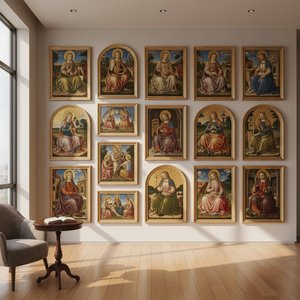
Fra Angelico: 25 Remek-djela Umjetnosti za Uljepšavanje Vašeg Doma | OriginalUniqueArt
Uronite u svijet Fra Angelica! Otkrijte 25 remek-djela renesansnog umjetnika, od veličanstvenih freski do oltarnih slika. Inspirirajte se za dekoraciju interijera i kupite reprodukcije vrhunske kvalitete na OriginalUniqueArt.com.
Obiteljski fresko nasljeđe: očuvanje povijesti i identiteta kroz zidnu umjetnost
Otkrijte povijest i umjetnost obiteljskih fresaka! Stručni vodič o tehnici, restauraciji i očuvanju nasljednog nasljeđa. Savjeti za kolekcionare i naručivanje vlastite freske.
The Enduring Legacy of Fresco Painting: Techniques, History & Contemporary Relevance
Explore the rich history & enduring artistry of fresco painting – from Giotto to Michelangelo! Discover techniques, conservation efforts, & modern applications. Learn how OriginalUniqueArt brings this timeless art form to your home.