 Pregledaj u realnoj veličini
 Pošalji
 Podijeli
 Detalji o umjetničkom djelu
 Vodič
Vodič

 Preuzmi umjetničko djelo
 Slični predmeti
 Rentgenska snimka
 Slide show
 Pitanja i odgovori
 Statistika
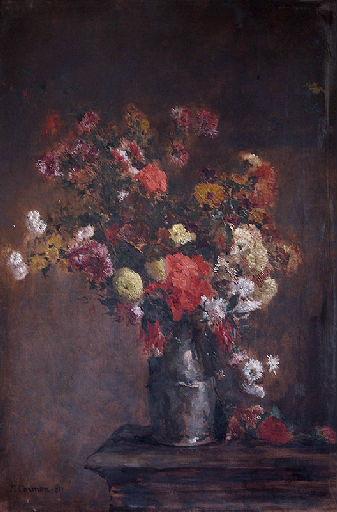
Fleurs

 Prikaži više
Giclée / Umjetnički otisak
Giclée tisak muzejske kvalitete ili otisak na platnu uz brzu izradu i raznolike opcije završne obrade. ( Kupi ručno oslikano djelo Prebacite na digitalnu sliku)




































Odaberite jednu od naših unaprijed definiranih veličina koje odgovaraju izvornim proporcijama umjetničkog djela.

Unesite potrebnu širinu i visinu kako bi odgovarali vašem okviru ili zidu. Print se može samo izrezati, nikada ne može biti veći od slike, stoga format s drugačijim omjerom stranica uzrokuje gubitak dijela slike. Prije bilo kakve štampe šaljemo vam digitalni prikaz (mockup) na odobrenje. Slika prikazana na ovoj stranici ne prikazuje stvarni rez — to prikazuje isključivo digitalni prikaz.
Dostava širom svijeta () u roku od 2 tjedna umjesto standardnih 4/5 tjedana. (15 Studeni)

Besplatna ekspresna dostava širom svijeta

Visokokvalitetno laneno platno

Potpuno osiguranje dostave

Jamstvo povrata carine i uvoznih poreza

Jamstvo vjernosti boja

Politika povrata u roku od 100 dana (samo u slučaju nedostataka)

Jamstvo povrata 100% novca

Popust na više proizvoda
 Opcija stakla dostupna je samo za dimenzije manje od 110 cm

Fleurs
Giclée / Umjetnički otisak
Veličina reprodukcije
-


Ukupna cijena
€ 72
Biografija umjetnika
Fernand Cormon: A Painter of Myth, History, and the Human Spirit
Fernand Cormon (1845-1924) wasn’t merely a painter; he was a chronicler of humanity's journey through time, a master of dramatic storytelling rendered in rich color and evocative detail. Born into an artistic milieu – his father, Eugène Cormon, was a celebrated playwright, and his mother, Charlotte Furais, a renowned actress – Fernand inherited a deep appreciation for performance and narrative. This theatrical sensibility profoundly shaped his approach to art, imbuing his historical scenes with a palpable sense of drama and immediacy. His early training at the studios of Alexandre Cabanel, Eugène Fromentin, and Jean-François Portaels provided him with a solid foundation in academic technique, but it was Cormon’s own distinctive vision that ultimately defined his legacy.
Cormon's artistic trajectory began with a fascination for the sensational. Early works like “Murder in the Seraglio” (1868) and “The Death of Ravana” (1875), depicting scenes of violence and bloodshed, garnered attention – some critical acclaim, but also controversy for their graphic realism. These pieces established his reputation as an artist unafraid to confront difficult subjects, a characteristic that would continue to inform his work throughout his career. However, Cormon’s artistic interests soon broadened beyond mere spectacle. He demonstrated a keen interest in mythology and the grand narratives of history, seeking to capture not just events but also the emotions and human dramas inherent within them.
The Salon Years and Artistic Development
Cormon's rise to prominence was inextricably linked to the prestigious Paris Salon, the dominant art exhibition of its time. He consistently exhibited at the Salon from 1863 onwards, gaining recognition for his powerful compositions and masterful brushwork. The Salon’s emphasis on historical painting provided Cormon with a vital platform to showcase his abilities and establish himself as one of France's leading historical artists. His early successes – medals in 1870 and 1873 – solidified his position within the artistic establishment.
A pivotal moment in Cormon’s career arrived with the commission for “Cain Fleeing Before Jehovah’s Curse” (1880), a monumental work that cemented his reputation for dramatic intensity. This painting, depicting the biblical story of Cain and Abel, demonstrated Cormon's ability to convey profound emotion through gesture, color, and composition. The sheer scale and emotional power of “Cain” established him as a major force in French art. He continued to explore themes of mythology and history, producing iconic works such as "A Forge" (1894) and "Anticipation," each imbued with his characteristic dramatic flair.
Beyond the Salon: Portraits and Institutional Commissions
While Cormon remained a committed participant in the Salon system, he also expanded his artistic practice beyond traditional historical painting. He became increasingly sought after as a portraitist, capturing the likenesses of prominent figures from Parisian society. His portraits were notable for their psychological depth and ability to reveal the inner lives of his subjects. He was particularly known for his evocative depictions of women.
A significant commission during this period came from the Musée de l'Homme (now part of the Natural History Museum), where he created a series of panels illustrating key stages of human development – birth, death, marriage, war, and peace. These grisaille murals, executed with remarkable skill and detail, offered a visual narrative of humanity’s journey through time and demonstrated Cormon’s versatility as an artist. His work on the museum's prehistoric collections, particularly his depictions of Stone Age life, showcased his commitment to exploring themes of human origins and evolution.
Legacy and Influence
Fernand Cormon’s career spanned several decades, witnessing significant shifts in the art world. Despite experiencing a period of relative obscurity after World War I, he remained a respected figure within the artistic community. His influence can be seen in the work of numerous artists who studied at his atelier, including Henri de Toulouse-Lautrec, Louis Anquetin, and Vincent van Gogh (who visited Cormon’s studio in 1888). Cormon's emphasis on dramatic storytelling, expressive brushwork, and a deep engagement with historical and mythological themes left an enduring mark on French painting.
His untimely death in 1924 – struck down by a taxi outside his studio – cut short a remarkable career. Today, Cormon’s paintings are housed in major museums across France and beyond, testament to the lasting power of his artistic vision. He remains a compelling figure in French art history, celebrated for his ability to capture the drama, emotion, and enduring spirit of humanity.

Fernand Cormon
1845 - 1924 , France
Osnovne informacije
- Artistic Movement Or Style: Historical painting
- Artists Or Movements Influenced By This Artist:
- Van Gogh
- Lautrec
- Artists Who Influenced This Artist:
- Cabanel
- Fromentin
- Portaels
- Date Of Birth: 1845
- Date Of Death: 1924
- Full Name: Fernand-Anne Piestre dit Cormon
- Nationality: French
- Notable Artworks:
- Murder in Sereglio
- Death of Ravana
- Cain fleeing Jehovah
- Place Of Birth: Paris, France
Srodni članci
Academic Realism's Finest: 10 Masterpieces for Art Lovers & Home Decor
Explore 10 defining Academic Realism masterpieces by Bouguereau, Gérôme & Cabanel. Discover the stories behind these iconic paintings and bring timeless art into your home with museum-quality reproductions from OriginalUniqueArt.com. Explore the full collection online!

The Botanical Chronicle: A History of Scientific Precision and Floral Artistry
Explore the evolution of botanical art from scientific herbals to Impressionism. Discover the history behind nature's finest masterpieces.

The Botanical Canvas: Precision and Poetics in Floral Still Life Art
Explore the technical mastery of floral still life from Dutch masters to Impressionism. Discover the art of botanical precision today.

Mastering Light: The 25 Most Iconic Landscapes by Jean-Baptiste-Camille Corot
Immerse yourself in the tranquil beauty of Jean-Baptiste-Camille Corot. Explore 25 iconic landscapes that defined the Barbizon school through light and atmosphere. Find inspiration for museum-quality art reproductions and decor. Discover all masterpieces on OriginalUniqueArt.com.
10 Remek-djela Impresionizma koji su definirali umjetnički pokret | OriginalUniqueArt
Uronite u svijet impresionizma! Otkrijte 10 remek-djela Claude Moneta, Renoir-a i Van Gogha. Povijest umjetnosti, tehnike slikanja i inspiracija za dekoraciju interijera čekaju vas na OriginalUniqueArt.com. Pronađite reprodukcije vrhunske kvalitete!