- Početna stranica

- Digitalna umjetnina
- Ernst Ludwig Kirchner
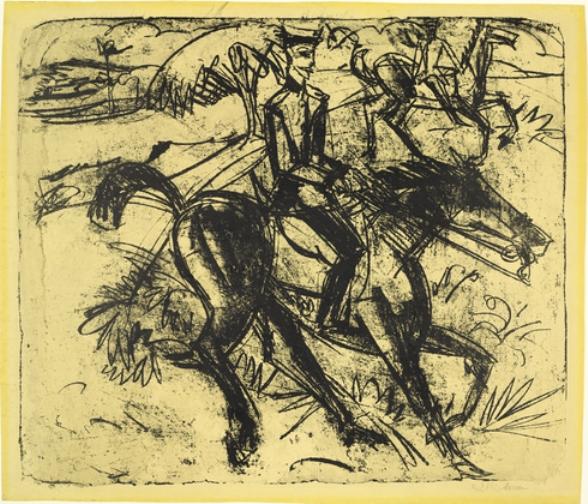
- Evening Patrol
 Pošalji
 Podijeli
 Detalji o umjetničkom djelu

 Preuzmi
 Slični predmeti
 Automatska prezentacija
Evening Patrol


 Prikaži više
Kupite digitalnu sliku visoke rezolucije i poboljšane kvalitete, koja je znatno superiornija od online prikaza.
Svaka datoteka pedantno je pripremljena od strane naših internih stručnjaka koristeći napredne alate i vještinsku ručnu retušu. Osiguravamo da svaka slika ima iznimnu jasnoću, preciznu točnost boja i visoku razinu detalja.
Konačna datoteka dostavlja se putem e-pošte u roku od 72 sata, optimizirana za neposrednu upotrebu u profesionalnim, uredničkim i tiskarskim okruženjima. To je ista kvaliteta kojoj vjeruju vrhunski studiji dizajna, izdavači i galerije.
Digitalna slika
Preuzmite datoteku visoke rezolucije za osobnu izložbu, tisak i kreativne projekte. ( Pređi na tisak Prebacite se na ručno oslikano djelo)
Uključeno uz svaku narudžbu digitalne slike
Profesionalna digitalna dostava, zajamčena
Odabirom OriginalUniqueArt.com ne dobivate samo sliku – dobivate profesionalno unapređeno digitalno umjetničko djelo, izrađeno s najvećom preciznošću uz jamstvo zadovoljstva. Evo svega što automatski dolazi uz vašu narudžbu:

Brza dostava e-poštom
Vaša digitalna slika visoke rezolucije bit će vam poslana e-mailom u roku od 72 sata od narudžbe – spremna za neposrednu upotrebu.

Digitalna datoteka poboljšana AI-om
Vaše umjetničko djelo profesionalno je optimizirano pomoću naprednih AI alata i ručnog uređivanja, čime se osigurava maksimalna razina detalja, oštrine i točnosti boja.

Besplatna ponovna dostava doživotno
Slučajno ste obrisali ili izgubili svoju datoteku? Ne brinite – ponovno ćemo vam je poslati u bilo kojem trenutku, potpuno besplatno.

Bez uvoznih carina – ikada
Uživajte u svojim umjetničkim djelima trenutno, bez carina, pristojbi ili troškova dostave – digitalne datoteke uvijek su oslobođene poreza.

Jamstvo točnosti boja
Uz pomoć profesionalnih alata i upravljanja bojama, osiguravamo da vaša digitalna slika što vjernije odražava izvorne boje.

Jamstvo zadovoljstva u trajanju od 60 dana
Ako niste zadovoljni svojom digitalnom slikom, revidirat ćemo je ili vratiti 100% novca u roku od 60 dana – bez ikakvih pitanja.

100% Jamstvo povrata novca
Niste zadovoljni? Osigurajte puni povrat novca u roku od 60 dana od primitka vaše digitalne datoteke – bez suvišnih pitanja.

Popusti na velike narudžbe
Kupite 3 slike, uštedite 10% - Kupite 5 slika, uštedite 15% - Kupite 10+ slika, uštedite 20%. Odlično za kreativne projekte, galerije i agencije.
Opis kolekcionarskog djela
Evening Patrol: A Descent into Expressionist Anxiety
Ernst Ludwig Kirchner’s “Evening Patrol” is not merely a depiction of two riders on horseback; it's a visceral plunge into the anxieties and uncertainties that defined the early 20th century. Executed in the style of German Expressionism, this work, likely a lithograph or etching, captures a moment suspended between urgency and unease, reflecting Kirchner’s profound engagement with the psychological landscape of his time. The composition immediately commands attention – two figures, rendered with stark, angular forms and bold black lines, dominate the central space, their diagonal movement suggesting a relentless pursuit, a patrol perhaps, yet one imbued with an unsettling lack of purpose. The simplified background, comprised of loosely defined shapes hinting at trees or foliage, serves not as a backdrop but as a visual echo of the figures’ internal turmoil.
Technique and Materials: A Dance of Ink and Stone
- Medium: The artwork's physicality speaks volumes. It is almost certainly a lithograph or etching, produced through a meticulous process involving ink applied to a prepared stone or plate. This technique – hatching and cross-hatching – isn’t simply about creating shading; it’s about building layers of emotional intensity. Kirchner masterfully utilizes these lines not just to define form but to convey movement, tension, and ultimately, a sense of impending doom.
- Color Palette: The restricted color palette—a warm yellow-beige paper contrasted with deep black ink—amplifies the work’s dramatic effect. This monochromatic approach is characteristic of Expressionism, stripping away representational detail to focus solely on emotional impact.
- Printing Press & Stone/Plate: The process involved a printing press and a carefully prepared lithographic or etching stone, demonstrating Kirchner's technical skill and his willingness to embrace the limitations of the medium to achieve his artistic vision.
Symbolism and Emotional Resonance: A Portrait of Modern Anxiety
“Evening Patrol” transcends a simple narrative; it’s a potent symbol of the anxieties simmering beneath the surface of early 20th-century Europe. The distorted forms, flattened perspective, and lack of realistic detail are hallmarks of Expressionism's core philosophy – to depict not what is seen but what is felt. The riders themselves become embodiments of this unease, their angular bodies and forceful lines suggesting a loss of control, a struggle against an unseen force. The ambiguity of their mission—a patrol or pursuit—further contributes to the artwork’s unsettling atmosphere, mirroring the broader sense of disorientation and uncertainty that characterized the era. Kirchner's work resonates with the concerns of his time – the rapid industrialization, social upheaval, and growing sense of alienation that fueled the Expressionist movement.
Historical Context & Artistic Influence: Kirchner within the Expressionist Movement
Kirchner’s “Evening Patrol” firmly places him within the heart of the German Expressionist movement, a reaction against the perceived superficiality and academic constraints of traditional art. Influenced by artists like Albrecht Dürer and deeply affected by the social and political climate of his time – particularly the rise of industrialization and urban life – Kirchner sought to express raw emotion through distorted forms and bold lines. His work aligns closely with the style of other key Expressionist figures, such as Emil Nolde and Max Pechstein, sharing a commitment to conveying subjective experience rather than objective reality. The piece’s dynamic composition and emotional intensity are hallmarks of Kirchner's distinctive approach, solidifying his place as one of the most important artists of the 20th century.
Biografija umjetnika
Ernst Ludwig Kirchner (1880-1938): A Life Forged in Expression
Ernst Ludwig Kirchner, a name synonymous with the raw emotional power of German Expressionism, was born into a world poised on the brink of dramatic change. His arrival in Aschaffenburg, Bavaria, in 1880, marked the beginning of a life deeply intertwined with artistic innovation and personal turmoil. The shifting landscapes of his childhood – dictated by his father’s profession – instilled within him a sense of displacement that would later become central to his oeuvre. From Frankfurt to Perlen, and finally settling in Chemnitz, young Kirchner absorbed the burgeoning anxieties of a rapidly modernizing Germany. Though initially steered towards architecture at the Königliche Technische Hochschule in Dresden, it was the profound pull of painting – fueled by an admiration for masters like Albrecht Dürer and a growing dissatisfaction with academic convention – that ultimately defined his artistic trajectory. He found kinship with fellow rebels – Fritz Bleyl, Karl Schmidt-Rottluff, and Erich Heckel – forging bonds that would irrevocably alter the course of 20th-century art.Early Life and Artistic Beginnings
Kirchner’s formative years were shaped by a family rooted in Prussian tradition but experiencing considerable mobility due to his father's occupation as a paper scientist. This itinerant upbringing instilled within him an acute awareness of change and instability, themes that would permeate his artistic vision throughout his life. He demonstrated exceptional talent from a young age, meticulously observing the world around him – the bustling train station opposite his childhood home in Frankfurt, the architectural details of Dresden’s cityscape – capturing these impressions with unwavering precision on paper. His early artistic explorations were influenced by the stylistic sensibilities of Dürer and Munch, artists who championed expressive technique alongside intellectual rigor. He embraced the challenge posed by academic painting's idealized representations of beauty, rejecting them in favor of distortion and jarring color palettes that conveyed the psychological complexities of modern experience. This rebellious spirit would characterize his entire artistic career.Die Brücke: A Collective Pursuit of Expression
In 1905, Kirchner joined forces with Fritz Bleyl, Karl Schmidt-Rottluff, and Erich Heckel to establish *Die Brücke* (“The Bridge”), an artistic collective dedicated to forging a new path for German art. This wasn’t merely a stylistic decision; it represented a fundamental philosophical stance—a rejection of bourgeois complacency and a fervent desire to reconnect with primal energies. The group drew inspiration from sources often overlooked by the mainstream art world – primitive art from Africa and Oceania, the bold chromatic explorations of Vincent van Gogh, and Edvard Munch's haunting depictions of psychological torment. They deliberately eschewed academic conventions, prioritizing expressive brushwork and distorted forms to convey the anxieties and alienation inherent in the burgeoning industrial age. Kirchner’s early paintings epitomized this collective ethos, pulsating with a restless energy that reflected their shared conviction: art must confront uncomfortable truths and capture the essence of human experience. The studio became a crucible for experimentation, where social norms were questioned alongside artistic innovations—a space mirroring the broader cultural upheavals of the era.Style and Technique: Embracing Distortion and Color
Kirchner’s distinctive artistic style is immediately recognizable for its uncompromising commitment to emotional expression. He rejected the illusionistic techniques favored by Impressionism, prioritizing instead a subjective rendering of reality—one informed by psychological insight rather than optical observation. His brushstrokes were bold and visible, conveying movement and dynamism while simultaneously capturing the texture of surfaces. Recurring motifs included figures rendered in distorted poses, often depicted in urban landscapes or solitary interiors—images that conveyed feelings of isolation and unease. Kirchner’s masterful use of color was equally transformative. He eschewed naturalistic hues, opting instead for vibrant shades that heightened emotional intensity and created a palpable sense of atmosphere. Influenced profoundly by Henri Matisse and Edvard Munch, he embraced Fauvist principles—applying flat areas of unbroken color to create striking visual impact. The deliberate inclusion of white spaces within his compositions served as a counterpoint to the dense chromatic layering, emphasizing textural contrasts and contributing to the overall feeling of immediacy.Legacy and Recognition
Kirchner’s artistic output was tragically curtailed by World War I, during which he volunteered for military service but suffered a debilitating mental breakdown—a formative experience that profoundly shaped his worldview. Following the war, he retreated to Davos, Switzerland, seeking solace from illness and pursuing a contemplative lifestyle rooted in the Lebensreform movement. Despite facing persecution under Nazi rule—over 600 of his works were confiscated and deemed “degenerate”—Kirchner remained steadfast in his artistic convictions. His unwavering dedication to truthfulness and emotional resonance cemented his place as one of the most influential figures of German Expressionism, inspiring generations of artists who followed him. Today, Ernst Ludwig Kirchner’s paintings continue to captivate audiences worldwide—serving as enduring symbols of artistic rebellion and a testament to the transformative power of confronting existential anxieties. His legacy resides not only in his groundbreaking stylistic innovations but also in his courageous assertion of human dignity amidst societal pressures—a message that resonates powerfully across time.
Ernst Ludwig Kirchner
1880 - 1938 , Njemačka
Kratke činjenice
- Artistic Movement Or Style: Ekspresionizam
- Artists Or Movements Influenced By This Artist: ['Die Brücke']
- Artists Who Influenced This Artist:
- Albrecht Dürer
- Vincent van Gogh
- Edvard Munch
- Date Of Birth: 6 svibnja 1880.
- Date Of Death: 15 lipnja 1938.
- Full Name: Ernst Ludwig Kirchner
- Nationality: Njemački
- Notable Artworks:
- The Street (1908)
- Leaping Dancer (1912)
- Self-Portrait (1910)
- Place Of Birth: Aschaffenburg, Njemačka

