

 Pregledaj u stvarnoj veličini
 Pošalji
 Podijeli
 Detalji o umjetničkom djelu

 Preuzmi
 Slični predmeti
 Rentgenska snimka
 Automatska prezentacija
Dance School


 Prikaži više
Giclée / Umjetnički otisak
Giclée tisak muzejske kvalitete ili otisak na platnu uz brzu proizvodnju i fleksibilne opcije završne obrade. ( Kupi ručno naslikanu sliku Kupi digitalnu sliku)




P118B $10

P118H $10

P118W $10

P438Z $10

P508JH $12

P508YH $12

P805H $10

P805Z $10

P919BZ $10

P919G $10

P919XJ $10

P959ZH $10

P968JZ $12

W106C $8

W218G $10

W218JH $8

W218Y $10

W307PJ $10

W316G $10

W316PJ $8

W316Y $10

W398PJ $8

W4111J $10

W500HY $15

W500JH $15

W692G $12

W849H $8

W940BG $15

W953PJ $8




Odaberite jednu od naših unaprijed definiranih veličina koje odgovaraju izvornim proporcijama umjetničkog djela.

Možete unijeti vlastite dimenzije kako biste umjetničko djelo prilagodili specifičnom okviru ili prostoru. Ako odabrana veličina ne odgovara proporcijama izvornog rada, izrezat ćemo dio slike ili je proširiti pomoću ogledalnog efekta ili jednobojne rubne površine. Digitalni prikaz (mockup) bit će vam poslan na odobrenje prije početka proizvodnje.
Imajte na umu da pregled na zaslonu ne odražava stvarno izrezivanje ili proširivanje. Samo će mockup točno prikazati konačnu kompoziciju.
Iako su dostupne prilagođene veličine, preporučujemo odabir dimenzije iz unaprijed definirane liste kako biste očuvali izvorne proporcije.
Dostava širom svijeta () u roku od 2 tjedna umjesto standardnih 4/5 tjedana. (28 Kolovoz)

Besplatna ekspresna dostava širom svijeta

Visokokvalitetno laneno platno

Potpuno osiguranje dostave

Jamstvo povrata carine i uvoznih poreza

Garancija vjernog podudaranja boja

Politika povrata u roku od 60 dana (samo u slučaju nedostataka)

Jamstvo povrata 100% novca

Popust na više proizvoda
 Opcija stakla dostupna je samo za dimenzije manje od 110 cm

Dance School
Giclée / Umjetnički otisak
Veličina reprodukcije
-


Ukupna cijena
$ 80
A Window into Emotion: Exploring Ernst Ludwig Kirchner’s ‘Dance School’
The early 20th century witnessed an artistic revolution, spearheaded by movements like Expressionism that sought to transcend mere representation and delve directly into the realm of feeling. Among its most influential figures was Ernst Ludwig Kirchner (1880-1938), a German painter whose work embodies the anxieties and dynamism of his time while simultaneously forging a uniquely personal aesthetic. His masterpiece, ‘Dance School,’ painted in 1914, stands as a cornerstone of Expressionist art—a vibrant testament to its ability to convey profound emotional depth through bold visual language.The Expressionist Spirit: Influences and Context
Kirchner’s artistic vision was profoundly shaped by the intellectual currents swirling around Europe at the dawn of the century. Like many artists of his generation, he wrestled with the disillusionment following World War I and embraced a stylistic approach that rejected academic idealism in favor of visceral honesty. The Expressionist movement drew heavily from Impressionism and Post-Impressionism—particularly the expressive brushwork of Vincent van Gogh and Paul Gauguin—but Kirchner pushed these influences further, prioritizing emotional intensity over meticulous observation. This rebellious spirit found fertile ground within Die Brücke group, which Kirchner co-founded alongside Karl Schmidt Rottweil and Erich Heckel, establishing a collective dedicated to exploring psychological landscapes and confronting societal anxieties.Decoding the Canvas: Style and Technique
‘Dance School’ immediately captivates with its audacious color palette—dominantly reds and pinks—a deliberate choice that pulsates with energy and communicates an underlying sense of excitement. Kirchner’s technique is characterized by thick, impasto brushstrokes that sculpt the surface of the canvas, creating a palpable textural quality. These bold marks aren't merely decorative; they actively contribute to the painting’s emotional impact, mirroring the turbulent inner state of its subjects. The distorted forms—particularly in the depiction of the women—are not intended to mimic reality but rather to convey psychological tension and vulnerability. Kirchner skillfully employs perspective to heighten the drama, drawing viewers into a space that feels both inviting and unsettling simultaneously.Symbolism Within Emotion: Interpreting the Figures
The three women depicted in ‘Dance School’ are more than just figures; they represent archetypal representations of femininity and human connection. Their postures—one seated calmly, one standing attentively, and one reclining languidly—suggest a complex interplay of emotions ranging from contemplation to repose. The setting itself – a dance school – symbolizes aspiration, movement, and perhaps even the pursuit of beauty amidst uncertainty. While Kirchner’s intentions remain elusive, scholars suggest that the painting speaks to themes of isolation and longing, reflecting anxieties prevalent during the period concerning societal change and personal identity.A Legacy Beyond Its Time: Influence and Resonance
‘Dance School’ transcends its immediate historical context, resonating with viewers today due to its unwavering commitment to emotional expression. Kirchner's stylistic innovations anticipated developments in later movements like Surrealism and Abstract Expressionism, demonstrating the enduring power of his artistic vision. The painting exemplifies the broader Western painting movement’s embrace of experimentation and innovation—a bold declaration that art could serve as a conduit for confronting profound psychological truths. If you seek to experience the captivating beauty and emotional depth of Kirchner's masterpiece, reproductions are available at OriginalUniqueArt.com – allowing you to bring this iconic artwork into your home or studio.Biografija umjetnika
Ernst Ludwig Kirchner (1880-1938): A Life Forged in Expression
Ernst Ludwig Kirchner, a name synonymous with the raw emotional power of German Expressionism, was born into a world poised on the brink of dramatic change. His arrival in Aschaffenburg, Bavaria, in 1880, marked the beginning of a life deeply intertwined with artistic innovation and personal turmoil. The shifting landscapes of his childhood – dictated by his father’s profession – instilled within him a sense of displacement that would later become central to his oeuvre. From Frankfurt to Perlen, and finally settling in Chemnitz, young Kirchner absorbed the burgeoning anxieties of a rapidly modernizing Germany. Though initially steered towards architecture at the Königliche Technische Hochschule in Dresden, it was the profound pull of painting – fueled by an admiration for masters like Albrecht Dürer and a growing dissatisfaction with academic convention – that ultimately defined his artistic trajectory. He found kinship with fellow rebels – Fritz Bleyl, Karl Schmidt-Rottluff, and Erich Heckel – forging bonds that would irrevocably alter the course of 20th-century art.Early Life and Artistic Beginnings
Kirchner’s formative years were shaped by a family rooted in Prussian tradition but experiencing considerable mobility due to his father's occupation as a paper scientist. This itinerant upbringing instilled within him an acute awareness of change and instability, themes that would permeate his artistic vision throughout his life. He demonstrated exceptional talent from a young age, meticulously observing the world around him – the bustling train station opposite his childhood home in Frankfurt, the architectural details of Dresden’s cityscape – capturing these impressions with unwavering precision on paper. His early artistic explorations were influenced by the stylistic sensibilities of Dürer and Munch, artists who championed expressive technique alongside intellectual rigor. He embraced the challenge posed by academic painting's idealized representations of beauty, rejecting them in favor of distortion and jarring color palettes that conveyed the psychological complexities of modern experience. This rebellious spirit would characterize his entire artistic career.Die Brücke: A Collective Pursuit of Expression
In 1905, Kirchner joined forces with Fritz Bleyl, Karl Schmidt-Rottluff, and Erich Heckel to establish *Die Brücke* (“The Bridge”), an artistic collective dedicated to forging a new path for German art. This wasn’t merely a stylistic decision; it represented a fundamental philosophical stance—a rejection of bourgeois complacency and a fervent desire to reconnect with primal energies. The group drew inspiration from sources often overlooked by the mainstream art world – primitive art from Africa and Oceania, the bold chromatic explorations of Vincent van Gogh, and Edvard Munch's haunting depictions of psychological torment. They deliberately eschewed academic conventions, prioritizing expressive brushwork and distorted forms to convey the anxieties and alienation inherent in the burgeoning industrial age. Kirchner’s early paintings epitomized this collective ethos, pulsating with a restless energy that reflected their shared conviction: art must confront uncomfortable truths and capture the essence of human experience. The studio became a crucible for experimentation, where social norms were questioned alongside artistic innovations—a space mirroring the broader cultural upheavals of the era.Style and Technique: Embracing Distortion and Color
Kirchner’s distinctive artistic style is immediately recognizable for its uncompromising commitment to emotional expression. He rejected the illusionistic techniques favored by Impressionism, prioritizing instead a subjective rendering of reality—one informed by psychological insight rather than optical observation. His brushstrokes were bold and visible, conveying movement and dynamism while simultaneously capturing the texture of surfaces. Recurring motifs included figures rendered in distorted poses, often depicted in urban landscapes or solitary interiors—images that conveyed feelings of isolation and unease. Kirchner’s masterful use of color was equally transformative. He eschewed naturalistic hues, opting instead for vibrant shades that heightened emotional intensity and created a palpable sense of atmosphere. Influenced profoundly by Henri Matisse and Edvard Munch, he embraced Fauvist principles—applying flat areas of unbroken color to create striking visual impact. The deliberate inclusion of white spaces within his compositions served as a counterpoint to the dense chromatic layering, emphasizing textural contrasts and contributing to the overall feeling of immediacy.Legacy and Recognition
Kirchner’s artistic output was tragically curtailed by World War I, during which he volunteered for military service but suffered a debilitating mental breakdown—a formative experience that profoundly shaped his worldview. Following the war, he retreated to Davos, Switzerland, seeking solace from illness and pursuing a contemplative lifestyle rooted in the Lebensreform movement. Despite facing persecution under Nazi rule—over 600 of his works were confiscated and deemed “degenerate”—Kirchner remained steadfast in his artistic convictions. His unwavering dedication to truthfulness and emotional resonance cemented his place as one of the most influential figures of German Expressionism, inspiring generations of artists who followed him. Today, Ernst Ludwig Kirchner’s paintings continue to captivate audiences worldwide—serving as enduring symbols of artistic rebellion and a testament to the transformative power of confronting existential anxieties. His legacy resides not only in his groundbreaking stylistic innovations but also in his courageous assertion of human dignity amidst societal pressures—a message that resonates powerfully across time.
Ernst Ludwig Kirchner
1880 - 1938 , Njemačka
Osnovne informacije
- Artistic Movement Or Style: Ekspresionizam
- Artists Or Movements Influenced By This Artist: ['Die Brücke']
- Artists Who Influenced This Artist:
- Albrecht Dürer
- Vincent van Gogh
- Edvard Munch
- Date Of Birth: 6 svibnja 1880.
- Date Of Death: 15 lipnja 1938.
- Full Name: Ernst Ludwig Kirchner
- Nationality: Njemački
- Notable Artworks:
- The Street (1908)
- Leaping Dancer (1912)
- Self-Portrait (1910)
- Place Of Birth: Aschaffenburg, Njemačka
Srodni članci
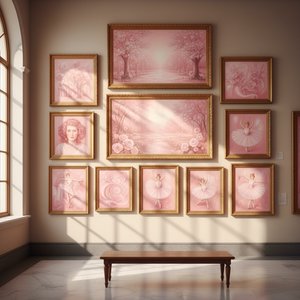
Blush & Brilliance: 10 Iconic Paintings Dominated by Light Pink Tones |
Explore 10 iconic paintings bathed in captivating light pink tones! From Monet's Impressionism to Renoir’s romance, discover the stories behind these blush-hued masterpieces. Find museum-quality art reproductions & decor inspiration at .

German Expressionism's 10 Defining Masterpieces | Art for Your Home
Explore 10 defining German Expressionism masterpieces – from Munch's 'The Scream' to Kandinsky’s abstracts. Discover the artists, stories & bold colors behind this powerful art movement. Find museum-quality reproductions at OriginalUniqueArt.com.

Crimson Threads of Narrative: Exploring Symbolism & Representation in Artworks Featuring the Red Dress
Explore the rich symbolism of the red dress in art history! From ancient power displays to iconic portraits like Cézanne’s 'Madame Cezanne', discover the cultural and artistic significance behind this captivating color. Expert analysis & insights.
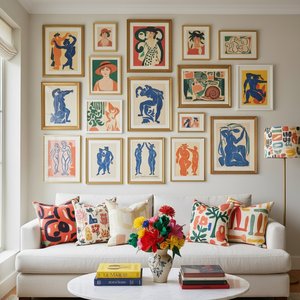
Henri Matisse: 25 Remek-djela koje morate vidjeti | OriginalUniqueArt.hr
Uronite u svijet Henri Matissea! Otkrijte 25 remek-djela Fauvizma i moderne umjetnosti. Priče iza slika, boje i tehnike slavnog umjetnika. Pronađite savršenu reprodukciju za vaš interijer na OriginalUniqueArt.com.
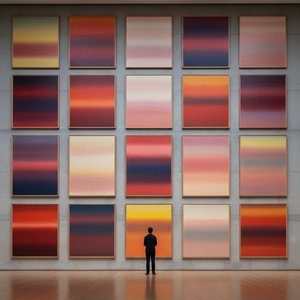
Mark Rothko: 25 Remek-djela Apstraktne Ekspresije za Vaš Dom | OriginalUniqueArt
Istražite 25 najpoznatijih djela Marka Rothka, majstora apstraktne ekspresije. Otkrijte priče iza njegovih platna, bogatih bojama i emocijama. Reprodukcije vrhunske kvalitete dostupne na OriginalUniqueArt.com – inspiracija za vaš dom!



