

 Pregledaj u stvarnoj veličini
 Pošalji
 Podijeli
 Detalji o umjetničkom djelu

 Preuzmi
 Slični predmeti
 Rentgenska snimka
 Automatska prezentacija
The New bridge


 Prikaži više
Ručno rađena uljana reprodukcija
Ručno oslikano uljanim bojama na platnu u dimenzijama i okviru po vašem izboru, izrađeno po narudžbi od strane naših umjetnika. ( Kupi print Kupi digitalnu sliku)




P118B $10

P118H $10

P118W $10

P438Z $10

P508JH $12

P508YH $12

P805H $10

P805Z $10

P919BZ $10

P919G $10

P919XJ $10

P959ZH $10

P968JZ $12

W106C $8

W218G $10

W218JH $8

W218Y $10

W307PJ $10

W316G $10

W316PJ $8

W316Y $10

W398PJ $8

W4111J $10

W500HY $15

W500JH $15

W692G $12

W849H $8

W940BG $15

W953PJ $8




Odaberite jednu od naših unaprijed definiranih veličina koje odgovaraju izvornim proporcijama umjetničkog djela.

Možete unijeti vlastite dimenzije kako bi odgovarale određenom okviru ili prostoru. Ako odabrana veličina ne odgovara proporcijama izvorne slike, izrezat ćemo umjetničko djelo ili proširiti sliku dodatnim ručno oslikanim elementima. Digitalni nacrt bit će vam poslan na odobrenje prije početka proizvodnje.
Imajte na umu da pregled na ekranu ne prikazuje stvarno izrezivanje ili proširivanje. Samo će nacrt točno prikazati konačni sastav.
Iako su dostupne prilagođene veličine, preporučujemo odabir dimenzije s preddefiniranog popisa kako bismo očuvali izvorne proporcije.
Nakon narudžbe, tim OriginalUniqueArt.com kontaktirat će klijenta putem e-pošte radi dobivanja uputa te dostaviti probni prikaz (mockup).
Isporuka širom svijeta () u roku od 3-4 tjedna umjesto standardnih 5 tjedana. (27 Kolovoz). Bez kompromisa u kvaliteti.

Besplatna ekspresna dostava širom svijeta

Visokokvalitetno laneno platno

Potpuno osiguranje dostave

Jamstvo povrata carine i uvoznih poreza

Garancija vjernog podudaranja boja

Politika povrata u roku od 60 dana (samo u slučaju nedostataka)

Jamstvo povrata 100% novca

Popust na više proizvoda
 Opcija stakla dostupna je samo za dimenzije manje od 110 cm

The New bridge
Tehnika reprodukcije
Veličina reprodukcije
-


Ukupna cijena
$ 300
Opis umjetničkog djela
Edward Hopper's "The New Bridge": A Study in Urban Isolation
Edward Hopper’s “The New Bridge,” painted in 1909, is more than just a depiction of a city street; it’s a poignant meditation on the human condition within the burgeoning landscape of early 20th-century America. The painting immediately draws the viewer into a scene brimming with quiet tension – a tableau of parked automobiles and solitary figures that speaks volumes about the increasing alienation inherent in modern urban life. Hopper, though born in 1882, captured a feeling that would become synonymous with his work: a sense of profound solitude amidst the relentless activity of the city.
- Subject Matter: The composition centers around a bustling street scene dominated by a bridge and a passing train. This juxtaposition – the forward momentum of industry represented by the train against the static presence of the urban environment – is central to Hopper’s exploration of time and movement.
- Technique: Hopper's masterful use of light and shadow, characteristic of his style, dramatically shapes the scene. The cloudy sky casts a diffused glow, highlighting the details of the vehicles and figures while simultaneously contributing to an atmosphere of muted melancholy. His brushwork is precise yet subtly expressive, conveying both realism and emotional depth.
Historical Context: Hopper and the Dawn of Modernism
"The New Bridge" was created during a pivotal moment in American art history – the transition from Impressionism to Modernism. Hopper, influenced by artists like William Merritt Chase and Robert Henri, embraced realism but infused it with a distinctly modern sensibility. The painting reflects the rapid industrialization and urbanization of America at the turn of the century, themes that would become increasingly prevalent in his work. The presence of automobiles, a relatively new phenomenon at the time, underscores this shift and adds to the sense of unease within the scene. The year 1909 marks a crucial period where Hopper was developing his signature style, experimenting with capturing fleeting moments and exploring psychological states through carefully constructed compositions.
Symbolism and Emotional Resonance
Beyond its realistic depiction, “The New Bridge” is laden with symbolic meaning. The solitary figures – the three people standing near the center – represent individuals adrift in a sea of urban activity, disconnected from one another and perhaps even from themselves. The bridge itself can be interpreted as a symbol of transition or connection, yet here it serves only to emphasize the distance between the figures and the overall sense of isolation. Hopper’s ability to evoke such powerful emotions through seemingly simple scenes is a testament to his artistic genius.
Collecting "The New Bridge": A Timeless Masterpiece
A hand-painted reproduction of “The New Bridge” offers an exceptional opportunity to bring this iconic work into your home or office. OriginalUniqueArt’s meticulous reproductions capture the essence of Hopper's style, faithfully recreating the painting's nuanced light, precise detail, and profound emotional impact. This artwork is not merely a decorative piece; it’s a window into the soul of modern America – a reminder of the enduring themes of isolation, contemplation, and the search for meaning in an increasingly complex world. Its timeless appeal makes it a valuable addition to any art collection or interior design scheme.
Biografija umjetnika
Edward Hopper: A Master of American Realism
Edward Hopper, a name inextricably linked to the quietude and subtle melancholy that permeated 20th-century American life, wasn’t simply a painter of scenes; he was a poet of light and shadow, a chronicler of modern isolation. Born in Nyack, New York, in 1882, to middle-class parents of Dutch ancestry, Hopper's early years provided a stable upbringing that nurtured his artistic inclinations. From childhood sketches meticulously dated and signed, it became evident that keen observation and an innate talent for drawing were central to his being. Though initially encouraged towards commercial illustration – a pragmatic suggestion from his parents – Hopper’s ambitions leaned toward fine art, leading him to the New York School of Art where he studied under William Merritt Chase and Robert Henri. These formative years instilled not only technical skill but also an appreciation for realism and a commitment to depicting the world as he saw it—unvarnished and honest. The writings of Ralph Waldo Emerson resonated deeply with Hopper, reinforcing his sense of individualism and acute observation – qualities that would become hallmarks of his artistic vision. Early travels to Paris exposed him to Impressionism, yet Hopper quickly diverged from its fleeting brushstrokes, forging a path uniquely his own.Early Life and Artistic Beginnings
Hopper’s fascination with art began in childhood, fueled by a family tradition of sketching and drawing. He displayed remarkable talent from an early age, diligently documenting the world around him with meticulous detail—a habit that would continue throughout his life. Despite initial reservations about pursuing artistic endeavors due to familial pressure for a more conventional career path, Hopper remained steadfast in his desire to express himself creatively. His formal training at the New York School of Art solidified his foundational skills and exposed him to influential teachers who championed realism as an artistic ideal. William Merritt Chase instilled in him a disciplined approach to technique, emphasizing anatomical accuracy and tonal gradation—skills that would prove invaluable in his subsequent work. Robert Henri encouraged Hopper’s experimentation with expressive brushwork while simultaneously upholding the importance of capturing psychological truthfulness. These formative influences shaped Hopper's artistic sensibilities and established him on a trajectory toward producing art that transcended mere visual representation.Realism as Artistic Expression
Hopper distinguished himself from many of his contemporaries by rejecting Impressionistic techniques in favor of a rigorously realistic style—a stylistic choice driven by a profound conviction that art should faithfully reflect the world as it is perceived. He eschewed idealized forms and decorative embellishments, prioritizing clarity and precision to convey emotional resonance. Hopper’s canvases often depict solitary figures inhabiting unremarkable spaces—houses, diners, offices—yet these scenes radiate an atmosphere of palpable tension and unspoken longing. His masterful manipulation of light and shadow became a defining characteristic of his oeuvre, transforming ordinary environments into evocative landscapes imbued with psychological depth. He achieved this effect through careful tonal planning and meticulous blending techniques—skills honed during his years studying under Chase and Henri—resulting in paintings that captivate viewers not only aesthetically but also emotionally.Iconic Visions: Nighthawks and Beyond
While Hopper’s career unfolded gradually, certain works catapulted him to widespread recognition. Nighthawks (1942), arguably his most famous painting, became an instant icon of American culture. The late-night diner scene, bathed in stark fluorescent light, perfectly encapsulates the alienation and anonymity of modern urban life. The figures within are lost in their own thoughts, disconnected from one another despite their proximity—a poignant commentary on the human condition. Hopper’s printmaking, often overlooked, ran parallel to his painting, sharing similar themes and stylistic qualities, demonstrating his mastery across mediums. He wasn't interested in grand historical narratives or allegorical symbolism; he focused on the mundane, elevating it through careful observation and emotional resonance. House by the Railroad (1925), an early masterpiece, exemplifies this approach—a seemingly simple composition radiating a profound sense of isolation and mystery. Hopper’s printmaking, often overlooked, ran parallel to his painting, sharing similar themes and stylistic qualities, demonstrating his mastery across mediums. He wasn't interested in grand historical narratives or allegorical symbolism; he focused on the mundane, elevating it through careful observation and emotional resonance. Other notable works like *Gas*, *Automat*, and *Office in a Small City* each offer unique insights into the complexities of 20th-century American society. These paintings weren't merely depictions of places; they were explorations of mood, psychology, and the subtle dramas unfolding within ordinary settings.Legacy and Influence
Edward Hopper’s enduring legacy rests on his profound contribution to American art history—his unwavering commitment to realism as an artistic ideal and his ability to capture the psychological nuances of everyday life with unparalleled sensitivity. His paintings continue to resonate with audiences today because they speak to universal themes of loneliness, isolation, and the search for meaning in a rapidly changing world. Hopper’s influence extends far beyond the realm of painting, inspiring filmmakers (like Alfred Hitchcock) and writers who explore similar themes of alienation and psychological tension. He established himself as one of the most important artists of the 20th century—a visual poet whose work transcends time and continues to captivate viewers with its haunting beauty and intellectual depth. Hopper’s distinctive style has influenced countless painters, cementing his place as a pivotal figure in American art history. His ability to capture the essence of modern American life with honesty, sensitivity, and a stylistic vision that distinguishes him from many of his contemporaries ensures his enduring relevance—a testament to the power of art to illuminate the human condition.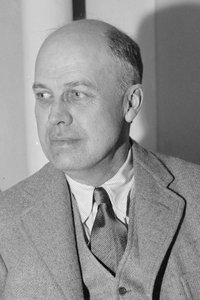
Edward Hopper
1931 - 1967 , Sjedinjene Američke Države
Osnovne informacije
- Artistic Movement Or Style: Realizam
- Artists Who Influenced This Artist:
- William Merritt Chase
- Robert Henri
- Date Of Birth: 22. srpnja 1882.
- Date Of Death: 15. svibnja 1967.
- Full Name: Edward Hopper
- Nationality: Američan
- Notable Artworks:
- Nighthawks
- Kuća pored pruga
- Benzinska stanica
- Place Of Birth: Nyack, SAD
Srodni članci
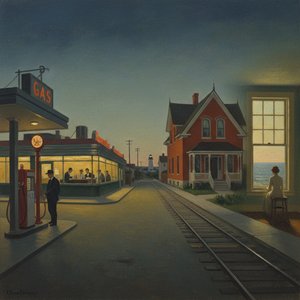
Edward Hopper: 25 Remek-djela Usamljenosti i Američkog Realizma | OriginalUniqueArt.com
Uronite u svijet Edwarda Hoppera! Otkrijte 25 remek-djela američkog realizma, priče iza ikoničnih slika i tajne svjetla i sjene. Reprodukcije vrhunske kvalitete za vaš dom na OriginalUniqueArt.com

American Realism's Defining Works: 10 Masterpieces for Your Home
Explore 10 defining American Realism masterpieces – Hopper, Homer & more. Discover the stories behind these iconic paintings and bring timeless art to your home with OriginalUniqueArt's museum-quality reproductions. Explore the full collection online.

The Unvarnished Truth: A Cultural Journey Through the Soul of American Realism
Explore the profound beauty of American Realism. From the Ashcan School's urban grit to intimate portraits, discover how artists captured the authentic soul of a nation through unvarnished truth and masterful observation.
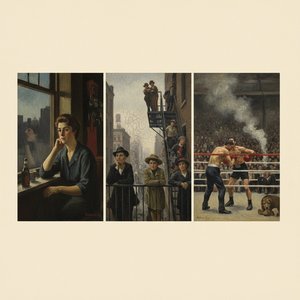
American Realism: Social Commentary & Artistic Representation in Early 20th-Century Painting
Explore the powerful social commentary & artistic representation of American Realism. Discover key artists like Bellows & Sloan, and understand the movement's lasting impact on 20th-century art history.
10 Remek-djela koja su definirala suvremeni realizam: Uronite u umjetnost i dekor!
Otkrijte 10 remek-djela suvremenog realizma! Uronite u svijet umjetnosti, od poznatih slikara do uljnih slika i akrilnih djela. Inspirirajte se za dekoraciju doma s OriginalUniqueArt.com – vrhunskim reprodukcijama i kuriranih ideja! Explore the full collection online.



