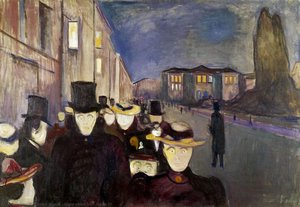
Ulje na platnu
 Sve o Red vine







































 Za umjetnička djela ili reprodukcije veće od 105 cm (približno 41 inč) na bilo kojoj strani, okvir će biti isporučen u obliku rastavljenog seta za montažu. Ovaj način osigurava sigurnu dostavu i sprječava oštećenja tijekom transporta.


Red Vine: A Haunting Expression of Isolation
“Red Vine” (1898) by Edvard Munch is a seminal work within the Expressionist movement, offering a profound exploration of human emotion and psychological distress. This painting isn't merely a depiction of a landscape; it’s a visceral representation of inner turmoil projected onto the external world.
The Painting Style: Expressionism
Expressionism, as an art movement, arose in the late 19th and early 20th centuries as a reaction against Impressionism's focus on objective reality. Instead, Expressionist artists sought to convey subjective emotions and experiences through distortion, exaggeration, and bold use of color. Munch was a key figure in this movement, and "Red Vine" exemplifies its core tenets. The painting utilizes rough brushstrokes, intense reds, and an unsettling composition to evoke a sense of anxiety and unease.
Significance in the Context of Expressionism
“Red Vine” stands as a powerful example of Expressionist principles at work:
- Intense Color Palette: The dominant use of red, far from representing natural foliage, creates an atmosphere of heightened emotion and potential danger. It symbolizes passion, anxiety, and perhaps even impending doom.
- Distorted Forms: The figure within the painting is not realistically rendered; instead, it appears isolated and vulnerable, contributing to the overall feeling of alienation. The house itself seems almost consumed by the encroaching vines, further emphasizing a sense of entrapment.
- Emotional Narrative: The scene doesn't tell a straightforward story but rather evokes a complex emotional state. It suggests themes of isolation, fear, and the struggle against overwhelming forces.
Symbolism and Interpretation
While Munch rarely provided definitive explanations for his works, "Red Vine" is rich in potential symbolism:
- The Red Vines: These are not simply decorative elements; they represent a suffocating force, potentially symbolizing jealousy, obsession, or the destructive power of emotions.
- The Figure: The lone figure’s posture and expression convey a sense of dread and vulnerability. It could be interpreted as representing Munch himself, grappling with his inner demons, or a universal symbol of human fragility in the face of adversity.
- The House: The dilapidated house suggests decay, instability, and perhaps even the crumbling foundations of the psyche. Its integration within the landscape emphasizes its vulnerability to external forces.
Emotional Impact and Legacy
“Red Vine” leaves a lasting impression on viewers due to its raw emotional power. The painting’s unsettling atmosphere and ambiguous narrative invite introspection, prompting audiences to confront their own anxieties and fears. Munch's masterful use of color and form continues to inspire artists today, solidifying his place as one of the most influential figures in modern art. It serves as a poignant reminder of the expressive potential of art to convey profound human experiences.
Pitanja i odgovori
Je li Red vine ručno oslikano ili je riječ o printu?
Ručno oslikano: profesionalni slikar prepisuje Red vine uljanim bojama na platno od lana.
Koje dimenzije odabrati za Red vine?
Veličine se kreću od 32.0 x 31.2 cm (€178) do 242.5 x 236.8 cm (€1843); u tablici na ovoj stranici navedeni su glavni koraci i njihove cijene.
Koliko traje dostava?
Isporuka traje od 4 do 5 tjedana uz besplatnu ekspresnu dostavu širom svijeta; na ovoj stranici dostupna je i opcija hitne proizvodnje. Proizvod možete vratiti u roku od 100 dana uz puni povrat novca, bez ikakvih uvjeta.
Koji je medij koristio/la Edvard Munch za djelo Red vine?
Acrylic On Canvas
 Pregledaj u realnoj veličini

 Pošalji
 Podijeli
 Detalji o umjetničkom djelu
 Informativni list


 Preuzmi umjetničko djelo
 Slični predmeti
 Rentgenska snimka
 Slide show
 Pitanja i odgovori

 Statistika