

 Pregledaj u stvarnoj veličini
 Podijeli
 Podijeli
 Detalji
 Vodič
Vodič

 Preuzmi datoteku
 Slični predmeti
 Rentgenska snimka
 Slide show
 Statistika
Roman Ruins
 Oil
Oil- WallArt
- Dutch Golden Age
 1620
1620- Early Modern
 23.0 x 31.0 cm
 Pročitajte više
Ručno rađena uljana reprodukcija
Ručno oslikano uljanim bojama na platnu u dimenzijama i okviru po vašem izboru, izrađeno po narudžbi od strane naših umjetnika. ( Prebacite na prodaju printova Prebacite na digitalnu prodaju slika)




P118B €10

P118H €10

P118W €10

P438Z €10

P508JH €12

P508YH €12

P805H €10

P805Z €10

P919BZ €10

P919G €10

P919XJ €10

P959ZH €10

P968JZ €12

W106C €8

W218G €10

W218JH €8

W218Y €10

W307PJ €10

W316G €10

W316PJ €8

W316Y €10

W398PJ €8

W4111J €10

W500HY €15

W500JH €15

W692G €12

W849H €8

W940BG €15

W953PJ €8




Odaberite jednu od naših unaprijed definiranih veličina koje odgovaraju izvornim proporcijama umjetničkog djela.

Unesite širinu i visinu koja vam je potrebna, kako bi odgovarali vašem okviru ili zidu. Budući da je ovo ručno oslikano djelo, umjetnik može malo proširiti rubove slike ili ih skratiti kako bi postigao željeni oblik — izbor je vaš. Prije početka slikanja poslat ćemo vam digitalni prikaz (mockup) radi potvrde. Slika prikazana na ovoj stranici ne predstavlja stvarni rezultat — samo digitalni prikaz to čini.
Nakon narudžbe, tim OriginalUniqueArt.com kontaktirat će klijenta putem e-pošte radi dobivanja uputa te dostaviti probni prikaz (mockup)
Isporuka širom svijeta () u roku od 3-4 tjedna umjesto standardnih 5 tjedana. (24 Listopad). Bez kompromisa u kvaliteti.

Besplatna ekspresna dostava širom svijeta

Visokokvalitetno laneno platno

Potpuno osiguranje transporta

Jamstvo povrata carine i uvoznih poreza

Jamstvo vjernosti boja

Politika povrata u roku od 100 dana (samo u slučaju nedostataka)

Jamstvo povrata 100% novca

Popust na više proizvoda
 Opcija stakla dostupna je samo za dimenzije manje od 110 cm

Roman Ruins
Tehnika izrade
Veličina reprodukcije
-


Ukupna cijena
€ 263
A Window into Antiquity: The Timeless Allure of Roman Ruins
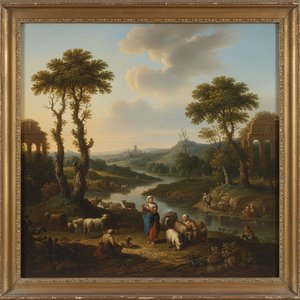
In the delicate, circular embrace of this exquisite tondo, Cornelis van Poelenburgh invites us to step through a portal into a bygone era. Painted around 1620, Roman Ruins is far more than a mere depiction of architectural decay; it is a profound meditation on the passage of time and the enduring relationship between humanity and the remnants of greatness. The composition, framed by its characteristic round format, focuses our gaze upon a landscape where the grandeur of the Roman Empire has softened into a pastoral sanctuary. Within this intimate space, the heavy stone arches and crumbling pillars serve as silent witnesses to history, now providing a backdrop for the quiet, rhythmic pulse of rural life.
The scene unfolds with a masterful use of light and shadow, reminiscent of the Dutch Golden Age's obsession with atmospheric truth. As we gaze upon the foreground, we encounter a world in gentle motion: a shepherd tending his flock, a laborer with his oxen, and figures caught in quiet contemplation. These small-scale inhabitants of the landscape bring a sense of warmth and vitality to the otherwise somber ruins. The artist employs a subtle, earthy palette—rich ochres, muted greens, and soft umbers—to weave a tapestry of textures that feels both tactile and ethereal. The hazy, overcast sky suggests the fleeting light of dawn or dusk, casting a melancholic yet peaceful glow over the entire vista, evoking a sense of nostalgia for a lost civilization.
The Mastery of the Italianate Style
Cornelis van Poelenburgh was a pivotal figure in the first generation of Dutch landscape painters who found profound inspiration in Italy. His travels to Rome allowed him to infuse his Northern training with the classical elegance of the Mediterranean. In Roman Ruins, we see this synthesis perfected. The technique is characterized by an incredible attention to detail; every crack in the ancient masonry and every distant bird in flight is rendered with a precision that draws the viewer deeper into the frame. This meticulousness does not feel clinical, however, but rather serves to enhance the three-dimensional depth of the scene, making the archway feel like a real threshold through which one might walk.
For the discerning collector or interior designer, this piece offers a unique emotional resonance. It possesses a "Caravaggesque" drama tempered by a serene, pastoral tranquility. The symbolism of the ruins—representing the inevitable cycle of rise and fall—is balanced by the resilience of the natural world and the simplicity of the human spirit. Such a work is an ideal centerpiece for a sophisticated interior, providing a conversational focal point that inspires reflection. Whether placed in a sunlit study or a grand gallery, this reproduction captures a moment of eternal stillness, offering any space it inhabits a touch of historical majesty and poetic grace.
Pitanja i odgovori
Tko je stvorio "Roman Ruins" i u kojoj godini?
"Roman Ruins" je djelo autora Cornelis Van Poelenburch iz 1620. godine.
Što prikazuje "Roman Ruins" autora Cornelis Van Poelenburch?
Teme prisutne u djelu "Roman Ruins" autora Cornelis Van Poelenburch uključuju figures, sheep, cow, archway, ruins, trees, birds, earth tones. Zajedno one sažimaju temu umjetničkog djela.
Koliko su izražene boje djela "Roman Ruins"?
Boje djela "Roman Ruins" autora Cornelis Van Poelenburch pokazuju Muted zasićenost uz Balanced intenzitet.
Biografija umjetnika
Rano djetinjstvo i edukacija
Cornelis van Poelenburgh, istaknuti holandski slikar pejzaža, rođen je u Utrechtu, u Nizozemskoj, 1594. godine. Svoje prve umjetničke korake podučio je pod okriljem Abrahama Bloemaerta, tadašnjeg renomiranog umjetnika, čija je stručnost postavila čvrste temelje za budući uspjeh Van Poelenburgha.Umjetnička karijera i utjecaji
Putovanja u Rim početkom 17. stoljeća duboko su prožela njegov rad, učinivši ga vodećim predstavnikom prve generacije holandskih slikara pejzaža aktivnih u Italiji. Njegova djela malog formata, koja često prikazuju italijanske pejzaže s sitnim likovima koji izvode biblijske ili mitološke scene, predstavljaju vrhunac njegovog jedinstvenog stila. Istaknuta djela:- Satiri koji špijuniraju nimfe (nakon 1627.), karakterističan primjer Van Poelenburghovog rada, koji prikazuje arhaične pejzaže s likovima u kupalištu. (pogledajte na OriginalUniqueArt)
- Vijeće bogova (oko 1630.), slika koja prikazuje idealizirani brežuljkasti pejzaž i boginje inspirirane Rimom, a koja se danas nalazi u muzeju Mauritshuis (Haag, Nizozemska). (pogledajte na OriginalUniqueArt)
Nasljeđe i poznata završetka
Van Poelenburghov rad uživao je veliko priznanje među njegovim suvremenicima, uključujući Velikog vojvodu toskanskog i holandskog stadholtera. Kasnije se vratio u Utrecht, gdje je preminuo 1667. godine, tek nekoliko godina nakon svog starog učitelja Abrahama Bloemaerta. Ključne točke:- rođen u Utrechtu, Nizozemska, 1594.
- školovan kod Abrahama Bloemaerta
- pod utjecajem boravka u Rimu
- poznat po malim italijanskim pejzažima s likovima
- preminuo u Utrechtu 1667.

Cornelis Van Poelenburch
1594 - 1667 , Nizozemska
Brzi pregled
- Artistic Movement Or Style: Dutch Landscape, Romanate
- Artists Or Movements Influenced By This Artist: ['Claude Lorraine']
- Artists Who Influenced This Artist: ['Abraham Bloemaert']
- Date Of Birth: 1594, Utrecht, Nizozemska
- Date Of Death: 1667, Utrecht, Nizozemska
- Full Name: Cornelis van Poelenburgh
- Nationality: Nizozemski
- Notable Artworks:
- Satyri koji špijuniraju nimfe
- Vijeće bogova
- Place Of Birth: Utrecht, Nizozemska
Povezani članci

Golden Light & Dutch Skies: The Timeless Magic of Dutch Golden Age Landscapes
Discover the breathtaking beauty of Dutch Golden Age landscapes. Explore the mastery of light, chiaroscuro, and 17th-century realism through an expert art history lens, celebrating the enduring legacy of the Dutch Masters for discerning collectors and art lovers.

Golden Age Reflections: Dutch Baroque Painting & Cultural Innovation
Explore the Dutch Golden Age of painting! Discover key artists like Vermeer & ter Borch, their innovative techniques, and the rich cultural context behind these Baroque masterpieces. Learn about collecting & appreciating this iconic art period.

Mastering Light & Shadow: A Journey Through the Dutch Golden Age's Luminous Legacy
Embark on a cultural journey through the Dutch Golden Age. Explore the masterful interplay of light and shadow in 17th-century masterpieces, from Rembrandt to Vermeer, and discover how this era of profound realism continues to inspire fine art collectors today.

Zlatno Dobo Nizozemske: 10 Remekdjela Koja Su Definirala Umjetnost i Dekor
Otkrijte remekdjela nizozemskog Zlatnog doba! Uronite u svijet Rembrandta, Vermeera i drugih majstora. 10 slika koje su definirale holandsku umjetnost & barokni stil. Inspirirajte se za dekoraciju doma s OriginalUniqueArt.com – reprodukcije vrhunske kvalitete!
Nicolaes Berchem: Dutch Golden Age Pastoralism & the Evolution of Landscape Painting
Explore the captivating world of Nicolaes Berchem, a leading Dutch Golden Age painter. Discover his idyllic landscapes, masterful technique & lasting influence on art history. Learn more at OriginalUniqueArt.