- Početna stranica

- Otisak na platnu
- claude vignon
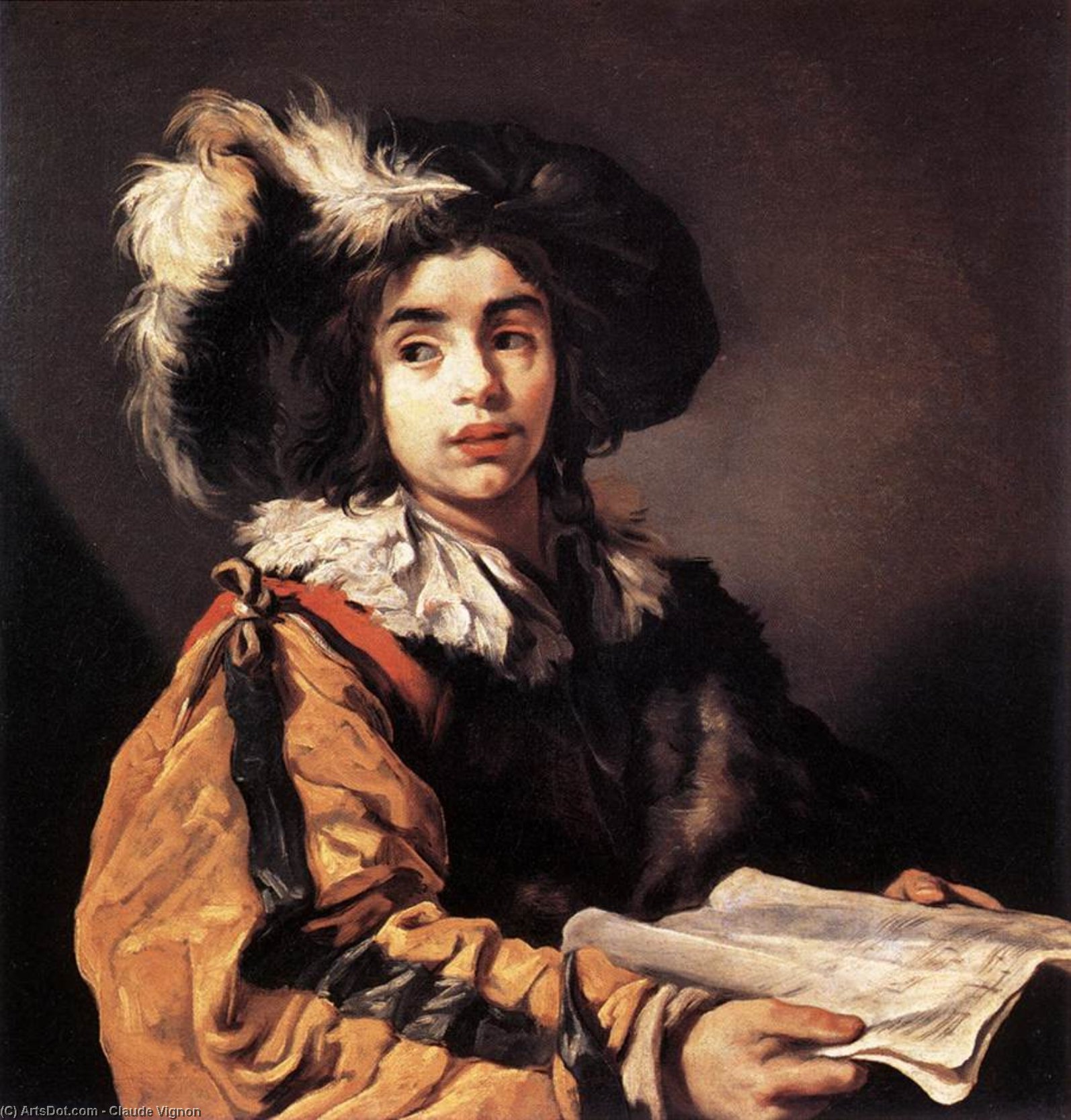
- The Young Singer
 Preview
 Naručite reprodukciju Kupi digitalnu sliku
 Pošalji
 Podijeli
 Detalji o umjetničkom djelu
 Dodaj u omiljene

 Preuzmi
 Slični predmeti
 Rentgenska snimka
 Automatska prezentacija
The Young Singer
 Acrylic On Canvas
- WallArt
- Caravaggism
 1622
1622 95.0 x 90.0 cm
 Louvre
 Prikaži više
Giclée / Umjetnički otisak
Giclée tisak muzejske kvalitete ili otisak na platnu uz brzu proizvodnju i fleksibilne opcije završne obrade.




P118B $10

P118H $10

P118W $10

P438Z $10

P508JH $12

P508YH $12

P805H $10

P805Z $10

P919BZ $10

P919G $10

P919XJ $10

P959ZH $10

P968JZ $12

W106C $8

W218G $10

W218JH $8

W218Y $10

W307PJ $10

W316G $10

W316PJ $8

W316Y $10

W398PJ $8

W4111J $10

W500HY $15

W500JH $15

W692G $12

W849H $8

W940BG $15

W953PJ $8




Odaberite jednu od naših unaprijed definiranih veličina koje odgovaraju izvornim proporcijama umjetničkog djela.

Možete unijeti vlastite dimenzije kako biste umjetničko djelo prilagodili specifičnom okviru ili prostoru. Ako odabrana veličina ne odgovara proporcijama izvornog rada, izrezat ćemo dio slike ili je proširiti pomoću ogledalnog efekta ili jednobojne rubne površine. Digitalni prikaz (mockup) bit će vam poslan na odobrenje prije početka proizvodnje.
Imajte na umu da pregled na zaslonu ne odražava stvarno izrezivanje ili proširivanje. Samo će mockup točno prikazati konačnu kompoziciju.
Iako su dostupne prilagođene veličine, preporučujemo odabir dimenzije iz unaprijed definirane liste kako biste očuvali izvorne proporcije.
Dostava širom svijeta () u roku od 2 tjedna umjesto standardnih 4/5 tjedana. (23 Srpanj)

Besplatna ekspresna dostava širom svijeta

Visokokvalitetno laneno platno

Potpuno osiguranje dostave

Jamstvo povrata carine i uvoznih poreza

Garancija vjernog podudaranja boja

Politika povrata u roku od 60 dana (samo u slučaju nedostataka)

Jamstvo povrata 100% novca

Popust na više proizvoda
 Opcija stakla dostupna je samo za dimenzije manje od 110 cm

The Young Singer
Giclée / Umjetnički otisak
Veličina reprodukcije
-


Ukupna cijena
-
Opis djela
A Glimpse into 17th-Century France: The Enigmatic “The Young Singer”
Claude Vignon’s “The Young Singer,” painted in 1622, is more than a simple portrait; it's a meticulously crafted window into the burgeoning artistic landscape of early modern France. Born into wealth in Tours, Vignon’s journey began within the established Mannerist circles of Paris under Jacob Bunel, but his true transformation occurred during his sojourn in Italy – a period profoundly shaped by the dramatic innovations of Caravaggio and his followers. This painting represents a pivotal moment in Vignon's evolution, showcasing a masterful synthesis of influences that would define his uniquely evocative style.
The subject himself—a young man radiating an almost palpable sense of anticipation—immediately draws the viewer’s attention. Dressed in what appears to be a theatrical costume, perhaps intended for performance or even a nascent career as a musician, he holds a book open in his hand, suggesting both intellectual curiosity and a potential future beyond mere entertainment. His direct gaze, meeting the eye of the observer, establishes an intimate connection—a silent invitation into his world. The inclusion of two secondary figures – a man standing behind him on the left and another further back on the right – subtly hints at a social context, perhaps indicating patronage or a shared circle of acquaintances. The backdrop, dominated by a clock mounted on the wall, adds an element of temporal awareness, anchoring the scene within a specific moment in time and subtly reinforcing the themes of youth, aspiration, and the passage of time.
Caravaggism’s Shadow: Light, Drama, and Texture
Vignon's technique is immediately striking. He employs a vibrant, almost theatrical palette—a hallmark of his mature work—that explodes with rich reds, deep blues, and luminous golds. This isn’t the muted elegance of earlier Mannerism; instead, it’s a bold declaration of color, reminiscent of Venetian painters like Titian and Veronese, yet filtered through a distinctly French sensibility. The artist's brushwork is remarkably fluid and dynamic, creating an almost electric energy that animates the scene. Notice particularly how Vignon renders the textures – the velvet of the costume, the sheen of the book’s leather binding, the delicate feathers adorning the young man’s hat. These details are rendered with astonishing precision, demonstrating a mastery of chiaroscuro—the dramatic interplay of light and shadow—a technique heavily influenced by Caravaggio.
The lighting itself is crucial to the painting's impact. It’s not diffuse or evenly distributed; instead, it originates from an unseen source, bathing the young man in a warm glow while casting deep shadows that heighten the drama and create a sense of mystery. This masterful use of light isn’t merely decorative; it serves to draw attention to key elements—the face, the hands holding the book—and imbue the scene with emotional weight.
Symbolism and the Portrait of Ambition
Beyond its technical brilliance, “The Young Singer” is rich in symbolic meaning. The young man’s posture – alert, engaged, and looking directly at the viewer – suggests a desire for recognition and perhaps even a hint of ambition. The book he holds could represent knowledge, learning, or a potential career path beyond performance. The costume itself might symbolize aspiration—a yearning to transcend one's circumstances and achieve social standing. Considering Vignon’s own trajectory, moving from the established Mannerist traditions to embrace Caravaggism, the painting can be interpreted as a reflection of his own artistic evolution – a striving for something new and bold.
Furthermore, the inclusion of the clock serves as a potent reminder of time's relentless march. It subtly underscores the fleeting nature of youth and the urgency to seize opportunities. “The Young Singer” is not simply a portrait; it’s a carefully constructed meditation on ambition, identity, and the passage of time—a testament to Vignon’s artistic genius and his ability to capture the complexities of human experience.
Biografija umjetnika
The Enigmatic Brilliance of Claude Vignon
In the grand, sweeping tapestry of the seventeenth century, few threads are as vibrant or as difficult to untangle as those woven by Claude Vignon. A master of contradictions, Vignon was a painter whose brush seemed to dance between the structured elegance of Mannerism and the raw, dramatic shadows of the Caravaggisti. Born in Tours, France, in 1593 into a family of significant wealth, his early life provided him with the stability to pursue an artistic journey that would eventually take him from the studios of Paris to the sun-drenched streets of Rome and even through the perilous landscapes of Spain. His career was not merely a progression of skill, but a restless exploration of style, making him one of the most prolific and enigmatic figures of the French Baroque era.
Vignon’s artistic soul was forged in the crucible of international influence. While his initial training under the Mannerist Jacob Bunel in Paris provided a foundation of formal grace, it was his transformative period in Italy that truly ignited his genius. Immersed in the Roman art scene, he breathed the same air as the followers of Caravaggio, absorbing the dramatic chiaroscuro and emotional intensity of artists like Guercino and Guido Reni. This exposure allowed him to develop a technique that was nothing short of electric. His mature works are characterized by an almost feverish brushwork, where light does not merely illuminate a subject but seems to vibrate against it. He possessed a singular ability to render the tactile splendor of the material world, capturing the shimmering luster of gold, the deep richness of precious stones, and the intricate, heavy folds of luxurious textiles with a precision that mesmerized his contemporaries.
A Life of Adventure and Artistic Triumph
The life of Claude Vignon was as dramatic as the canvases he produced. His travels were marked by both cultural enrichment and physical peril; most notably, during a journey through Spain, he survived a harrowing encounter in Barcelona where he was attacked by bandits, leaving him with a permanent scar upon his face. Yet, such hardships did not dampen his professional ascent. Upon returning to France, Vignon established himself as one of the most respected and successful artists in Paris. His talent earned him the patronage of the highest echelons of French society, including the formidable King Louis XIII and the powerful Cardinal Richelieu. This level of recognition placed him at the very heart of the nation's cultural and political life.
Beyond his individual mastery, Vignon’s significance lies in his role as a bridge between disparate artistic movements. His work serves as a fascinating intersection where several great traditions met:
- The Mannerist Legacy: Retaining the sophisticated elegance and complex compositions of his early training.
- The Caravaggesque Revolution: Embracing the dramatic lighting and psychological depth brought to Europe by the Italian masters. • International Synthesis: Integrating subtle influences from Venetian color, Dutch realism, and German precision into a uniquely French vernacular.
As he navigated his career, Vignon also became a vital figure in the art commerce of his time, working closely with print publishers and dealers to ensure his imagery reached a wider audience. Though his style remained difficult for historians to categorize—often shifting between the theatrical and the delicate—his impact was undeniable. He stood as a precursor to the great shifts in European art, embodying the restless, searching spirit of an age that was moving away from the rigidities of the past toward the profound emotional landscapes of the future.

claude vignon
1593 - 1670 , France
Osnovne informacije
- Artistic Movement Or Style: Baroque, Mannerism, Caravaggism
- Artists Who Influenced This Artist:
- Caravaggio
- Guercino
- Guido Reni
- Annibale Carracci
- Date Of Birth: 1593
- Date Of Death: 1670
- Full Name: Claude Vignon
- Nationality: French
- Place Of Birth: Tours, France
Srodni članci

Claude Monet: 25 Remek-djela Impresionizma za Uljepšanje Vašeg Doma | OriginalUniqueArt
Uronite u svijet Claude Moneta s 25 najpoznatijih remek-djela impresionizma. Otkrijte priče iza slika, tehnike i inspiraciju ovog francuskog umjetnika. Kupite visokokvalitetne reprodukcije na OriginalUniqueArt.com i uljepšajte svoj dom!

John Singer Sargent: 25 Remek-djela Portreta i Impresionizma | OriginalUniqueArt
Uronite u svijet John Singera Sargenta! Otkrijte 25 remek-djela portreta i impresionizma, priče iza slika te tehničku genijalnost američkog slikara. Reprodukcije vrhunske kvalitete za luksuzni dekor interijera na OriginalUniqueArt.com.

Barokna Genijalnost: Top 10 Remekdjela Koja Su Definirala Umjetnički Pokret
Otkrijte 10 remekdjela barokne umjetnosti koja su obilježila epohu! Karavaggio, Bernini, Rubens i drugi majstori. Istražite priče iza slika, tehnike i vječne ljepote. Inspirirajte se za svoj interijer s OriginalUniqueArt.com - vrhunskim reprodukcijama i kuriranim idejama za dekoraciju doma.
Gray Masterpieces: 10 Iconic Paintings & Timeless Home Decor Ideas
Explore 10 iconic gray paintings by masters like Rembrandt, Hopper & Whistler. Discover the stories behind these atmospheric artworks and find museum-quality art reproductions for your home decor at . Explore the full collection online.
25 Remek-djela Muzeja lijepih umjetnosti u Bostonu: Inspiracija za vaš dom | OriginalUniqueArt
Uronite u svijet 25 remek-djela Muzeja lijepih umjetnosti u Bostonu! Otkrijte priče Claude Moneta, Degasa i drugih majstora. Inspirirajte se za dekoraciju doma s OriginalUniqueArt.com - luksuzne reprodukcije slika i umjetnine po narudžbi.

