Prebacite na printove
 Prikaži više







































 Za umjetnička djela ili reprodukcije veće od 105 cm (približno 41 inč) na bilo kojoj strani, okvir će biti isporučen u obliku rastavljenog seta za montažu. Ovaj način osigurava sigurnu dostavu i sprječava oštećenja tijekom transporta.


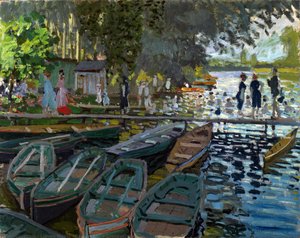
In the Norvegienne: A Moment Frozen in Impressionist Light
Claude Monet’s “In the Norvegienne,” painted in 1887, isn't merely a depiction of a boat on a river; it’s an embodiment of Impressionism’s core philosophy – capturing the ephemeral beauty of nature as perceived by the artist at that precise instant. Held proudly within the Musée d’Orsay’s halls in Paris, this canvas invites viewers into Monet’s world, where light dances across water and stillness holds a profound resonance.
- Composition & Detail: The painting centers around three women seated in a bateau mouche—a traditional Venetian gondola— gliding along the Seine. Monet meticulously rendered each figure, emphasizing their postures and expressions to convey a sense of quiet contemplation. Scattered throughout the scene are birds – doves and swans – adding movement and vibrancy against the muted tones of the riverbank.
- Monet’s Impressionistic Technique: Monet employed his signature technique—plein air painting—allowing him to directly translate the effects of sunlight onto canvas. Thick, visible brushstrokes create textured surfaces that shimmer with reflected light, prioritizing color over precise representation. The palette leans heavily into blues and greens, mirroring the tranquil hues of the river environment.
- Historical Context: Completed during Monet’s prolific period—a time marked by significant artistic breakthroughs and personal milestones— “In the Norvegienne” reflects the broader cultural landscape of Belle Époque Paris. The Impressionist movement was challenging academic conventions, advocating for a new aesthetic rooted in observation and emotion.
- Symbolism & Emotional Impact: Beyond its visual beauty, the painting speaks to themes of companionship and serenity. The women’s relaxed postures suggest an escape from urban life, immersing themselves in the restorative power of nature. Monet's masterful use of color evokes feelings of peace and tranquility—a testament to his ability to distill complex emotions into simple yet powerful imagery.
- Comparisons & Legacy: Considering its stylistic similarities with “The Artist’s Garden at Giverny” (1900) and other Impressionist works like “Peony Garden” (1887), "In the Norvegienne" exemplifies Monet's unwavering dedication to exploring the transformative effects of light on landscape subjects. Its enduring appeal is evident in its continued presence within prestigious exhibitions and reproductions available at OriginalUniqueArt.com – a timeless masterpiece that continues to inspire awe and admiration.
Pitanja i odgovori
Gdje mogu pronaći statistiku o djelu "U 'Norvegienne'" autora Claude Monet?
Stranica Statistika pregleda djela "U 'Norvegienne'" autora Claude Monet prikazuje statistiku javnih posjeta: mjesečni broj posjeta ovom umjetničkom djelu, usporedbu s najgledanijim djelima tog umjetnika te informacije o porijeklu posjetitelja.
Kako bi se opisala atmosfera djela "U 'Norvegienne'" autora Claude Monet?
"U 'Norvegienne'" autora Claude Monet opisuje se kao djelo Serenitet raspoloženja. Ova klasifikacija može pomoći u usklađivanju umjetnine s prostorom.
Na koji način se preporučuje tisak djela "U 'Norvegienne'" – koja je preporučena veličina i orijentacija?
Veličina Veliki format, orijentacija Vodoravni format: to su preporučene postavke za tisak djela "U 'Norvegienne'" autora Claude Monet.
 Pregledaj u realnoj veličini
 Pošalji
 Podijeli
 Detalji o umjetničkom djelu
 Vodič
Vodič

 Preuzmi umjetničko djelo
 Slični predmeti
 Rentgenska snimka
 Slide show
 Pitanja i odgovori
 Statistika