

 Pregledaj u stvarnoj veličini
 Podijeli
 Podijeli
 Detalji
 Vodič
Vodič

 Preuzmi datoteku
 Slični predmeti
 Rentgenska snimka
 Slide show
 Statistika
Grape Vines and Fruit, with Three Wagtails


 Pročitajte više
Ručno rađena uljana reprodukcija
Ručno oslikano uljanim bojama na platnu u dimenzijama i okviru po vašem izboru, izrađeno po narudžbi od strane naših umjetnika. ( Prebacite na prodaju printova Prebacite na digitalnu prodaju slika)




































Odaberite jednu od naših unaprijed definiranih veličina koje odgovaraju izvornim proporcijama umjetničkog djela.

Možete unijeti vlastite dimenzije kako bi odgovarale određenom okviru ili prostoru. Ako odabrana veličina ne odgovara proporcijama izvorne slike, izrezat ćemo umjetničko djelo ili proširiti sliku dodatnim ručno oslikanim elementima. Digitalni nacrt bit će vam poslan na odobrenje prije početka proizvodnje.
Imajte na umu da pregled na ekranu ne prikazuje stvarno izrezivanje ili proširivanje. Samo će nacrt točno prikazati konačni sastav.
Iako su dostupne prilagođene veličine, preporučujemo odabir dimenzije s preddefiniranog popisa kako bismo očuvali izvorne proporcije.
Nakon narudžbe, tim OriginalUniqueArt.com kontaktirat će klijenta putem e-pošte radi dobivanja uputa te dostaviti probni prikaz (mockup)
Isporuka širom svijeta () u roku od 3-4 tjedna umjesto standardnih 5 tjedana. (21 Rujan). Bez kompromisa u kvaliteti.

Besplatna ekspresna dostava širom svijeta

Visokokvalitetno laneno platno

Potpuno osiguranje transporta

Jamstvo povrata carine i uvoznih poreza

Jamstvo vjernosti boja

Politika povrata u roku od 100 dana (samo u slučaju nedostataka)

Jamstvo povrata 100% novca

Popust na više proizvoda
 Opcija stakla dostupna je samo za dimenzije manje od 110 cm

Grape Vines and Fruit, with Three Wagtails
Tehnika izrade
Veličina reprodukcije
-


Ukupna cijena
$ 300
Biografija umjetnika
The Shadow and the Light: The Life of Bartolomeo Cavarozzi
In the dramatic, sun-drenched corridors of the Italian Baroque, few names evoke the visceral tension of light and shadow quite like Bartolomeo Cavarozzi. Born in Viterbo in 1587, Cavarozzi emerged as a vital pulse within the Caravaggisti movement, a group of painters who sought to capture the raw, unvarnished truth of human existence through the revolutionary lens of Caravaggio. While history often casts him in the shadow of his mentors, Cavarozzi possessed a singular, luminous voice that allowed him to transcend mere imitation, carving out a legacy defined by both spiritual depth and an almost scientific precision in his observation of the natural world.
His artistic journey was deeply intertwined with the influence of Giovanni Battista Crescenzi, a Roman nobleman and mentor who provided Cavarozzi with more than just technical instruction. Under Crescenzi’s guidance, the young artist mastered the art of chiaroscary—the profound interplay between deep, enveloping darkness and piercing, sudden light. This training was not merely about technique; it was an education in emotion. Through this mastery, Cavarozzi learned to transform a canvas into a stage where divine grace and earthly reality collided, creating works that felt less like static images and more like captured breaths of time.
A Journey Across Borders: From Rome to Spain
Cavarozzi’s career was marked by a significant geographical and cultural expansion that helped spread the fervor of Caravaggism far beyond the borders of Italy. Alongside his master, Crescenzi, Cavarozzi participated in ambitious large-scale commissions, most notably the monumental work at the Escorial palace in Spain. This period of travel was transformative; as he moved through the Spanish courts, his ability to execute complex, high-pressure projects solidified his reputation as a formidable craftsman. His presence in Spain was instrumental in seeding the dramatic, tenebrist style into the Iberian Peninsula, leaving an indelible mark on the evolution of Spanish Baroque art.
This era of his life demonstrated a remarkable versatility. While he was capable of handling the grand scale of religious narratives, he also found profound beauty in the minute and the mundane. His development saw him moving between the epic and the intimate, a duality that defines much of his surviving oeuvre. Whether painting the celestial heights of a saint or the delicate dew on a piece of fruit, Cavarozzi maintained an unwavering commitment to tenebrism—the use of extreme contrasts to heighten the emotional stakes of his subjects.
The Art of Observation: Still Life and Sacred Narrative
One of the most enchanting aspects of Cavarozzi’s artistry lies in his ability to bridge the gap between the sacred and the scientific. In his celebrated still lifes, such as Grape Vines and Fruit, with Three Wagtails, we see an artist captivated by the intersection of art and natural science. These works are not merely decorative; they are exercises in intense, direct observation. He captured the textures of ripening fruit and the delicate plumage of birds with such startling realism that contemporary viewers might have felt the urge to reach out and touch them, much like the legendary Greek painter Zeuxis.
This meticulous attention to detail served a higher purpose when integrated into his religious compositions. In masterpieces like St Ursula and Her Companions with Pope Ciriacus and St Catherine of Alexandria, the physical reality of the world—the weight of fabric, the glow of skin, the ripeness of fruit—serves to anchor the divine within the human experience. His work often features:
- Divine Radiance: The use of a central, luminous light source to signify spiritual presence and grace.
- Emotional Realism: A focus on capturing fleeting, authentic human expressions that resonate with the viewer's own empathy.
- Naturalistic Detail: An integration of botanical and zoological accuracy that lends credibility to biblical scenes.
Though his life was tragically short, ending in 1625, Bartolomeo Cavarozzi left behind a body of work that continues to fascinate. He remains a vital link in the Baroque chain, an artist who took the revolutionary fire of Caravaggio and refined it into a sophisticated language of light, shadow, and profound, quiet beauty.

Bartolomeo Cavarozzi
1587 - 1625 , Italy
Brzi pregled
- Artistic Movement Or Style: Baroque
- Artists Or Movements Influenced By This Artist: ['Dutch Golden Age']
- Artists Who Influenced This Artist:
- Giovanni Battista Crescenzi
- Cristofano Roncalli
- Guercino
- Date Of Birth: 1587
- Full Name: Bartolomeo Cavarozzi
- Nationality: Italian
- Notable Artworks:
- St Ursula and Her Companions with Pope Ciriacus and St Catherine of Alexandria
- Grape Vines and Fruit, with Three Wagtails
- Basket of Fruit
- Saint Isidore
- St Philip Apostle
- St Benedict
- Presentation at the Temple
- Chapel of Calabresi Family
- Place Of Birth: Viterbo, Italy
Povezani članci

Baroque Classicism: The Grandeur of Order and Drama in 17th-Century Art History
Explore the profound elegance of Baroque Classicism. Discover how 17th-century masters synthesized dramatic emotion with classical order through the lens of the Counter-Reformation and the works of legends like Carlo Maratta and Andrea Sacchi.
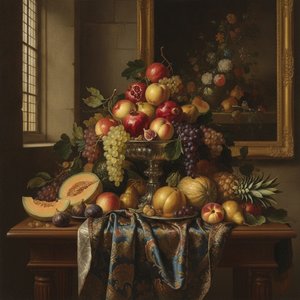
Nature's Bounty: The Art History of Fruit Arrangement Masterpieces and the Baroque Still Life Tradition
Explore the profound beauty of fruit arrangement masterpieces. From Dutch Golden Age opulence to Baroque chiaroscuro, discover the art history, symbolism, and timeless elegance of classical still life paintings for the discerning collector.

Drama and Light: A Definitive Guide to the Italian Baroque Masterpieces and the Revolution of Chiaroscuro
Explore the dramatic world of Italian Baroque art. Discover how masters like Caravaggio used chiaroscuro and tenebrism to revolutionize painting through light, shadow, and profound realism. A definitive guide for history lovers and art collectors.
Decoding Baroque Grandeur: A Guide to the Drama and Emotion of 17th-Century Art
Explore the breathtaking drama of 17th-century Baroque art. Our expert guide decodes the use of chiaroscuro, emotional intensity, and historical grandeur to help you appreciate and curate timeless masterpieces for your collection.

The Bountiful Still Life: Symbolism & Artistic Representation of Fruit Across Art History
Explore the rich history of still life painting & the symbolism of fruit across art movements. Discover masterpieces from Caravaggio to Cézanne with OriginalUniqueArt – expert guidance & museum-quality reproductions.