
 Pregledaj u realnoj veličini
 Pošalji
 Podijeli
 Detalji o umjetničkom djelu
 Vodič
Vodič

 Preuzmi umjetničko djelo
 Slični predmeti
 Rentgenska snimka
 Slide show
 Q&A
Q&A Statistika
Emil Hertzka

- 29.0 x 36.0 cm


 Prikaži više
Giclée / Umjetnički otisak
Giclée tisak muzejske kvalitete ili otisak na platnu uz brzu izradu i raznolike opcije završne obrade. ( Kupi ručno oslikano djelo Prebacite na digitalnu sliku)




P118B €10

P118H €10

P118W €10

P438Z €10

P508JH €12

P508YH €12

P805H €10

P805Z €10

P919BZ €10

P919G €10

P919XJ €10

P959ZH €10

P968JZ €12

W106C €8

W218G €10

W218JH €8

W218Y €10

W307PJ €10

W316G €10

W316PJ €8

W316Y €10

W398PJ €8

W4111J €10

W500HY €15

W500JH €15

W692G €12

W849H €8

W940BG €15

W953PJ €8




Odaberite jednu od naših unaprijed definiranih veličina koje odgovaraju izvornim proporcijama umjetničkog djela.

Unesite potrebnu širinu i visinu kako bi odgovarali vašem okviru ili zidu. Print se može samo izrezati, nikada ne može biti veći od slike, stoga format s drugačijim omjerom stranica uzrokuje gubitak dijela slike. Prije bilo kakve štampe šaljemo vam digitalni prikaz (mockup) na odobrenje. Slika prikazana na ovoj stranici ne prikazuje stvarni rez — to prikazuje isključivo digitalni prikaz.
Dostava širom svijeta () u roku od 2 tjedna umjesto standardnih 4/5 tjedana. (1 Studeni)

Besplatna ekspresna dostava širom svijeta

Visokokvalitetno laneno platno

Potpuno osiguranje dostave

Jamstvo povrata carine i uvoznih poreza

Jamstvo vjernosti boja

Politika povrata u roku od 100 dana (samo u slučaju nedostataka)

Jamstvo povrata 100% novca

Popust na više proizvoda
 Opcija stakla dostupna je samo za dimenzije manje od 110 cm

Emil Hertzka
Giclée / Umjetnički otisak
Veličina reprodukcije
-


Ukupna cijena
€ 71
A Portrait of Ambition: Emil Hertzka by Arnold Schoenberg
This intimate portrait, rendered in 1910, offers a rare glimpse into the burgeoning artistic ambitions of Arnold Schoenberg, one of the most revolutionary figures in musical history. Painted by Schoenberg himself – a surprising and revealing act – the work transcends a simple likeness; it’s a carefully constructed statement about his aspirations and the perceived value of his increasingly influential art. The subject, a man with a distinguished reddish-brown beard and mustache, gazes directly at the viewer, an arresting intensity that speaks to Schoenberg's own self-assurance and desire for recognition. The slightly faded appearance of the painting lends it an aged quality, hinting at the passage of time and perhaps a subtle acknowledgement of the challenges he faced in establishing his reputation.
The Context of Innovation
- Vienna's Artistic Landscape: 1910 Vienna was a crucible of artistic innovation. Schoenberg, along with figures like Alban Berg and Anton Webern, was at the forefront of the Second Viennese School, challenging traditional harmonic structures and paving the way for atonality – a radical departure from established musical norms.
- Hertzka's Role: Emil Hertzka was a prominent art dealer who recognized Schoenberg’s potential early on. The correspondence between them reveals Schoenberg’s strategic thinking; he understood the power of association and sought to leverage his reputation within the music world to gain wider acceptance for his visual work.
- A Moment of Transition: This painting represents a pivotal moment in Schoenberg's career, just as he was solidifying his position as a leading composer and beginning to explore new artistic avenues.
Symbolism and Technique – A Calculated Impression
Schoenberg’s technique is characterized by a meticulous attention to detail, particularly in the rendering of the subject's facial features and the textures of his clothing. The use of muted tones and subtle gradations of light and shadow creates a sense of depth and realism, while simultaneously conveying an air of formality and sophistication. The glasses worn by the sitter are not merely a stylistic choice; they suggest intellectualism and perhaps a detachment from conventional perspectives – qualities central to Schoenberg’s revolutionary approach to music. The direct gaze of the subject is particularly significant, demanding engagement from the viewer and subtly asserting Schoenberg's confidence in his artistic abilities.
Beyond the Brushstroke: A Statement of Value
The inscription accompanying the painting – “You know that I paint. What you do not know is that my work is highly praised by experts…” – reveals Schoenberg’s anxieties and strategic calculations. He was acutely aware of the skepticism surrounding his foray into visual art, particularly given his groundbreaking musical innovations. By emphasizing the praise he received from "experts," he sought to bypass public opinion and directly appeal to a discerning audience. His desire for a patron, coupled with his assertion that owning a painting by him would be “much more interesting” than commissioning a work from a lesser-known artist, underscores his ambition to establish himself as a significant figure in both the music and art worlds. This portrait is not simply a representation of a man; it’s a carefully crafted testament to Schoenberg's belief in his own artistic genius.
Pitanja i odgovori
Tko prodaje ručno oslikane kopije djela "Emil Hertzka" autora Arnold Schoenberg?
Ručno oslikane kopije djela "Emil Hertzka" autora Arnold Schoenberg dostupne su na stranici ovaj web-mjesto: ručno oslikana uljana reprodukcija na lanenom platnu, a mogu se naručiti putem njihove stranice Ručno oslikana reprodukcija.
Gdje mogu kupiti digitalnu sliku djela "Emil Hertzka" autora Arnold Schoenberg?
Digitalnu sliku djela "Emil Hertzka" autora Arnold Schoenberg možete kupiti na njegovoj stranici za Digitalna umjetnina: preuzimanje digitalne slike visoke rezolucije.
Koju emociju dočarava djelo "Emil Hertzka" iz pokreta Early Modern Music?
"Emil Hertzka" odiše Reflective emocionalnim tonom unutar pokreta Early Modern Music.
Biografija umjetnika
Rano život i glazbeni počeci
Arnold Schoenberg, austrijsko-američki skladatelj, rođen je 13. septembra 1874. godine u Beču, u Austriji. Njegovo rano djetinjstvo obilježeno je skromnim početkom, budući da je njegov otac bio vlasnik obućarske trgovine. Unatoč tome, Schoenbergova urođena strast prema glazbi dovela ga je do toga da se u tom području uglavnom samobrazovao.Glazbena evolucija i značajna djela
Schoenbergova rana djela, poput Verklärte Nacht (1899), pokazala su brahmsijansko-wagnerovsku sintezu. Kako je napredovao, postao je centralna figura druge Bečke škole, uz Antona Weberna i Albana Berga. Njegove kompozicije, uključujući Strijelni kvartet br. 2 (1907–1908), Erwartung (19omg) i Pierrot Lunaire (1912), exemplificirale su njegov inovativni pristup atonalnosti.Podučavanje, emigracija i kasniji život
Schoenberg je podređeno odustao od mjesta u Pruskoj akademiji umjetnosti 1933. godine zbog uspona nacista na vlast, koji su njegovu glazbu označili kao "degeneriranom". Nakon toga je predavao u SAD-u, uključujući Sveučilište Kalifornije u Los Angelesu (1936–1944), gdje su sadržaji nazvani po njemu u znak čast. [https://OriginalUniqueArt.com/@/arnold-sokolberg](otkrijte više o Schoenbergovom životu i djelima na OriginalUniqueArt).- Schoenberg je istraživao filmsku glazbu i pisao tonalniju glazbu, dovršavajući svoju kamernu simfoniju br. 2 u 1939. godini.
- Satirizirao je fašističke tirane u djelu Oda Napoleonu (1942), inspirirano Byronom.
- Poslijeratni Beč ponudio mu je počasno državljanstvo, ali bio je bolestan, što je prikazano u njegovom strijelnom trio (1946).
Nasljeđe i utjecaj
Dok je svijet saznavao za Holokaust, Schoenberg je vječnom memorijom odamio njegove žrtve u djelu Preživjeli iz Varšave (1947). Izraelski konzervatorij i akademija glazbe izabrali su ga za počasnog predsjednika 1951. godine. [https://OriginalUniqueArt.com/@@/a@d3bqc7-the-museum-destroyed-by-fire-(united-states)](saznajte više o utjecaju njegovog rada na OriginalUniqueArt). Ključne točke:- Schoenbergova inovativna glazba bila je među najutjecajnijom i najkontroverznijom klasičnom glazbom 20. stoljeća.
- Najmanje tri generacije skladatelja proširilo je njezine gotovo formalne principe.
- Njegovi estetski i glazbeno-povijesni pogledi utjecali su na muzikologe Theodore W. Adornoa i Carla Dahlhausa.

Arnold Schoenberg
1874 - 1951 , Austrija
Osnovne informacije
- Artistic Movement Or Style: Dvanaestotonna tehnika; Ekspresionizam
- Artists Or Movements Influenced By This Artist:
- Anton Webern
- Alban Berg
- Artists Who Influenced This Artist:
- Johannes Brahms
- Richard Wagner
- Date Of Birth: 13. rujna 1874.
- Date Of Death: 1951.
- Full Name: Arnold Schoenberg
- Nationality: Austrijsko-američki
- Notable Artworks:
- Suite, op. 29
- Music Typewriter
- Staffliner
- Place Of Birth: Beč, Austrija
Srodni članci

Timeless Vienna: Capturing the Imperial Elegance of Austria Through the Lens of Art History
Explore the imperial grandeur of Vienna through art history. Discover the architectural mastery of Otto Wagner and the elegance of the Secessionist movement in this sophisticated guide to Austria's timeless aesthetic legacy.

Beyond Symbolism: Exploring the Spiritual Landscapes of Mikalojus Konstantinas Čiurlionis's Art
Explore the captivating world of Mikalojus Konstantinas Čiurlionis, a pioneer of abstract art. Discover his unique blend of music and painting, spiritual themes, and lasting influence on Lithuanian culture. Learn more at OriginalUniqueArt.
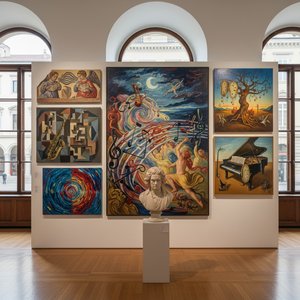
Harmonies on Canvas: Exploring the Visual Representation of Music in Art History
Explore the fascinating history of music's visual representation in art! From ancient symbolism to modern abstraction, discover how artists have captured sound and emotion on canvas. Expert insights & stunning examples.

Gustav Klimt: 25 Remek-djela Bečke Secesije za Uljepšanje Vašeg Prostora
Uronite u svijet Gustava Klimta! Otkrijte 25 remek-djela bečke secesije, simbolizma i zlatnog doba. Pronađite inspiraciju za dekoraciju interijera s vrhunskim reprodukcijama slika na OriginalUniqueArt.com.

The Vienna Secession: A Rebellion of Form & Spirit in Fin-de-Siècle Art
Discover the revolutionary Vienna Secession art movement! Explore Klimt, Olbrich & more. Learn about its history, characteristics & lasting influence on modern art. High-quality reproductions available.


