 Prebacite na printove
 Prikaži više







































 Za umjetnička djela ili reprodukcije veće od 105 cm (približno 41 inč) na bilo kojoj strani, okvir će biti isporučen u obliku rastavljenog seta za montažu. Ovaj način osigurava sigurnu dostavu i sprječava oštećenja tijekom transporta.


Ambrosius van Swol: A Silent Sculptor Shaping Utrecht’s Baroque Vision
Ambrosius van Swol (c. 1640 – 1680) remains a figure shrouded in relative obscurity compared to his contemporaries—artists who graced the canvases of Rembrandt and Vermeer—yet his contribution to Dutch Baroque sculpture deserves recognition as a testament to artistic innovation within a period defined by grandeur and dramatic expression. Born in Utrecht, Netherlands, Van Swol’s life details are scarce, leaving much to speculation about his formative years and early artistic inclinations. However, surviving documentation confirms he established himself as a sculptor and frame maker around 1643, marking the beginning of a prolific career that spanned nearly four decades. His work embodies the spirit of Utrecht during this golden age—a city brimming with wealth, ambition, and an unwavering devotion to artistic excellence.Early Career & Patronage: Frames That Enhance Beauty
Van Swol’s initial commissions primarily focused on crafting ornate frames for paintings—a crucial element in the visual culture of Utrecht during his time. These frames weren't merely decorative; they were meticulously designed to enhance the luminosity and color palette of artworks, reflecting a sophisticated understanding of optics and artistic aesthetics. Evidence suggests he worked under the patronage of influential families like the Van Loon clan, whose opulent estates served as hubs for artistic activity. The frame maker’s craft demanded precision and artistry—a skill that undoubtedly honed Van Swol's sculptural sensibilities. He skillfully manipulated materials like wood and alabaster to create frames that complemented the paintings they housed, elevating them to new levels of visual splendor.“The Rat-Catcher”: A Dramatic Narrative in Marble
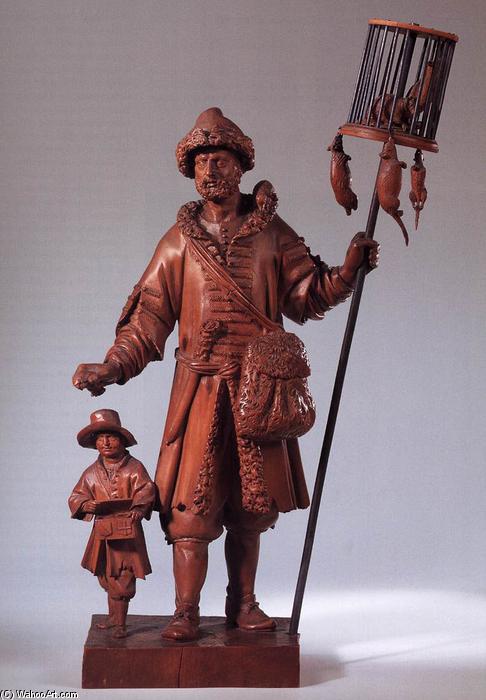
“The Rat-Catcher,” created around 1660, stands as Van Swol’s most celebrated achievement—a sculpture currently residing at Museum Van Loon and captivating visitors with its masterful depiction of a moment frozen in time. Executed in polished marble, the piece exemplifies the Baroque style's penchant for dramatic realism and emotional intensity. It portrays a rat catcher engaged in capturing a rodent with considerable skill and determination, conveying a palpable sense of urgency and focused concentration. The sculpture’s meticulous anatomical detail—particularly the musculature of the rat catcher’s arms—demonstrates Van Swol’s mastery of sculptural technique and his commitment to portraying human figures with unparalleled accuracy. Like Rembrandt's etching of 1632 which also shows a rat-catcher and a young assistant in a similar arrangement and poses, this artwork reflects an interest in capturing the essence of everyday life within a framework of humanist ideals.Symbolism & Artistic Influences: Echoes of Rembrandt
Van Swol’s style aligns closely with Albert Vinckenbrinck, a prominent Utrecht sculptor who championed naturalism and expressive dynamism. He skillfully blended technical virtuosity with humanist ideals—a hallmark of the Baroque era—creating sculptures that resonated deeply with viewers. The influence of Rembrandt is undeniable; Van Swol's depiction of the rat catcher mirrors Rembrandt’s etching of 1632, demonstrating a shared fascination for capturing human emotion and portraying figures in dynamic poses. Furthermore, the inclusion of a cage containing a dead rat symbolizes mortality—a recurring motif in Baroque art that served as a reminder of humanity’s vulnerability to death. The sculpture's smooth surfaces and subtle drapery folds contribute to an overall sense of elegance and sophistication—characteristics consistent with Vinckenbrinck’s artistic vision.Legacy & Rediscovery: A Quiet Masterpiece
Despite his considerable talent, Van Swol’s artistic legacy endured relative obscurity for centuries—primarily due to the limited surviving documentation of his life and oeuvre. However, recent scholarship has begun to illuminate his significance as a sculptor who skillfully blended technical virtuosity with humanist ideals. Museums like Museum Van Loon are actively promoting awareness of Van Swol's work, ensuring that this remarkable masterpiece continues to inspire admiration and appreciation for generations to come. His enduring influence testifies to the power of art—a testament to Utrecht’s artistic heritage and Ambrosius van Swol’s unwavering dedication to capturing the human condition with breathtaking precision.Pitanja i odgovori
O čemu je "Rat-Catcher" i kakvu atmosferu odiše?
"Rat-Catcher" autora Ambrosius Van Swol prikazuje baroque sculpture, dutch art history, renaissance influence, human anatomy, animal representation, decorative arts, sculptural detail u Elegantno raspoloženju. Motiv i atmosfera zajedno dočaravaju ovo djelo.
Koja boja najviše dolazi do izražaja u djelu "Rat-Catcher"?
Dominantna boja djela "Rat-Catcher" autora Ambrosius Van Swol je Espresso (#3f1e20).
Kako mogu pregledati reprodukciju djela "Rat-Catcher" autora Ambrosius Van Swol?
Stranica Pregled u prostoru za "Rat-Catcher" omogućuje vam pregled umjetničkog djela prije narudžbe.
 Pošalji
 Podijeli
 Detalji o umjetničkom djelu
 Vodič
Vodič

 Preuzmi umjetničko djelo
 Slični predmeti
 Slide show
 Pitanja i odgovori
 Statistika






