पूर्वावलोकन देखें
 भेजें
भेजें साझा करें
 विवरण देखें
 मार्गदर्शिका

 डाउनलोड करें
 समान वस्तुएं
 एक्स-रे
 स्लाइड शो देखें
 Q&A
Q&A आंकड़े
Black Forms on White


 और पढ़ें
गिक्ली / आर्ट प्रिंट
तेज़ उत्पादन और विभिन्न फिनिश विकल्पों के साथ म्यूजियम-क्वालिटी गिकली (giclée) या कैनवस प्रिंट। ( हाथ से बनी पेंटिंग खरीदें डिजिटल इमेज पर जाएँ)




P118B ₹10

P118H ₹10

P118W ₹10

P438Z ₹10

P508JH ₹12

P508YH ₹12

P805H ₹10

P805Z ₹10

P919BZ ₹10

P919G ₹10

P919XJ ₹10

P959ZH ₹10

P968JZ ₹12

W106C ₹8

W218G ₹10

W218JH ₹8

W218Y ₹10

W307PJ ₹10

W316G ₹10

W316PJ ₹8

W316Y ₹10

W398PJ ₹8

W4111J ₹10

W500HY ₹15

W500JH ₹15

W692G ₹12

W849H ₹8

W940BG ₹15

W953PJ ₹8




कलाकृति के मूल अनुपात से मेल खाने वाले हमारे पूर्व निर्धारित आकारों में से चुनें।

अपने फ्रेम या अपनी दीवार के अनुसार आवश्यक चौड़ाई और ऊंचाई दर्ज करें। प्रिंट को केवल काटा जा सकता है, चित्र से बड़ा कभी नहीं बनाया जा सकता, इसलिए अलग आकार का साइज चित्र का एक हिस्सा खो देता है। किसी भी चीज़ को प्रिंट करने से पहले हम आपकी स्वीकृति के लिए आपको एक डिजिटल मॉकअप भेजते हैं। इस पृष्ठ पर दिखाया गया चित्र वास्तविक कटिंग नहीं दिखाता है — केवल मॉकअप ही इसे दर्शाता है।
विश्वव्यापी डिलीवरी (), मानक 4/5 सप्ताह के बजाय मात्र 2 सप्ताह में। (1 नवमबर)

दुनिया भर में मुफ़्त एक्सप्रेस शिपिंग

प्रीमियम ग्रेड लिनेन कैनवास

पूर्ण शिपिंग बीमा

सीमा शुल्क और आयात कर वापसी की गारंटी

सटीक रंग मिलान की गारंटी

100 दिनों की वापसी नीति (केवल निर्माण दोष होने पर)

100% पैसे वापसी की गारंटी

थोक छूट का अवसर
 ग्लास का विकल्प केवल 110 सेमी से कम आकार में ही उपलब्ध है।

Black Forms on White
गिक्ली / आर्ट प्रिंट
प्रतिकृति का आकार
-


कुल मूल्य
₹ 7710
A Symphony of Form and Spirit: Exploring Kandinsky’s ‘Black Forms on White’
Wassily Kandinsky, a name synonymous with the birth of abstract art, possessed a unique ability to translate inner experience onto canvas. His work wasn't merely about depicting the visible world; it was an exploration of the spiritual realm, rendered through a revolutionary visual language. “Black Forms on White,” painted in 1934, exemplifies this pursuit beautifully. The painting isn’t a representation *of* something, but rather an expression *itself*, a direct emanation of Kandinsky's inner landscape. A dynamic interplay between geometric shapes – circles, lines, and amorphous blots – dances across the white ground, creating a sense of rhythmic energy. It is as if we are witnessing the very genesis of form, a cosmic ballet unfolding before our eyes. The composition isn’t chaotic, however; there’s an underlying order, a carefully considered balance that prevents it from dissolving into pure randomness. This control speaks to Kandinsky's meticulous approach and his deep understanding of color theory and compositional principles.The Evolution of Abstraction: Context and Influences
To truly appreciate “Black Forms on White,” one must understand its place within Kandinsky’s artistic journey. Born in Moscow in 1866, he initially pursued a career in law before being profoundly moved by Monet's "Haystacks" exhibition in 1896 – an experience that ignited his passion for painting. He then relocated to Munich, immersing himself in the burgeoning avant-garde scene and absorbing influences from Impressionism, Fauvism, and Symbolism. However, Kandinsky wasn’t content with merely mimicking these styles; he sought something more profound. Inspired by theosophy and a belief in the spiritual power of art, he began to move away from representational imagery towards abstraction. This evolution culminated in his theoretical writings, most notably “Concerning the Spiritual in Art” (1911), where he articulated his vision for a non-objective art capable of expressing inner states directly. “Black Forms on White,” created during his time in France after leaving the Bauhaus school following its closure by the Nazis, reflects a mature phase of this exploration – a distillation of years spent refining his visual vocabulary and deepening his spiritual understanding.Decoding the Visual Language: Symbolism and Technique
Kandinsky believed that colors and forms possessed inherent emotional and spiritual qualities. While he resisted assigning fixed meanings to specific elements, certain tendencies emerge in his work. Circles, for instance, often represented wholeness, harmony, and the cosmic realm. Lines conveyed energy, direction, and movement. In “Black Forms on White,” the black shapes aren’t simply forms; they are active agents, pulsating with a life of their own against the expansive white background. The contrast between these elements is crucial – the darkness suggesting depth, mystery, and perhaps even the subconscious, while the white represents purity, potentiality, and the infinite. Technically, Kandinsky employed a fluid, expressive brushstroke, allowing the paint to flow freely across the canvas. This technique contributes to the painting’s sense of spontaneity and vitality. He layered colors subtly, creating nuanced effects that reward close observation. The work isn't about precise rendering; it’s about capturing an *impression*, a feeling, a fleeting moment of inner revelation.An Emotional Resonance: Experiencing ‘Black Forms on White’
Looking at “Black Forms on White” is not simply a visual experience; it’s an emotional one. The painting evokes a sense of calm contemplation, yet also hints at underlying currents of energy and dynamism. It invites the viewer to enter into a dialogue with the artwork, to project their own feelings and associations onto its abstract forms. The work's enduring appeal lies in its universality – it transcends cultural boundaries and speaks directly to the human spirit. Whether displayed in a modern minimalist interior or a more traditional setting, “Black Forms on White” adds a touch of sophistication, intellectual depth, and spiritual resonance. It is a testament to Kandinsky’s genius and his unwavering belief in the power of art to transform our perception of the world and ourselves.प्रश्न और उत्तर
वासिली वासिलीविच कैंडिंस्की द्वारा "Black Forms on White" की प्रतिकृति को कहाँ लटकाया जाना चाहिए?
फॉर्मेट (Square) और अनुशंसित स्थान (Living Room), वासिली वासिलीविच कैंडिंस्की द्वारा "Black Forms on White" के लिए दर्ज किए गए दो प्लेसमेंट तथ्य हैं।
"Black Forms on White" में प्रकाश और छाया का संतुलन कैसे बनाया गया है?
वासिली वासिलीविच कैंडिंस्की द्वारा "Black Forms on White" की चमक balanced दर्ज की गई है, जिसमें Gentle Luminance का ल्यूमिनेंस (luminance) है।
वासिली वासिलीविच कैंडिंस्की द्वारा "Black Forms on White" किस आंदोलन और किस युग से संबंधित है?
वासिली वासिलीविच कैंडिंस्की द्वारा "Black Forms on White" में, Expressionist Abstraction आंदोलन और 19वीं शताब्दी युग का संगम होता है।
कलाकार का परिचय
एक रंग और आत्मा में डूबी हुई जिंदगी
वासिली वासिलीविच कैंडिंस्की, जिनका जन्म 1866 में मास्को में हुआ था, एक क्रांतिकारी व्यक्ति थे जिन्होंने आधुनिक कला के पाठ्यक्रम को अपरिवर्तनीय रूप से बदल दिया। उनका सफर तत्काल कलात्मक बुलावा का नहीं था; शुरू में कानून और अर्थशास्त्र में करियर के लिए नियत, उन्होंने मॉस्को विश्वविद्यालय में अध्ययन किया। लेकिन लगभग तीस साल की उम्र में, क्लाउड मोनेट की "गैंहस्टैक" (Haystacks) को देखने और रिचर्ड वैग्नर के "लोहेनग्रिन" (Lohengrin) ओपेरा का अनुभव करने से उनके भीतर कला के प्रति एक अथाह इच्छा जागृत हुई। यह निर्णायक क्षण न केवल करियर परिवर्तन था, बल्कि दृष्टिकोण में एक पूर्ण बदलाव भी था, जिसने उन्हें अमूर्तता के अग्रणी बनने की राह पर अग्रसर किया। जल्द ही उन्होंने म्यूनिख चले गए, जहाँ वे प्रतिष्ठित फाइन आर्ट्स अकादमी में दाखिला लिया और फ्रांज वॉन स्टक के अधीन अध्ययन किया, हालाँकि औपचारिक प्रशिक्षण के भीतर भी, कैंडिंस्की की आत्मा पारंपरिक सीमाओं से परे अन्वेषण के लिए तरसती थी।
उनकी शुरुआती प्रेरणाओं में 1889 में वोलोडगा क्षेत्र में एक मानवविज्ञान यात्रा से प्राप्त रूसी लोक कला शामिल थी, जिसने उन्हें जीवंत रंग पैलेट और प्रतीकात्मक कल्पना के प्रति आकर्षित किया। यह नींव महत्वपूर्ण साबित होगी क्योंकि उन्होंने अपनी अनूठी कलात्मक भाषा विकसित करना शुरू कर दिया। ये प्रारंभिक अन्वेषण केवल सौंदर्य संबंधी प्राथमिकता के बारे में नहीं थे; वे गहरे सांस्कृतिक संबंध और इस समझ से उपजे थे कि कला शाब्दिक से परे कैसे संवाद कर सकती है। कैंडिंस्की ने रूसी लोक कला की सरलता और प्रतीकात्मकता को अपनाया, जो उनके बाद के अमूर्त कार्यों में रंग और आकार के उपयोग को प्रभावित करेगा। उन्होंने महसूस किया कि कला केवल बाहरी दुनिया का प्रतिनिधित्व करने तक ही सीमित नहीं होनी चाहिए, बल्कि भावनाओं और आध्यात्मिक अनुभवों को व्यक्त करने का एक माध्यम भी हो सकती है।
अभिव्यक्तिवाद से आंतरिक आवश्यकता: अमूर्तता की ओर कदम
कैंडिंस्की के शुरुआती कार्यों में एक मजबूत अभिव्यक्तिवादी प्रवृत्ति दिखाई देती है, जो बोल्ड रंगों और भावनात्मक तीव्रता द्वारा चिह्नित है - "पापेलन (पॉपलर)" (1902) जैसे टुकड़े इस अवधि को दर्शाते हैं। हालाँकि, वे केवल बाहरी दुनिया का प्रतिनिधित्व करने से संतुष्ट नहीं थे; उन्होंने आंतरिक वास्तविकताओं, आध्यात्मिक सत्यों को व्यक्त करना चाहा जो साधारण दृश्य चित्रण से परे थे। यह खोज धीरे-धीरे उन्हें प्रतिनिधित्वपूर्ण कला से दूर ले गई और रंग, रूप और उनकी भावनात्मक प्रतिध्वनि की एक क्रांतिकारी खोज की ओर ले गई। उन्होंने महसूस किया कि रंगों में अंतर्निहित मनोवैज्ञानिक प्रभाव होते हैं, जो दर्शक में विशिष्ट भावनाएँ और संवेदनाएँ पैदा करने में सक्षम होते हैं। यह विश्वास उनके थियोसोफी में बढ़ते रुचि के साथ गहराई से जुड़ा हुआ था, जो गूढ़ ज्ञान और सार्वभौमिक भाईचारे पर जोर देने वाली एक आध्यात्मिक आंदोलन था। जैसे-जैसे उन्होंने इन विचारों में गहराई से उतरना शुरू किया, कैंडिंस्की की पेंटिंगें तेजी से गैर-वस्तुनिष्ठ होती गईं, पहचानने योग्य रूपों को त्यागकर अमूर्त रचनाओं के पक्ष में जो एक "आंतरिक आवश्यकता" द्वारा संचालित थीं। यह केवल प्रतिनिधित्व को छोड़ने के बारे में नहीं था; यह एक नई दृश्य भाषा की खोज करने के बारे में था जो भावना और आध्यात्मिकता के अगम्य क्षेत्रों को व्यक्त करने में सक्षम थी। उन्होंने संगीत के समतुल्य दृश्य बनाने का प्रयास किया, जहाँ रंग और रूप गहरे भावनात्मक प्रतिक्रियाओं को जगाने के लिए सामंजस्यपूर्ण होते हैं।
ज्यामितीय सद्भाव और आध्यात्मिक प्रतिध्वनि
1911 में म्यूनिख में स्थापित प्रभावशाली कलाकार समूह डेर ब्लूए रीटर (द ब्लू राइडर) में उनकी भागीदारी के बाद की अवधि में कैंडिंस्की की शैली में और विकास देखा गया। उनके शुरुआती कार्यों में अक्सर तरल, जैविक आकार होते थे, लेकिन उन्होंने ज्यामितीय अमूर्तता का पता लगाना शुरू कर दिया, वृत्त, त्रिभुज और वर्गों के बीच परस्पर क्रिया पर ध्यान केंद्रित किया। "कई वृत्त" (140 x 140 सेमी) इस चरण का एक उत्कृष्ट उदाहरण है - एक गतिशील रचना जहाँ रंग और रूप एक सामंजस्यपूर्ण लेकिन ऊर्जावान नृत्य में बातचीत करते हैं। यह ठंडा या बाँझ ज्यामिति नहीं थी; बल्कि, इसमें आध्यात्मिक महत्व निहित था। कैंडिंस्की का मानना था कि ज्यामितीय आकृतियों में अंतर्निहित प्रतीकात्मक अर्थ होता है, और कैनवास के भीतर उनकी व्यवस्था विशिष्ट भावनात्मक प्रतिक्रियाओं को जगा सकती है। उन्होंने अपनी सैद्धांतिक रचनाओं में, विशेष रूप से "कला में आध्यात्मिक के बारे में" (1911) में इन मान्यताओं को व्यक्त किया, अमूर्त कला की समझ के लिए आधार तैयार किया जो गहरे आध्यात्मिक सत्यों को व्यक्त करने का एक माध्यम है। उनका तर्क था कि कला को प्रकृति की नकल करने का प्रयास नहीं करना चाहिए बल्कि कलाकार की आंतरिक दुनिया को प्रकट करना और दर्शक के साथ एक गहरा, अधिक सहज स्तर पर जुड़ना चाहिए। उन्होंने रंगों के सिद्धांत में भी गहराई से अध्ययन किया, यह समझने की कोशिश की कि विभिन्न रंग कैसे भावनाओं को जगाते हैं और रचनाओं में सद्भाव पैदा करते हैं।
बाउहाउस प्रभाव और स्थायी विरासत
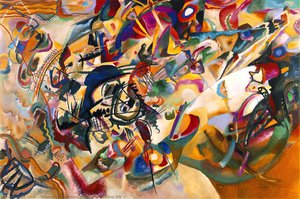
प्रथम विश्व युद्ध के प्रकोप ने 1914 में कैंडिंस्की की रूस वापसी के लिए मजबूर कर दिया, लेकिन रूसी क्रांति के बाद, उन्हें कलात्मक जलवायु में बढ़ती असहमति का अनुभव हुआ। 1920 में, उन्होंने जर्मनी के बाऊहाउस स्कूल में एक शिक्षण पद स्वीकार किया, जहाँ उन्होंने अपने रंग, रूप और अमूर्तता पर सिद्धांतों के साथ पीढ़ियों के कलाकारों को गहराई से प्रभावित किया। बाऊहाउस कैंडिंस्की के लिए अपने विचारों को विकसित करने और नए रचनात्मक रास्ते तलाशने के लिए एक आदर्श वातावरण प्रदान करता था। उन्होंने ज्यामितीय रूपों और जीवंत रंगों के साथ प्रयोग करना जारी रखा, अक्सर परतदार इम्पैस्टो तकनीकों को शामिल करते हुए जो उनकी रचनाओं में गहराई और जटिलता जोड़ने वाली बनावट सतहें बनाते हैं - जैसा कि "एक अंतरंग पार्टी" (1942) जैसे बाद के कार्यों में देखा जा सकता है। नाजी शासन द्वारा 1933 में बाऊहाउस के बंद होने के बाद, कैंडिंस्की फ्रांस चले गए, जहाँ वे अपनी मृत्यु तक रहे। आधुनिक कला पर उनका प्रभाव अकल्पनीय है; उन्हें व्यापक रूप से अमूर्त अभिव्यक्तिवाद के एक अग्रणी और गैर-प्रतिनिधित्वपूर्ण पेंटिंग के विकास में एक प्रमुख व्यक्ति के रूप में मान्यता प्राप्त है। उनके कार्यों को दुनिया भर के प्रमुख संग्रहालयों में रखा गया है, जिसमें मास्को का ट्रेत्याकोव गैलरी शामिल है, जो उनकी कलात्मक दृष्टि और स्थायी विरासत का प्रमाण है "रचना VII"।
कैंडिंस्की का रंग, रूप और आध्यात्मिकता की खोज आज भी कलाकारों को प्रेरित करती रहती है, जिससे 20वीं शताब्दी के कला इतिहास में सबसे महत्वपूर्ण आंकड़ों में से एक के रूप में उनकी जगह मजबूत होती है। उन्होंने सिर्फ चित्र नहीं बनाए; उन्होंने भावनाओं, विचारों और मानव आत्मा के सार को चित्रित किया।

वासिली वासिलीविच कैंडिंस्की
1866 - 1944 , रूस
संक्षिप्त जानकारी
- Artistic Movement Or Style: Абстрактное искусство, Экспрессионизм
- Artists Or Movements Influenced By This Artist: ['Абстрактное экспрессионизм']
- Artists Who Influenced This Artist:
- Клод Моне
- Ричард Вагнер
- Date Of Birth: 1866 год
- Date Of Death: 1944 год
- Full Name: Василий Васильевич Кандинский
- Nationality: Русский
- Notable Artworks:
- Мурнау с радугой
- Темперированный Элан
- Интимная вечеринка
- Place Of Birth: Москва, Россия
संबंधित लेखों की सूची

Mastering Abstraction: The 25 Most Iconic Works by Wassily Kandinsky
Explore 25 iconic Kandinsky masterpieces and the birth of abstraction. Discover the full collection online at OriginalUniqueArt.com.

फर्नांड लेगर की शीर्ष 25 कलाकृतियाँ: आधुनिकता का सौंदर्य और घर सजावट के लिए प्रेरणा
फर्नांड लेगर की शीर्ष 25 कलाकृतियों में आधुनिक कला और क्यूबिज्म का सौंदर्य अनुभव करें। प्रत्येक पेंटिंग के पीछे की कहानी जानें, और अपने घर को अद्वितीय दीवार सजावट से सजाएं। OriginalUniqueArt.com पर उच्च गुणवत्ता वाले कला प्रिंट खोजें।

ज्यामितीय अमूर्तता: शीर्ष 10 उत्कृष्ट कृतियाँ जो कला को नया आकार देती हैं | OriginalUniqueArt.com
ज्यामितीय अमूर्तता की शीर्ष 10 उत्कृष्ट कृतियों का अन्वेषण करें! पिकासो, मोंड्रियन और अन्य कलाकारों के प्रेरणादायक कार्यों से कला इतिहास जानें। OriginalUniqueArt.com पर उच्च गुणवत्ता वाली कला प्रिंट और कैनवास खरीदें।

अमूर्त अभिव्यंजनावाद: शीर्ष 10 कलाकृतियाँ जिन्होंने परिभाषित किया कला की दुनिया
अमूर्त अभिव्यंजनावाद की 10 उत्कृष्ट कृतियाँ जानें! पोलक, रोथको जैसे कलाकारों के अनूठे रंगों और भावनाओं का अनुभव करें। OriginalUniqueArt.com पर कला इतिहास की गहराई में जाएँ और अपने घर के लिए अद्वितीय सजावट खोजें। ऑनलाइन संग्रह देखें!

काज़िमिर मालेविच की 25 सर्वश्रेष्ठ कलाकृतियाँ: अमूर्तता का शिखर | OriginalUniqueArt
काज़िमिर मालेविच की 25 सर्वश्रेष्ठ कलाकृतियों का अन्वेषण करें! ब्लैक स्क्वायर और व्हाइट ऑन व्हाइट जैसे सुपरमाटिज्म के शिखर को जानें। उच्च-गुणवत्ता वाले कला प्रिंट और घर की सजावट के लिए OriginalUniqueArt.com पर खोजें।