पूर्वावलोकन देखें
 साझा करें
 साझा करें
 विस्तृत विवरण

 डाउनलोड करें
 समान कलाकृतियाँ
 एक्स-रे
 स्लाइड शो देखें
Stanza Della Segnatura d07

 पूरा देखें
गिक्ली / आर्ट प्रिंट
तेज़ उत्पादन और विभिन्न फिनिश विकल्पों के साथ म्यूजियम-क्वालिटी गिकली (giclée) या कैनवस प्रिंट। ( हाथ से बनी पेंटिंग खरीदें छवि खरीदें)




P118B $10

P118H $10

P118W $10

P438Z $10

P508JH $12

P508YH $12

P805H $10

P805Z $10

P919BZ $10

P919G $10

P919XJ $10

P959ZH $10

P968JZ $12

W106C $8

W218G $10

W218JH $8

W218Y $10

W307PJ $10

W316G $10

W316PJ $8

W316Y $10

W398PJ $8

W4111J $10

W500HY $15

W500JH $15

W692G $12

W849H $8

W940BG $15

W953PJ $8




कलाकृति के मूल अनुपात से मेल खाने वाले हमारे पूर्व निर्धारित आकारों में से चुनें।

आप किसी विशिष्ट फ्रेम या स्थान के अनुसार अपने स्वयं के आयाम (dimensions) दर्ज कर सकते हैं। यदि आपके द्वारा चुना गया आकार मूल छवि के अनुपात से मेल नहीं खाता है, तो हम कलाकृति को क्रॉप कर देंगे या मिरर किए गए या सॉलिड-फिल किनारे के साथ छवि का विस्तार करेंगे। उत्पादन शुरू होने से पहले आपकी स्वीकृति के लिए एक डिजिटल मॉकअप भेजा जाएगा।
कृपया ध्यान दें कि स्क्रीन पर दिखने वाला प्रीव्यू वास्तविक क्रॉपिंग या विस्तार को नहीं दर्शाता है। केवल मॉकअप ही अंतिम संरचना को सटीक रूप से दिखाएगा।
हालाँकि कस्टम आकार उपलब्ध हैं, फिर भी हम मूल अनुपात बनाए रखने के लिए पूर्व-निर्धारित सूची में से एक आयाम चुनने की सलाह देते हैं।
विश्वव्यापी डिलीवरी (), मानक 4/5 सप्ताह के बजाय मात्र 2 सप्ताह में। (21 अगस्त)

दुनिया भर में मुफ़्त एक्सप्रेस शिपिंग

उच्च गुणवत्ता वाला लिनेन कैनवास

पूर्ण शिपिंग बीमा

सीमा शुल्क और आयात कर वापसी की गारंटी

सटीक रंग मिलान की गारंटी

60-दिन की वापसी नीति (केवल दोषों के लिए)

100% पैसे वापसी की गारंटी

थोक छूट का लाभ
 ग्लास का विकल्प केवल 110 सेमी से कम आकार में ही उपलब्ध है।

Stanza Della Segnatura d07
गिक्ली / आर्ट प्रिंट
प्रतिकृति का आकार
-


कुल देय राशि
$ 80
संग्रहणीय वस्तु का विवरण
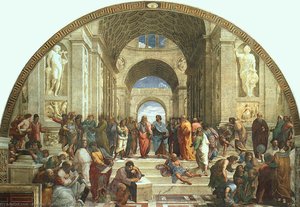
The Stanza Della Segnatura: A Window into Renaissance Thought
Raphael’s “Stanza della Segnatura,” or Room of the Signatura, within the Vatican Palace remains one of the most profoundly captivating and intellectually stimulating spaces in Western art history. Completed between 1508 and 1511 during a period of intense artistic and philosophical ferment, this fresco cycle isn't merely a decorative scheme; it’s a meticulously crafted visual argument for the harmonious balance of human knowledge and virtue. Commissioned by Pope Julius II, a man known for his patronage of the arts and his ambition to restore Rome’s former glory, the room was intended as a study and library – a space dedicated not just to accumulating information but to understanding its significance and applying it to the betterment of humankind.
The overall design is rooted in classical principles, particularly those championed by Leon Battista Alberti, whose treatise *De Pictura* provided a foundational framework for Renaissance art. The room’s layout mirrors the structure of a Roman atrium, with a central perspective leading the eye towards the magnificent “Parnassus” fresco – a breathtaking depiction of Apollo and the Muses presiding over the realms of poetry, philosophy, theology, and law. This central image serves as the anchor for the entire cycle, visually connecting the individual scenes that surround it.
The Frescoes: A Symphony of Allegory
Each of the five frescoes within the Stanza Della Segnatura tells a distinct story, interwoven with complex allegorical meanings. “Disputation over the Most Holy Sacrament,” on the left wall, depicts theologians engaged in a spirited debate about the Eucharist, representing theological truth. “School of Athens,” arguably the most famous fresco in the room, celebrates philosophy and reason, featuring a gathering of ancient Greek philosophers – Plato and Aristotle are prominently displayed – alongside Renaissance figures like Raphael himself and Leonardo da Vinci. The scene is not simply a historical representation; it’s an assertion of the enduring power of classical thought to inform contemporary understanding.
“Cardinal and Theological Virtues and the Law” showcases the cardinal virtues (prudence, justice, fortitude, and temperance) alongside theological virtues (faith, hope, and charity), all presided over by a majestic Cardinal. Finally, “Parnassus” embodies beauty and artistic inspiration, with Apollo and the Muses overseeing the intellectual pursuits of humankind. Notice the meticulous detail in each figure’s drapery, the subtle gradations of color, and the masterful use of perspective – hallmarks of Raphael's unparalleled skill.
Technique and Style: The Pinnacle of High Renaissance Grace
Raphael’s style during this period is characterized by its remarkable clarity, balance, and grace. He masterfully blended the influences of his predecessors—Perugino, Leonardo da Vinci, and Michelangelo—into a uniquely harmonious aesthetic. The frescoes are executed in *aerangio*, a technique involving layering thin washes of color to create luminous effects and subtle transitions between tones. This method contributes significantly to the paintings’ ethereal quality and sense of depth.
The use of *sfumato* – a blurring effect achieved through delicate glazing—is particularly evident in the faces, lending them an almost lifelike quality. Raphael's attention to detail is astonishing; from the individual folds of fabric to the expressions on the figures’ faces, every element contributes to the overall sense of realism and psychological insight. The scale of the frescoes, combined with Raphael’s technical prowess, creates a truly immersive experience for the viewer.
Symbolism and Legacy: A Timeless Vision
Beyond their aesthetic beauty, the frescoes of the Stanza Della Segnatura are laden with symbolism. They represent not just the pursuit of knowledge but also the importance of virtue, reason, and divine guidance in shaping a fulfilling life. The room itself embodies the humanist ideal – a space designed to foster intellectual growth and spiritual contemplation.
Raphael’s “Stanza Della Segnatura” stands as a testament to the power of art to communicate complex ideas and inspire profound reflection. It remains a source of fascination for scholars, artists, and viewers alike, offering a glimpse into the mind of one of history's greatest masters and a window into the intellectual heart of Renaissance Italy. Reproductions of this masterpiece continue to captivate audiences today, allowing them to experience its beauty and wisdom firsthand.
कलाकार का जीवन परिचय
राफेल: पुनर्जागरण के सौंदर्य का प्रतीक
रफाएल, जिनका असली नाम राफेल सान्ज़ियो दा उरबीनो था, इतालवी कला इतिहास में एक अद्वितीय स्थान रखते हैं। 1483 में उरबीनो शहर में जन्मे राफेल ने अपनी कम उम्र में ही कला की दुनिया में क्रांति ला दी। उरबीनो, उस समय कला और संस्कृति का केंद्र था, जहाँ ड्यूक फेडरिको दा मोंटेफेल्ट्रो के संरक्षण में कलाकारों को फलने-फूलने का अवसर मिला था। उनके पिता जियोवानी सान्ती भी एक चित्रकार थे और उन्होंने राफेल को शुरुआती प्रशिक्षण दिया। बचपन से ही राफेल की प्रतिभा स्पष्ट थी, लेकिन उनके जीवन में एक महत्वपूर्ण मोड़ तब आया जब 11 साल की उम्र में उनके पिता की मृत्यु हो गई। इस घटना ने उन्हें परिवार के व्यवसाय को संभालने और अपनी कलात्मक कौशल को विकसित करने के लिए प्रेरित किया।
पिएत्रो पेरुगिनो से फ्लोरेंस तक: कलात्मक विकास
अपनी प्रारंभिक शिक्षा के बाद, राफेल पिएत्रो पेरुगिनो के अधीन प्रशिक्षु बने। पेरुगिनो के मार्गदर्शन में, उन्होंने उम्ब्रिया शैली की बारीकियों को सीखा, जो अपनी कोमल मॉडलिंग, सामंजस्यपूर्ण रचनाओं और शांत धार्मिक दृश्यों के लिए जानी जाती है। हालांकि, राफेल की जिज्ञासा उन्हें नई चुनौतियों की तलाश करने और अपने कलात्मक क्षितिज का विस्तार करने के लिए प्रेरित करती रही। 1504 में, उन्होंने फ्लोरेंस की यात्रा की, जो उस समय कलात्मक नवाचारों से भरा हुआ था। वहाँ, उन्होंने लियोनार्डो दा विंची और माइकल एंजेलो जैसे महान कलाकारों के कार्यों को देखा और उनसे प्रेरणा ली। लियोनार्डो की स्फुमाटो तकनीक, जिसमें प्रकाश और छाया के सूक्ष्म ग्रेडेशन का उपयोग किया जाता है, और माइकल एंजेलो की शक्तिशाली शारीरिक सटीकता और नाटकीय रचनाएँ राफेल के कलात्मक विकास में महत्वपूर्ण भूमिका निभाते हैं। फ्लोरेंस में बिताया गया समय राफेल के लिए एक परिवर्तनकारी अनुभव था, जिसने उन्हें अपनी अनूठी शैली विकसित करने में मदद की।
रोम में विजय: कमीशन और उत्कृष्ट कृतियाँ
1508 में, पोप जूलियस द्वितीय ने राफेल को रोम बुला लिया, जो उनके करियर का एक महत्वपूर्ण मोड़ साबित हुआ। रोम में, उन्हें कला के भव्य कार्यों को करने का अवसर मिला, जिससे उन्होंने वैटिकन के पैलेस की दीवारों को शानदार भित्ति चित्रों से सजाया। "स्कूल ऑफ एथेंस", उनकी सबसे प्रसिद्ध कृतियों में से एक है, जो मानव तर्क और ज्ञान की खोज का जश्न मनाता है। इस भित्ति चित्र में, राफेल ने प्लेटो, अरस्तू, पाइथागोरस और यूक्लिड जैसे प्राचीन काल के महान दार्शनिकों को एक साथ चित्रित किया है। उन्होंने बाद में पोप लियो एक्स के लिए भी कई महत्वपूर्ण परियोजनाएँ कीं, जिनमें स्टैंजा डेला सेग्नाटुरा और स्टैंजा डी'एलियोडोरो का अलंकरण शामिल था। राफेल के रोम के भित्ति चित्र न केवल सजावटी हैं, बल्कि वे पोप शक्ति, धार्मिक विश्वासों और पुनर्जागरण के आदर्शों पर गहन विचार व्यक्त करते हैं।
सौंदर्य और भव्यता का संश्लेषण: राफेल की कलात्मक शैली
राफेल की कलात्मक शैली को अक्सर सौंदर्य, स्पष्टता और आदर्शित सुंदरता के सामंजस्यपूर्ण मिश्रण के रूप में वर्णित किया जाता है। उनके पास रचनाओं की योजना बनाने की असाधारण क्षमता थी, जो पुनर्जागरण सिद्धांतों की गहरी समझ को दर्शाती है। उनकी आकृतियाँ शांत गरिमा और भावनात्मक अभिव्यक्ति का संचार करती हैं, जो मानव पूर्णता के मानवतावादी आदर्श को मूर्त रूप देती हैं। वे एक कुशल रंगज्ञ भी थे, जिन्होंने समृद्ध, चमकदार रंगों का उपयोग करके ऐसे कार्य बनाए जो न केवल नेत्रहीन आकर्षक हैं बल्कि बौद्धिक रूप से उत्तेजक भी हैं। माइकल एंजेलो की अक्सर नाटकीय और अशांत शैली के विपरीत, राफेल के कार्यों में शांति और सद्भाव की भावना है - एक ऐसी गुणवत्ता जिसने सदियों से दर्शकों को मोहित किया है।
विरासत और स्थायी प्रभाव
राफेल की असामयिक मृत्यु 1520 में मात्र 37 वर्ष की आयु में हुई, लेकिन उनकी विरासत कला इतिहास के सबसे महत्वपूर्ण आंकड़ों में से एक के रूप में जीवित रही। उनके कार्यों ने उच्च पुनर्जागरण सौंदर्यशास्त्र का आधार बनाया, जो पीढ़ियों के कलाकारों के लिए एक मॉडल बन गए। राफेल का प्रभाव अनगिनत कार्यों में देखा जा सकता है, जिससे पश्चिमी कला पर उनका स्थायी प्रभाव स्थापित हो गया है। उनकी कृतियाँ आज भी दर्शकों को आश्चर्य और प्रशंसा से भर देती हैं, अपनी तकनीकी प्रतिभा, भावनात्मक गहराई और चिरस्थायी अपील के साथ। वे वास्तव में पुनर्जागरण के एक महान स्वामी थे - एक चित्रकार जिन्होंने न केवल अपने विषयों की शारीरिक समानता को कैद किया बल्कि मानव गरिमा और सौंदर्य का सार भी दर्शाया।

राफेल
1483 - 1520 , इटली
मुख्य तथ्य
- कलात्मक शैली: उच्च पुनर्जागरण
- जन्म तिथि: 28 मार्च 1483
- जन्म स्थान: उर्बाइनो, इटली
- पूरा नाम: रफ़ेल (राffaएलो सांजियो)
- प्रभावित आंदोलन: ['नवशास्त्रीय चित्रकला']
- प्रभावित कलाकार:
- लियोनार्डो दा विंची
- मिकेलेंजो
- प्रमुख कलाकृतियाँ:
- एथेंस का विद्यालय
- सिस्टिन मैडोना
- द ट्रांसफिग्रेशन
- मृत्यु तिथि: 6 अप्रैल 1520
- राष्ट्रीयता: इतालवी
संबंधित लेख
राफेल की शीर्ष 25 उत्कृष्ट कृतियाँ: कला, इतिहास और आपके घर के लिए प्रेरणा
राफेल की शीर्ष 25 उत्कृष्ट कृतियों का अन्वेषण करें! पुनर्जागरण कला, धार्मिक चित्र और मैडोना पेंटिंग के इतिहास को जानें। उच्च गुणवत्ता वाली राफेल कला प्रतिकृतियाँ खरीदें और अपने घर को सजाएँ। OriginalUniqueArt.com पर संपूर्ण संग्रह देखें।

पारिवारिक विरासत का संरक्षण: भित्ति कला के माध्यम से पीढ़ीगत मूल्यों की अभिव्यक्ति
पारिवारिक विरासत को भित्ति कला के माध्यम से संरक्षित करें। फ्रेस्को तकनीक, राजस्थान की शैलियों और पीढ़ीगत मूल्यों का सुंदर प्रकटीकरण। विशेषज्ञ मार्गदर्शन प्राप्त करें।

The Enduring Legacy of Fresco Painting: Techniques, History & Contemporary Relevance
Explore the rich history & enduring artistry of fresco painting – from Giotto to Michelangelo! Discover techniques, conservation efforts, & modern applications. Learn how OriginalUniqueArt brings this timeless art form to your home.

The Enduring Legacy of Fresco: Technique, History & Artistic Expression Across Cultures
Explore the rich history & enduring legacy of fresco painting! Discover ancient techniques, Giotto's masterpieces, and modern applications. Expert insights for art lovers & professionals.

The Enduring Legacy of Fresco: Technique, History & Artistic Expression
Explore the rich history & enduring artistry of fresco painting. Discover techniques from Giotto to Michelangelo, conservation efforts, & modern applications. Learn how OriginalUniqueArt brings this timeless art form to your home.