

 पूर्वावलोकन देखें
 भेजें
भेजें साझा करें
 विवरण देखें
 मार्गदर्शिका

 डाउनलोड करें
 समान वस्तुएं
 एक्स-रे
 स्लाइड शो देखें
 आंकड़े
Coffee pot


 और पढ़ें
इस पृष्ठ पर प्रदर्शित कलाकृति कॉपीराइट कानून द्वारा संरक्षित है, जिसका अर्थ है कि हम कानूनी रूप से इसकी हूबहू प्रतिलिपि बनाने या बेचने का अधिकार नहीं रखते हैं। यह संरक्षण अंतर्राष्ट्रीय समझौतों के तहत लागू किया जाता है, जैसे कि बर्न कन्वेंशन और राष्ट्रीय कानूनों द्वारा, जिनमें % द्वारा निर्धारित कानून भी शामिल हैं। अमेरिकी कॉपीराइट कानून - शीर्षक 17।
यह विधि कॉपीराइट नियमों का पूरी तरह से पालन करती है क्योंकि इसमें संरक्षित कलाकृति की नकल या प्रतिलिपि बनाना शामिल नहीं है। इसके बजाय, यह एक रचनात्मक पुनर्व्याख्या है - एक ऐसी नई पेंटिंग जो मूल कृति से प्रेरित तो है, लेकिन उसके समान नहीं है।
गिक्ली / आर्ट प्रिंट
तेज़ उत्पादन और विभिन्न फिनिश विकल्पों के साथ म्यूजियम-क्वालिटी गिकली (giclée) या कैनवस प्रिंट। ( हाथ से बनी पेंटिंग खरीदें डिजिटल इमेज पर जाएँ)




P118B ₹10

P118H ₹10

P118W ₹10

P438Z ₹10

P508JH ₹12

P508YH ₹12

P805H ₹10

P805Z ₹10

P919BZ ₹10

P919G ₹10

P919XJ ₹10

P959ZH ₹10

P968JZ ₹12

W106C ₹8

W218G ₹10

W218JH ₹8

W218Y ₹10

W307PJ ₹10

W316G ₹10

W316PJ ₹8

W316Y ₹10

W398PJ ₹8

W4111J ₹10

W500HY ₹15

W500JH ₹15

W692G ₹12

W849H ₹8

W940BG ₹15

W953PJ ₹8




कलाकृति के मूल अनुपात से मेल खाने वाले हमारे पूर्व निर्धारित आकारों में से चुनें।

अपने फ्रेम या अपनी दीवार के अनुसार आवश्यक चौड़ाई और ऊंचाई दर्ज करें। प्रिंट को केवल काटा जा सकता है, चित्र से बड़ा कभी नहीं बनाया जा सकता, इसलिए अलग आकार का साइज चित्र का एक हिस्सा खो देता है। किसी भी चीज़ को प्रिंट करने से पहले हम आपकी स्वीकृति के लिए आपको एक डिजिटल मॉकअप भेजते हैं। इस पृष्ठ पर दिखाया गया चित्र वास्तविक कटिंग नहीं दिखाता है — केवल मॉकअप ही इसे दर्शाता है।
विश्वव्यापी डिलीवरी (), मानक 4/5 सप्ताह के बजाय मात्र 2 सप्ताह में। (22 अक्टूबर)

दुनिया भर में मुफ़्त एक्सप्रेस शिपिंग

प्रीमियम ग्रेड लिनेन कैनवास

पूर्ण शिपिंग बीमा

सीमा शुल्क और आयात कर वापसी की गारंटी

सटीक रंग मिलान की गारंटी

100 दिनों की वापसी नीति (केवल निर्माण दोष होने पर)

100% पैसे वापसी की गारंटी

थोक छूट का अवसर
 ग्लास का विकल्प केवल 110 सेमी से कम आकार में ही उपलब्ध है।

Coffee pot
गिक्ली / आर्ट प्रिंट
प्रतिकृति का आकार
-


कुल मूल्य
₹ 7653
A Playful Rebellion: The Coffee Pot Design of Michael Graves
The silver coffee pot stands as a testament to Michael Graves’s unwavering belief that architecture should transcend mere functionality, embracing instead the richness of history and the delight of visual experience. Born in Indianapolis in 1934, Graves initially honed his skills within the confines of modernist principles at Cincinnati and Harvard, yet he swiftly recognized the limitations of an aesthetic solely focused on form without acknowledging context or emotion. This realization propelled him toward a bold exploration of ornamentation and symbolism—a deliberate departure from the prevailing architectural trends of his time—establishing him as a champion for buildings that resonate with human spirit.- Style & Form: Graves’s design embodies Art Deco influences, characterized by geometric precision and symmetrical elegance. The coffee pot's body utilizes vertical fluted panels interspersed with rectangular recesses, creating a rhythmic pattern reminiscent of iconic skyscrapers from the 1920s and 30s.
- Material Palette: Crafted primarily from polished silver—a deliberate choice reflecting Graves’s fascination with luxurious materials—the pot incorporates creamy beige plastic for the handle and blue spherical knobs, adding pops of color against the metallic surface.
Technique & Craftsmanship: Studio Photography – Capturing Essence
The image itself is a meticulously executed studio photograph, prioritizing clarity and accuracy while simultaneously striving to convey an overall impression of sophistication. Soft diffused lighting minimizes harsh shadows, highlighting the reflective qualities of the silver and emphasizing the subtle textures of the handle. The camera’s shallow depth of field ensures that every element—from the coffee pot's gleaming surface to the delicate blue knobs—is rendered in sharp focus, capturing the essence of Graves’s design vision. This technique underscores the importance of presenting artwork with precision while simultaneously inviting viewers into its aesthetic realm.- Historical Context: Graves’s work emerged during a period of significant architectural debate, challenging the dominance of modernist dogma and advocating for buildings that drew inspiration from past styles. He sought to rekindle a connection between architecture and human experience—a reaction against the perceived coldness and detachment of earlier movements.
- Symbolism & Emotion: The geometric forms and symmetrical composition evoke feelings of order, balance, and timeless elegance – mirroring Graves’s belief that buildings should inspire contemplation and delight.
A Celebration of Form and Functionality
Ultimately, the coffee pot design represents more than just a beautifully crafted object; it embodies Graves's philosophical stance on architecture—a conviction that buildings should serve both practical needs and aesthetic aspirations. The careful selection of materials—silver, plastic, and ceramic—combined with meticulous attention to detail—the fluted panels, the handle’s matte texture, and the spherical knobs—demonstrates Graves’s commitment to elevating utilitarian design through artistic consideration. It stands as a reminder that true innovation lies not merely in constructing structures efficiently but also in enriching human lives with beauty and wonder.- Further Exploration: Interested in delving deeper into Michael Graves's oeuvre? Visit the Michael C. Carlos Museum of Emory University to explore his expansive collection of ancient artworks and gain insights into his enduring influence on contemporary design!
प्रश्न और उत्तर
क्या "Coffee pot" एक फाइन आर्ट प्रिंट के रूप में उपलब्ध है?
Michael Graves द्वारा "Coffee pot" का प्रिंट प्राप्त करने के लिए, बस इसके फाइन आर्ट प्रिंट पेज पर ऑर्डर करें: कॉटन कैनवास या आर्काइवल कैनवास पेपर पर एक फाइन आर्ट प्रिंट।
मैं Michael Graves द्वारा "Coffee pot" की छवि कैसे डाउनलोड कर सकता हूँ?
"Coffee pot" के लिए डाउनलोड उपलब्ध है: कलाकृति का डाउनलोड करें पेज एक उच्च-रिज़ॉल्यूशन वाली डिजिटल इमेज डाउनलोड की सुविधा देता है।
Michael Graves द्वारा "Coffee pot" के रंग किस तरह की भावना पैदा करते हैं?
Michael Graves द्वारा "Coffee pot" का Neutrals पैलेट इसके Calm भावनात्मक स्वर के साथ पूरी तरह मेल खाता है। रंग उन तरीकों में से एक है जिससे कोई कलाकृति भावनाओं को व्यक्त करती है।
कलाकार का परिचय
A Playful Rebellion: The Life and Vision of Michael Graves
Michael Graves, born in Indianapolis in 1934, emerged as a pivotal figure in late 20th and early 21st-century design—an architect who dared to challenge the austere dogma of modernism with a vibrant, often whimsical aesthetic. His journey wasn’t one of immediate rebellion, but rather a gradual evolution fueled by a growing dissatisfaction with the perceived rigidity and historical detachment of the prevailing architectural style. Initially steeped in modernist principles during his education at the University of Cincinnati and Harvard, Graves found himself increasingly drawn to the power of history, symbolism, and ornamentation—elements largely banished from the modernist lexicon. This shift wasn’t simply an aesthetic preference; it was a fundamental questioning of architecture's purpose: should buildings merely function, or should they also delight, communicate, and connect with people on a more emotional level? The seeds of this inquiry were sown during his time at the American Academy in Rome as a recipient of the prestigious Rome Prize, where he immersed himself in the rich tapestry of classical architecture. It was an experience that profoundly shaped his understanding of form, proportion, and the enduring power of architectural language.From The New York Five to Postmodern Iconoclasm
Graves’s ascent coincided with a period of significant experimentation within the architectural world. He became a key member of *The New York Five*, a group of architects—alongside Peter Eisenman, Charles Gwathmey, Richard Meier, and Robert A.M. Stern—who actively challenged modernist orthodoxy in the late 1960s and early 70s. Their work, characterized by formal complexity and a rejection of simplistic functionalism, laid the groundwork for the burgeoning postmodern movement. However, Graves’s vision extended beyond architectural boundaries. His involvement with *The Memphis Group* in the 1980s—an Italian design collective known for its boldly colored, playfully shaped furniture and objects—brought his designs to an even wider audience. This collaboration was a watershed moment, demonstrating that good design wasn't limited to buildings; it could permeate everyday life through accessible, aesthetically engaging products. It was a deliberate democratization of design, bringing artistry into the home. The influence of Robert Venturi and Denise Scott Brown’s seminal work, *Complexity and Contradiction in Architecture*, cannot be overstated. Their critique of modernist simplicity resonated deeply with Graves, encouraging him to embrace ambiguity, irony, and historical references—qualities that would become hallmarks of his style.Landmark Buildings and the Democratization of Design
Graves’s architectural portfolio is remarkably diverse, reflecting his willingness to adapt his distinctive aesthetic to a wide range of contexts. The Portland Building (1982) in Oregon remains perhaps his most iconic—and controversial—creation. Its colorful facade, adorned with oversized classical ornamentation, sparked intense debate, challenging conventional notions of what a civic building should look like. Similarly, the Humana Building in Louisville, Kentucky, is a playful and whimsical structure that incorporates exaggerated decorative elements, creating a sense of theatricality. Beyond these landmark projects, Graves demonstrated his versatility with works such as the Ministry of Culture in The Hague, Netherlands, and the Denver Public Library expansion—each showcasing his commitment to public spaces and thoughtful design solutions. But perhaps his most significant contribution was his ability to bridge the gap between high art and mass production. His collaborations with companies like Alessi resulted in iconic designs such as the 9093 Kettle, transforming a mundane kitchen object into a work of art. Further extending this philosophy, Graves partnered with Target and J.C. Penney to create affordable product lines, making stylish and well-designed items accessible to a broader audience—a truly revolutionary act that challenged the elitism often associated with design.A Legacy of Accessibility and Humanistic Design
In 2003, a life-altering event profoundly impacted Graves’s work: he suffered a partial paralysis that confined him to a wheelchair. This personal experience ignited a passionate advocacy for universal design—the principle of creating products and environments usable by all people, regardless of age, ability, or status. He recognized firsthand the challenges faced by individuals with disabilities and dedicated himself to improving healthcare environments, ensuring they were not only functional but also dignified and supportive. His later work reflected this commitment, prioritizing accessibility, comfort, and a humanistic approach to design. Throughout his illustrious career, Michael Graves received numerous accolades, including fellowships from the American Institute of Architects, the AIA Gold Medal, the National Medal of Arts, and the Driehaus Architecture Prize—testaments to his enduring influence and significant contributions to the field. He left behind a legacy that extends far beyond bricks and mortar or product designs; he challenged conventions, embraced playfulness, and championed a more inclusive and human-centered approach to design—a vision that continues to inspire generations of architects and designers today.
Michael Graves
1934 - 2015 , United States of America
संक्षिप्त जानकारी
- Full Name: Michael Graves
- Nationality: American
- Date Of Birth: 1934
- Date Of Death: 2015
- Place Of Birth: Indianapolis, United States of America
- Notable Artworks:
- 9093 Kettle
- Coffee pot
- Portland Building
- Humana Building
- Artistic Movement Or Style: Postmodernism
- Artists Who Influenced This Artist:
- Robert Venturi
- Denise Scott Brown
- Artists Or Movements Influenced By This Artist:
- Postmodern architecture
- New Urbanism
संबंधित लेखों की सूची

Art Deco Masterpieces: Exploring the Era of Geometric Elegance and Modernist Luxury
Delve into the era of geometric elegance with our expert exploration of Art Deco masterpieces. Discover the history, iconic artists, and architectural marvels of this luxurious movement, and find museum-quality hand-painted oil reproductions to elevate your collection.
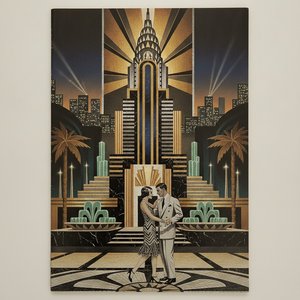
Art Deco Defined: The Glamour, Geometry, and Enduring Legacy of a Modern Icon
Explore the sophisticated world of Art Deco. Discover the history, geometric precision, and enduring glamour of this iconic 20th-century movement through an expert art-historical lens.

The Gilded Age Reimagined: Exploring the Aesthetic Principles & Enduring Legacy of Art Deco
Explore the captivating world of Art Deco! Discover its origins, defining features, cultural impact & enduring legacy. Expert insights for collectors and design enthusiasts. Shop handmade reproductions at OriginalUniqueArt.

The Architecture of Glamour: Unveiling the Timeless Geometric Elegance of Art Deco Masterpieces
Immerse yourself in the golden age of glamour. From the sleek lines of Tamara de Lempicka to the geometric soul of Erté, explore the enduring legacy of Art Deco. Discover the artistry that defined an era of luxury and modern sophistication through our expert art history guide.

The Glamour of Erté: Discovering the Art Deco Elegance and Geometric Mastery of Romain de Tirtoff
Step into a realm of perpetual elegance. Discover the visionary world of Erté, the high priest of Art Deco, and explore how his mastery of line and symmetry defined an era of unparalleled glamour and fashion sophistication through expert art history insights.