
 पूर्वावलोकन देखें
 साझा करें
 साझा करें
 विस्तृत विवरण
 मार्गदर्शिका

 डाउनलोड करें
 समान वस्तुएं
 एक्स-रे
 स्लाइड शो देखें
 प्रश्न और उत्तर
 आंकड़े
Time for a Bathe, Valencia


 पूरा देखें
गिक्ली / आर्ट प्रिंट
तेज़ उत्पादन और विभिन्न फिनिश विकल्पों के साथ म्यूजियम-क्वालिटी गिकली (giclée) या कैनवस प्रिंट। ( इस संग्रहणीय वस्तु की हाथ से बनी प्रतिकृति मंगवाएं डिजिटल इमेज पर स्विच करें)




P118B ₹10

P118H ₹10

P118W ₹10

P438Z ₹10

P508JH ₹12

P508YH ₹12

P805H ₹10

P805Z ₹10

P919BZ ₹10

P919G ₹10

P919XJ ₹10

P959ZH ₹10

P968JZ ₹12

W106C ₹8

W218G ₹10

W218JH ₹8

W218Y ₹10

W307PJ ₹10

W316G ₹10

W316PJ ₹8

W316Y ₹10

W398PJ ₹8

W4111J ₹10

W500HY ₹15

W500JH ₹15

W692G ₹12

W849H ₹8

W940BG ₹15

W953PJ ₹8




कलाकृति के मूल अनुपात से मेल खाने वाले हमारे पूर्व निर्धारित आकारों में से चुनें।

अपने फ्रेम या अपनी दीवार के अनुसार आवश्यक चौड़ाई और ऊंचाई दर्ज करें। प्रिंट को केवल काटा जा सकता है, चित्र से बड़ा कभी नहीं बनाया जा सकता, इसलिए अलग आकार का साइज चित्र का एक हिस्सा खो देता है। किसी भी चीज़ को प्रिंट करने से पहले हम आपकी स्वीकृति के लिए आपको एक डिजिटल मॉकअप भेजते हैं। इस पृष्ठ पर दिखाया गया चित्र वास्तविक कटिंग नहीं दिखाता है — केवल मॉकअप ही इसे दर्शाता है।
विश्वव्यापी डिलीवरी (), मानक 4/5 सप्ताह के बजाय मात्र 2 सप्ताह में। (7 नवमबर)

दुनिया भर में मुफ़्त एक्सप्रेस शिपिंग

उच्च गुणवत्ता वाला लिनेन कैनवास

पूर्ण शिपिंग बीमा

सीमा शुल्क और आयात कर वापसी की गारंटी

सटीक रंग मिलान की गारंटी

100 दिनों की वापसी नीति (केवल दोष होने पर)

100% पैसे वापसी की गारंटी

थोक छूट का अवसर
 ग्लास का विकल्प केवल 110 सेमी से कम आकार में ही उपलब्ध है।

Time for a Bathe, Valencia
गिक्ली / आर्ट प्रिंट
प्रतिकृति का आकार
-


कुल देय राशि
₹ 7846
Time for a Bathe, Valencia – A Snapshot of Mediterranean Light
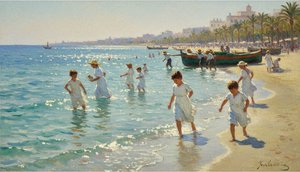
Joaquín Sorolla’s “Time for a Bathe,” painted in 1909, isn't merely a depiction of children playing on the Valencian coast; it’s an embodiment of Impressionistic idealism—a fervent celebration of fleeting beauty and the transformative power of sunlight. Captured within a square format, deliberately restricting compositional space, this canvas embodies Sorolla’s innovative approach to capturing immediacy and atmosphere. As documented in his own notes, he sought to freeze a moment, mirroring the photographic techniques gaining popularity at the time, resulting in an artwork that feels remarkably present.Composition & Technique: Embracing Photographic Realism
The scene unfolds with breathtaking precision. Sorolla eschews traditional perspective, opting instead for a high viewpoint devoid of horizon or sky—a stylistic choice that intensifies the drama and draws the viewer into the heart of the action. The figures – children immersed in splashing water – dominate the foreground, positioned close to the eye, fostering a palpable connection between observer and subject. Sorolla’s masterful brushwork is characterized by loose, expressive strokes, prioritizing color and texture over meticulous detail. Long, horizontal brushstrokes define the edges of the figures, anchoring them within the frame while short, rapid strokes convey movement—particularly evident in the children's playful gestures as they engage with the surf. The artist employs oil paints applied directly to the canvas, allowing for visible brushstrokes that contribute significantly to the artwork’s dynamism and luminosity.Color Palette & Light – Sorolla’s Signature Brilliance
The color palette is dominated by variations of blue—turquoise merging into deep navy—representing the sea's depths and reflecting sunlight with dazzling brilliance. These blues are punctuated by splashes of pink and beige, mirroring the sand and clothing of the children. Sorolla meticulously renders skin tones in soft pinks and creams, capturing subtle nuances that imbue the scene with warmth and vitality. Crucially, he utilizes light as his primary tool—a technique honed during his formative years in Rome—to illuminate every surface. Strong sunlight casts dramatic highlights and shadows, sculpting forms and creating a palpable sense of depth despite the absence of conventional perspective. The shimmering quality of the water is achieved through layering translucent glazes that capture the ethereal glow of Mediterranean light.Historical Context & Symbolism – A Moment Preserved
Painted in 1909, “Time for a Bathe” reflects Sorolla’s fascination with capturing everyday life and celebrating the joys of summer—themes recurrent throughout his oeuvre. The Valencian coastline served as an inspiration for many of his paintings, symbolizing tranquility, innocence, and connection to nature. More broadly, the artwork embodies Impressionism's core tenets: prioritizing sensory experience over intellectual analysis and striving to convey the fleeting effects of light on color and form. Sorolla’s decision to hang these canvases alongside their original frames—Ionic pilasters adding a touch of classical elegance—underscores his commitment to preserving authenticity and honoring the legacy of his artistic vision.Emotional Impact – Capturing Pure Joy
Ultimately, “Time for a Bathe” transcends mere visual representation; it evokes profound emotions—nostalgia for simpler times, admiration for natural beauty, and an uninhibited appreciation for human joy. Sorolla’s artwork invites contemplation on the ephemeral nature of happiness and reminds us to savor those precious moments of carefree delight. It remains a testament to his unparalleled ability to translate light and emotion onto canvas, securing its place as one of the most cherished images of the Mediterranean summer.प्रश्न और उत्तर
क्या "Time for a Bathe, Valencia" की इमेज डाउनलोड करने के लिए उपलब्ध है?
जोAquin सोरोला य बास्टिडा द्वारा "Time for a Bathe, Valencia" की छवि को कलाकृति के डाउनलोड करें पेज से डाउनलोड किया जा सकता है: उच्च-रिज़ॉल्यूशन वाली डिजिटल इमेज डाउनलोड।
"Time for a Bathe, Valencia" में कौन सा रंग सबसे प्रमुखता से उभर कर आता है?
Espresso (#645246), जोAquin सोरोला य बास्टिडा द्वारा "Time for a Bathe, Valencia" का प्रमुख रंग है।
"Time for a Bathe, Valencia" में किस रंग की प्रधानता है?
"Time for a Bathe, Valencia" में Warm Sunset Tones रंग की प्रधानता है।
कलाकार की जीवनी
Joaquín Sorolla y Bastida: A Life Bathed in Light
Joaquín Sorolla y Bastida, एक नाम जो स्पेन के प्रकाश और रंग की जीवंत ऊर्जा से समकालीन है, केवल एक चित्रकार नहीं था; वह अपने राष्ट्र की आत्मा का दस्तावेज़ था। 1863 में वालेंसिया में पैदा हुआ, सोरोला का प्रारंभिक जीवन त्रासदी से चिह्नित था। केवल दो साल की उम्र में अपनी दोनों माता-पिता को खसरा महामारी ने ले लिया था, युवा सोरोला और उसके बहन को उनकी मां के भाई और बहन द्वारा पालन किया गया था। इस शुरुआती अनुभव के परिणामस्वरूप हानि शायद उसे जीवन की क्षणभंगुर सुंदरता की गहरी सराहना पैदा कर दी - एक भावना जो कला में प्रतिध्वनित होती रही। कठिनाई अपने शुरुआती दिनों में मंद थी लेकिन कलात्मक प्रतिभा का स्पार्क तुरंत दिखाई दिया। वह वालेंसिया में प्रारंभिक शिक्षा प्राप्त करते थे, प्रदर्शन करते थे कि वे स्थापित कलाकारों जैसे कैयेटानो कैपुज़ और जोसे बेनलीउर के तहत अध्ययन कर सकते थे, अंततः रोम में चार साल के लिए अध्ययन करने के लिए एक अनुदान प्राप्त किया गया था। इटली के शास्त्रीय भव्यता के बीच वह अपने अद्वितीय कलात्मक मार्ग को आकार दे रहा था, जबकि समान रूप से अपनी शैली विकसित कर रहा था।Early Hardship and Artistic Beginnings
Joaquín Sorolla’s early life was marked by profound sorrow. Orphaned at just two years old following a devastating cholera epidemic that claimed the lives of his parents, young Joaquín and his sister were raised by their maternal aunt and uncle. This formative experience instilled within him an enduring appreciation for the fleeting beauty of existence – a sentiment that would profoundly influence his artistic vision. Despite facing considerable hardship, Sorolla’s innate talent shone through from a young age. He received initial instruction in Valencia, demonstrating aptitude that led to studies under established artists like Cayetano Capuz and José Benlliure, culminating in a four-year grant to study in Rome. This pivotal period shaped his artistic sensibilities and instilled a lifelong fascination with capturing the essence of light and color.Rome and Influences: Embracing Classical Tradition
Sorolla’s journey to Rome proved transformative. He enrolled at the Academy of Fine Arts, immersing himself in the artistic heritage of Italy and absorbing influences from masters like Francesco Hayez and Anton Raphael Mengelsdorf. The Roman landscape—characterized by its rolling hills and azure skies—became a constant source of inspiration for his early works. Notably, he studied with José Benlliure, Emilio Sala, and José Villegas Cordero, honing his technique and developing a distinctive style rooted in Luminism – an artistic movement that sought to depict light as the dominant force shaping visual perception. This approach would foreshadow Sorolla’s later mastery of capturing atmospheric effects and conveying emotion through color.From Historical Narratives to Sun-Drenched Realism
Sorolla's initial artistic endeavors leaned towards historical painting, mirroring the prevailing academic trends of his time. However, a decisive shift occurred upon his return to Spain, where he began to observe the world around him with renewed intensity. He was captivated by the daily lives of ordinary Spaniards—particularly those inhabiting the Valencian coast—a region renowned for its radiant Mediterranean sunlight. This fascination fueled his artistic exploration and propelled him toward a style that would become synonymous with Spanish Impressionism. The shimmering sea, vibrant flora, and bustling marketplaces provided endless subjects for his canvases, reflecting Sorolla’s belief in art's ability to capture the immediacy of experience.The Valencian Coast: A Lifelong Obsession
Sorolla’s artistic focus solidified during his residency in Valencia—a city he would revisit repeatedly throughout his life. He established a studio overlooking the harbor and dedicated himself to painting scenes of coastal life, capturing the interplay between light and shadow on water and sand with unparalleled skill. His paintings depict fishermen hauling boats ashore, children playing on beaches, and families enjoying leisurely afternoons—moments rendered with breathtaking luminosity and expressive brushwork. These works exemplify Sorolla’s unwavering commitment to *plein air* painting—working outdoors directly confronted with the challenges of capturing fleeting atmospheric conditions—a technique that would become his hallmark. He sought not merely to represent what he saw but to convey its emotional impact, achieving a remarkable synthesis of observation and artistic interpretation.Notable Achievements & Recognition
- 1892: Gold medal at the National Exhibition in Madrid for Another Marguerite
- 1894: Acclaimed for The Return from Fishing: Hauling the Boat, acquired by the Musée du Luxembourg
- 1899: Grand Prix and medal of honor at the Universal Exhibition in Paris for Sad Inheritance
- 1900-1923: Extensive exhibitions throughout Europe and the United States, establishing international recognition
- 1912-1928: Commissioned to create Vision of Spain for the Hispanic Society of America (completed posthumously)

जोAquin सोरोला य बास्टिडा
1863 - 1923 , स्पेन
प्रमुख तथ्य
- Artistic Movement Or Style: लुमिनिज्म और प्रभाववाद
- Artists Or Movements Influenced By This Artist: ['प्रभाववाद']
- Artists Who Influenced This Artist:
- फ्रांसिसको प्रadilla
- जूलस बास्टियन-लेपेज
- Date Of Birth: 27 फरवरी 1863
- Date Of Death: 10 अगस्त 1923
- Full Name: Joaquín Sorolla y Bastida
- Nationality: स्पेनिश
- Notable Artworks:
- इतालवी लड़की के फूल
- समुद्र तट पर बच्चे
- सिलाई जहाज
- Place Of Birth: वैलेंसिया, स्पेन
संबंधित लेख
Playful Masterpieces: Top 10 Artworks for a Joyful Home | OriginalUniqueArt
Find joy & inspiration! Explore 10 playful masterpieces by Monet, Matisse & more. Discover art history, vibrant colors & uplifting stories behind these iconic paintings. Museum-quality reproductions at OriginalUniqueArt.com – explore the full collection online!

Impressionism's Masterpieces: 10 Paintings That Defined a Movement | OriginalUniqueArt
Journey through Impressionism's heart with 10 iconic paintings by Monet, Renoir & Degas. Explore light, color & the stories behind these masterpieces. Find museum-quality art reproductions and elevate your home decor on OriginalUniqueArt.com.

प्रकाश और रंग से परे: विवेकी संग्राहक के लिए प्रभाववाद बनाम उत्तर-प्रभाववाद
प्रभाववाद और उत्तर-प्रभाववाद कला में निवेश के अवसरों का अन्वेषण करें। OriginalUniqueArt.com पर उच्च गुणवत्ता वाले पुनरुत्पादन, विशेषज्ञ परामर्श और विवेकी संग्राहकों के लिए अद्वितीय संग्रह खोजें।
Joaquín Sorolla: Capturing Spanish Light & Life – A Legacy of Impressionism
Explore the luminous world of Joaquín Sorolla, Spanish master of Impressionism. Discover his life, techniques & legacy – a guide for art collectors and enthusiasts. Invest in timeless beauty.

Capturing Sunlight: The Radiant Magic and Impressionist Brilliance of Joaquín Sorolla's Masterpieces
Embark on a visual journey through the radiant sunlight of Joaquín Sorolla's masterpieces. Discover the brilliance of Spanish Impressionism and learn how to bring this luminous legacy into your home with museum-quality, hand-painted oil reproductions from OriginalUniqueArt.


