

 पूर्वावलोकन देखें
 भेजें
भेजें साझा करें
 विवरण देखें
 मार्गदर्शिका

 डाउनलोड करें
 समान वस्तुएं
 एक्स-रे
 स्लाइड शो देखें
 आंकड़े
Self Portrait


 और पढ़ें
गिक्ली / आर्ट प्रिंट
तेज़ उत्पादन और विभिन्न फिनिश विकल्पों के साथ म्यूजियम-क्वालिटी गिकली (giclée) या कैनवस प्रिंट। ( हाथ से बनी पेंटिंग खरीदें डिजिटल इमेज पर जाएँ)




P118B ₹10

P118H ₹10

P118W ₹10

P438Z ₹10

P508JH ₹12

P508YH ₹12

P805H ₹10

P805Z ₹10

P919BZ ₹10

P919G ₹10

P919XJ ₹10

P959ZH ₹10

P968JZ ₹12

W106C ₹8

W218G ₹10

W218JH ₹8

W218Y ₹10

W307PJ ₹10

W316G ₹10

W316PJ ₹8

W316Y ₹10

W398PJ ₹8

W4111J ₹10

W500HY ₹15

W500JH ₹15

W692G ₹12

W849H ₹8

W940BG ₹15

W953PJ ₹8




कलाकृति के मूल अनुपात से मेल खाने वाले हमारे पूर्व निर्धारित आकारों में से चुनें।

अपने फ्रेम या अपनी दीवार के अनुसार आवश्यक चौड़ाई और ऊंचाई दर्ज करें। प्रिंट को केवल काटा जा सकता है, चित्र से बड़ा कभी नहीं बनाया जा सकता, इसलिए अलग आकार का साइज चित्र का एक हिस्सा खो देता है। किसी भी चीज़ को प्रिंट करने से पहले हम आपकी स्वीकृति के लिए आपको एक डिजिटल मॉकअप भेजते हैं। इस पृष्ठ पर दिखाया गया चित्र वास्तविक कटिंग नहीं दिखाता है — केवल मॉकअप ही इसे दर्शाता है।
विश्वव्यापी डिलीवरी (), मानक 4/5 सप्ताह के बजाय मात्र 2 सप्ताह में। (23 अक्टूबर)

दुनिया भर में मुफ़्त एक्सप्रेस शिपिंग

प्रीमियम ग्रेड लिनेन कैनवास

पूर्ण शिपिंग बीमा

सीमा शुल्क और आयात कर वापसी की गारंटी

सटीक रंग मिलान की गारंटी

100 दिनों की वापसी नीति (केवल निर्माण दोष होने पर)

100% पैसे वापसी की गारंटी

थोक छूट का अवसर
 ग्लास का विकल्प केवल 110 सेमी से कम आकार में ही उपलब्ध है।

Self Portrait
गिक्ली / आर्ट प्रिंट
प्रतिकृति का आकार
-


कुल मूल्य
₹ 7681
Joaquin Sorolla y Bastida’s Self Portrait: A Dialogue with Velázquez
Joaquin Sorolla’s “Self Portrait,” completed in 1904, isn't merely an image of the artist; it’s a deliberate conversation—a respectful nod and subtle reimagining—of Francisco de Zurbarán’s monumental “Saint Jerome in His Study.” This influence permeates every aspect of Sorolla’s composition, from its masterful use of light to its carefully considered spatial arrangement. Viewing this painting feels like stepping into the artist's mind as he wrestled with his own identity and artistic vocation, mirroring the profound introspection evident in Zurbarán’s masterpiece. Sorolla’s technique—characterized by loose brushstrokes and vibrant color palettes—is instantly recognizable. He employs a layering process that builds up tonal values gradually, capturing the nuances of light and shadow with breathtaking accuracy. The artist meticulously renders the textures of his clothing – the crisp white collar of his shirt – highlighting the materiality of the canvas itself. This deliberate attention to detail speaks volumes about Sorolla’s dedication to portraying reality as he perceived it, prioritizing observation over idealized representation. Notably, Sorolla's palette leans heavily into Spain’s Golden Age aesthetic, favoring muted hues punctuated by brilliant highlights—a conscious decision to honor the artistic heritage of his time.- Spatial Depth: Sorolla consciously replicates Zurbarán’s technique of creating a sense of depth through carefully positioned canvases stacked against the wall. This isn't simply decorative; it serves as justification for Sorolla’s artistic practice, grounding him in the traditions of his era.
- Symbolism: The inclusion of a blank canvas on the right side is arguably another tribute to Zurbarán and the artist’s profession—a visual declaration of intent and an acknowledgement of the creative process itself.
The Influence of Velázquez's Las Meninas
Sorolla’s preoccupation with Zurbarán’s work stems from a deeper fascination with Diego Velázquez’s “Las Meninas,” which had captivated him immensely. Like Velázquez, Sorolla sought to capture the immediacy and psychological complexity of his subject matter—himself—creating an image that transcends mere likeness. The artist's gaze is direct, inquisitive, inviting the viewer into a dialogue about art and perception. This mirroring of Velázquez’s compositional strategies underscores Sorolla’s ambition to engage in a grand artistic tradition.- Compositional Echoes: Sorolla adopts Zurbarán’s use of asymmetrical balance and subtle perspective—techniques that imbue the painting with an aura of quiet contemplation.
- Psychological Portraiture: The artist's expression conveys confidence and maturity, reflecting his belief in the transformative power of art to illuminate the human condition.
A Celebration of Light and Texture
Sorolla’s masterful handling of light is paramount to the painting’s emotional impact. He captures the diffused glow of afternoon sunlight filtering through a window, illuminating the artist's face and collar with radiant warmth. This luminous quality isn’t merely aesthetically pleasing; it symbolizes Sorolla’s optimism and his unwavering belief in the beauty of the natural world—a sentiment deeply rooted in Spanish Impressionism. The textured brushstrokes contribute to this sense of vibrancy, conveying the physicality of paint itself and enhancing the viewer's sensory experience.- Technique: Sorolla’s layering technique builds up tonal values gradually, creating a rich tapestry of color and light that captures the essence of his subject matter.
- Emotional Resonance: The painting evokes feelings of serenity and contemplation—a testament to Sorolla's ability to translate visual observation into profound artistic expression.
Concluding Thoughts
“Self Portrait” stands as a remarkable achievement in Spanish Impressionism, embodying Sorolla’s intellectual engagement with art history while simultaneously asserting his own distinctive artistic vision. It is more than just a depiction of an artist; it's a meditation on identity, creativity, and the enduring legacy of masters like Velázquez and Zurbarán—a painting that continues to inspire admiration for its luminous beauty and thoughtful composition.प्रश्न और उत्तर
जोAquin सोरोला य बास्टिडा द्वारा "Self Portrait" में कौन से रंग प्रमुख हैं?
जोAquin सोरोला य बास्टिडा द्वारा "Self Portrait" में Earthy रंगों का उपयोग किया गया है, जिसमें Espresso (#574a3f) प्रमुख रंग है।
1904 में "Self Portrait" की रचना करते समय जोAquin सोरोला य बास्टिडा की आयु क्या थी?
जब 1904 में "Self Portrait" का निर्माण किया गया था, तब 1863 में जन्मे जोAquin सोरोला य बास्टिडा की आयु 41 वर्ष थी।
"Self Portrait" के पीछे कौन से कलाकार और कौन सी शैली है?
"Self Portrait" की रचना जोAquin सोरोला य बास्टिडा द्वारा Impressionistic Light शैली में की गई थी। कलाकार और कला आंदोलन इस कृति की परंपरा की पहचान कराते हैं।
कलाकार का परिचय
Joaquín Sorolla y Bastida: A Life Bathed in Light
Joaquín Sorolla y Bastida, एक नाम जो स्पेन के प्रकाश और रंग की जीवंत ऊर्जा से समकालीन है, केवल एक चित्रकार नहीं था; वह अपने राष्ट्र की आत्मा का दस्तावेज़ था। 1863 में वालेंसिया में पैदा हुआ, सोरोला का प्रारंभिक जीवन त्रासदी से चिह्नित था। केवल दो साल की उम्र में अपनी दोनों माता-पिता को खसरा महामारी ने ले लिया था, युवा सोरोला और उसके बहन को उनकी मां के भाई और बहन द्वारा पालन किया गया था। इस शुरुआती अनुभव के परिणामस्वरूप हानि शायद उसे जीवन की क्षणभंगुर सुंदरता की गहरी सराहना पैदा कर दी - एक भावना जो कला में प्रतिध्वनित होती रही। कठिनाई अपने शुरुआती दिनों में मंद थी लेकिन कलात्मक प्रतिभा का स्पार्क तुरंत दिखाई दिया। वह वालेंसिया में प्रारंभिक शिक्षा प्राप्त करते थे, प्रदर्शन करते थे कि वे स्थापित कलाकारों जैसे कैयेटानो कैपुज़ और जोसे बेनलीउर के तहत अध्ययन कर सकते थे, अंततः रोम में चार साल के लिए अध्ययन करने के लिए एक अनुदान प्राप्त किया गया था। इटली के शास्त्रीय भव्यता के बीच वह अपने अद्वितीय कलात्मक मार्ग को आकार दे रहा था, जबकि समान रूप से अपनी शैली विकसित कर रहा था।Early Hardship and Artistic Beginnings
Joaquín Sorolla’s early life was marked by profound sorrow. Orphaned at just two years old following a devastating cholera epidemic that claimed the lives of his parents, young Joaquín and his sister were raised by their maternal aunt and uncle. This formative experience instilled within him an enduring appreciation for the fleeting beauty of existence – a sentiment that would profoundly influence his artistic vision. Despite facing considerable hardship, Sorolla’s innate talent shone through from a young age. He received initial instruction in Valencia, demonstrating aptitude that led to studies under established artists like Cayetano Capuz and José Benlliure, culminating in a four-year grant to study in Rome. This pivotal period shaped his artistic sensibilities and instilled a lifelong fascination with capturing the essence of light and color.Rome and Influences: Embracing Classical Tradition
Sorolla’s journey to Rome proved transformative. He enrolled at the Academy of Fine Arts, immersing himself in the artistic heritage of Italy and absorbing influences from masters like Francesco Hayez and Anton Raphael Mengelsdorf. The Roman landscape—characterized by its rolling hills and azure skies—became a constant source of inspiration for his early works. Notably, he studied with José Benlliure, Emilio Sala, and José Villegas Cordero, honing his technique and developing a distinctive style rooted in Luminism – an artistic movement that sought to depict light as the dominant force shaping visual perception. This approach would foreshadow Sorolla’s later mastery of capturing atmospheric effects and conveying emotion through color.From Historical Narratives to Sun-Drenched Realism
Sorolla's initial artistic endeavors leaned towards historical painting, mirroring the prevailing academic trends of his time. However, a decisive shift occurred upon his return to Spain, where he began to observe the world around him with renewed intensity. He was captivated by the daily lives of ordinary Spaniards—particularly those inhabiting the Valencian coast—a region renowned for its radiant Mediterranean sunlight. This fascination fueled his artistic exploration and propelled him toward a style that would become synonymous with Spanish Impressionism. The shimmering sea, vibrant flora, and bustling marketplaces provided endless subjects for his canvases, reflecting Sorolla’s belief in art's ability to capture the immediacy of experience.The Valencian Coast: A Lifelong Obsession
Sorolla’s artistic focus solidified during his residency in Valencia—a city he would revisit repeatedly throughout his life. He established a studio overlooking the harbor and dedicated himself to painting scenes of coastal life, capturing the interplay between light and shadow on water and sand with unparalleled skill. His paintings depict fishermen hauling boats ashore, children playing on beaches, and families enjoying leisurely afternoons—moments rendered with breathtaking luminosity and expressive brushwork. These works exemplify Sorolla’s unwavering commitment to *plein air* painting—working outdoors directly confronted with the challenges of capturing fleeting atmospheric conditions—a technique that would become his hallmark. He sought not merely to represent what he saw but to convey its emotional impact, achieving a remarkable synthesis of observation and artistic interpretation.Notable Achievements & Recognition
- 1892: Gold medal at the National Exhibition in Madrid for Another Marguerite
- 1894: Acclaimed for The Return from Fishing: Hauling the Boat, acquired by the Musée du Luxembourg
- 1899: Grand Prix and medal of honor at the Universal Exhibition in Paris for Sad Inheritance
- 1900-1923: Extensive exhibitions throughout Europe and the United States, establishing international recognition
- 1912-1928: Commissioned to create Vision of Spain for the Hispanic Society of America (completed posthumously)

जोAquin सोरोला य बास्टिडा
1863 - 1923 , स्पेन
संक्षिप्त जानकारी
- Artistic Movement Or Style: लुमिनिज्म और प्रभाववाद
- Artists Or Movements Influenced By This Artist: ['प्रभाववाद']
- Artists Who Influenced This Artist:
- फ्रांसिसको प्रadilla
- जूलस बास्टियन-लेपेज
- Date Of Birth: 27 फरवरी 1863
- Date Of Death: 10 अगस्त 1923
- Full Name: Joaquín Sorolla y Bastida
- Nationality: स्पेनिश
- Notable Artworks:
- इतालवी लड़की के फूल
- समुद्र तट पर बच्चे
- सिलाई जहाज
- Place Of Birth: वैलेंसिया, स्पेन
संबंधित लेखों की सूची
Spanish Baroque Art: The Dramatic Mastery of Light and Shadow in the Age of Velázquez
Explore the profound drama of Spanish Baroque art. Delve into the mastery of light, shadow, and realism through the legendary works of Diego Velázquez and the Spanish Golden Age with our expert-led historical guide.
The Golden Age Reforged: Dramatic Realism & Religious Zeal in Spanish Baroque Art
Explore the dramatic world of Spanish Baroque art! Discover masters like Zurbarán & the powerful influence of religious zeal on painting techniques – a guide for collectors and enthusiasts.
Spanish Baroque Art: The Dramatic Mastery of Light and Shadow in the Age of Velázquez
Explore the profound drama of Spanish Baroque art. Delve into the mastery of light, shadow, and realism through the legendary works of Diego Velázquez and the Spanish Golden Age.
Joaquín Sorolla: Capturing Spanish Light & Life – A Legacy of Impressionism
Explore the luminous world of Joaquín Sorolla, Spanish master of Impressionism. Discover his life, techniques & legacy – a guide for art collectors and enthusiasts. Invest in timeless beauty.
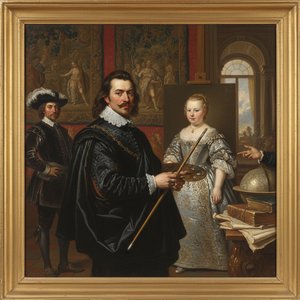
Diego Velázquez: Master of the Spanish Golden Age – Technique, Influence & Courtly Portraiture
Explore the life & work of Diego Velázquez, master of the Spanish Golden Age. Discover his innovative techniques, iconic paintings like Las Meninas, and lasting influence on art history. Expert insights for collectors.


