

 पूर्वावलोकन देखें
 साझा करें
 साझा करें
 विस्तृत विवरण

 डाउनलोड करें
 समान कलाकृतियाँ
 एक्स-रे
 स्लाइड शो देखें
Carnival in Flanders

 पूरा देखें
गिक्ली / आर्ट प्रिंट
तेज़ उत्पादन और विभिन्न फिनिश विकल्पों के साथ म्यूजियम-क्वालिटी गिकली (giclée) या कैनवस प्रिंट। ( हाथ से बनी पेंटिंग खरीदें छवि खरीदें)




P118B $10

P118H $10

P118W $10

P438Z $10

P508JH $12

P508YH $12

P805H $10

P805Z $10

P919BZ $10

P919G $10

P919XJ $10

P959ZH $10

P968JZ $12

W106C $8

W218G $10

W218JH $8

W218Y $10

W307PJ $10

W316G $10

W316PJ $8

W316Y $10

W398PJ $8

W4111J $10

W500HY $15

W500JH $15

W692G $12

W849H $8

W940BG $15

W953PJ $8




कलाकृति के मूल अनुपात से मेल खाने वाले हमारे पूर्व निर्धारित आकारों में से चुनें।

आप किसी विशिष्ट फ्रेम या स्थान के अनुसार अपने स्वयं के आयाम (dimensions) दर्ज कर सकते हैं। यदि आपके द्वारा चुना गया आकार मूल छवि के अनुपात से मेल नहीं खाता है, तो हम कलाकृति को क्रॉप कर देंगे या मिरर किए गए या सॉलिड-फिल किनारे के साथ छवि का विस्तार करेंगे। उत्पादन शुरू होने से पहले आपकी स्वीकृति के लिए एक डिजिटल मॉकअप भेजा जाएगा।
कृपया ध्यान दें कि स्क्रीन पर दिखने वाला प्रीव्यू वास्तविक क्रॉपिंग या विस्तार को नहीं दर्शाता है। केवल मॉकअप ही अंतिम संरचना को सटीक रूप से दिखाएगा।
हालाँकि कस्टम आकार उपलब्ध हैं, फिर भी हम मूल अनुपात बनाए रखने के लिए पूर्व-निर्धारित सूची में से एक आयाम चुनने की सलाह देते हैं।
विश्वव्यापी डिलीवरी (), मानक 4/5 सप्ताह के बजाय मात्र 2 सप्ताह में। (4 सितमबर)

दुनिया भर में मुफ़्त एक्सप्रेस शिपिंग

उच्च गुणवत्ता वाला लिनेन कैनवास

पूर्ण शिपिंग बीमा

सीमा शुल्क और आयात कर वापसी की गारंटी

सटीक रंग मिलान की गारंटी

60-दिन की वापसी नीति (केवल दोषों के लिए)

100% पैसे वापसी की गारंटी

थोक छूट का लाभ
 ग्लास का विकल्प केवल 110 सेमी से कम आकार में ही उपलब्ध है।

Carnival in Flanders
गिक्ली / आर्ट प्रिंट
प्रतिकृति का आकार
-


कुल देय राशि
$ 80
James Ensor’s Carnival in Flanders: A Symphony of Shadows and Spectacle
James Ensor's “Carnival in Flanders,” painted in 1931, isn’t merely a depiction of a Belgian fête; it’s a meticulously crafted psychological portrait rendered in oil on canvas—a testament to the artist’s unwavering fascination with unsettling imagery and social critique. Created during the height of Expressionism, this artwork transcends its surface appearance, inviting viewers into a darkly humorous contemplation of human behavior and societal anxieties.
- Subject Matter: The painting captures a vibrant carnival scene—a cacophony of figures jostling for position amidst elaborate decorations. Ensor eschews idealized beauty, presenting instead a raw portrayal of ordinary people engaged in revelry, albeit with an undercurrent of unease.
- Style & Technique: Ensor’s distinctive style is characterized by bold brushstrokes and jarring color palettes—a deliberate rejection of academic conventions. He employs thick impasto to create textural surfaces that amplify the emotional intensity of the scene, conveying a palpable sense of movement and disorientation.
- Historical Context: Painted in the wake of World War I, “Carnival in Flanders” reflects the pervasive disillusionment felt by many artists following the horrors of conflict. Ensor’s work aligns with the Expressionist impulse to confront uncomfortable truths about human nature and societal morality—a reaction against the optimism of preceding decades.
Symbolism & Emotional Impact: The central figure, holding an umbrella amidst a throng of others, embodies both vulnerability and defiance. Surrounding him are six umbrellas – a visual motif that Ensor frequently utilized to represent protection from external forces and the illusion of control. Notably, perched atop one of the figures is a bird—a symbol of freedom yet also of fragility, mirroring the precariousness of human existence within the spectacle of carnival.
Ensor’s masterful use of color contributes significantly to the artwork's emotional resonance. Dominant hues of crimson and ochre clash dramatically against muted browns and greens, creating a visual tension that mirrors the psychological turmoil depicted in the scene. The artist’s deliberate distortion of perspective further enhances this unsettling effect, immersing viewers in an atmosphere of disorientation and unease.
- Further Exploration: Consider Ensor's broader artistic oeuvre—particularly “The Laughing Cavalier” and “Night Café”—to appreciate the consistency of his stylistic vision and thematic concerns. These works share a similar preoccupation with grotesque imagery and psychological exploration, cementing Ensor’s legacy as one of the most influential artists of the early 20th century.
A reproduction of “Carnival in Flanders” offers an opportunity to engage with Ensor's profound artistic insights—a captivating glimpse into a world where joy masks despair and spectacle conceals unsettling truths. Its enduring power lies in its ability to provoke contemplation and challenge conventional perceptions of beauty and morality.
कलाकार का जीवन परिचय
James Ensor: A Visionary of Disquiet
James Sidney Edouard, Baron Ensor (Ostend, 13 April 1860 – November 19, 1949) был бельгийским художником и гравёром, оказавшим значительное влияние на экспрессионизм и сюрреализм. Он был членом художественной группы Les XX.
Early Influences and Artistic Training
James Ensor’s father, James Frederic Ensor, родился в Брюсселе у английских родителей и был образованным человеком, изучавшим инженерию в Англии и Германии. Его мать, Мария Катерина Хаэгеман, была бельгийкой. Сам Энсор не проявлял интереса к академическому изучению и оставил школу в возрасте пятнадцати лет, чтобы начать своё художественное обучение с двух местных художников. Он посещал Академию Королевскую Бельгии в Брюсселе вместе со своим одноклассником Фернандом Хнопфом.
The Birth of Expressionism: Bold Experimentation
Энсор быстро отказался от традиционного подхода к живописи и начал разрабатывать революционный стиль, который отражал его собственное видение мира. Он особенно был очарован карнавальской культурой организованной вокруг праздника Мартра каждый год в Бельгии, что несомненно было вызвано тем, что семья Энсора в Остенде была главным поставщиком карнавальной атрибутики. Формальный метод живописи Энсора отличался от традиционных методов и был предназначен для выражения его личной позиции. Он отвергал французский импрессионизм и символизм и использовал экспрессивные средства света, линии и цвета.
Iconic Paintings and Recurring Themes
Энсор создал серию работ, которые продолжают поражать и восхищать публику сегодня. Картина «Христос входит в Брюссель» (1888–89) является одним из самых известных произведений Энсора и представляет собой сатиру религиозной неискренности и социальной безразличия. Этот тревожный образ Христа, входящего в город, наполненный гротескными масками и фигурами, является мощным комментарием о разрыве между духовными идеалами и человеческим поведением. Картина «Скелеты сражаются за повешенного человека» (1891) исследует темы смерти, разложения и абсурда жизни.
Legacy and Recognition
Несмотря на первоначальное сопротивление Энсора его художественное наследие остается свидетельством силы искусства для столкновения с неудобными истинами и исследования глубины человеческого состояния. Он является одним из ключевых фигур в переходном периоде от XIX века к началу XX века — настоящим пионером современного искусства.

जेम्स एन्सर
1860 - 1949 , बेल्जियम
मुख्य तथ्य
- Artistic Movement Or Style: अभिव्यक्तिवाद और अतिवास्तववाद
- Artists Who Influenced This Artist:
- पीटर पॉल रुबेन्स
- फ्रांसिस्को गोया
- विथ्सलर
- Date Of Birth: अप्रैल 13, 1860
- Date Of Death: नवंबर 19, 1949
- Full Name: James Sidney Edouard Ensor
- Nationality: बेल्जियम
- Notable Artworks:
- क्राइस्ट का ब्रुसेल्स में प्रवेश
- संकेतित मुखौटे
- सेंट एंथोनी के दुखों का चित्रण
- Place Of Birth: ओस्टेंड, बेल्जियम
संबंधित लेख
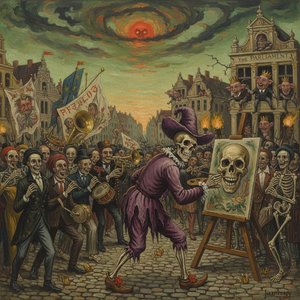
James Ensor's Grotesque Visions: Social Commentary & Artistic Innovation
Explore the unsettling yet captivating world of James Ensor, a pioneer of Expressionism. Discover his satirical masterpieces, symbolic imagery & lasting influence on modern art. High-quality reproductions available at OriginalUniqueArt.

जेम्स एबॉट मैकनील व्हिस्लर की 25 उत्कृष्ट कलाकृतियाँ: सौंदर्य और इतिहास का संगम
जेम्स एबॉट मैकनील व्हिस्लर की 25 सर्वश्रेष्ठ कलाकृतियों का अन्वेषण करें। सौंदर्यवादी आंदोलन, रात्रि दृश्य और पोर्ट्रेट से लेकर, प्रत्येक पेंटिंग एक कहानी कहती है। उच्च गुणवत्ता वाले कला पुनरुत्पादन के लिए OriginalUniqueArt.com पर खोजें।

Sir Alfred Munnings' Masterpieces: 25 Paintings That Define Equine Art | OriginalUniqueArt
Explore 25 iconic Sir Alfred Munnings paintings! Discover the beauty of British Impressionism, equine art & rural England. Find museum-quality reproductions and elevate your home decor with OriginalUniqueArt. Explore the full collection online.
Unveiling the Mystery: A Journey Through the World's Most Iconic Mask Artworks
Embark on a profound journey through the world's most iconic mask artworks. Explore the spiritual depth, intricate craftsmanship, and rich cultural heritage of global traditions, from Chhau to Gomira, in this expert-led exploration of ancestral artistry and symbolic beauty.
Figurative Expressionism: Emotional Intensity & Subjective Reality in 20th-Century Art
Explore the powerful world of Figurative Expressionism with OriginalUniqueArt. Discover key artists like Kirchner & Beckmann, understand its emotional depth, and learn how to collect this influential 20th-century art movement.



