

 पूर्वावलोकन देखें
 भेजें
भेजें साझा करें
 विवरण देखें
 मार्गदर्शिका

 डाउनलोड करें
 समान वस्तुएं
 एक्स-रे
 स्लाइड शो देखें
 आंकड़े
Spring Flood
 Oil On Canvas
- WallArt
- Impressionism
 1897
1897- 19th Century
 64.0 x 57.0 cm
 Третьяковская галерея
 और पढ़ें
गिक्ली / आर्ट प्रिंट
तेज़ उत्पादन और विभिन्न फिनिश विकल्पों के साथ म्यूजियम-क्वालिटी गिकली (giclée) या कैनवस प्रिंट। ( हाथ से बनी पेंटिंग खरीदें डिजिटल इमेज पर जाएँ)




































कलाकृति के मूल अनुपात से मेल खाने वाले हमारे पूर्व निर्धारित आकारों में से चुनें।

अपने फ्रेम या अपनी दीवार के अनुसार आवश्यक चौड़ाई और ऊंचाई दर्ज करें। प्रिंट को केवल काटा जा सकता है, चित्र से बड़ा कभी नहीं बनाया जा सकता, इसलिए अलग आकार का साइज चित्र का एक हिस्सा खो देता है। किसी भी चीज़ को प्रिंट करने से पहले हम आपकी स्वीकृति के लिए आपको एक डिजिटल मॉकअप भेजते हैं। इस पृष्ठ पर दिखाया गया चित्र वास्तविक कटिंग नहीं दिखाता है — केवल मॉकअप ही इसे दर्शाता है।
विश्वव्यापी डिलीवरी (), मानक 4/5 सप्ताह के बजाय मात्र 2 सप्ताह में। (26 अक्टूबर)

दुनिया भर में मुफ़्त एक्सप्रेस शिपिंग

प्रीमियम ग्रेड लिनेन कैनवास

पूर्ण शिपिंग बीमा

सीमा शुल्क और आयात कर वापसी की गारंटी

सटीक रंग मिलान की गारंटी

100 दिनों की वापसी नीति (केवल निर्माण दोष होने पर)

100% पैसे वापसी की गारंटी

थोक छूट का अवसर
 ग्लास का विकल्प केवल 110 सेमी से कम आकार में ही उपलब्ध है।

Spring Flood
गिक्ली / आर्ट प्रिंट
प्रतिकृति का आकार
-


कुल मूल्य
₹ 7675
Spring Flood by Isaak Ilyich Levitan: A Serene Reflection of Nature
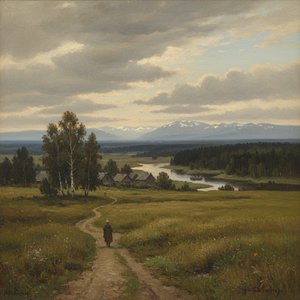
Isaak Ilyich Levitan's "Spring Flood," painted in 1897, is a captivating landscape that embodies the artist’s signature style – a poignant and evocative portrayal of the Russian countryside. This oil on canvas masterpiece, measuring 64 x 57 cm, resides within the esteemed collection of the Tretyakov Gallery in Moscow, Russia, serving as a testament to Levitan's profound connection with nature and his ability to translate its essence onto canvas.
Artistic Style and Technique
"Spring Flood" exemplifies Levitan’s mastery of mood landscape painting. Unlike earlier landscape artists who focused on topographical accuracy, Levitan sought to capture the emotional atmosphere and spiritual resonance of a scene. The artwork is rendered in an Impressionistic style, characterized by loose brushstrokes and a focus on capturing fleeting moments of light and color. The technique involves layering paint to build up texture and create atmospheric effects. Notice how the artist uses muted yellows, browns, and blues to evoke a sense of serenity and quietude. The delicate play of light on the water creates a sense of movement and energy, while the reflections in the water add depth and complexity to the composition. The flattened perspective is typical of Impressionism, emphasizing the surface qualities of the paint.
Subject Matter and Composition
The painting depicts a tranquil riverbank scene during what appears to be late autumn or early spring. The dominant feature is the reflection of trees and shoreline in the water, creating a symmetrical effect that draws the viewer into the heart of the landscape. A small boat rests gently on the shore, adding a subtle human element to the otherwise natural setting. The composition is carefully balanced, with the horizon line positioned slightly above the midpoint to emphasize the vastness of the sky and the surrounding environment. The inclusion of two people in the scene adds a touch of human connection to the peaceful landscape.
Historical Context and Symbolism
Levitan painted "Spring Flood" during a period of significant artistic change in Russia, as artists began to move away from traditional academic styles towards more modern approaches. The painting reflects this shift, embracing Impressionistic techniques while retaining a distinctly Russian sensibility. The flood itself can be interpreted symbolically – representing renewal and the cyclical nature of life. The muted color palette and tranquil atmosphere evoke a sense of melancholy and introspection, characteristic of Levitan’s work. It is believed that Levitan was deeply affected by personal loss during this time, which may have contributed to the painting's poignant emotional tone.
Emotional Impact and Legacy
"Spring Flood" continues to resonate with viewers today due to its ability to evoke a profound sense of peace and contemplation. The artwork’s beauty lies not only in its technical skill but also in its capacity to transport the viewer to a tranquil natural setting, inviting them to reflect on the beauty and fragility of life. As a masterpiece of Russian art, "Spring Flood" stands as a testament to Levitan's enduring legacy as one of Russia's most beloved landscape painters.
प्रश्न और उत्तर
क्या इसाक इल्यिच लेवितान द्वारा "Spring Flood", Impressionism कला के सबसे बहुप्रतीक्षित कलाकृतियों में से एक है?
Impressionism आंदोलन के भीतर, "Spring Flood" का लोकप्रियता स्तर Recognized है।
इसाक इल्यिच लेवितान द्वारा "Spring Flood" किस ऐतिहासिक काल का है?
"Spring Flood" 19th Century युग से संबंधित है।
इसाक इल्यिच लेवितान द्वारा "Spring Flood" में कौन से रंग प्रमुख हैं?
इसाक इल्यिच लेवितान द्वारा "Spring Flood" में Neutrals रंगों का उपयोग किया गया है, जिसमें Celadon (#bbc5c3) प्रमुख रंग है।
कलाकार का परिचय
A Symphony of the Russian Soul: The Life and Art of Isaak Ilyich Levitan
Isaak Ilyich Levitan, a name synonymous with the evocative power of Russian landscape painting, was more than just a chronicler of nature; he was a poet of the land, a translator of its moods into visual form. Born in 1860 in Kibarty (present-day Lithuania) to a Jewish family who later settled in Moscow, Levitan’s life was marked by both profound hardship and an unwavering dedication to his art. The early loss of his mother and father instilled within him a sensitivity that would permeate his canvases with a melancholic beauty. This sense of longing, coupled with the restrictions imposed upon Jewish communities in Tsarist Russia, fueled a desire to find solace and expression in the natural world. He entered the Moscow School of Painting, Sculpture and Architecture in 1873, where he came under the tutelage of Alexei Savrasov, whose influence would prove pivotal in shaping Levitan’s artistic vision. It was Savrasov who nurtured his student's innate ability to capture not merely the appearance of nature, but its very essence—its atmosphere, its emotional resonance.The Birth of a ‘Mood Landscape’
Levitan quickly distinguished himself as an artist capable of conveying profound emotion through landscape. He wasn’t interested in topographical accuracy for its own sake; rather, he sought to imbue his paintings with a sense of *mood*, a feeling that resonated deep within the viewer's soul. This approach earned him the title of pioneer of the “mood landscape,” a genre that moved beyond simple representation to explore the spiritual connection between humanity and nature. His palette was often subdued, favoring naturalistic colors and poetic elements over vibrant displays. He masterfully employed light and shadow, creating atmospheric effects that evoked feelings of tranquility, solitude, or even quiet despair. Works like *Autumn Day. Sokolniki* (1879), painted when he was just nineteen years old, already demonstrated this remarkable ability to capture the subtle nuances of the Russian countryside. The painting’s muted tones and delicate rendering of light create a sense of wistful nostalgia, hinting at the transience of beauty and the inevitability of change. Later masterpieces such as *The Vladimirka Road* (1892) and *Eternal Rest* (1894), prominently displayed in the Tretyakov Gallery, further solidified his reputation as a master of emotional landscape painting.Influences and Artistic Kinships
While deeply indebted to Savrasov’s influence, Levitan was also receptive to other artistic currents. He collaborated with fellow artists like Konstantin Korovin, Mikhail Nesterov, and Nikolai Chekhov—the brother of the renowned playwright Anton Chekhov, who became a lifelong friend. This circle fostered an environment of creative exchange and mutual support. Though he briefly experimented with Impressionistic techniques, Levitan never fully embraced the movement, maintaining a uniquely Russian sensibility in his work. He found inspiration not only in the visual world but also in music and literature, seeking to translate their emotional power into his paintings. His designs for scenery for Savva Mamontov’s private Russian Opera demonstrate his versatility and willingness to explore different artistic mediums. The influence of these collaborations and experiences can be seen in works like *Spring Flood*, *Stormy Day*, *Vesper Chimes* and *Silent Cloister*, each a testament to his evolving style and deepening understanding of the emotional landscape.Major Achievements and Legacy
Levitan’s ascension to prominence within the Russian art world was marked by several significant milestones. He gained recognition as a student at Moscow School of Painting, Sculpture and Architecture where he studied under Alexei Savrasov who instilled in him an unwavering passion for portraying Russian landscapes with profound emotional depth. His election to the Imperial Academy of Arts in 1897 cemented his position as one of Russia’s foremost artistic figures. Furthermore, he served as head of the landscape studio at Moscow School of Painting, Sculpture and Architecture from 1898 onward nurturing the talent of aspiring artists. Perhaps most notably, Levitan's paintings became synonymous with the mood landscape genre establishing a distinctive aesthetic characterized by atmospheric subtlety and psychological resonance. His enduring legacy resides in his ability to capture the soul of Russia—its melancholy beauty, its spiritual yearning—and to communicate these emotions powerfully through visual form.A Final Resting Place
Levitan’s untimely death in 1900 at the age of forty left an indelible mark on Russian art history. His remains were interred in Novodevichy Cemetery alongside Anton Chekhov—a poignant symbol of artistic kinship and shared devotion to capturing the essence of their time. Isaak Ilyich Levitan's canvases continue to inspire awe and contemplation reminding us that true artistry transcends mere representation offering instead a glimpse into the deepest recesses of human experience and the sublime grandeur of the natural world. Isaak Ilyich Levitan remains an icon of Russian landscape painting—a testament to his unwavering commitment to artistic excellence and his profound connection to the spirit of Russia.
इसाक इल्यिच लेवितान
1860 - 1900 , रूस
संक्षिप्त जानकारी
- Artistic Movement Or Style: Моодовый пейзаж, Реализм
- Artists Who Influenced This Artist:
- Алексей Саввасов
- Василий Перов
- Василий Поленов
- Date Of Birth: August 30, 1860
- Date Of Death: July 22, 1900
- Full Name: Isaak Ilyich Levitan
- Nationality: Русский
- Notable Artworks:
- Осенний день. Сокольники
- Владимирское шоссе
- Вечная тишина
- Весенний половодье
- Мрачный день
- Вечерняя колокольница
- Place Of Birth: Kibarty, Lithuania
संबंधित लेखों की सूची

Evocations of Place: A Historical Journey Through Landscape Art
Explore the rich history of landscape art with OriginalUniqueArt. Discover renowned artists, movements like Impressionism & Romanticism, and expert guidance for collecting timeless pieces. Find your perfect serene escape today!

जॉन कॉन्स्टेबल की शीर्ष 25 कलाकृतियाँ: प्रकृति का सौंदर्य और भावनात्मक गहराई | OriginalUniqueArt
जॉन कॉन्स्टेबल की शीर्ष 25 कलाकृतियों का अन्वेषण करें! ग्रामीण इंग्लैंड के रोमांटिक परिदृश्य, हे वेन और स्टूर नदी के सुंदर चित्रण। उच्च गुणवत्ता वाले कला प्रिंट और दीवार सजावट के लिए OriginalUniqueArt.com पर संग्रह देखें।

Aleksey Savrasov: The Poetic Realism That Defined Russian Landscape Painting
Explore the poetic realism of Aleksey Savrasov, founder of Russian lyrical landscape painting. Discover his masterpieces like 'The Rooks Have Returned' and learn about his lasting influence on 19th-century art. OriginalUniqueArt offers high-quality reproductions.

रोमांटिक कला: 10 उत्कृष्ट लैंडस्केप कृतियाँ जो परिभाषित करती हैं | OriginalUniqueArt
रोमांटिक लैंडस्केप पेंटिंग की 10 उत्कृष्ट कृतियाँ! जानें कैस्पर डेविड फ्रेडरिक, टर्नर जैसे कलाकारों के बारे में और कला के इतिहास को समझें। OriginalUniqueArt.com पर उच्च गुणवत्ता वाले आर्ट रिप्रोडक्शन और सजावट के विचार खोजें।
Fyodor Vasilyev: A Poetic Vision of Russian Landscape – Life, Legacy, and the Transience of Nature
Explore the captivating world of Fyodor Vasilyev, a pioneering Russian landscape painter. Discover his lyrical style, influential works like 'Clouds' & lasting legacy. Learn about his life, artistic journey & impact on Russian art history.
