पूर्वावलोकन देखें
 भेजें
भेजें साझा करें
 विवरण देखें
 मार्गदर्शिका

 डाउनलोड करें
 समान वस्तुएं
 एक्स-रे
 स्लाइड शो देखें
 आंकड़े
Fighting Cows
 Oil On Canvas
- WallArt
- Expressionism
 1911
1911- Modern
 83.0 x 135.0 cm
 और पढ़ें
हस्तनिर्मित ऑयल रिप्रोडक्शन
आपके आकार और फ्रेम के अनुसार कैनवास पर हाथ से बनी ऑयल पेंटिंग, हमारे कलाकारों द्वारा विशेष रूप से ऑर्डर पर तैयार। ( प्रिंट विकल्प पर जाएँ डिजिटल इमेज पर जाएँ)




P118B ₹10

P118H ₹10

P118W ₹10

P438Z ₹10

P508JH ₹12

P508YH ₹12

P805H ₹10

P805Z ₹10

P919BZ ₹10

P919G ₹10

P919XJ ₹10

P959ZH ₹10

P968JZ ₹12

W106C ₹8

W218G ₹10

W218JH ₹8

W218Y ₹10

W307PJ ₹10

W316G ₹10

W316PJ ₹8

W316Y ₹10

W398PJ ₹8

W4111J ₹10

W500HY ₹15

W500JH ₹15

W692G ₹12

W849H ₹8

W940BG ₹15

W953PJ ₹8




कलाकृति के मूल अनुपात से मेल खाने वाले हमारे पूर्व निर्धारित आकारों में से चुनें।

अपने फ्रेम या अपनी दीवार के अनुसार आवश्यक चौड़ाई और ऊंचाई दर्ज करें। यह हाथ से पेंट किया गया है, इसलिए अलग आकार के लिए कलाकार चित्र के चारों ओर थोड़ा अधिक पेंट कर सकता है, या थोड़ा काट सकता है — चुनाव आपका है। पेंटिंग शुरू होने से पहले हम आपकी स्वीकृति के लिए एक डिजिटल मॉकअप भेजते हैं। इस पृष्ठ पर दिखाई गई तस्वीर वास्तविक परिणाम नहीं दिखाती है — केवल मॉकअप ही वास्तविक रूप दिखाता है।
ऑर्डर देने के बाद, OriginalUniqueArt.com टीम निर्देशों के लिए क्लाइंट को ईमेल करेगी और एक मॉकअप प्रीव्यू प्रदान करेगी
विश्वव्यापी वितरण () मानक 5 सप्ताह के बजाय मात्र 3/4 सप्ताह में। (21 अक्टूबर)। गुणवत्ता से कोई समझौता नहीं।

दुनिया भर में मुफ़्त एक्सप्रेस शिपिंग

प्रीमियम ग्रेड लिनेन कैनवास

पूर्ण शिपिंग बीमा

सीमा शुल्क और आयात कर वापसी की गारंटी

सटीक रंग मिलान की गारंटी

100 दिनों की वापसी नीति (केवल निर्माण दोष होने पर)

100% पैसे वापसी की गारंटी

थोक छूट का अवसर
 ग्लास का विकल्प केवल 110 सेमी से कम आकार में ही उपलब्ध है।

Fighting Cows
प्रतिकृति की सामग्री
प्रतिकृति का आकार
-


कुल मूल्य
₹ 28699
The Profound Resonance of Rural Life: Franz Marc’s *Fighting Cows*
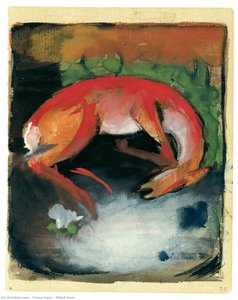
Franz Marc's *Fighting Cows*, painted in 1911, isn’t merely a depiction of three bovine figures amidst a verdant field; it’s a distilled essence of Expressionist philosophy translated into vibrant color and dynamic form. This oil on canvas, measuring 83 x 135 cm, stands as a pivotal work within Marc's oeuvre and a cornerstone of the early 20th-century art movement that sought to convey raw emotion and subjective experience rather than objective reality. The painting immediately draws the eye with its bold palette – deep reds, blues, greens, and yellows—a deliberate departure from naturalistic representation, reflecting Marc’s core belief in the expressive power of color itself.
The composition is deceptively simple yet profoundly layered. Three cows dominate the scene, positioned strategically to create a sense of movement and tension. The leftmost cow, with its lowered head and spread legs, embodies a powerful stance of readiness, while the central cow stands upright, facing right, suggesting an active engagement in the unfolding drama. The third cow, situated on the far right, mirrors this posture but turns away, creating a visual dialogue between the animals – a silent conversation about conflict and interaction. The lush green field serves not as a passive backdrop, but as an integral part of the narrative, providing a vibrant contrast to the earthy tones of the cows and amplifying their presence within the landscape.
Decoding Symbolism: Color, Form, and Spiritual Intent
Marc’s masterful use of color is central to understanding *Fighting Cows*. He wasn't simply aiming for visual appeal; he was employing a symbolic language deeply rooted in his spiritual beliefs. As Marc himself believed, colors possessed inherent emotional qualities, and he meticulously selected them to evoke specific feelings and ideas. The dominant red, representing the earth and primal energy, is powerfully contrasted with the blue, symbolizing masculinity, spirituality, and introspection. The yellow hues, often associated with femininity and sensuality, subtly permeate the scene, adding a layer of complexity to the interaction between the animals.
Beyond color, Marc’s abstracted forms contribute significantly to the painting's expressive power. The cows are not rendered with photographic accuracy; instead, they are simplified into powerful silhouettes, emphasizing their essential nature and reducing them to archetypal figures. This simplification allows Marc to focus on conveying the underlying emotional state of the scene – a sense of tension, struggle, and perhaps even a hint of melancholy. The dynamic positioning of the animals—their stances and facing directions—further reinforces this feeling of movement and conflict.
A Window into Expressionism: Context and Legacy
*Fighting Cows* emerged during a period of intense artistic experimentation and intellectual ferment in Germany, marking a crucial moment in the development of Expressionism. Influenced by artists like Vincent van Gogh, Marc sought to move beyond mere representation and delve into the realm of subjective experience. The painting reflects the broader concerns of the time—a questioning of traditional values, a fascination with the spiritual, and a desire to express inner emotions through art.
Marc’s work was deeply intertwined with the *Blaue Reiter* (Blue Rider) group, an artistic circle that he co-founded alongside Vasily Kandinsky. This collective explored themes of spirituality, symbolism, and color theory, pushing the boundaries of modern art. Marc's influence extended far beyond his immediate circle, inspiring a generation of artists who sought to capture the essence of human emotion through bold colors and expressive forms. His legacy can be seen in the works of artists like August Macke and others associated with the Duisburg Lehmbruck Museum.
Bringing *Fighting Cows* Home: A Reproduction for Your Space
OriginalUniqueArt offers meticulously hand-painted reproductions of Franz Marc’s *Fighting Cows*, capturing the painting's vibrant colors, dynamic composition, and profound emotional resonance. Each reproduction is created by skilled artists using traditional oil painting techniques, ensuring a faithful representation of Marc’s original vision. Available in various sizes, our reproductions are perfect for collectors, art enthusiasts, and interior designers seeking to infuse their spaces with the spirit of Expressionism. Consider how this powerful image—a meditation on rural life, conflict, and spiritual yearning—can become a focal point within your home or office, sparking conversation and inviting contemplation.
प्रश्न और उत्तर
"Fighting Cows" किस कलाकार की रचना है?
"Fighting Cows" के पीछे के कलाकार फ्रांस मर्क हैं। यह कृति फ्रांस मर्क के नाम के अंतर्गत सूचीबद्ध है।
फ्रांस मर्क के करियर में "Fighting Cows" किस कालखंड का हिस्सा है?
"Fighting Cows" फ्रांस मर्क के करियर के Early Period काल से संबंधित है। यह वर्गीकरण इस कृति को कलाकार के विकासक्रम से जोड़ता है।
क्या "Fighting Cows" के रंग गहरे हैं या हल्के?
फ्रांस मर्क द्वारा "Fighting Cows" के रंगों में Vivid तीव्रता है।
कलाकार का परिचय
रंगों और आध्यात्मिकता में डूबा एक जीवन
1880 में म्यूनिख में जन्मे फ्रांज मोरित्ज़ विल्हेम मार्क एक ऐसे चित्रकार थे, जिनके संक्षिप्त लेकिन अत्यंत केंद्रित करियर ने जर्मन अभिव्यक्तिवाद (German Expressionism) की दिशा को अपरिवर्तनीय रूप से बदल दिया। उनकी कहानी गहन आध्यात्मिक खोज की है जिसे एक जीवंत दृश्य भाषा में अनुवादित किया गया—जीवन के सार को उस शुद्धता के माध्यम से समझने की एक खोज जो उन्हें प्राकृतिक दुनिया, विशेष रूप से पशु जगत में मिली थी। प्रारंभ में अपने पिता, विल्हेम मार्क, जो एक परिदृश्य चित्रकार (landscape painter) थे, से प्रभावित होने के कारण युवा फ्रांज का कलात्मक मार्ग तुरंत निश्चित नहीं था। उन्होंने कुछ समय के लिए धर्मशास्त्र पर विचार किया, विश्वास और अस्तित्व के प्रश्नों से जूझते रहे, और अंततः म्यूनिख के एकेडमी ऑफ फाइन आर्ट्स में खुद को कला के प्रति समर्पित कर दिया। धार्मिक विचारों के ये प्रारंभिक अन्वेलेशन उनके काम में गहराई से समाए रहे, जिससे उनका यह विश्वास पुख्ता हुआ कि कला आध्यात्मिक अनुभव का एक माध्यम हो सकती है। उनके शैक्षणिक प्रशिक्षण ने उन्हें तकनीकी आधार प्रदान किया, लेकिन पेरिस की यात्राओं के दौरान विन्सेंट वैन गॉग के कार्यों से हुए मिलन ने वास्तव में उनकी कलात्मक दृष्टि को प्रज्वलित किया। वैन गॉग के रंगों के भावनात्मक उपयोग और कच्चे भावों ने मार्क को गहराई से प्रभावित किया, जिससे वे पारंपरिक तकनीकों से मुक्त होकर एक अधिक व्यक्तिपरक और भावनात्मक रूप से आवेशित शैली की ओर बढ़ सके।द ब्लू राइडर और एक नई कलात्मक दृष्टि
मार्क का कलात्मक विकास एकाकी नहीं था; यह 20वीं सदी की शुरुआत के म्यूनिख के गतिशील संदर्भ में फला-फूला। उन्होंने 1911 में वासिली कांडिंस्की के साथ मिलकर 'डेर ब्लाउ रीटर' (Der Blaue Reiter - द ब्लू राइडर) की सह-स्थापना करने से पहले, 'न्यूई कुन्स्टलरवेरिनुंग म्यूनिख' सहित विभिन्न कलाकार समूहों के साथ प्रयोग किए। यह केवल एक समूह या प्रदर्शनी श्रृंखला नहीं थी; यह एक दार्शनिक और कलात्मक क्रांति थी। 'डेर ब्लाउ रीटर' ने केवल चित्रण से आगे बढ़ने का प्रयास किया, जिसका लक्ष्य अमूर्तता (abstraction) और प्रतीकात्मक रंगों के माध्यम से आंतरिक आध्यात्मिक सत्यों को व्यक्त करना था। इसी नाम की पत्रिका इन विचारों के प्रसार के लिए एक मंच बन गई, जिसने न केवल उनके अपने काम को प्रदर्शित किया बल्कि अन्य प्रगतिशील कलाकारों के कार्यों को भी दिखाया और लोक कला से लेकर आदिम मूर्तिकला तक विविध सांस्कृतिक प्रभावों की खोज की। इस अवधि के दौरान मार्क का योगदान अत्यंत महत्वपूर्ण था। उन्होंने परिदृश्यों को स्थिर दृश्यों के रूप में चित्रित करने के बजाय, जानवरों—घोड़ों, हिरणों, लोमड़ियों—को आध्यात्मिक ऊर्जा के वाहक के रूप में केंद्रित किया। ये केवल पशु चित्र नहीं थे; वे मासूमियत, सद्भाव और प्राकृतिक दुनिया के साथ उस संबंध के प्रतीकात्मक प्रतिनिधित्व थे जिसे वे मानते थे कि मानवता ने खो दिया है। रॉबर्ट डेलने के अमूर्त रूपों और जीवंत रंगों के अन्वेषण के प्रभाव ने मार्क को उनके काम में सरलीकरण और उच्च भावनात्मक अभिव्यक्ति की ओर और अधिक प्रेरित किया। 'द टाइगर' (1912) और 'रेड डियर' (19ही 1912) जैसी पेंटिंग इस बदलाव का उदाहरण हैं, जो यथार्थवादी चित्रण के बजाय अपने विषयों के अंतर्निहित गुणों और साहसी रंग विकल्पों को प्रदर्शित करती हैं।प्रतीकवाद, रंग और अस्तित्व का सार
मार्क की कलात्मक शैली रंगों और रूपों के विशिष्ट उपयोग के लिए तुरंत पहचानी जा सकती है। उन्होंने रंगों का उपयोग वर्णनात्मक रूप से नहीं किया; इसके बजाय, उन्होंने उन्हें प्रतीकात्मक अर्थों से भर दिया। नीला रंग आध्यात्मिकता और पुरुषत्व का प्रतिनिधित्व करता था, पीला रंग खुशी और स्त्रीत्व का प्रतीक था, और लाल रंग हिंसा और भौतिकता को दर्शाता था। ये कोई मनमाने चुनाव नहीं थे बल्कि विशिष्ट भावनात्मक और दार्शनिक विचारों को संप्रेषित करने के लिए बनाया गया एक सावधानीपूर्वक निर्मित तंत्र था। उनके जानवर केवल विषय नहीं हैं; वे इन अवधारणाओं के अवतार हैं। रूपों का सरलीकरण—आकृतियों को उनके आवश्यक आकार तक कम करना—उस अंतर्निहित आध्यात्मिक सार पर और अधिक जोर देता जिसे वे पकड़ना चाहते थे। 'द टॉवर ऑफ ब्लू हॉर्सिस' (1913), जो दुखद रूप से द्वितीय विश्व युद्ध के दौरान खो गया था, इस दृष्टिकोण का शायद सबसे प्रतिष्ठित उदाहरण है, एक शक्तिशाली और विचारोत्तेजक रचना जो उनकी कलात्मक दृष्टि को समाहित करती है। उनका मानना था कि जानवरों में एक अंतर्निहित शुद्धता और प्रकृति के साथ ऐसा संबंध होता है जिसे मनुष्यों ने सामाजिक बाधाओं और बौद्धिककरण के माध्यम से त्याग दिया है। उन्हें इतनी श्रद्धा और प्रतीकात्मक महत्व के साथ चित्रित करके, मार्क दर्शकों को इस खोए हुए सद्भाव की याद दिलाना चाहते थे और प्राकृतिक दुनिया के प्रति गहरी प्रशंसा को प्रेरित करना चाहते थे। उनका काम यह चित्रित करने के बारे में नहीं था कि उन्होंने *क्या* देखा बल्कि यह था कि उन्होंने *कैसा* महसूस किया—अपने परिवेश के प्रति एक गहरा व्यक्तिगत और आध्यात्मिक उत्तर।एक दुखद अंत और स्थायी विरासत
1914 में प्रथम विश्व युद्ध के प्रकोप ने मार्क के जीवन और कलात्मक प्रक्षेपवक्र को नाटकीय रूप से बदल दिया। एक कलाकार के रूप में अपनी स्थिति के कारण छूट की तलाश करने के बावजूद, उन्हें जर्मन सेना में भर्ती कर लिया गया और एक घुड़सवार के रूप में सेवा दी। युद्ध की भयावहता ने उन्हें गहराई से प्रभावित किया, फिर भी अराजकता के बीच भी, उन्होंने पेंटिंग करना जारी रखा, अपनी कला में सांत्वना और अर्थ खोजते रहे। दुखद रूप से, फ्रांज मार्क की मृत्यु 4 मार्च, 1916 को वर्दुन की लड़ाई में हुई, जो कला जगत के लिए एक विनाशकारी क्षति थी। उनकी असामयिक मृत्यु ने संभावनाओं से भरे करियर को बीच में ही रोक दिया, लेकिन इसने आधुनिक कला इतिहास में एक महत्वपूर्ण व्यक्ति के रूप में उनके स्थान को भी पुख्ता कर दिया। उनका कार्य आज भी गूँजता है, कलाकारों की पीढ़ियों को प्रभावित करता है और अपनी भावनात्मक गहराई और आध्यात्मिक प्रतिध्वनि से दर्शकों को मंत्रमुग्ध करता है। मार्क की पेंटिंग्स दुनिया भर के प्रमुख संग्रहालयों में प्रदर्शित की जाती हैं, जिसमें म्यूनिख का लेनबाकहाउस शामिल है, जहाँ उनके काम का एक विस्तृत संग्रह है। उन्हें न केवल जर्मन अभिव्यक्तिवाद के अग्रदूत के रूप में बल्कि एक दूरदर्शी कलाकार के रूप में भी याद किया जाता है जिसने कला, आध्यात्मिकता और प्राकृतिक दुनिया के बीच गहरे संबंध को खोजने का साहस किया—एक ऐसी विरासत जो विस्मय और चिंतन को प्रेरित करती रहती है। उनकी कलात्मक दृष्टि भौतिक जगत से परे जाने और मानव आत्मा के भीतर कुछ गहरा छूने की कला की शक्ति के प्रमाण के रूप में बनी हुई है।
फ्रांस मर्क
1880 - 1916 , जर्मनी
संक्षिप्त जानकारी
- Artistic Movement Or Style: जर्मन अभिव्यक्तिवाद
- Artists Or Movements Influenced By This Artist: ['अब्स्ट्रैक्ट आर्ट']
- Artists Who Influenced This Artist:
- वैन गॉग
- डेलौनेय
- Date Of Birth: फ़र्ज़ मौरिज़ विल्हेम मार्च ८ फ़रवरी १८८०
- Date Of Death: ४ मार्च १९१६
- Full Name: Franz Moritz Wilhelm Marc
- Nationality: जर्मनी
- Notable Artworks:
- टॉवर ऑफ़ ब्लू हर्स
- रेड डीयर
- Place Of Birth: मुंख़ेन, जर्मनी
संबंधित लेखों की सूची

The Allure of Azure: Exploring the Symbolic & Aesthetic Depths of Blue in Art History
Explore the rich history of blue in art! Discover its symbolism, from ancient pigments to modern masterpieces by Kandinsky & Seurat. Uncover the psychological impact and cultural meanings behind this captivating hue.

Slate Blue Masterpieces: 10 Iconic Paintings & Timeless Home Decor Ideas
Immerse yourself in the captivating world of slate blue! Explore 10 iconic paintings by Monet, Van Gogh & Renoir. Discover their stories, techniques & find museum-quality art reproductions for your home at .

कला में पशु-प्रतीकवाद: आंतरिक सजावट में जीवन और संस्कृति का समावेश
कला में पशु-प्रतीकवाद के गहन अर्थ जानें। भारतीय और पश्चिमी कला परंपराओं से प्रेरणा लें और अपने घर को OriginalUniqueArt की उच्च गुणवत्ता वाली हस्तनिर्मित पेंटिंग से सजाएं। विशेषज्ञ मार्गदर्शन उपलब्ध।

German Expressionism's 10 Defining Masterpieces | Art for Your Home
Explore 10 defining German Expressionism masterpieces – from Munch's 'The Scream' to Kandinsky’s abstracts. Discover the artists, stories & bold colors behind this powerful art movement. Find museum-quality reproductions at OriginalUniqueArt.com.

Franz Marc: Expressionism, Spirituality & the Animal Symbolism of a Modern Master
Explore the profound world of Franz Marc's Expressionist paintings. Discover his spiritual connection to animals, innovative use of color, and lasting impact on modern art history. Learn more at OriginalUniqueArt.