पूर्वावलोकन देखें
 भेजें
भेजें साझा करें
 विवरण देखें
 मार्गदर्शिका

 डाउनलोड करें
 समान वस्तुएं
 एक्स-रे
 स्लाइड शो देखें
 आंकड़े
Paulus Verschuur
 Oil On Canvas
- WallArt
- Baroque
 1643
1643 119.0 x 94.0 cm
 मेट्रोपॉलिटन म्यूज़ियम ऑफ़ आर्ट
 और पढ़ें
गिक्ली / आर्ट प्रिंट
तेज़ उत्पादन और विभिन्न फिनिश विकल्पों के साथ म्यूजियम-क्वालिटी गिकली (giclée) या कैनवस प्रिंट। ( हाथ से बनी पेंटिंग खरीदें डिजिटल इमेज पर जाएँ)




P118B ₹10

P118H ₹10

P118W ₹10

P438Z ₹10

P508JH ₹12

P508YH ₹12

P805H ₹10

P805Z ₹10

P919BZ ₹10

P919G ₹10

P919XJ ₹10

P959ZH ₹10

P968JZ ₹12

W106C ₹8

W218G ₹10

W218JH ₹8

W218Y ₹10

W307PJ ₹10

W316G ₹10

W316PJ ₹8

W316Y ₹10

W398PJ ₹8

W4111J ₹10

W500HY ₹15

W500JH ₹15

W692G ₹12

W849H ₹8

W940BG ₹15

W953PJ ₹8




कलाकृति के मूल अनुपात से मेल खाने वाले हमारे पूर्व निर्धारित आकारों में से चुनें।

आप किसी विशिष्ट फ्रेम या स्थान के अनुसार अपने स्वयं के आयाम (dimensions) दर्ज कर सकते हैं। यदि आपके द्वारा चुना गया आकार मूल छवि के अनुपात से मेल नहीं खाता है, तो हम कलाकृति को क्रॉप कर देंगे या मिरर किए गए या सॉलिड-फिल किनारे के साथ छवि का विस्तार करेंगे। उत्पादन शुरू होने से पहले आपकी स्वीकृति के लिए एक डिजिटल मॉकअप भेजा जाएगा।
कृपया ध्यान दें कि स्क्रीन पर दिखने वाला प्रीव्यू वास्तविक क्रॉपिंग या विस्तार को नहीं दर्शाता है। केवल मॉकअप ही अंतिम संरचना को सटीक रूप से दिखाएगा।
हालाँकि कस्टम आकार उपलब्ध हैं, फिर भी हम मूल अनुपात बनाए रखने के लिए पूर्व-निर्धारित सूची में से एक आयाम चुनने की सलाह देते हैं।
विश्वव्यापी डिलीवरी (), मानक 4/5 सप्ताह के बजाय मात्र 2 सप्ताह में। (11 अक्टूबर)

दुनिया भर में मुफ़्त एक्सप्रेस शिपिंग

प्रीमियम ग्रेड लिनेन कैनवास

पूर्ण शिपिंग बीमा

सीमा शुल्क और आयात कर वापसी की गारंटी

सटीक रंग मिलान की गारंटी

100 दिनों की वापसी नीति (केवल निर्माण दोष होने पर)

100% पैसे वापसी की गारंटी

थोक छूट का अवसर
 ग्लास का विकल्प केवल 110 सेमी से कम आकार में ही उपलब्ध है।

Paulus Verschuur
गिक्ली / आर्ट प्रिंट
प्रतिकृति का आकार
-


कुल मूल्य
₹ 7646
A Portrait of Dignified Authority: Paulus Verschuur by Frans Hals
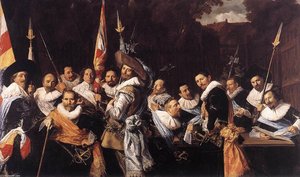
Frans Hals’s “Paulus Verschuur,” painted in 1643, is more than simply a portrait; it's a meticulously crafted study in Dutch Golden Age formality and understated power. The painting captures the likeness of Paulus Verschuur, a prominent Rotterdam mayor and director of the Dutch East India Company, offering a glimpse into the social standing and civic responsibility of a man at the heart of his city’s bustling commercial world. Hals masterfully employs his signature loose brushwork to create an image that is both strikingly realistic and imbued with a palpable sense of character – a testament to his revolutionary approach to portraiture.
The composition centers on Verschuur's face, rendered with remarkable detail despite the artist’s characteristic disregard for rigid precision. His gaze, direct and unwavering, engages the viewer immediately, conveying an air of quiet confidence and authority. The lighting, a dramatic chiaroscuro technique, sculpts his features, highlighting the strong lines of his face and emphasizing the subtle textures of his clothing. Hals skillfully uses light to draw attention to key elements – the meticulously rendered lace collar, a clear indicator of wealth and social status in 17th-century Holland, and the gesture of his hand resting lightly on his hip, suggesting both control and a certain relaxed dignity.
The Language of Form: Technique and Style
Hals’s distinctive style is immediately recognizable. He eschews the smooth, polished surfaces favored by many of his contemporaries, opting instead for a vibrant, almost impasto-like application of paint. The brushstrokes are visible, energetic, and full of life – a deliberate choice that imbues the portrait with a sense of immediacy and movement. This technique, combined with Hals’s masterful use of color, creates an illusion of depth and texture, particularly evident in the folds of his dark coat and cloak. The layering of thin glazes of oil paint builds up rich colors and subtle gradations, contributing to the painting's luminous quality.
Furthermore, Hals utilizes a carefully considered perspective – a single-point perspective that draws the viewer’s eye directly to Verschuur’s face. Geometric shapes—rectangles defining his clothing, circles for his eyes and nose, ovals for his head—are employed with precision, yet they never feel rigid or artificial. The background, rendered in muted grey-brown tones, serves as a neutral backdrop, allowing the subject to command attention without distraction. The overall effect is one of controlled elegance and understated sophistication – hallmarks of Hals’s artistic vision.
Symbolism and Context: A Window into 17th-Century Rotterdam
Beyond its technical brilliance, “Paulus Verschuur” offers a fascinating window into the social and cultural context of 17th-century Rotterdam. The portrait reflects the city's prominence as a major center for trade and commerce during the Dutch Golden Age. The hat worn by Verschuur is not merely an accessory; it’s a clear symbol of his elevated social standing, signifying membership in the merchant elite. The lace collar, another prominent detail, further reinforces this status, demonstrating wealth and refinement – attributes highly valued within the city's hierarchical society.
The fact that Verschuur was a director of the Dutch East India Company adds another layer of significance to the portrait. This powerful trading organization played a crucial role in shaping Rotterdam’s prosperity and influence during this period, highlighting the subject’s involvement in one of the most dynamic economic ventures of its time. The painting, therefore, serves as both a personal commemoration and a reflection of the city's thriving commercial landscape.
A Timeless Masterpiece: Reproduction and Legacy
“Paulus Verschuur” remains a captivating example of Dutch Golden Age portraiture, admired for its technical skill, psychological depth, and evocative atmosphere. Today, high-quality reproductions offer art lovers the opportunity to experience Hals’s masterpiece firsthand, bringing this remarkable image into homes and galleries worldwide. Whether displayed as a statement piece or incorporated into interior design schemes, a reproduction of “Paulus Verschuur” serves as a powerful reminder of the enduring legacy of Frans Hals and his profound contribution to the history of art.
Useful Links:
- Frans Hals Paulus Verschuur 1643 Oil Painting Reproduction
- Paulus Verschuur - Wikipedia
- Frans Hals Museum
Additional Research:
- Paulus Verschuur in *Dutch Paintings in the Metropolitan Museum of Art*, by Walter A. Liedtke, Metropolitan Museum of Art, 2007
- 1643, Frans Hals, Paulus Verschuur -- Metropolitan Museum of Art (New York)
प्रश्न और उत्तर
"Paulus Verschuur" किस कलाकार की रचना है?
"Paulus Verschuur" के पीछे के कलाकार फ्रांस हाल्स प्रथम हैं। यह कृति फ्रांस हाल्स प्रथम के नाम के अंतर्गत सूचीबद्ध है।
फ्रांस हाल्स प्रथम द्वारा "Paulus Verschuur" में रंगों का संतृप्ति स्तर (saturation) कैसा है?
"Paulus Verschuur" का रंग पैलेट संतृप्ति (saturation) में Muted है।
"Paulus Verschuur" को कितने लोग देखते हैं?
"Paulus Verschuur" के लिए एक आंकड़े पेज उपलब्ध है। यह देश और भाषा के विवरण के साथ, इस कलाकृति और कलाकार की अन्य कृतियों की मासिक यात्राओं का चार्ट प्रस्तुत करता है।
मूल "Paulus Verschuur" किस संग्रहालय में रखा गया है?
आप मूल "Paulus Verschuur" को मेट्रोपॉलिटन म्यूज़ियम ऑफ़ आर्ट, New York, United States of America में देख सकते हैं।
"Paulus Verschuur" के निर्माण के समय फ्रांस हाल्स प्रथम की आयु क्या थी?
1643 में "Paulus Verschuur" की रचना करते समय फ्रांस हाल्स प्रथम की आयु 63 वर्ष थी। यह आयु कलाकार के जन्म वर्ष, 1580, से गणना की गई है।
क्या फ्रांस हाल्स प्रथम द्वारा "Paulus Verschuur" में गहरे विरोधाभास (strong contrasts) का उपयोग किया गया है या कोमल सामंजस्य (soft harmonies) का?
फ्रांस हाल्स प्रथम द्वारा "Paulus Verschuur" का रंग विश्लेषण एक Serene विरोधाभास और एक Strong Color Unity सामंजस्य को दर्शाता है।
"Paulus Verschuur" कब बनाया गया था?
फ्रांस हाल्स प्रथम द्वारा "Paulus Verschuur" का निर्माण 1643 में हुआ था।
कलाकार का परिचय
फ्रांस हाल्स प्रथम: जीवन और कला का अद्भुत संगम
फ्रांस हाल्स प्रथम, जिनका जन्म लगभग 1580 में एंटवर्प, बेल्जियम में हुआ था, डच स्वर्ण युग के सबसे महत्वपूर्ण चित्रकारों में से एक थे। उनकी प्रारंभिक जीवन की जानकारी बहुत कम है, लेकिन वे अपनी नवीन चित्रकला और शैलीगत दृश्यों के लिए प्रसिद्ध हुए। हाल्स ने न केवल चित्रों को बनाया, बल्कि उन्होंने अपने ब्रशस्ट्रोक्स में भावनाओं और व्यक्तित्व को जीवंत कर दिया। उनका कार्य डच समाज की समृद्धि और व्यक्तिगतता को दर्शाता है, जो उस समय के बदलते मूल्यों का प्रतीक था।
प्रारंभिक जीवन और प्रशिक्षण
हाल्स के शुरुआती वर्षों के बारे में बहुत कम जानकारी उपलब्ध है। ऐसा माना जाता है कि उन्होंने एंटवर्प में कला की प्रारंभिक शिक्षा प्राप्त की थी, जो उस समय चित्रकला का एक महत्वपूर्ण केंद्र था। हालांकि, धार्मिक और राजनीतिक उथल-पुथल के कारण उनका परिवार नीदरलैंड के हार्लेम शहर में चला गया। 1610 में, वे हार्लेम के सेंट ल्यूक गिल्ड के सदस्य बने, जिसने उनके पेशेवर करियर की औपचारिक शुरुआत को चिह्नित किया। एंटवर्प में प्राप्त प्रारंभिक प्रशिक्षण ने उन्हें कला के मूलभूत सिद्धांतों से परिचित कराया, लेकिन हार्लेम में आकर उन्होंने अपनी अनूठी शैली विकसित की।
कलात्मक विकास और विशिष्ट शैली
हाल्स ने एक अद्भुत रूप से ताज़ा और सहज शैली के माध्यम से खुद को अलग किया। उनके समकालीन कलाकारों के विपरीत, जो विस्तृत विवरणों पर ध्यान केंद्रित करते थे, हाल्स ने ढीले और अभिव्यंजक ब्रशस्ट्रोक्स का उपयोग किया। इस तकनीक ने उनकी पेंटिंग में तात्कालिकता और जीवंतता की भावना भर दी, जिससे उनके विषयों के व्यक्तित्व और चरित्र को एक क्रांतिकारी तरीके से चित्रित किया गया। उनकी चित्रकला सिर्फ चेहरे नहीं थी; वे मनोवैज्ञानिक अध्ययन थे। हाल्स ने हँसी, बातचीत या चिंतन जैसे क्षणिक पलों को चित्रित करने में उत्कृष्टता हासिल की। प्रकाश और छाया का उनका उपयोग रचनाओं में गहराई और नाटकीयता जोड़ता था।
प्रमुख कार्य और योगदान
हाल्स ने कई उत्कृष्ट कार्यों का निर्माण किया, लेकिन वे अपनी पोर्ट्रेट पेंटिंग के लिए सबसे ज्यादा जाने जाते हैं। उनके कुछ सबसे प्रसिद्ध चित्रों में शामिल हैं: द लाफिंग कैवेलियर (1624) – यह उनकी चरित्र और गति को पकड़ने की क्षमता का एक उत्कृष्ट उदाहरण है। मल्ले बाबबे (सी. 1633-1635) – यह एक बुजुर्ग महिला का प्रभावशाली चित्रण है, जो हाल्स की उम्र और व्यक्तित्व को चित्रित करने के कौशल को दर्शाता है। हार्लेम में पुराने पुरुषों के घर के रीजेंट्स के पोर्ट्रेट (1664) - यह समूह चित्रकला में उनकी महारत को प्रदर्शित करता है। उन्होंने रोजमर्रा की जिंदगी के दृश्यों का भी निर्माण किया, जो डच समाज की झलक पेश करते थे।
प्रभाव और विरासत
हाल्स के प्रत्यक्ष प्रभावों का निर्धारण करना चुनौतीपूर्ण है, क्योंकि उन्होंने एक अत्यधिक व्यक्तिगत शैली विकसित की थी। हालांकि, यह संभावना है कि वे पहले फ्लेमिश चित्रकारों जैसे पीटर ब्रूगेल द एल्डर के कार्यों से परिचित थे। उनकी नवीन चित्रकला दृष्टिकोण ने बाद की पीढ़ियों के कलाकारों पर गहरा प्रभाव डाला। उन्होंने एड्रियान ब्रोवर और जोहानेस वर्मीर जैसे कलाकारों को प्रभावित किया। व्यक्तित्व को पकड़ने पर उनके जोर ने अधिक अंतरंग और मनोवैज्ञानिक पोर्ट्रेट का मार्ग प्रशस्त किया। बाद के कलाकारों, जिनमें प्रभाववादी भी शामिल थे, ने उनके ढीले ब्रशवर्क और प्रकाश पर ध्यान केंद्रित करने की प्रशंसा की।
ऐतिहासिक महत्व
फ्रांस हाल्स प्रथम ने डच स्वर्ण युग के दौरान डच चित्रकला को आकार देने में महत्वपूर्ण भूमिका निभाई। उनका कार्य उस समय के नीदरलैंड की बढ़ती समृद्धि और व्यक्तिवाद को दर्शाता है। उन्होंने कठोर औपचारिकता से दूर रहकर एक अधिक प्राकृतिक और अभिव्यंजक शैली अपनाई, जिससे कला जगत पर एक स्थायी विरासत बनी। आज, उनकी पेंटिंग अत्यधिक मांग में हैं और दुनिया भर के प्रमुख संग्रहालयों में पाई जा सकती हैं, जिनमें हार्लेम में फ्रांस हाल्स संग्रहालय शामिल है, जिसमें उनके कार्यों का सबसे बड़ा संग्रह है। उनका योगदान सदियों बाद भी कलाकारों को प्रेरित करता है और दर्शकों को मोहित करता रहता है।

फ्रांस हाल्स प्रथम
1580 - 1585 , बेल्जियम
संक्षिप्त जानकारी
- कला आंदोलन: डच स्वर्ण युग
- किसके द्वारा प्रभावित:
- एड्रियान ब्रोवर
- जोहानेस वर्मीर
- जन्म तिथि: लगभग 1580
- जन्म स्थान: एंटवर्प, बेल्जियम
- पूरा नाम: फ्रांस हाल्स I
- प्रभावित कलाकार: ['पीटर ब्रूगल द एल्डर']
- प्रमुख कलाकृतियाँ:
- द लाफिंग कैवेलियर
- माल्ले बाबबे
- मृत्यु तिथि: 1666
- राष्ट्रीयता: डच
संबंधित लेखों की सूची

Golden Age Reflections: Dutch Baroque Painting & Cultural Innovation
Explore the Dutch Golden Age of painting! Discover key artists like Vermeer & ter Borch, their innovative techniques, and the rich cultural context behind these Baroque masterpieces. Learn about collecting & appreciating this iconic art period.

Frans Hals I: Innovation, Intimacy & the Dutch Golden Age Portrait
Explore the revolutionary portraiture of Frans Hals I, a master of the Dutch Golden Age. Discover his innovative techniques, captivating character studies & lasting impact on art history. Learn more at OriginalUniqueArt.

Dutch Baroque Masters: 10 Paintings That Shaped an Era | OriginalUniqueArt
Journey through the Golden Age with our guide to the Top 10 Dutch Baroque masterpieces! Explore iconic paintings by Rembrandt, Vermeer & Frans Hals. Find museum-quality art reproductions and elevate your home decor at OriginalUniqueArt.com.

डच स्वर्ण युग की शीर्ष 10 कृतियाँ: कला और घर में वैभव का अनुभव | OriginalUniqueArt
डच स्वर्ण युग की 10 उत्कृष्ट कृतियाँ! रेम्ब्रांट, वर्मीर और वैन एइक जैसे महान कलाकारों के वैभवशाली कलाकृतियों का अन्वेषण करें। क्लासिक डच चित्रकला, तेल चित्रों और घर की सजावट के लिए प्रेरणा पाएं। OriginalUniqueArt.com पर सभी उत्कृष्ट कृतियाँ देखें!

Golden Light & Dutch Skies: The Timeless Magic of Dutch Golden Age Landscapes
Discover the breathtaking beauty of Dutch Golden Age landscapes. Explore the mastery of light, chiaroscuro, and 17th-century realism through an expert art history lens, celebrating the enduring legacy of the Dutch Masters for discerning collectors and art lovers.