

 पूर्वावलोकन देखें
 भेजें
भेजें साझा करें
 विवरण देखें
 मार्गदर्शिका

 डाउनलोड करें
 समान वस्तुएं
 एक्स-रे
 स्लाइड शो देखें
 आंकड़े
Constanze Mozart
 Oil On Canvas
- WallArt
- Expressionism
 1802
1802 द मोत्ज़ार्ट-म्यूजियम्स ऑफ द इंटरनेशनल मोत्ज़ार्टम फाउंडेशन साल्ज़बर्ग
 और पढ़ें
गिक्ली / आर्ट प्रिंट
तेज़ उत्पादन और विभिन्न फिनिश विकल्पों के साथ म्यूजियम-क्वालिटी गिकली (giclée) या कैनवस प्रिंट। ( हाथ से बनी पेंटिंग खरीदें डिजिटल इमेज पर जाएँ)




P118B ₹10

P118H ₹10

P118W ₹10

P438Z ₹10

P508JH ₹12

P508YH ₹12

P805H ₹10

P805Z ₹10

P919BZ ₹10

P919G ₹10

P919XJ ₹10

P959ZH ₹10

P968JZ ₹12

W106C ₹8

W218G ₹10

W218JH ₹8

W218Y ₹10

W307PJ ₹10

W316G ₹10

W316PJ ₹8

W316Y ₹10

W398PJ ₹8

W4111J ₹10

W500HY ₹15

W500JH ₹15

W692G ₹12

W849H ₹8

W940BG ₹15

W953PJ ₹8




कलाकृति के मूल अनुपात से मेल खाने वाले हमारे पूर्व निर्धारित आकारों में से चुनें।

अपने फ्रेम या अपनी दीवार के अनुसार आवश्यक चौड़ाई और ऊंचाई दर्ज करें। प्रिंट को केवल काटा जा सकता है, चित्र से बड़ा कभी नहीं बनाया जा सकता, इसलिए अलग आकार का साइज चित्र का एक हिस्सा खो देता है। किसी भी चीज़ को प्रिंट करने से पहले हम आपकी स्वीकृति के लिए आपको एक डिजिटल मॉकअप भेजते हैं। इस पृष्ठ पर दिखाया गया चित्र वास्तविक कटिंग नहीं दिखाता है — केवल मॉकअप ही इसे दर्शाता है।
विश्वव्यापी डिलीवरी (), मानक 4/5 सप्ताह के बजाय मात्र 2 सप्ताह में। (27 अक्टूबर)

दुनिया भर में मुफ़्त एक्सप्रेस शिपिंग

प्रीमियम ग्रेड लिनेन कैनवास

पूर्ण शिपिंग बीमा

सीमा शुल्क और आयात कर वापसी की गारंटी

सटीक रंग मिलान की गारंटी

100 दिनों की वापसी नीति (केवल निर्माण दोष होने पर)

100% पैसे वापसी की गारंटी

थोक छूट का अवसर
 ग्लास का विकल्प केवल 110 सेमी से कम आकार में ही उपलब्ध है।

Constanze Mozart
गिक्ली / आर्ट प्रिंट
प्रतिकृति का आकार
-


कुल मूल्य
₹ 7686
The Enigmatic Figure: An Exploration of Emil Nolde’s “Constanze Mozart”
Emil Nolde's "Constanze Mozart," painted in 1902, isn’t merely a portrait; it’s a carefully constructed distillation of memory, emotion, and the lingering echoes of a bygone era. Nolde, a pivotal figure within the Die Brücke movement, eschewed photographic realism in favor of an intensely subjective approach to representation – a strategy that profoundly shaped his distinctive visual language. This particular work, housed within the Mozart-Museums of Salzburg, immediately draws the viewer into a world steeped in quiet contemplation and a subtle undercurrent of sadness. The subject herself, Constanze Mozart, is rendered with a remarkable degree of intimacy, her gaze direct yet veiled, suggesting both vulnerability and an inner strength.
Nolde’s technique here is immediately arresting. He employs a bold, almost aggressively applied palette dominated by deep blues and browns – colors that evoke the twilight hours, the shadows of memory, and perhaps even the melancholy associated with Mozart's own life. The brushstrokes are thick and impastoed, creating a tactile surface that invites close inspection. Notice how he utilizes broken color—small, distinct patches of hue rather than smooth transitions—to build up form and texture. This technique isn’t about replicating reality; it’s about conveying feeling – the weight of experience, the fragility of beauty, and the enduring power of a single, poignant image.
Echoes of Salzburg: Historical Context and Artistic Influences
To fully appreciate “Constanze Mozart,” one must consider the artistic climate in which it was created. Nolde’s early career was deeply influenced by the radical Expressionist group Die Brücke, a collective dedicated to rejecting academic conventions and exploring the raw emotions of modern life. This movement sought to capture not just what *was* seen, but what *felt* – a philosophy perfectly embodied in Nolde's work. His use of intense color and distorted forms can be traced back to his encounters with artists like Vincent van Gogh and Paul Gauguin, both of whom championed the expressive potential of color as a vehicle for conveying emotion. Furthermore, Nolde’s fascination with primitive art – particularly masks and carvings from various cultures – is evident in the painting's simplified forms and symbolic weight.
The portrait itself is rooted in a specific historical context: Salzburg during the late 19th century, a city inextricably linked to the legacy of Mozart. Constanze’s presence within this setting adds another layer of complexity to the work. She represents not only a real woman but also an idealized image of feminine grace and resilience – qualities that resonated deeply with Nolde's artistic sensibilities.
Symbolism and Emotional Resonance: A Portrait Beyond Representation
Beyond its formal elements, “Constanze Mozart” is rich in symbolic meaning. The book she holds isn’t simply a prop; it represents knowledge, contemplation, and perhaps even a yearning for understanding. Her direct gaze invites the viewer to engage with her inner world – to share in her thoughts and emotions. The muted lighting and somber color palette contribute to a sense of melancholy, suggesting that this portrait is not merely a likeness but an exploration of memory and loss. It’s a quiet meditation on beauty, fragility, and the enduring power of the past.
Nolde masterfully avoids sentimentality, instead offering a nuanced portrayal of a woman caught between worlds – between the idealized image of Mozart's wife and the complexities of her own life. “Constanze Mozart” is a testament to Nolde’s ability to transform a simple portrait into a profound statement about human experience, leaving the viewer with a lingering sense of both beauty and sadness.
प्रश्न और उत्तर
मैं एमिल नोल्डे द्वारा "Constanze Mozart" की डिजिटल फ़ाइल कैसे प्राप्त कर सकता हूँ?
एमिल नोल्डे द्वारा "Constanze Mozart" की डिजिटल फ़ाइल प्राप्त करने के लिए, इसके डिजिटल छवि पेज पर एक उच्च-रिज़ॉल्यूशन वाली डिजिटल इमेज डाउनलोड करें।
एमिल नोल्डे के करियर में "Constanze Mozart" किस कालखंड का हिस्सा है?
एमिल नोल्डे के करियर में, "Constanze Mozart" का संबंध Late Period से है। यह चरण इसे कलाकार की अन्य कृतियों के साथ तुलना करने में मदद करता है।
क्या छात्रों के लिए एमिल नोल्डे द्वारा "Constanze Mozart" के बारे में कोई फैक्टशीट उपलब्ध है?
एमिल नोल्डे द्वारा "Constanze Mozart" के लिए एक मार्गदर्शिका पेज उपलब्ध है: कलाकृति के बारे में एक प्रिंट करने योग्य फैक्टशीट, जिसे छात्रों और कक्षा में उपयोग के लिए डिज़ाइन किया गया है।
कलाकार का परिचय
एमिल नोल्डे: जीवन और विरासत
एमिल नोल्डे, जिनका जन्म हंस एमिल हैंसेन के नाम से 7 अगस्त, 1867 को जर्मनी के श्लेस्विग-होल्स्टीन प्रांत के नोल्डे में हुआ था, एक प्रसिद्ध जर्मन-डेनिश चित्रकार थे। उनका परिवार ग्रामीण जीवन और धार्मिक विश्वासों से गहराई से जुड़ा हुआ था, ऐसे कारक जिन्होंने उनकी कलात्मक दृष्टि को गहरा प्रभावित किया। हालांकि उनके माता-पिता ने उन्हें अधिक पारंपरिक करियर अपनाने की सलाह दी थी, लेकिन नोल्डे ने लगातार अपनी कला के प्रति जुनून का पीछा किया। उन्होंने बीस वर्ष की उम्र में लकड़ी की नक्काशी और फर्नीचर सजावट का काम किया, इससे पहले कि उन्होंने पूरी तरह से चित्रकला को समर्पित कर दिया।
कलात्मक विकास और प्रभाव
नोल्डे की कलात्मक यात्रा आत्म-शिक्षा और अन्वेषण द्वारा चिह्नित थी। उन्होंने व्यापक रूप से यात्रा की, विभिन्न संस्कृतियों और कला रूपों से प्रेरणा ली। शुरुआती प्रभावों में विन्सेंट वैन गॉग, पॉल गौगुइन और पारंपरिक लोक कला शामिल थे - विशेष रूप से आदिम मुखौटों और नक्काशी की अभिव्यंजक शक्ति। इन मुलाकातों ने उन्हें बोल्ड रंगों, सरलीकृत रूपों और भावनात्मक रूप से आवेशित विषयों में रुचि जगाई। उन्होंने शुरू में यथार्थवाद और प्रभाववाद के साथ प्रयोग किया, लेकिन जल्दी ही अधिक व्यक्तिपरक और अभिव्यंजक शैली की ओर बढ़ गए।
डी ब्रुके और अभिव्यक्तिवादी सफलता
1905 में, नोल्डे ने डी ब्रुके (द ब्रिज) की सह-स्थापना की, जो जर्मन अभिव्यक्तिवादी कलाकारों का एक महत्वपूर्ण समूह था। इस सामूहिक ने अकादमिक परंपराओं से अलग होने और कट्टरपंथी कलात्मक प्रयोगों के माध्यम से आंतरिक भावनाओं को व्यक्त करने की मांग की। डी ब्रुके में नोल्डे का योगदान महत्वपूर्ण था; रंग के उनके तीव्र उपयोग और विकृत रूपों ने प्रतिनिधित्व की सीमाओं को आगे बढ़ाया। हालांकि, उन्होंने समूह के भीतर एक स्वतंत्र मार्ग बनाए रखा, अक्सर विषय वस्तु और शैलीगत दृष्टिकोण में भिन्नता रखते हुए।
प्रमुख विषय और कलात्मक शैली
नोल्डे के कार्यों की विशेषता कई आवर्ती विषय हैं: धार्मिक दृश्य, परिदृश्य, समुद्र तट और चित्र। वह मुखौटों की शक्ति से विशेष रूप से मोहित थे - दोनों भौतिक वस्तुओं के रूप में और आदिम भावनाओं के प्रतीकात्मक प्रतिनिधित्व के रूप में। उनकी कलात्मक शैली को निम्नलिखित द्वारा परिभाषित किया गया है:
- बोल्ड, जीवंत रंग भावनात्मक तीव्रता व्यक्त करने के लिए उपयोग किए जाते हैं
- विकृत रूप जो यथार्थवादी प्रतिनिधित्व से अधिक अभिव्यक्ति पर जोर देते हैं
- इम्पास्टो तकनीक - मोटे पेंट का अनुप्रयोग बनावट पैदा करता है
- आंतरिक मनोवैज्ञानिक अवस्थाओं को पकड़ने पर ध्यान केंद्रित करना
महत्वपूर्ण कार्य और उपलब्धियां
अपने करियर के दौरान, नोल्डे ने एक विशाल मात्रा में काम किया। उनकी सबसे प्रसिद्ध चित्रों में से कुछ शामिल हैं:
- मुखौटे (1906-1907) - आदिम कला के प्रति उनके आकर्षण को प्रदर्शित करते हुए
- क्राइस्ट का उपहास (1909) - एक शक्तिशाली और भावनात्मक रूप से आवेशित धार्मिक दृश्य
- शरद ऋतु समुद्र (1908) - उनकी अभिव्यंजक परिदृश्य चित्रकला का प्रदर्शन करते हुए।
- फूल उद्यान (लड़की और धुलाई) (1907)
- सुनहरे बछड़े के चारों ओर नृत्य (1909)
नाज़ी शासन के दौरान आलोचना और सेंसरशिप का सामना करने के बावजूद - उनके काम को "अध: पतनशील" माना गया था - नोल्डे ने गुप्त रूप से पेंट करना जारी रखा। उन्होंने इस अवधि के दौरान जल रंग चित्रों का एक महत्वपूर्ण संग्रह तैयार किया, जो कलात्मक अभिव्यक्ति के प्रति उनकी अटूट प्रतिबद्धता को दर्शाता है।
ऐतिहासिक महत्व और विरासत
एमिल नोल्डे के रंग के नवीन उपयोग और अभिव्यंजक ब्रशवर्क ने पीढ़ियों के कलाकारों को गहराई से प्रभावित किया। उनके काम ने पारंपरिक प्रतिनिधित्व कला और उसके बाद के अमूर्त आंदोलनों के बीच की खाई को पाटा। वह जर्मन अभिव्यक्तिवाद में एक केंद्रीय व्यक्ति बने हुए हैं, जो अपनी भावनात्मक तीव्रता, बोल्ड प्रयोगों और स्थायी कलात्मक दृष्टि के लिए जाने जाते हैं। उनकी विरासत दुनिया भर के कलाकारों और कला प्रेमियों को प्रेरित करती रहती है।
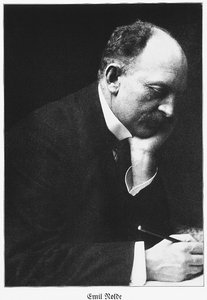
एमिल नोल्डे
1867 - 1956 , जर्मनी
संक्षिप्त जानकारी
- कला आंदोलन: अभिव्यक्तिवाद
- जन्म तिथि: 7 अगस्त 1867
- जन्म स्थान: नोर्दे, जर्मनी
- पूरा नाम: एमिल नोल्डे
- प्रभावित आंदोलन: ['जर्मन अभिव्यक्तिवाद']
- प्रभावित कलाकार:
- विन्सेंट वैन गॉग
- पॉल गौगुइन
- प्रसिद्ध कलाकृतियाँ:
- मास्क
- मसीहा का उपहास
- मृत्यु तिथि: 1956
- राष्ट्रीयता: जर्मन-डेनिश
संबंधित लेखों की सूची

Ephemeral Visions: Exploring the Artistic Legacy & Nuances of Watercolor Painting
Explore the captivating world of watercolor painting! Discover its rich history, essential techniques, influential artists & collecting tips from art experts. A comprehensive guide for enthusiasts.

Ephemeral Visions: Exploring the History & Emotional Resonance of Watercolor Painting
Explore the captivating history of watercolor painting, from ancient techniques to modern masters like Kandinsky & Blake. Discover essential artists, collecting tips & the emotional power of this luminous medium. Expert insights for art enthusiasts.

Ephemeral Visions: Exploring the Artistic Legacy & Contemporary Practice of Watercolor Painting
Explore the captivating world of watercolor painting! Discover its rich history, essential techniques, influential artists & collecting tips. A comprehensive guide for art enthusiasts from OriginalUniqueArt.

Watercolor Wonders: 10 Masterpieces That Redefined Art History | OriginalUniqueArt
Journey through 10 legendary watercolor masterpieces by Sargent, Turner & Homer! Explore iconic landscapes, portraits & floral art that redefined history. Find museum-quality reproductions and curated decor ideas at OriginalUniqueArt.com.

जल रंग की चिरस्थायी अपील: इतिहास, तकनीकें और समकालीन अभ्यास
जल रंग चित्रकला का इतिहास, तकनीकें और समकालीन कला का अन्वेषण करें। विशेषज्ञों द्वारा मार्गदर्शन, उच्च गुणवत्ता वाली सामग्री और कस्टम पोर्ट्रेट सेवाएं उपलब्ध। OriginalUniqueArt पर आज ही अपनी कला यात्रा शुरू करें!

