

 पूर्वावलोकन देखें
 भेजें
भेजें साझा करें
 विवरण देखें
 मार्गदर्शिका

 डाउनलोड करें
 समान वस्तुएं
 एक्स-रे
 स्लाइड शो देखें
 आंकड़े
Black Sun


 और पढ़ें
हस्तनिर्मित ऑयल रिप्रोडक्शन
आपके आकार और फ्रेम के अनुसार कैनवास पर हाथ से बनी ऑयल पेंटिंग, हमारे कलाकारों द्वारा विशेष रूप से ऑर्डर पर तैयार। ( प्रिंट विकल्प पर जाएँ डिजिटल इमेज पर जाएँ)




P118B ₹10

P118H ₹10

P118W ₹10

P438Z ₹10

P508JH ₹12

P508YH ₹12

P805H ₹10

P805Z ₹10

P919BZ ₹10

P919G ₹10

P919XJ ₹10

P959ZH ₹10

P968JZ ₹12

W106C ₹8

W218G ₹10

W218JH ₹8

W218Y ₹10

W307PJ ₹10

W316G ₹10

W316PJ ₹8

W316Y ₹10

W398PJ ₹8

W4111J ₹10

W500HY ₹15

W500JH ₹15

W692G ₹12

W849H ₹8

W940BG ₹15

W953PJ ₹8




कलाकृति के मूल अनुपात से मेल खाने वाले हमारे पूर्व निर्धारित आकारों में से चुनें।

आप किसी विशिष्ट फ्रेम या स्थान के अनुसार अपने स्वयं के आयाम (dimensions) दर्ज कर सकते हैं। यदि आपके द्वारा चुना गया आकार मूल छवि के अनुपात से मेल नहीं खाता है, तो हम कलाकृति को क्रॉप करेंगे या पेंटिंग में अतिरिक्त हाथ से चित्रित तत्व जोड़कर उसका विस्तार करेंगे। उत्पादन शुरू होने से पहले आपकी स्वीकृति के लिए एक डिजिटल मॉकअप भेजा जाएगा।
कृपया ध्यान दें कि स्क्रीन पर दिखने वाला पूर्वावलोकन वास्तविक क्रॉपिंग या विस्तार को नहीं दर्शाता है। केवल मॉकअप ही अंतिम रचना को सटीक रूप से दिखाएगा।
यद्यपि कस्टम आकार उपलब्ध हैं, फिर भी हम मूल अनुपात बनाए रखने के लिए पूर्व-निर्धारित सूची से आयाम चुनने की सलाह देते हैं।
ऑर्डर देने के बाद, OriginalUniqueArt.com टीम निर्देशों के लिए क्लाइंट को ईमेल करेगी और एक मॉकअप प्रीव्यू प्रदान करेगी
विश्वव्यापी वितरण () मानक 5 सप्ताह के बजाय मात्र 3/4 सप्ताह में। (30 सितमबर)। गुणवत्ता से कोई समझौता नहीं।

दुनिया भर में मुफ़्त एक्सप्रेस शिपिंग

प्रीमियम ग्रेड लिनेन कैनवास

पूर्ण शिपिंग बीमा

सीमा शुल्क और आयात कर वापसी की गारंटी

सटीक रंग मिलान की गारंटी

100 दिनों की वापसी नीति (केवल निर्माण दोष होने पर)

100% पैसे वापसी की गारंटी

थोक छूट का अवसर
 ग्लास का विकल्प केवल 110 सेमी से कम आकार में ही उपलब्ध है।

Black Sun
प्रतिकृति की सामग्री
प्रतिकृति का आकार
-


कुल मूल्य
₹ 28563
Alexander Milne Calder’s “Black Sun”: A Dance of Darkness and Light
Alexander Milne Calder's "Black Sun," painted in 1953, isn’t merely a depiction of abstract forms; it’s an invitation to contemplate the interplay between chaos and order, darkness and light. Born in Aberdeen, Scotland, and later establishing himself as a pivotal figure in American sculpture alongside his son Alexander Stirling Calder and grandson Alexander ‘Sandy’ Calder, Milne Calder possessed a singular vision – one that sought to capture dynamic movement and inherent instability within static forms. This piece exemplifies that philosophy perfectly, presenting a swirling vortex of black acrylic paint against a stark white canvas, creating an immediate sense of both tension and serenity.
The artwork's core is defined by its curvilinear shapes: elongated ribbons and sweeping curves dominate the composition, reminiscent of waves in perpetual motion or the currents of a turbulent stream. These forms are interwoven with sharp, geometric elements – triangles and circles – that introduce a counterpoint of structure to the fluidity. This juxtaposition immediately establishes a dynamic tension; the organic curves seem poised to collide with the rigid angles, suggesting an ongoing negotiation between opposing forces. The thick application of paint contributes significantly to this effect, lending a tactile quality to the forms and emphasizing their weight and presence within the space.
A Symbol Rooted in Mystery
The “Black Sun” motif itself carries a complex and layered history, extending far beyond Calder’s artistic intentions. Initially conceived as a symbol by SS officer Wilhelm Landig during the Nazi era, it was intended to replace the swastika – a potent emblem of Aryan supremacy. The Wewelsburg mosaic, where this design first appeared, became a clandestine center for occult practices and esoteric beliefs within the Nazi regime. Calder, however, remained largely unaware of this symbolic context during the creation of his painting. The symbol’s association with the occult has since been embraced by neo-Nazis and far-right groups, adding another layer of intrigue to its visual language.
Interestingly, the “Black Sun” also found resonance within esoteric traditions, particularly in alchemy and Hermeticism. It represents a solar deity associated with transformation, rebirth, and the cyclical nature of time. This connection speaks to Calder’s broader interest in exploring universal themes through his art – themes that transcend specific historical contexts. The painting, therefore, can be interpreted as a meditation on these enduring concepts, inviting viewers to consider their own relationship to cycles of destruction and renewal.
Technique and Emotional Resonance
Calder’s technique is characterized by its directness and immediacy. He employed acrylic paint applied directly onto the canvas with broad brushstrokes and, potentially, other tools like palette knives, creating a textured surface that enhances the sense of movement. The lack of traditional perspective—depth is implied through overlapping forms rather than linear recession—further contributes to the artwork’s dynamic quality. There's no attempt at realistic representation; instead, Calder focuses on capturing the *feeling* of motion and energy.
“Black Sun” evokes a powerful emotional response. The stark contrast between black and white creates a dramatic visual impact, while the swirling forms generate a sense of unease and dynamism. Yet, there’s also an underlying feeling of balance and harmony—a suggestion that even within chaos, order can be found. It's a piece that demands contemplation, inviting viewers to lose themselves in its intricate patterns and ponder the mysteries it holds. The painting’s enduring appeal lies in its ability to simultaneously fascinate and unsettle, prompting us to confront our own perceptions of beauty, darkness, and the cyclical nature of existence.
A Legacy of Motion and Form
Alexander Milne Calder's legacy extends far beyond this single masterpiece. His pioneering work with mobiles—kinetic sculptures that respond to air currents—revolutionized sculpture and continues to inspire artists today. His son, Alexander Stirling Calder, further developed these concepts, while his grandson, Alexander ‘Sandy’ Calder, created monumental public art installations around the world. “Black Sun” stands as a testament to their collective vision – a celebration of movement, form, and the enduring power of abstract expression.
कलाकार का परिचय
परिचय: अलेक्जेंडर मिल्ने कैल्डर
अलेक्जेंडर मिल्ने कैल्डर, एक स्कॉटिश-अमेरिकी मूर्तिकार थे जिनका जन्म 1846 में एबरडीन, स्कॉटलैंड में हुआ था। वे अपनी वास्तुकलात्मक मूर्तियों के लिए सबसे ज्यादा जाने जाते हैं, विशेष रूप से फिलाडेल्फिया सिटी हॉल की जटिल रचनाओं के लिए। कैल्डर का जीवन कला और पारिवारिक विरासत का एक अद्भुत संगम था; उनके पुत्र, अलेक्जेंडर स्टर्लिंग कैल्डर, और पोते, अलेक्जेंडर 'सैंडी' कैल्डर, दोनों ही 20वीं सदी में महत्वपूर्ण मूर्तिकार बने। कैल्डर की कहानी न केवल एक कलाकार के व्यक्तिगत विकास की है, बल्कि कलात्मक प्रतिभा की पीढ़ियों को प्रेरित करने वाली विरासत की भी है।प्रारंभिक जीवन और करियर
कैल्डर ने स्कॉटलैंड में अपना करियर शुरू किया, मूर्तिकार जॉन रिंड के साथ काम करते हुए, जबकि वे एडिनबर्ग में रॉयल अकादमी में अध्ययन कर रहे थे। लंदन जाने के बाद उन्होंने अल्बर्ट मेमोरियल पर भी काम किया, जो उस समय की एक महत्वपूर्ण परियोजना थी। 1868 में कैल्डर संयुक्त राज्य अमेरिका में आकर फिलाडेल्फिया में बस गए। यहां उन्होंने जोसेफ ए. बैली से शिक्षा ली और थॉमस ईकिंस के साथ पेंसिल्वेनिया अकादमी ऑफ फाइन आर्ट्स में कक्षाएं लीं। यह समय उनके कलात्मक विकास के लिए महत्वपूर्ण था, क्योंकि उन्होंने विभिन्न शैलियों और तकनीकों का अध्ययन किया और अपनी अनूठी शैली को विकसित करना शुरू किया। कैल्डर की प्रारंभिक रचनाओं में उनकी प्रतिभा और विस्तार पर ध्यान देना स्पष्ट रूप से दिखाई देता है।महत्वपूर्ण कार्य
अलेक्जेंडर मिल्ने कैल्डर के सबसे उल्लेखनीय कार्यों में फिलाडेल्फिया सिटी हॉल शामिल है, जो एक ऐसा कमीशन था जिसमें संगमरमर और कांस्य की 250 से अधिक रचनाएं थीं। इस परियोजना को पूरा करने में उन्हें लगभग 20 साल लग गए। विलियम पेन की विशालकाय कांस्य प्रतिमा भी उनकी महत्वपूर्ण कृतियों में से एक थी, जिसे सिटी हॉल के टावर पर स्थापित किया जाना था। इसके अतिरिक्त, 'इंडियन फिगर' नामक मूर्ति भी उनके उल्लेखनीय कार्यों में शामिल है, जो सिटी हॉल पर स्थापना से पहले बनाई गई थी। कैल्डर ने साउथ पोर्टल और वेस्ट पोर्टल को रंगीन रोशनी से सजाया, जिससे उनकी विस्तार पर ध्यान देने की क्षमता का पता चलता है। इन रचनाओं में कैल्डर की कलात्मक दृष्टि और तकनीकी कौशल का अद्भुत मिश्रण देखने को मिलता है।विरासत और प्रभाव
अलेक्जेंडर मिल्ने कैल्डर की विरासत केवल उनके अपने कार्यों तक सीमित नहीं है, बल्कि उनके पुत्र और पोते के कार्यों से भी आगे बढ़ती है, जो दोनों ही प्रमुख मूर्तिकार बने। उनकी कलात्मक योगदान विभिन्न संग्रहालयों में देखे जा सकते हैं, जिनमें स्मिथसोनियन अमेरिकन आर्ट म्यूजियम और गैलेरिया सिविका डी आरे मॉडर्ना ई कॉन्टेम्पोरानिया ट्यूरिनो शामिल हैं। कैल्डर की रचनाएं न केवल कला प्रेमियों और विद्वानों द्वारा सराही गई हैं, बल्कि वे कला जगत में एक महत्वपूर्ण व्यक्ति के रूप में भी माने जाते हैं। उनकी विरासत आने वाली पीढ़ियों तक प्रेरणा देती रहेगी और उनका अध्ययन किया जाएगा। कैल्डर का प्रभाव आज भी मूर्तिकला की दुनिया में महसूस किया जाता है, खासकर वास्तुकलात्मक मूर्तियों के क्षेत्र में।ऐतिहासिक महत्व
अलेक्जेंडर मिल्ने कैल्डर 19वीं सदी के एक महत्वपूर्ण मूर्तिकार थे, जिन्होंने अपनी रचनाओं से कला जगत को समृद्ध किया। फिलाडेल्फिया सिटी हॉल पर उनके काम ने शहर की पहचान को आकार देने में महत्वपूर्ण भूमिका निभाई और यह आज भी एक प्रतिष्ठित स्थल है। कैल्डर का योगदान न केवल कलात्मक था, बल्कि सांस्कृतिक और ऐतिहासिक रूप से भी महत्वपूर्ण था। उनकी रचनाएं उस समय के सामाजिक और राजनीतिक मूल्यों को दर्शाती हैं और वे हमें उस युग की जीवनशैली और विचारधाराओं के बारे में जानकारी प्रदान करती हैं। कैल्डर की विरासत एक प्रेरणादायक उदाहरण है कि कैसे एक कलाकार अपनी प्रतिभा और समर्पण से दुनिया को बदल सकता है।
अलेक्जेंडर मिल्ने कैल्डर
1898 - 1976 , यूनाइटेड किंगडम
संक्षिप्त जानकारी
- कला आंदोलन/शैली: वास्तुकला मूर्तिकला
- जन्म तिथि: 23 अगस्त 1846
- जन्म स्थान: एबरडीन, यूनाइटेड किंगडम
- जिन कलाकारों को प्रभावित किया:
- अलेक्जेंडर स्टर्लिंग कैल्डर
- अलेक्जेंडर कैल्डर
- पूरा नाम: अलेक्जेंडर मिल्ने कैल्डर
- प्रभावित कलाकार: ['जॉन रिंड']
- प्रमुख कलाकृतियाँ:
- फिलाडेल्फिया सिटी हॉल
- विलियम पेन प्रतिमा
- भारतीय आकृति
- मृत्यु तिथि: 14 जून 1923
- राष्ट्रीयता: स्कॉटिश-अमेरिकी
संबंधित लेखों की सूची
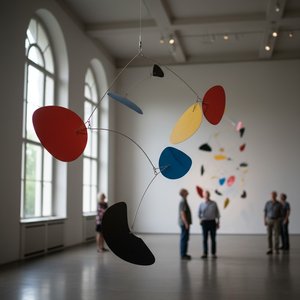
Alexander Calder: Kinetic Sculpture, Mobile Art & the Poetics of Chance
Explore the revolutionary world of Alexander Calder's kinetic sculptures & mobiles. Discover insights for collectors, acquisition advice, and the enduring legacy of this modern master. Expert analysis & art valuation.

Neo-Abstract Art: The High-Impact Evolution of Modern Visual Energy and Geometric Sophistication
Discover the power of Neo-Abstract art. Explore how bold geometric forms and high-impact visual energy are redefining modern design. Learn to curate sophisticated, high-energy spaces with the latest trends in contemporary abstraction and structural color.

Kandinsky's Masterpieces: 25 Paintings That Define Abstract Art | OriginalUniqueArt
Journey through Wassily Kandinsky's 25 most iconic abstract paintings. Explore his revolutionary use of color, form & spiritual expressionism. Find museum-quality Kandinsky reproductions and elevate your home decor with OriginalUniqueArt.com. Discover all masterpieces on OriginalUniqueArt.com!

Beyond Form & Color: Geometric Abstraction's Evolution in 20th/21st Century Art
Explore the evolution of geometric abstraction from Cubism to contemporary art. Discover key artists like Malevich & Mondrian, investment insights, and expert collecting advice at OriginalUniqueArt.

ज्यामितीय अमूर्तता: शीर्ष 10 उत्कृष्ट कृतियाँ जो कला को नया आकार देती हैं | OriginalUniqueArt.com
ज्यामितीय अमूर्तता की शीर्ष 10 उत्कृष्ट कृतियों का अन्वेषण करें! पिकासो, मोंड्रियन और अन्य कलाकारों के प्रेरणादायक कार्यों से कला इतिहास जानें। OriginalUniqueArt.com पर उच्च गुणवत्ता वाली कला प्रिंट और कैनवास खरीदें।
