Une symphonie de pierre et d'esprit : l'âme de Stuttgart
Franchir le seuil de la Staatsgalerie Stuttgart, c'est s'engager dans un voyage profond au cœur même des battements de l'histoire de l'art européen. Ce n'est pas seulement une destination pour l'observateur occasionnel, mais un sanctuaire où les échos du passé s'harmonisent avec l'énergie vibrante, et souvent saisissante, de l'ère moderne. Fondée en 1843, la galerie a commencé sa vie comme un modeste dépositaire de la collection royale du Wurtemberg, pour finalement s'épanouir en un phare mondial d'importance culturelle. Le musée agit comme un dialogue vivant entre les siècles, offrant une opportunité rare de témoigner de l'évolution de l'expression humaine, passant du calme sacré du Moyen Âge aux réalités explosives et fragmentées du XXe siècle. Pour l'amateur d'art, chaque couloir offre une nouvelle révélation ; pour le collectionneur, il s'agit d'une véritable leçon magistrale sur le pouvoir durable de l'innovation esthétique.
L'expérience architecturale de la Staatsgalerie est tout aussi magistrale que les toiles qu'elle protège. Le musée présente une dualité frappante à travers ses deux structures principales : l'Alte Staatsgalerie et la Neue Staatsgalerie. Le bâtiment ancien, avec sa façade néoclassique digne, ancre l'institution dans la tradition, abritant un éventail époustouflant de peintures de l'Ancien Monde allemand, des trésors de la Renaissance italienne et les paysages sereins de la période romantique. En contraste total, la Neue Staatsgalerie — triomphe du postmodernisme conçu par le visionnaire James Stirling — redéfinit l'expérience muséale. Avec son utilisation ludique de matériaux industriels, ses juxtapositions géométriques inattendues et sa rotonde ouverte qui invite le ciel à entrer dans la galerie, cette merveille architecturale défie les frontières entre l'espace intérieur et extérieur. C'est un édifice qui respire, à l'image des mouvements d'avant-garde qu'il a été conçu pour accueillir.
Une tapisserie de modernité et de chefs-d'œuvre
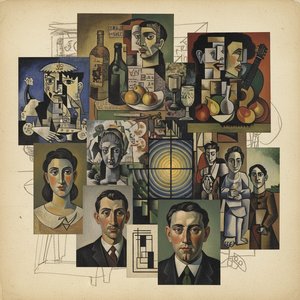
Entre ces murs, la transition de la tradition vers la modernité se ressent physiquement et émotionnellement. La collection atteint son crescendo dans les galeries du XXe siècle, où résident les titans du modernisme. On peut se perdre dans l'énergie rythmique et primale de l'œuvre de Pablo Picasso, « Tumblers (Mother and Son) » , ou être captivé par les délices sensoriels et lumineux d'Henri Matisse dans « Avec la toilette (La Coiffure) ». Le musée possède une collection particulièrement puissante d'expressionnisme allemand et de Nouvelle Objectivité, où le réalisme sans concession d'Otto Dix et la profondeur psychologique de Max Beckmann offrent une fenêtre sur l'esprit tumultueux d'une Europe en pleine mutation. Ces œuvres ne se contentent pas de trôner sur les murs ; elles pulsent au rythme des tensions sociales et politiques de leur époque, invitant le spectateur à contempler la fragilité et la résilience de la condition humaine.
Pour ceux qui trouvent l'inspiration dans le jeu des formes et des couleurs, les fonds d'art abstrait de la galerie sont tout aussi profonds. La précision géométrique de la « Composition en blanc, rouge et bleu » de Piet Mondrian résonne face aux visions plus fluides et oniriques de Joan Miró ainsi qu'aux traces éthérées de Paul Klee. Cette tension orchestrée entre structure et spontanéité fait de la Staatsgalerie une destination de premier plan pour les designers d'intérieur et les décorateurs cherchant à comprendre comment différentes époques peuvent coexister au sein d'une seule vision esthétique. L'engagement du musée envers une gestion éthique — notamment son rôle actif dans la restitution d'œuvres d'art pillées pendant l'ère nazie — élève encore davantage son importance, le marquant comme un lieu d'intégrité profonde et de vérité historique.
Au-delà de ses trésors permanents, la Staatsgalerie demeure un moteur culturel dynamique, accueillant des expositions temporaires stimulantes qui jettent un pont entre les canons historiques et le discours contemporain. Qu'il s'agisse d'explorer les nuances de l'identité sociale ou de célébrer la renaissance de techniques oubliées, le musée veille à ce que son récit ne soit jamais statique. Il demeure un lieu où le poids de l'histoire rencontre la lumière des idées nouvelles, faisant de lui un pèlerinage essentiel pour quiconque cherche à comprendre le pouvoir transformateur et éternel de l'art.