


Un héritage d'excellence artistique aux Staatliche Museen
L'histoire des Staatliche Museen est inextricablement liée au rôle de Kassel en tant que centre d'innovation artistique. Des siècles de mécénat et de quête intellectuelle ont façonné cette institution, créant un espace où le poids de l'histoire se ressent à travers les objets eux-mêmes. Les collections soulignent l'interconnexion des cultures à travers les âges, traçant le mouvement des idées au-delà des frontières géographiques. Les visiteurs ont ainsi l'opportunité de s'immerger dans un patrimoine culturel par un engagement silencieux et profond avec ces héritages immuables.
Les conservateurs s'efforcent de contextualiser les œuvres d'art au sein de récits historiques plus vastes, veillant à ce que chaque pièce soit comprise comme le fragment d'une plus grande histoire humaine. Cette approche permet une compréhension plus fine de la manière dont les mouvements artistiques et les transformations culturelles se sont déployés au fil du temps. La présence de trésors de l'Égypte ancienne, de la Grèce, de la Rome et de l'Islam, aux côtés des traditions occidentales, met en lumière une perspective mondiale qui s'étend sur de nombreuses époques.
Les collections comprennent des œuvres majeures qui reflètent ces mutations historiques, telles que :
- Leda, vers 1530 - Leonardo da Vinci
- Scène bachique, 1627 - Nicolas Poussin
- Paysage de rivière montagneux (Version nuit), 1830 - Caspar David Friedrich
- Portrait d'Anna van Craesbecke, 1635 - Sir Anthony van Dyck
- La Fête des haricots, 1668 - Jan Havickszoon Steen
Identité architecturale et diversité des styles bâtis
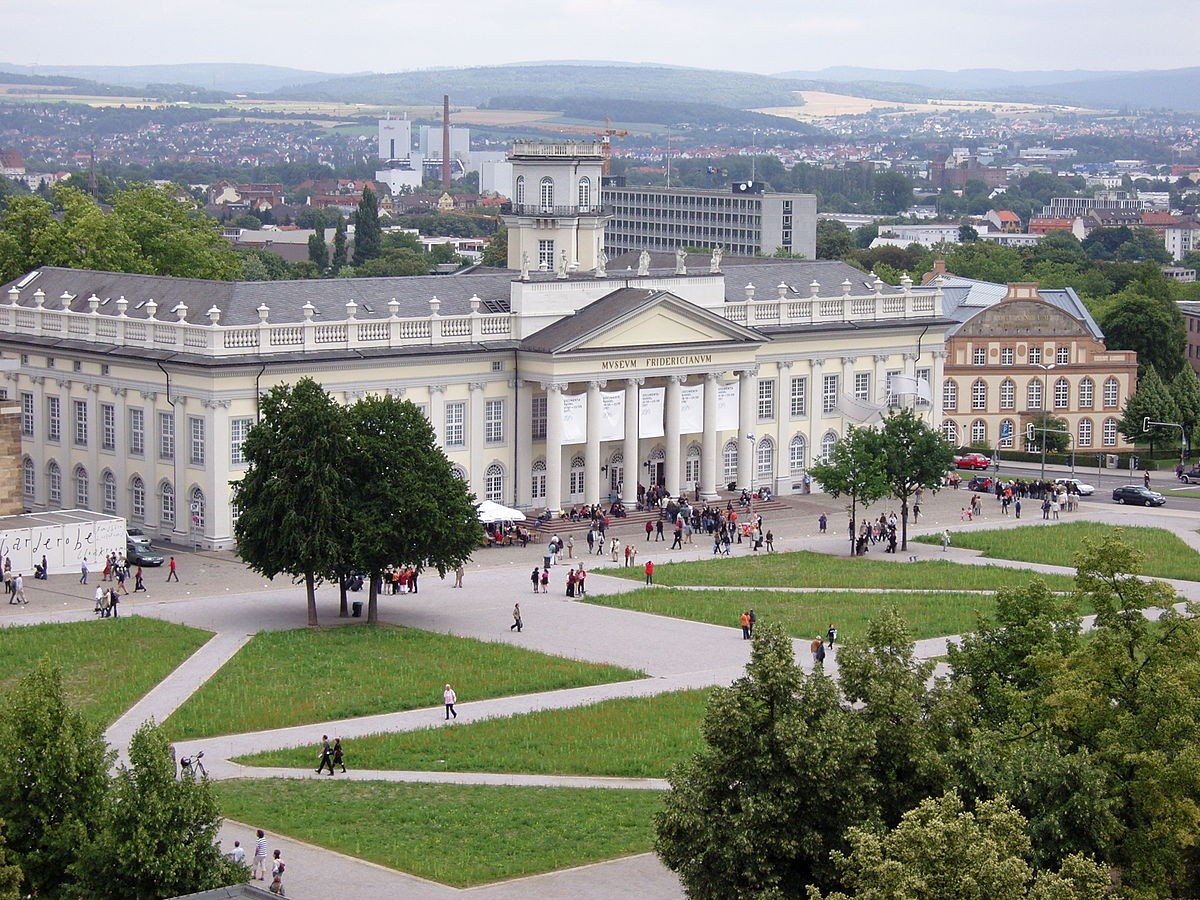
L'identité architecturale de ce complexe se dessine à travers ses édifices constitutifs, chacun étant le témoin d'une ère de conception bien distincte. Le Museum Fridericianum, conçu en 1796 par Carl Wilhelm Schulze, incarne l'élégance et la grandeur du néoclassicisme. Sa présence impose un environnement formel et structuré qui ancre le poids historique de la collection, tandis que la symétrie et les proportions de sa structure instaurent un sentiment de permanence au cœur du paysage de Hesse.
À l'opposé, la Neue Galerie, érigée en 1895, reflète les influences stylistiques de l'Art Nouveau. Ce bâtiment marque une rupture avec les lignes rigides de l'ère néoclassique précédente, introduisant la fluidité organique caractéristique du tournant du siècle. Le passage du Museum Fridericianum, si structuré, à la Neue Galerie, plus décorative, invite à une véritable progression physique à travers différentes philosophies esthétiques.
Enfin, le Documentz Zentrum Kassel, inauguré en 2003, apporte une esthétique architecturale contemporaine au site. Cette structure offre un contrepoint moderne aux institutions plus anciennes, soulignant l'évolution du design spatial jusqu'au XXIe siècle. Le dialogue qui s'établit entre ces trois styles distincts — néoclassique, Art Nouveau et contemporain — crée un environnement stratifié où l'architecture elle-même devient le reflet de la progression historique de l'art européen.
Institutions majeures et collections d'art diversifiées
Le cœur de ce complexe muséal s'articule autour de quatre institutions distinctes, chacune offrant un prisme unique pour contempler le passage du temps. Le Museum Fridericianum abrite un assemblage remarquable de peintures et de sculptures allemandes, s'étendant de l'ère baroque jusqu'à l'époque moderne. À proximité, la Neue Galerie déploie un panorama impressionnant de l'art du XIXe siècle, embrassant la peinture, la sculpture et les œuvres graphiques. Pour ceux qui souhaitent se confronter au présent, le Documentz Zentrum Kassel explore les tendances artistiques contemporaines et le commentaire social.
Au-delà de ces époques spécifiques, l'envergure de la collection embrasse des trésors venus de l'Égypte ancienne, de la Grèce, de Rome et du monde islamique. Ces objets témoignent de l'interconnexion profonde des cultures à travers l'histoire. La présence de matériaux aussi diversifiés permet d'étudier la manière dont les idées et les techniques artistiques ont traversé les frontières géographiques pour insuffler la créativité sur plusieurs continents.
Les collections incluent des œuvres telles que :
- Leda, vers 1530 - Leonardo da Vinci
- Scène bachique, 1627 - Nicolas Poussin
- Paysage fluvial montagneux (Version nuit), 1830 - Caspar David Friedrich
- Portrait d'Anna van Craesbecke, 1635 - Sir Anthony van Dyck
- La Fête des haricots, 1668 - Jan Havickszoon Steen
Chefs-d'œuvre et œuvres emblématiques de la collection
La présence de la Leda de Léonard de Vinci, peinte vers 1530, offre un instant de contemplation silencieuse au cœur des galeries. Non loin de là, la Scène bachique de Nicolas Poussin, datée de 1627, déploie une composition structurée qui captive le regard par l'agencement méticuleux de ses figures. Ces œuvres agissent comme de véritables ancres physiques jetées dans le passé, invitant le visiteur à une observation lente et profonde du travail de la touche et du jeu de la lumière.
La collection recèle également des exemples magistraux de paysages et de portraits. Le Paysage fluvial montagneux (version nocturne de Caspar David Friedrich, datant de 1830, capture une atmosphère sombre et singulière à travers un dialogue entre l'ombre et le relief. Dans le domaine du portrait, le Portrait d'Anna van Craesbecke de Sir Anthony van Dyck, réalisé en 1635, révèle la psychologie de son sujet grâce à une précision de détail saisissante. Enfin, La Fête des haricots de Jan Havickszoon Steen, datant de 1668, insuffle une énergie tout autre, capturant une scène de rassemblement social avec un sens du mouvement absolument distinct.
- Leda, vers 1530 - Léonard de Vinci
- Scène bachique, 1627 - Nicolas Poussin
- Paysage fluvial montagneux (version nocturne), 1830 - Caspar David Friedrich
- Portrait d'Anna van Craesbecke, 1635 - Sir Anthony van Dyck
- La Fête des haricots, 1668 - Jan Havickszoon Steen
Identité culturelle et contexte historique
L'identité de Kassel est intimement liée à l'héritage littéraire des frères Grimm. Durant leurs années de formation dans cette ville, Jacob et Wilhelm Grimm se sont consacrés à un effort collaboratif pour collecter et diffuser les contes populaires. Ce travail acharné a établi la région comme un phare de la tradition littéraire germanique, ancrant la culture locale dans la puissance du récit oral et de la préservation linguistique.
Le paysage est par ailleurs sculpté par le monumental monument de Wilhelmshöhe. Conçue par Ludwig Prandtl et inaugurée en 1897, cette structure demeure l'emblème de l'ambition historique de la ville pour la grandeur artistique et la prouesse technologique. Elle représente ce moment charnière où la quête d'une échelle esthétique a rencontré les capacités de l'innovation industrielle.
Cette intersection entre discours intellectuel et monumentalité physique façonne l'atmosphère même de la région. La présence de ces jalons historiques offre un sentiment de continuité, reliant les quêtes érudites du passé aux monuments physiques qui dominent encore aujourd'hui le paysage de Hesse.
Art contemporain et engagement sociétal
Le Documentz Zentrum Kassel s'affirme comme un espace privilégié où les tendances artistiques contemporaines entrent en résonance avec les enjeux sociaux les plus pressants. Ici, les expositions transcendent la simple esthétique pour explorer les complexités de l'identité, de la migration et de la durabilité environnementale. De tels thèmes invitent à une contemplation silencieuse des forces qui façonnent l'existence moderne. La programmation témoigne d'un engagement profond à nourrir la curiosité intellectuelle par un dialogue direct avec l'instant présent.
L'approche adoptée par le centre favorise une compréhension culturelle plus profonde. En présentant des œuvres qui suscitent la réflexion sur les défis auxquels le monde actuel est confronté, l'institution encourage un véritable échange entre le spectateur et les réalités sociales représentées. Cet engagement envers la vie contemporaine garantit que l'art demeure une composante vitale du dialogue continu qui anime la ville de Kassel.


