Une Révélation Renaissance : L'Âme de Florence
Niché au cœur des rues évocatrices du quartier de l'Oltrarno à Florence, Santa Maria del Carmine s'érige comme un témoignage profond de la ferveur artistique qui a embrasé la Renaissance italienne. Bien plus qu'un simple sanctuaire de dévotion, ce monument propose un voyage immersif dans l'une des époques les plus transformatrices de l'histoire, où des techniques révolutionnaires ont été façonnées pour créer des chefs-d'œuvre qui continuent de susciter l'émerveillement des siècles plus tard. Fondée en 1325 par l'ordre carmélite, l'église commença sa vie comme une modeste chapelle dédiée à Notre-Dame du Carmel, mais son destin fut irrévocablement changé au cours du XVe siècle. C'est grâce à l'ajout de la légendaire chapelle Brancacci que le site est passé d'un lieu de dévotion locale à un épicentre mondial de l'innovation artistique, ancrant à jamais sa place parmi les trésors culturels les plus précieux de Florence.
La présence architecturale de l'église offre un dialogue serein entre différentes époques du design florentin. La façade, façonnée par la main d'Alessandro Gherardesca, incarne un mélange magistral de grandeur médiévale et d'élégance néoclassique. Cette harmonie structurelle offre une toile de fond contemplative au visiteur, où la simplicité de l'extérieur reflète les profondes valeurs spirituelles et intellectuelles de la période Renaissance. À mesure que l'on parcourt l'espace, l'architecture semble respirer sous le poids de l'histoire, guidant le regard vers le véritable cœur du complexe : les fresques révolutionnaires qui ont redéfini les frontières de la peinture occidentale.
La Chapelle Brancacci : Une Révolution de Lumière et de Forme
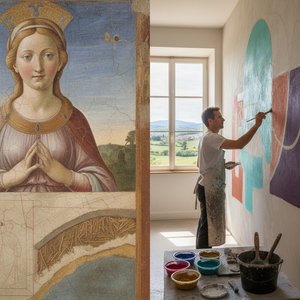
Entrer dans la chapelle Brancacci, c'est être témoin du moment précis où le cours de l'histoire de l'art a basculé. Cet espace sacré abrite un cycle de fresques nées de la collaboration entre Masaccio et Masolino da Panicale , des œuvres qui ont notoirement défié les conventions byzantines rigides de leur époque. Ici, l'introduction de la perspective linéaire et la quête de précision anatomique ont apporté un réalisme saisissant aux murs. Masaccio, en particulier, s'est imposé comme un visionnaire, utilisant la lumière et l'ombre — une technique connue sous le nom de clair-obscur — pour sculpter des figures hors du plan bidimensionnel, leur conférant un poids et une présence qui semblaient presque tangibles pour le spectateur.
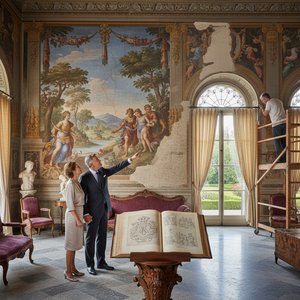
La collection contenue entre ces murs est une tapisserie extraordinaire de courants artistiques. Au-delà du travail pionnier de Masaccio, l'influence de Giotto se fait ressentir dans la puissance expressive et le dynamisme émotionnel des récits bibliques représentés. Ces fresques ne se contentent pas de raconter des histoires ; elles capturent la condition humaine avec une intensité inégalée qui a inspiré des générations d'artistes à travers l'Europe. Pour l'amateur ou le collectionneur d'art, ces œuvres représentent l'ADN fondateur de la peinture moderne, où la manipulation de l'espace et l'étude de la lumière sont devenues les principaux outils du récit.
Un Héritage d'Innovation et une Beauté Éternelle
L'importance de Santa Maria del Carmine s'étend bien au-delà de ses murs physiques, servant de rappel poignant du rôle de Florence en tant que creuset du progrès intellectuel. L'influence de la chapelle a agi comme un catalyseur pour les artistes cherchant à émuler son réalisme novateur, en faisant un lieu de pèlerinage pour les érudits et les passionnés. Des expositions récentes ont enrichi davantage cet héritage, utilisant la recherche scientifique moderne pour éclairer de nouvelles facettes du patrimoine de la chapelle, de la composition chimique des pigments anciens aux techniques subtiles utilisées par les maîtres pour atteindre une telle brillance durable.
Aujourd'hui, le Museo di Santa Maria del Carmine continue de captiver un public mondial, offrant une expérience inégalée aux designers d'intérieur et aux historiens de l'art en quête d'inspiration classique. Que l'on soit attiré par les profonds récits théologiques ou par la pure maîtrise technique des maîtres de la Renaissance, le musée demeure un monument vivant. Il se dresse comme un pont entre le passé et le présent, invitant chaque visiteur à se perdre dans la beauté d'une période qui a appris au monde comment voir la lumière, l'ombre et l'humanité à travers le prisme de l'art.