Un chef-d'œuvre vénitien baigné de lumière
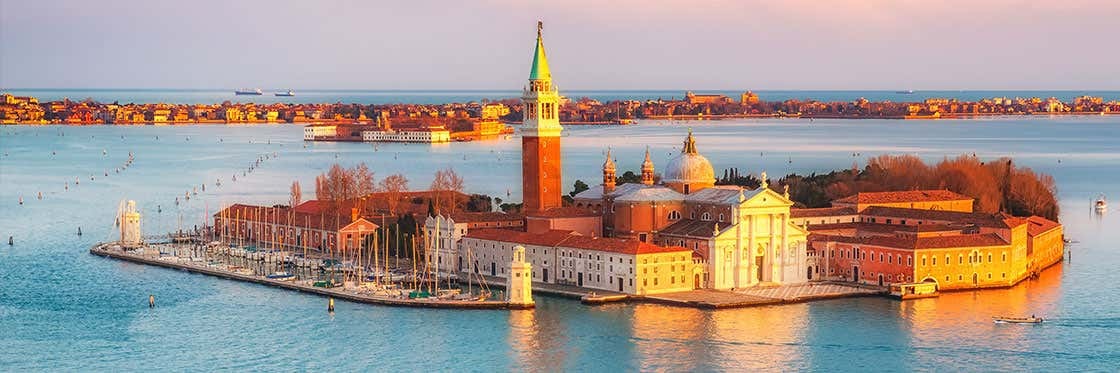
Nichée sur sa propre île tranquille au cœur de la lagune de Venise, San Giorgio Maggiore s'érige comme un témoignage de l'ambition de la Renaissance et du génie architectural — un phare d'élégance palladienne qui continue d'inspirer l'émerveillement des siècles plus tard. Bien plus qu'une simple église, elle incarne l'esprit même de Venise : un mélange harmonieux de grandeur classique et d'idéaux humanistes, méticuleusement façonné par l'un des plus grands architectes d'Italie. À mesure que l'on approche de l'île, la silhouette de la basilique domine l'horizon, servant d'ancrage visuel à l'ensemble de la lagune. Conçue par Andrea Palladio entre 1566 et 1576, la structure est sans doute l'exemple le plus emblématique du palladianisme vénitien. Ses colonnes élancées, sa façade symétrique et ses proportions harmonieuses reflètent l'engagement indéfectible de Palladio à faire revivre les gloires de la Rome antique, créant un dialogue délibéré et magnifique avec la place Saint-Marc, de l'autre côté de l'eau.
L'architecture de ce site sacré est une symphonie de pierre et de lumière. Le marbre blanc éclatant scintille au-dessus des eaux bleues de la lagune, formant le point focal de la vue depuis la Riva degli Schiavoni. Pour ceux qui rechercheent un moment de réflexion paisible ou une perspective grandiose, l'ascension du Campanile — le clocher historique de l'église — offre des panoramas à couper le souffle sur Venise. De cette hauteur, on peut observer la trame urbaine complexe de la ville et la lagune miroitante, une perspective qui agit comme un rappel poignant du passé maritime de Venise et de sa beauté éternelle et intemporelle.
Une galerie sacrée de la maîtrise vénitienne
En pénétrant dans la basilique, on est immédiatement enveloppé par une collection extraordinaire d'œuvres d'art qui s'étendent sur des siècles de maîtrise vénitienne. L'intérieur fait office de galerie sacrée où l'ombre et la lumière dansent sur des toiles d'une importance historique immense. La collection propose un voyage profond à travers l'évolution de l'art vénitien, présentant des œuvres qui capturent l'essence même de l'âme de la cité.
Les points forts de ce trésor spirituel incluent :
- Le monumental Dernier Cène de Titien : Une représentation dramatique du dernier repas du Christ avec ses disciples, ce chef-d'œuvre est un triomphe de couleur et de composition, capturant la tension palpable et l'anticipation spirituelle de ce moment fatidique avec une intensité saisissante.
- Les Noces de Cana de Paolo Veronese : Cette œuvre offre un panorama somptueux de la vie aristocratique vénitienne, faisant preuve d'une compétence inégalée dans la manipulation de la lumière et de la perspective pour créer une illusion de profondeur et de grandeur qui transporte le spectateur au cœur d'une époque festive et opulente.
Au-delà de ses trésors permanents, l'héritage de San Giorgio Maggiore est profondément lié à l'histoire de la recherche et de la dévotion religieuse. Fondé en tant que monastère bénédictin en 982 par Giovanni Morosini, le site a nourri une riche tradition d'échange intellectuel pendant plus d'un millénaire. Cet esprit de préservation perdure aujourd'hui à travers la Fondation Cini , établie en 1958, qui maintient le rôle de l'île en tant que centre culturel vibrant. La fondation accueille des expositions et des conférences prestigieuses qui célèbrent le patrimoine vénitien, allant de l'exploration de la peinture de la Renaissance à la beauté délicate de la sculpture baroque, garantissant que l'île demeure un centre vivant et palpitant d'art et d'intellect.