Menu
CONSEIL EN ART GRATUIT

Royal Cornwall Hospital

Informations clés

  • Works on APS: 5
  • Location: Truro, United Kingdom
  • Featured artists:
    • john miller
    • frederick yates

Quiz d'art

Chaque question ne comporte qu'une seule réponse correcte.

Question 1:
Quel est le domaine d'étude principal du Musée Royal de Cornouailles ?
Question 2:
Quel artiste célèbre a trouvé Cornwall particulièrement inspirant et dont les œuvres sont présentées au musée ?
Question 3:
La bibliothèque de Courtney possède une collection importante de quels matériaux ?
Question 4:
Quel véhicule historique est exposé au musée ?
Question 5:
Ce qui rend le Musée Royal de Cornouailles unique par rapport aux autres musées est principalement...

Royal Cornwall Museum: Unveiling Cornwall’s Artistic Soul

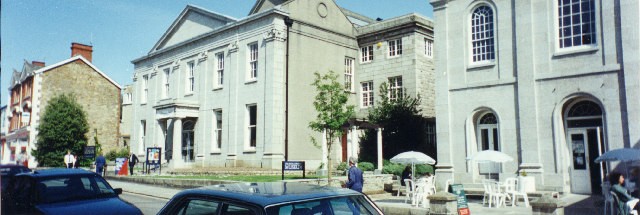
The Royal Cornwall Museum in Truro isn't merely a repository of artefacts; it’s a vibrant embodiment of Cornish identity—a journey through millennia etched into stone and illuminated by the brilliance of artistic vision. Established as the Royal Cornwall Infirmary in 1799, driven by compassion for the burgeoning Cornish workforce extracting tin ore from the hillsides, its origins speak to a bedrock of public service and enduring resilience. Today, it welcomes visitors with an expansive collection spanning epochs—from Neolithic settlements whispering tales of ancient rituals to breathtaking canvases by J.M.W. Turner—a testament to Cornwall’s transformative relationship with art and landscape.

Mining Heritage: The Cornish Spirit Embodied

At the museum's heart lies a profound exploration of Cornish mining heritage, an industry that has shaped the very contours of Cornwall’s topography and indelibly imprinted upon its cultural consciousness. Visitors can immerse themselves in the tangible legacy of this transformative force through meticulously preserved tools—pickaxes honed by generations of miners, geological specimens illustrating the complex ore deposits beneath Cornwall’s hillsides—and captivating narratives detailing the lives of those who risked their livelihoods to unlock Cornwall’s mineral wealth. Detailed diagrams and interactive displays illuminate the techniques employed throughout history, from Roman mining operations to Victorian steam-powered shafts, conveying a visceral understanding of Cornish industriousness. The museum's curators have painstakingly reconstructed working environments, allowing visitors to appreciate the sheer physicality and ingenuity required to transform raw ore into valuable commodities—a feat that reflects Cornwall’s enduring spirit of innovation.

Turner’s Cornish Landscape: Capturing the Sublime

Dominating the museum’s art collection is the oeuvre of J.M.W. Turner—a titan of Romantic landscape painting who found Cornwall profoundly inspiring. His canvases capture the dramatic coastline, the misty moorlands, and the turbulent seas with unparalleled sensitivity to light and atmosphere—a preoccupation that resonates powerfully across artistic movements. Examining Turner’s works alongside Cornish landscapes reveals a shared fascination for capturing the sublime beauty of nature—a quest for transcendence that finds expression in his masterful use of colour and brushstroke. The museum houses numerous preparatory sketches and studies by Turner, offering invaluable insight into his creative process and demonstrating his meticulous observation of the Cornish environment—a testament to his artistic dedication and Cornwall’s enduring allure as a subject for artistic contemplation.

Ancient Civilizations: Echoes of Cornwall's Roots

Beyond Turner’s iconic depictions lie exhibits delving into Cornwall’s earliest inhabitants—evidence of Neolithic settlements, Bronze Age rituals, and Celtic traditions. Archaeologists have unearthed remarkable artefacts—pottery shards bearing intricate designs reflecting Cornish craftsmanship from millennia past, stone tools fashioned with precision and artistry—providing tangible connections to communities that thrived in Cornwall before recorded history. The Courtney Library holds a significant collection of rare books and manuscripts documenting Cornish scholarship from the medieval period onwards, including the Philip Rashleigh Collection – a treasure trove for historians interested in Cornish social history and intellectual life. These documents illuminate the beliefs and practices of Cornwall’s formative cultures—a reminder that artistic expression has always been intertwined with spiritual understanding.

A Synthesis of Form & Function: The Museum's Architectural Legacy

The museum’s building itself is an integral part of its narrative—a harmonious blend of Victorian grandeur and modern innovation reflecting the aspirations of a region determined to secure its place in the annals of British culture. Originally conceived as the Infirmary, it underwent significant expansion during the late 19th and early 20th centuries, incorporating elements reflecting prevailing architectural styles of the era—resulting in a stately edifice adorned with ornate detailing and bathed in natural light. However, a bold new wing designed in 1998 by Terry Farrell represents a decisive step forward—embracing sustainable design principles and creating an adaptable space for contemporary exhibitions—a testament to Cornwall’s commitment to preserving its heritage while embracing the dynamism of the future. The soaring ceilings of the main hall convey a sense of openness and grandeur—a deliberate intention to inspire contemplation and foster engagement with Cornwall’s artistic legacy.

Collection d'œuvres d'art

Aucune œuvre d'art trouvée.