
 Aperçu en situation
 Envoyer
 Partager
 Détails de l'œuvre

 Télécharger
 Articles similaires
 Radiographie
 Diaporama
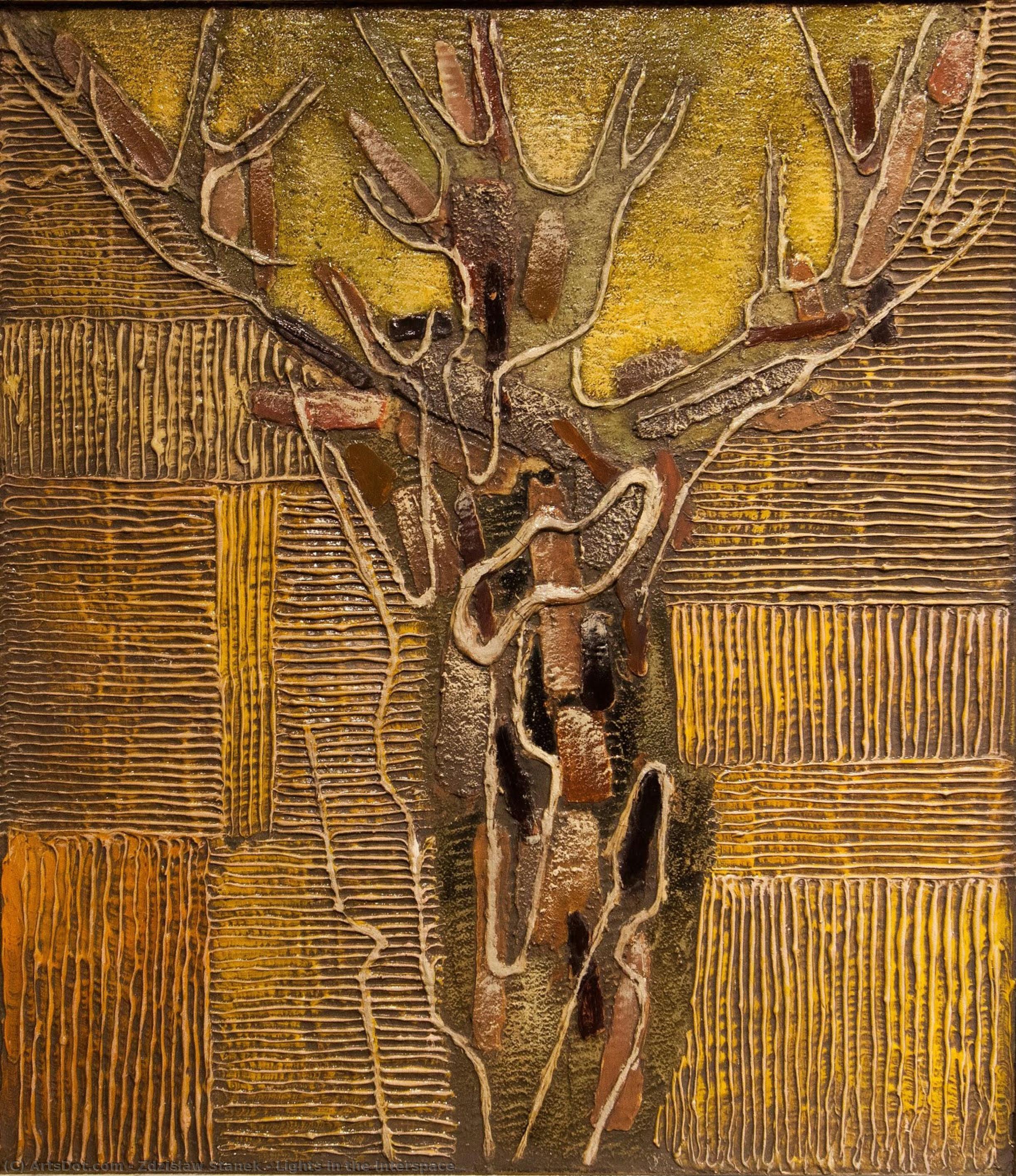
Lights in the Interspace
 Geometric Abstraction
 1960
1960- Modern
 62.0 x 54.0 cm
 Musée d’Histoire de Katowice
 Lire la suite
Reproduction à l'huile faite à la main
Huile sur toile peinte à la main, avec cadre et dimensions personnalisés, réalisée sur commande par nos artistes. ( Commander l'impression Télécharger l'image haute résolution)




































Choisissez parmi nos formats prédéfinis qui respectent les proportions originales de l’œuvre.

Vous pouvez saisir vos propres dimensions pour l'adapter à un cadre ou à un espace spécifique. Si la taille sélectionnée ne correspond pas aux proportions de l'image d'origine, nous recadrerons l'œuvre ou prolongerons la peinture avec des éléments peints à la main supplémentaires. Une maquette numérique vous sera envoyée pour approbation avant le début de la production.
Veuillez noter que l'aperçu à l'écran ne reflète pas le recadrage ou l'extension réels. Seule la maquette montrera fidèlement la composition finale.
Bien que des tailles personnalisées soient disponibles, nous vous recommandons de sélectionner une dimension dans la liste prédéfinie afin de préserver les proportions d'origine.
Après la commande, l’équipe OriginalUniqueArt.com contactera le client par e-mail pour recueillir ses instructions et lui fournira une maquette d’aperçu
Livraison dans le monde entier () en 3 à 4 semaines au lieu des 5 semaines habituelles. (14 août). Aucun compromis sur la qualité.

Livraison express gratuite dans le monde entier

Toile de lin de qualité supérieure

Assurance transport complète

Garantie de remboursement des droits de douane

Garantie de fidélité des couleurs

Politique de retour de 60 jours (uniquement en cas de défaut)

Garantie de remboursement à 100%

Offre de tarifs dégressifs
 L'option verre n'est disponible que pour les dimensions inférieures à 110 cm.

Lights in the Interspace
Technique de reproduction
Format de la reproduction
-


Prix total
$ 300
Description de l'œuvre
A Symphony of Light and Nature
In the evocative masterpiece Lights in the Interspace, created in 1960, the Polish visionary Zdzisław Stanek invites us into a realm where the boundaries between the physical world and the ethereal plane begin to dissolve. At first glance, the viewer is greeted by the familiar silhouette of a tree, its sturdy trunk anchoring the composition amidst a delicate network of reaching branches and soft foliage. Yet, beneath this naturalistic surface lies a profound exploration of space and luminosity. The painting captures a moment of quiet vitality, where the presence of two small birds—one perched near the upper left and another drifting toward the right—infuses the stillness with a rhythmic pulse of life. These avian figures act as silent witnesses to the interplay of light, transforming a simple landscape into a meditative study of movement within a frozen moment.
The technique employed by Stanek reflects his deep-seated connection to the avant-garde theories of Wład::adysław Strzemiński, particularly the concept of light as an active, transformative force. Rather than merely illuminating the scene, the light in this work seems to emerge from the "interspace" itself, weaving through the leaves and defining the edges of the branches with a spectral glow. The artist utilizes a delicate balance of form and atmosphere, where the organic textures of the bark and leaves are softened by an almost atmospheric haze. This creates a sense of depth that is not merely perspectival but emotional, drawing the collector into a space that feels both intimate and infinitely expansive.
The Legacy of Polish Abstraction
To understand the profound impact of Lights in the Interspace, one must consider Stanek’s position within the mid-20th-century Polish art movement. Emerging from the intellectual crucible of Łódź, Stanek was a pioneer who resisted the easy comforts of prevailing trends to pursue a more rigorous, geometric, and light-centric language. This particular work serves as a beautiful bridge between representational nature and abstract experimentation. While the subject matter remains grounded in the organic world, the way the light interacts with the structural elements of the tree hints at the artist's fascination with how perception is shaped by luminosity. It is a piece that embodies the tension between what we see with our eyes and what we feel through the subtle shifts in shadow and radiance.
For the discerning collector or interior designer, this painting offers more than just aesthetic beauty; it provides a sophisticated focal point that commands attention through subtlety rather than noise. The muted yet luminous palette allows it to integrate seamlessly into high-end contemporary spaces, adding a layer of intellectual depth and historical significance. Whether placed in a minimalist gallery setting or a richly textured study, the artwork acts as a window into a contemplative era of art history. Owning a reproduction of such a significant work means bringing a piece of Poland's modernist soul into one's environment—a constant reminder of the beauty found in the delicate balance between light, life, and the spaces that connect them.
Biographie de l'artiste
Zdzislaw Stanek: A Pioneer of Light and Geometric Abstraction
Zdzisław Stanek (1925 – 1996) stands as a singular figure in Polish art history, recognized for his unwavering dedication to experimentation and his profound engagement with the theoretical framework established by Władysław Strzemiński. He wasn’t merely an artist; he was a relentless explorer of visual language, consistently pushing boundaries and resisting the allure of prevailing artistic trends—a characteristic that cemented his reputation as one of Poland's most distinctive voices during the mid-20th century.Early Life and Artistic Formation
Born in Łódź, Poland, Stanek’s formative years were marked by an early fascination with Strzemiński’s groundbreaking theories on art, particularly his concept of “light” as a fundamental element shaping perception and artistic expression. Strzemiński championed the idea that light wasn't simply illumination but an active force capable of transforming matter and conveying emotion—a perspective that deeply resonated with Stanek’s artistic sensibilities. This influence is palpable throughout his oeuvre, where bold brushstrokes and vibrant colors coalesce to create canvases imbued with a luminous quality reminiscent of Strzemiński’s pioneering investigations into light forms. He studied at the Krakow Academy of Fine Arts, immersing himself in the intellectual currents that would shape his artistic trajectory.Artistic Style and Influences
Stanek's artistic style evolved continuously, reflecting the diverse currents of modern art that captivated him. He drew inspiration from movements like Cubism and Cyber Art, skillfully integrating geometric shapes—particularly cubes and spheres—into his compositions. However, unlike many artists of his time who adhered rigidly to stylistic conventions, Stanek prioritized a dynamic interplay between form and color. Light became an indispensable tool in his artistic arsenal, utilized not merely for illumination but as a means of generating depth, dimensionality, and conveying psychological nuance. His paintings often depict scenes bathed in ethereal light, inviting viewers into contemplative spaces where visual elements converge to evoke feelings of melancholy and introspection. The artist’s approach mirrored the spirit of Strzemiński's vision—a quest for new expressive possibilities beyond traditional representation.Notable Works and Exhibitions
Among Stanek’s most celebrated creations is “Still Life with Leeks Bunch, Apples and Cheese,” a masterful demonstration of his ability to balance compositional harmony with chromatic richness. The artwork captures the subtle textures and hues of everyday objects—vegetables, fruit, and dairy products—transforming them into symbols of domesticity and contemplation. Stanek’s work gained recognition through exhibitions at prestigious institutions such as the Museum Pomorskie (Danzig) and the National Museum in Warsaw, establishing him as a pivotal figure within Polish artistic discourse. These presentations underscored his commitment to conveying complex ideas through visual media—a testament to his enduring legacy as an innovator of modern art. Exploring works like “Painting-form V” and “Lightnude II,” one observes a masterful blending of Cubist influences with Surrealist sensibilities—a stylistic fusion that exemplifies Stanek’s refusal to confine himself to established artistic paradigms.Legacy and Significance
Zdzisław Stanek’s unwavering pursuit of artistic originality continues to inspire contemporary artists. His canvases stand as emblems of experimentation, challenging conventional notions of representation and prioritizing the expressive potential of abstract forms. Exploring works like “Part of the Lightforms of Stone X,” one observes a masterful blending of Cubist influences with Surrealist sensibilities—a stylistic fusion that exemplifies Stanek’s refusal to confine himself to established artistic paradigms. His exploration of light forms, particularly evident in pieces such as "Lightnude II," reflects Strzemiński's core tenets and contributes to a broader understanding of Polish art history. Stanek remains an artist whose work embodies the spirit of intellectual curiosity and artistic courage—a beacon for those striving to forge new paths within the realm of visual expression.
Zdzisław Stanek
1925 - 1996 , Poland
L'essentiel de l'artiste
- Artistic Movement Or Style: Cubism, Cyber Art
- Artists Or Movements Influenced By This Artist: ['Cyber art']
- Artists Who Influenced This Artist: ['Władysław Strzemiński']
- Date Of Death: 1996
- Full Name: Zdzisław Stanek
- Nationality: Polish
- Notable Artworks:
- Still life with leeks bunch,
- Apples and cheese
- Place Of Birth: Poland
Articles connexes

Abstraction Géométrique : Les 10 Chefs-d'œuvre qui ont Marqué l'Histoire de l'Art
Plongez au cœur de l'abstraction géométrique avec OriginalUniqueArt.com ! Découvrez les 10 œuvres majeures de Mondrian, Malevitch et Kandinsky qui ont révolutionné l'art moderne. Inspirez votre décoration intérieure avec des reproductions de tableaux exceptionnelles. Explorez la collection en ligne !

Neo-Abstract Art: The High-Impact Evolution of Modern Visual Energy and Geometric Sophistication
Discover the power of Neo-Abstract art. Explore how bold geometric forms and high-impact visual energy are redefining modern design. Learn to curate sophisticated, high-energy spaces with the latest trends in contemporary abstraction and structural color.

Beyond Form & Color: Geometric Abstraction's Evolution in 20th/21st Century Art
Explore the evolution of geometric abstraction from Cubism to contemporary art. Discover key artists like Malevich & Mondrian, investment insights, and expert collecting advice at OriginalUniqueArt.

Kandinsky : Les 25 Œuvres Maîtresses d'un Pionnier de l'Art Abstrait | OriginalUniqueArt
Plongez dans l'univers vibrant de Kandinsky ! Découvrez les 25 œuvres majeures du pionnier de l'art abstrait. Explorez son expressionnisme, ses couleurs audacieuses et l'histoire fascinante derrière chaque tableau. Reproductions d'exception sur OriginalUniqueArt.com.
Beyond Form & Color: Geometric Abstraction's Enduring Legacy in Art History
Explore the captivating world of geometric abstraction! Discover its origins, key artists like Malevich & Mondrian, and why this movement remains highly valued by art collectors today. Expert insights at OriginalUniqueArt.

