

 Aperçu en situation
 Envoyer
 Partager
 Détails de l'œuvre
 Guide
Guide

 Télécharger l'image
 Articles similaires
 Radiographie
 Diaporama
 Statistiques
Le poète Chen Sanyuan


 Lire la suite
Giclées et impressions d'art
Impressions giclées ou sur toile de qualité musée, avec une production rapide et des finitions au choix. ( Commander la reproduction peinte à la main Passer au format numérique)




P118B €10

P118H €10

P118W €10

P438Z €10

P508JH €12

P508YH €12

P805H €10

P805Z €10

P919BZ €10

P919G €10

P919XJ €10

P959ZH €10

P968JZ €12

W106C €8

W218G €10

W218JH €8

W218Y €10

W307PJ €10

W316G €10

W316PJ €8

W316Y €10

W398PJ €8

W4111J €10

W500HY €15

W500JH €15

W692G €12

W849H €8

W940BG €15

W953PJ €8




Choisissez parmi nos formats prédéfinis qui respectent les proportions originales de l’œuvre.

Saisissez la largeur et la hauteur souhaitées pour qu'elles s'adaptent à votre cadre ou à votre mur. Une impression peut être recadrée, mais jamais agrandie au-delà de l'image originale ; ainsi, un format de forme différente entraînera la perte d'une partie de l'image. Nous vous envoyons une maquette numérique pour approbation avant toute impression. L'image présentée sur cette page ne montre pas le recadrage réel — seule la maquette le permet.
Livraison dans le monde entier () en 2 semaines au lieu des 4/5 semaines habituelles. (27 octobre)

Livraison express gratuite dans le monde entier

Toile de lin de qualité supérieure

Assurance transport complète

Garantie de remboursement des droits de douane

Garantie de fidélité des couleurs

Politique de retour de 100 jours (uniquement en cas de défaut)

Garantie de remboursement à 100%

Offre de tarifs dégressifs
 L'option verre n'est disponible que pour les dimensions inférieures à 110 cm.

Le poète Chen Sanyuan
Giclées et impressions d'art
Format de la reproduction
-


Prix total
€ 70
Le poète Chen Sanyuan : Un portrait d'un héritage perdu
- « Le poète Chen Sanyuan » de Xu Beihong est bien plus qu'un simple portrait ; c'est une élégie poignante dédiée à une époque qui s'efface, un témoignage de l'esprit éternel de la poésie traditionnelle chinoise et un exemple magistral de la vision artistique unique de Xu Beihong. Achevé en 1930, ce tableau capture Chen Sanli (1853-1937), largement considéré comme le dernier poète traditionnel de Chine, dans un moment de contemplation silencieuse — assis devant un livre, sa barbe blanche symbolisant la sagesse et les années passées immergé dans les vers. La signification de l'œuvre est profondément ancrée dans le paysage politique tumultueux de la Chine du début du XXe siècle, en particulier l'échec de la Réforme des Cent Jours, dont Chen Sanli fut une figure clé.
Une fenêtre sur l'école Tongguang et l'innovation de Xu BeBeihong
Style et technique : Le tableau illustre les caractéristiques stylistiques de l'école Tongguang, un mouvement qui cherchait à moderniser l'art chinois tout en préservant ses valeurs fondamentales. Le coup de pinceau de Xu Beihong se distingue par un mélange remarquable de réalisme et de dynamisme expressif. Observez la manière dont il rend le visage de Chen Sanli avec une précision méticuleuse — les rides gravées par le temps, la courbe délicate de ses lèvres — tout en insufflant au personnage un sentiment de vitalité indéniable. L'utilisation de tons sourds — principalement des noirs, des bruns et des blancs — crée une atmosphère sombre, reflétant l'âge du poète et la mélancolie de sa situation. La composition elle-même est soigneusement équilibrée, attirant le regard du spectateur vers Chen Sanli tout en intégrant subtilement les éléments de la pièce — les chaises, le canapé et l'horloge — qui ancrent le portrait dans son contexte historique. Cette technique reflète l'ambition de Xu Beihong de jeter un pont entre les traditions artistiques orientales et occidentales, une marque de fabrique de son œuvre.Contexte historique et résonance symbolique
Sujet et importance : La vie de Chen Sanli est inextricablement liée à l'un des moments les plus cruciaux de la Chine — la Réforme des Cent Jours de 1908-1909. En tant que l'un des « Quatre Fils de la Réforme des Cent Jours », il représentait une génération luttant pour la modernisation et la réforme au sein des limites de la société chinoise traditionnelle. Ses dernières années, passées à observer en retrait durant l'occupation japonaise de Beiping (Pékin), pour culminer par sa mort tragique de faim, ajoutent une couche de tristesse profonde au portrait. Le livre tenu par Chen Sanli n'est pas un simple objet ; il symbolise son engagement indéfectible envers la poésie et les quêtes intellectuelles — un acte de défi face à l'obscurité envahissante. L'inclusion de l'horloge souligne subtilement le passage du temps et la nature éphémère de l'existence humaine, des thèmes fréquemment explorés dans l'art et la littérature chinoise.Impact émotionnel et attrait pour les collectionneurs
- « Le poète Chen Sanyuan » possède une puissante résonance émotionnelle qui transcende son sujet historique. La peinture évoque des sentiments de nostalgie, de mélancolie et de respect pour l'intégrité intellectuelle. L'exécution magistrale de Xu Beihong garantit que cette reproduction sera non seulement un bel ajout à toute collection d'art, mais aussi une pièce précieuse du patrimoine culturel. Sa représentation d'une figure solitaire aux prises avec des questions profondes sur l'histoire et l'identité continue de résonner auprès des spectateurs d'aujourd'hui. OriginalUniqueArt propose des reproductions peintes à la main avec une précision méticuleuse, vous permettant d'expérimenter toute la beauté et la signification historique de cette œuvre remarquable dans des détails époustouflants.
Questions et réponses
Quelle harmonie de couleurs «Le poète Chen Sanyuan» de Xu Beihong présente-t-il ?
Les couleurs de «Le poète Chen Sanyuan» de Xu Beihong présentent une harmonie Forte unité chromatique. L'harmonie décrit la relation entre les couleurs.
Puis-je commander une reproduction à l'huile de « Le poète Chen Sanyuan » ?
Vous pouvez commander une reproduction peinte à la main de «Le poète Chen Sanyuan» de Xu Beihong directement sur sa page Reproduction peinte à la main : une reproduction à l'huile peinte à la main sur toile de lin, réalisée sur commande.
L'œuvre « Le poète Chen Sanyuan » se trouve-t-elle dans le pays de son créateur ?
Non - l'œuvre est conservée à l'étranger. « Le poète Chen Sanyuan » est conservée en République populaire de Chine, tandis que Xu Beihong est né(e) en Chine.
Biographie de l'artiste
A Pioneer Bridging Worlds: The Life and Art of Xu Beihong
Xu Beihong, born Xu Shoukang in 1895 in the tranquil town of Yixing, Jiangsu province, stands as a monumental figure in 20th-century Chinese art. His life was a compelling narrative of artistic evolution, dedicated to forging a new path for Chinese painting—one that harmoniously blended the rich traditions of his homeland with the innovations of Western art. From humble beginnings steeped in classical learning and traditional brushwork under the tutelage of his father, Xu Dazhang, a struggling artist himself, young Beihong’s early life was marked by both artistic promise and economic hardship. This formative period instilled within him not only technical skill but also a deep appreciation for Chinese culture and a resilient spirit that would define his career. The family's itinerant existence, painting portraits and landscapes to make ends meet, exposed him to the realities of rural China and fueled an early ambition to elevate the status of art and artists. A pivotal moment arrived when he adopted the name “Beihong,” meaning "sad wild goose," a reflection perhaps of his youthful anxieties and aspirations.The European Awakening: Forging a New Artistic Vision
Driven by a thirst for knowledge and a desire to modernize Chinese art, Xu Beihong embarked on a transformative journey to Europe in 1917. Initially studying in Tokyo, he soon secured a coveted scholarship to the prestigious École Nationale Supérieure des Beaux-Arts in Paris. This period proved crucial in shaping his artistic philosophy and technique. Immersed in the heart of European art, he meticulously studied oil painting and drawing, mastering Western principles of perspective, composition, and realism. While embracing these new techniques, Xu Beihong remained critical of certain modernist trends prevalent at the time, favoring instead the classical traditions he encountered. He adopted the French name "Ju Péon" during his stay, a testament to his immersion in European culture. However, it was not merely technical skill that he sought; he aimed to understand the underlying principles of Western art and adapt them to revitalize Chinese painting—a vision articulated in his later writings and teachings. This period laid the foundation for his unique artistic style, characterized by a powerful synthesis of Eastern aesthetics and Western techniques. He spent years absorbing the works of masters like Ingres and Delacroix, not simply copying their styles but analyzing their approaches to form, color, and composition.Iconic Motifs and Artistic Style: A Synthesis of East and West
Upon returning to China in 1927, Xu Beihong embarked on a prolific career marked by groundbreaking works that captured the spirit of a nation undergoing profound change. He quickly became renowned for his dynamic depictions of horses and birds—motifs that transcended mere representation to become powerful symbols of strength, freedom, and national pride. His horses, in particular, are celebrated for their muscularity, energy, and expressive power, often depicted galloping across vast landscapes with a sense of untamed spirit. Galloping Horse, perhaps his most iconic work, embodies this perfectly—a testament to the vitality and resilience of the Chinese people. The painting is not just a portrait of an animal; it’s a symbol of China's enduring strength and its connection to the land. Beyond these signature subjects, Xu Beihong also excelled in portraiture and historical painting, demonstrating his mastery of both oil painting and traditional ink wash techniques. His style was characterized by a unique blend of bold brushstrokes, precise delineation, and a masterful command of light and shadow. He seamlessly integrated Western perspective and composition into the fluidity of Chinese brushwork, creating a visual language that was both innovative and deeply rooted in tradition. Foolish Old Man Who Removed the Mountains, inspired by a traditional Chinese fable, exemplifies his ability to imbue classical themes with modern energy and social commentary. The painting’s layered imagery and symbolic narrative demonstrate Xu's skill at blending storytelling with artistic technique.Legacy and Influence: Shaping Modern Chinese Art Education
Xu Beihong’s impact extended far beyond his own artistic creations; he was also a pioneering art educator who profoundly shaped the development of modern Chinese art education. After returning to China, he held teaching positions at several prestigious universities, including National Central University and Peking University, where he tirelessly advocated for curriculum reform. He championed the incorporation of Western sketching and oil painting techniques into traditional Chinese art programs, believing that this integration was essential for revitalizing Chinese artistic expression. He argued that a truly modern Chinese artist needed to understand both the traditions of their heritage *and* the advancements of the West. Following the founding of the People's Republic of China in 1949, he became president of the Central Academy of Fine Arts and chairman of the China Artists Association, further solidifying his influence on the nation’s artistic landscape. He trained generations of artists who went on to become leading figures in Chinese art, carrying forward his vision of a modern yet culturally grounded aesthetic. Xu Beihong's emphasis on artistic conception, the importance of life experiences, and the integration of Eastern and Western traditions left an indelible mark on Chinese art history, cementing his legacy as one of its most influential figures. His work continues to inspire artists and captivate audiences worldwide, serving as a powerful reminder of the enduring power of art to bridge cultures and transcend boundaries.Major Achievements
* **Mastery of Diverse Techniques:** Xu Beihong seamlessly blended traditional Chinese ink wash painting with Western oil painting techniques, creating a unique and innovative style. * **Iconic Horse Paintings:** His depictions of horses—particularly *Galloping Horse*—became symbols of Chinese strength and resilience. * **Pioneering Art Education:** He revolutionized art education in China by advocating for the integration of Western methods alongside traditional practices. * **Influence on Generations of Artists:** He trained numerous artists who went on to become prominent figures in the Chinese art world. * **Recognition as a National Treasure:** Xu Beihong's work is now celebrated as a cornerstone of modern Chinese art and a testament to his enduring legacy.
Xu Beihong
1895 - 1953 , Chine
L'essentiel de l'artiste
- Artistic Movement Or Style: Peinture chinoise moderne
- Artists Or Movements Influenced By This Artist: ['Modern Chinese artists']
- Date Of Birth: 1895-07-19
- Date Of Death: 1953-09-26
- Full Name: Xu Beihong
- Nationality: Chinois
- Notable Artworks:
- Galloping Horse
- Homme stupide
- La mère et la fille
- Portrait de Xu
- HORSE
- Place Of Birth: Yixing, Chine
Articles connexes
Edwin Deakin: A Victorian Topographer's Vision of Landscape, Industry & Social Change
Explore the captivating world of Edwin Deakin, a Victorian artist who masterfully captured California's landscapes, Spanish missions & Chinatown. Discover his legacy and influence on art history.
The Timeless Beauty of Chinese Calligraphy: An Exploration of Ink, Spirit, and the Art of the Brush
Embark on a profound journey through the soul of Chinese calligraphy. Explore the historical mastery of ink, brush, and script, from ancient Zhuanshu to elegant running script, and discover how this timeless art form reflects the enduring spirit of classical East Asian aesthetics.
Pu Xinyu's 'Puru': A Legacy of Literati Painting & Emotional Resonance
Explore the captivating world of Pu Xinyu (Puru), the last great literati painter. Discover his imperial heritage, masterful ink wash techniques & enduring legacy – a valuable addition to any discerning art collection.
Xie Zhiliu: A Legacy of Ink Wash Painting & Modern Chinese Literati Tradition
Explore the legacy of Xie Zhiliu, a master of Chinese ink wash painting & prominent figure in modern art. Discover his techniques, influences, and contributions to literati tradition. A guide for discerning collectors.
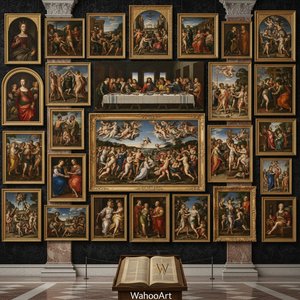
Jacopo Tintoretto : Les 25 Chefs-d'œuvre du Maître Vénitien | OriginalUniqueArt
Plongez dans l'univers dramatique de Jacopo Tintoretto ! Découvrez les 25 œuvres incontournables du maître vénitien, ses techniques uniques et son style baroque. Reproductions de qualité muséale sur OriginalUniqueArt.com.


