

 Aperçu en situation
 Partager
 Partager
 Détails
 Guide imprimable

 Télécharger
 Articles similaires
 Radiographie
 Voir le diaporama
 Statistiques
Marion Crossing the Peedee
 Oil On Canvas
- WallArt
- American Genre Painting
 1850
1850- 19th Century
 188.0 x 127.0 cm
 Amon Carter Museum of American Art
 Afficher la suite
Reproduction à l'huile faite à la main
Huile sur toile peinte à la main, avec cadre et dimensions personnalisés, réalisée sur commande par nos artistes. ( Passer au format impression Passer au format image numérique)




P118B €10

P118H €10

P118W €10

P438Z €10

P508JH €12

P508YH €12

P805H €10

P805Z €10

P919BZ €10

P919G €10

P919XJ €10

P959ZH €10

P968JZ €12

W106C €8

W218G €10

W218JH €8

W218Y €10

W307PJ €10

W316G €10

W316PJ €8

W316Y €10

W398PJ €8

W4111J €10

W500HY €15

W500JH €15

W692G €12

W849H €8

W940BG €15

W953PJ €8




Choisissez parmi nos formats prédéfinis qui respectent les proportions originales de l’œuvre.

Saisissez la largeur et la hauteur souhaitées, pour s'adapter à votre cadre ou à votre mur. Cette œuvre est peinte à la main ; ainsi, pour un format de forme différente, l'artiste peut peindre un peu plus autour du tableau ou réduire légèrement les bords — c'est vous qui choisissez. Nous vous envoyons une maquette numérique pour approbation avant que la peinture ne commence. L'image présentée sur cette page ne reflète pas le résultat réel — seule la maquette le fait.
Après la commande, l’équipe OriginalUniqueArt.com contactera le client par e-mail pour recueillir ses instructions et lui fournira une maquette d’aperçu
Livraison dans le monde entier () en 3 à 4 semaines au lieu des 5 semaines habituelles. (24 octobre). Aucun compromis sur la qualité.

Livraison express gratuite dans le monde entier

Toile de lin de haute qualité

Assurance transport complète

Garantie de remboursement des droits de douane

Garantie de fidélité des couleurs

Garantie de retour de 100 jours (uniquement en cas de défaut)

Garantie de remboursement à 100%

Tarifs dégressifs sur quantité
 L'option verre n'est disponible que pour les dimensions inférieures à 110 cm.

Marion Crossing the Peedee
Technique de reproduction
Format de la reproduction
-


Prix total final
€ 417
A Journey Through Time: The Spirit of the American Frontier
In the sweeping expanse of William Tylee Ranney’s Marion Crossing the Peedee, we are not merely observers of a landscape, but witnesses to a pivotal moment in the American narrative. Painted in 1850, this masterful oil on canvas captures a scene of profound movement and historical weight. The composition centers on a bustling river crossing, where figures, horses, and even a faithful dog navigate the unpredictable waters of the Peedee River. There is an undeniable sense of drama unfolding within the frame; the way the boat is laden with life suggests a community in transition, embodying the very essence of westward expansion and the rugged resilience required to tame a new frontier. For the collector, this piece offers more than just a visual feast; it provides a window into the soul of 19th-century America, evoking themes of exploration, interdependence, and the shared struggle of pioneer life.
The technical prowess displayed in this work is nothing short of extraordinary, making it a centerpiece worthy of any sophisticated interior. Ranney employs a traditional 19th-century realist style, utilizing layered oil techniques to build a world of immense depth and tactile reality. One can almost feel the rough texture of the riverbank’s bark and the heavy folds of the travelers' clothing through his deliberate, visible brushstrokes. The artist masterfully balances organic shapes with a dynamic use of diagonal lines—the angle of the boat and the curve of the shoreline guide the eye through the chaos of the crossing, creating a sense of rhythmic motion. This interplay of light and shadow, particularly under the diffused glow of an overcast sky, lends a cinematic quality to the scene, casting soft highlights on the water and deep, mysterious shadows within the dense foliage.
A Symphony of Earthy Tones and Atmospheric Depth
Color plays a vital role in establishing the emotional temperature of this masterpiece. Ranney avoids garish hues, opting instead for a sophisticated palette dominated by earthy browns, deep forest greens, and muted grays. These tones ground the painting in realism, suggesting the grit and dust of travel. However, these somber shades are punctuated by subtle glints of white and blue in the sky and water, providing much-needed breath and light to the composition. This careful color management creates an atmospheric perspective where distant elements soften into a hazy, ethereal background, pulling the viewer deeper into the vastness of the American landscape.
For interior designers and art enthusiasts alike, Marion Crossing the Peedee serves as a profound emotional anchor. The painting does not just depict a historical event; it evokes a feeling of uncertainty and courage. The dramatic sky, heavy with the promise of change, mirrors the internal state of those navigating the river—a metaphor for the unpredictability of life itself. Whether placed in a grand library, a traditional study, or as a conversation starter in a contemporary living space, this reproduction brings with it an aura of historical prestige and a timeless, adventurous spirit that continues to captivate the modern imagination.
Questions et réponses
Où puis-je trouver un guide pour « Marion Crossing the Peedee » ?
Une page Guide est disponible pour «Marion Crossing the Peedee» de William Tylee Ranney : une fiche d'information imprimable sur l'œuvre, conçue pour les étudiants et un usage pédagogique en classe.
Où peut-on voir «Marion Crossing the Peedee» de William Tylee Ranney aujourd'hui ?
Vous pouvez admirer l'original de « Marion Crossing the Peedee » au Amon Carter Museum of American Art, Fort Worth, États-Unis d'Amérique.
Pour quel usage une reproduction de «Marion Crossing the Peedee» de William Tylee Ranney est-elle recommandée ?
L'utilisation recommandée d'une impression de « Marion Crossing the Peedee » est Focal.
Biographie de l'artiste
Premières années et expérience au Texas
- Né: 9 mai 1813, Middletown, Connecticut
- Parents: William Ranney (capitaine de marine) et Clarissa Ranney
- Déménagé à Fayetteville, Caroline du Nord en 1826 pour vivre avec son oncle, le commerçant William Nott.
- Apprenti tôlier durant cette période, développant probablement ses premières compétences en dessin.
- En 1833, déménagé à Brooklyn, New York, pour étudier la peinture.
- S'est porté volontaire dans l'armée du Texas en mars 1836 après la chute de l'Alamo, servant sous le général Sam Houston.
- A servi pendant neuf mois, vivant des événements qui ont profondément influencé son sujet artistique ultérieur. Il aurait gardé Santa Anna après la bataille de San Jacinto.
- Est retourné à Brooklyn en 1837 et a repris ses activités artistiques.
Développement Artistique et Style
- Peintre à l'huile autodidacte, sans formation formelle.
- A exposé publiquement ses premières peintures en 1838 à la National Academy of Design de New York City.
- A reçu un prix pour sa peinture de genre, "Une scène de cour."
- A voyagé entre Caroline du Nord et New York de 1839 à 1842.
- A ouvert un atelier à New York City en 1843, se présentant initialement comme peintre portraitiste.
- A développé un style distinctif caractérisé par des représentations réalistes de la vie quotidienne, de scènes sportives, de sujets historiques et de paysages occidentaux.
- Son travail présentait souvent des portraits détaillés de personnages et d'environnements, reflétant son observation méticuleuse et son souci du détail.
Thèmes Majeurs et Œuvres
- La Vie dans l’Ouest: Esprit pionnier, chasseurs, trappeurs, explorateurs avant le peuplement généralisé par les Américains d'origine européenne (par exemple, "Enterrement sur la prairie", "Partie de reconnaissance").
- Scènes Sportives: La chasse au canard et les sujets équestres étaient prédominants, remarquables pour leurs figures sculpturales ("On the Wing" - son œuvre la plus populaire avec plusieurs versions).
- Sujets Historiques: Représentait des scènes de la Révolution américaine, en se concentrant sur l'expérience des gens ordinaires plutôt que sur les grandes batailles.
- Peinture de Genre: La vie quotidienne et les scènes domestiques étaient fréquemment représentées.
- Œuvres Notables: "On the Wing", "Prairie Burial", "Scouting Party", "Hunting Wild Horses", "Trapper's Last Shot", "The Match Boy", "Old Oaken Bucket."
Vie ultérieure, Héritage et Importance
- A épousé Margaret Agnes O’Sullivan en 1847.
- S'est installé définitivement à West Hoboken, New Jersey (aujourd'hui Union City) en 1853, établissant un atelier surplombant le skyline de Manhattan.
- Contributeur régulier et membre associé de la National Academy of Design et de l'American Art Union.
- Considéré comme le premier grand peintre de genre à travailler dans le New Jersey.
- L’un des peintres américains les plus importants avant la guerre de Sécession.
- Ses contemporains ont reconnu son importance, un témoin affirmant qu'« un spécimen de Ranney est indispensable partout où existe une collection d'art américain ».
- Est décédé le 18 novembre 1857, probablement à cause de la tuberculose.
- Le travail de Ranney a contribué à populariser les représentations de l’Ouest américain et au développement de la peinture de genre aux États-Unis. Son attention portée à la vie quotidienne et aux gens ordinaires a rendu son art accessible et pertinent pour un large public.
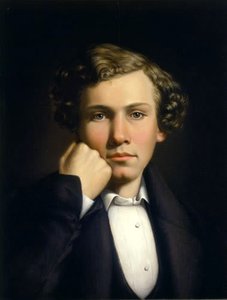
William Tylee Ranney
1813 - 1857 , États-Unis d'Amérique
En bref
- Artistic Movement Or Style: Peinture de genre
- Date Of Birth: 9 mai 1813
- Date Of Death: 18 novembre 1857
- Full Name: William Tylee Ranney
- Nationality: Américain
- Notable Artworks:
- On the Wing
- Prairie Burial
- Scouting Party
- Trapper's Last Shot
- Place Of Birth (City And Country): Middletown, États-Unis
Articles connexes
Terre et Émotion : La Résonance Affective des Couleurs Terrestres dans l'Art
Explorez la puissance émotionnelle des couleurs terrestres en art ! Découvrez comment les artistes les utilisent pour créer des ambiances uniques et trouvez l'œuvre parfaite pour votre intérieur avec OriginalUniqueArt.
Les 10 Chefs-d'œuvre Sable : Peintures Célèbres aux Tons Chauds |
Plongez dans les 10 chefs-d'œuvre aux tons sable ! Découvrez l'histoire de Van Gogh, Monet et d'autres artistes renommés. Inspirez votre décoration intérieure avec des reproductions de peintures classiques sur .
Top 10 des Tableaux Célèbres aux Tons Champignon : Art & Décor Intemporels
Plongez dans l'univers des 10 plus beaux tableaux aux tons champignon ! Découvrez les histoires de Van Gogh, Monet et Cézanne. Inspirez votre décoration intérieure avec : reproductions d'art de qualité muséale et collections exclusives.

Les 10 Chefs-d'œuvre du XIXe Siècle : Artistes et Décor Intemporels
Plongez au cœur du XIXe siècle avec les 10 œuvres incontournables de Manet, Monet et Renoir. Découvrez l'histoire, les techniques et l'émotion derrière ces chefs-d'œuvre impressionnistes et réalistes. Trouvez votre reproduction idéale sur OriginalUniqueArt.com !
Les 10 Chefs-d'œuvre Peints dans les Tons d'Argile : Histoire et Décor
Plongez dans les 10 chefs-d'œuvre peints dans des tons d'argile envoûtants ! Découvrez l'histoire de Van Gogh, Monet et Rembrandt. Trouvez l'inspiration déco & achetez des reproductions tableaux haute qualité sur .