

 Aperçu en situation
 Envoyer
 Partager
 Détails de l'œuvre

 Télécharger
 Articles similaires
 Radiographie
 Diaporama
Woodland Brook


 Lire la suite
Giclées et impressions d'art
Impressions giclées ou sur toile de qualité musée, avec une production rapide et des finitions au choix. ( Commander la reproduction peinte à la main Acheter l'image haute résolution)




P118B $10

P118H $10

P118W $10

P438Z $10

P508JH $12

P508YH $12

P805H $10

P805Z $10

P919BZ $10

P919G $10

P919XJ $10

P959ZH $10

P968JZ $12

W106C $8

W218G $10

W218JH $8

W218Y $10

W307PJ $10

W316G $10

W316PJ $8

W316Y $10

W398PJ $8

W4111J $10

W500HY $15

W500JH $15

W692G $12

W849H $8

W940BG $15

W953PJ $8




Choisissez parmi nos formats prédéfinis qui respectent les proportions originales de l’œuvre.

Vous pouvez saisir vos propres dimensions pour vous adapter à un cadre ou à un espace spécifique. Si la taille sélectionnée ne correspond pas aux proportions de l'image originale, nous recadrerons l'œuvre ou étendrons l'image avec une bordure en miroir ou une couleur unie. Une maquette numérique vous sera envoyée pour approbation avant le début de la production.
Veuillez noter que l'aperçu à l'écran ne reflète pas le recadrage ou l'extension réelle. Seule la maquette montrera avec précision la composition finale.
Bien que des tailles personnalisées soient disponibles, nous vous recommandons de choisir une dimension dans la liste prédéfinie afin de préserver les proportions originales.
Livraison dans le monde entier () en 2 semaines au lieu des 4/5 semaines habituelles. (28 août)

Livraison express gratuite dans le monde entier

Toile de lin de qualité supérieure

Assurance transport complète

Garantie de remboursement des droits de douane

Garantie de fidélité des couleurs

Politique de retour de 60 jours (uniquement en cas de défaut)

Garantie de remboursement à 100%

Offre de tarifs dégressifs
 L'option verre n'est disponible que pour les dimensions inférieures à 110 cm.

Woodland Brook
Giclées et impressions d'art
Format de la reproduction
-


Prix total
$ 80
A Moment of Tranquil Reflection: William Trost Richards’ “Woodland Brook”
William Trost Richards' "Woodland Brook," painted in 1861, isn’t merely a depiction of a forest scene; it’s an invitation to stillness. This oil on canvas, currently residing within the Detroit Institute of Arts, embodies the spirit of the Hudson River School while simultaneously hinting at the burgeoning Pre-Raphaelite influence that would soon reshape American landscape painting. Richards, a meticulous observer and dedicated craftsman, sought not to glorify nature with dramatic vistas but rather to capture its quiet dignity and inherent beauty through painstaking detail and a profound understanding of light and atmosphere.
The painting immediately draws the eye into a serene woodland setting. A gently flowing stream, rendered with remarkable precision in Richards’ brushwork, snakes its way through a dense forest floor. The trees themselves—a mix of maples, birches, and pines—are not idealized symbols but individual specimens, each bearing the unique markings of age and experience. Richards' technique is characterized by a layering of thin glazes, building up color gradually to achieve an astonishing sense of depth and luminosity. Notice how he uses warm ochres and browns in the undergrowth, contrasted with cooler greens and blues in the shadowed depths of the trees – a masterful manipulation of value that creates a convincing illusion of three-dimensionality.
The Language of Light and Color
Richards’ mastery lies not just in his technical skill but also in his ability to evoke mood through color. The painting is bathed in a soft, diffused light, characteristic of the Luminist style – a movement Richards helped pioneer. This isn't harsh sunlight; it’s a gentle illumination that seems to emanate from within the forest itself. The use of complementary colors—the vibrant greens against the warm browns and yellows—intensifies the sense of depth and creates a visual harmony that is both captivating and calming. The dappled light filtering through the leaves adds an element of magic, suggesting hidden secrets and quiet contemplation.
Interestingly, Richards included two figures within this vast landscape – small, almost ghostly presences near the center and slightly to the right. Their inclusion isn’t about narrative; rather, they serve as a poignant reminder of humanity's place within the grandeur of nature. They invite us to consider our own relationship with the environment, prompting reflection on scale and perspective.
Historical Context and Artistic Influences
"Woodland Brook" sits comfortably at the intersection of two significant artistic movements. Richards was a key figure in the Hudson River School, known for their detailed depictions of American landscapes. However, unlike some of his contemporaries who embraced romanticized themes, Richards prioritized scientific accuracy and observational realism. He studied botany extensively, meticulously documenting the flora of the White Mountains, which heavily influenced his work. Furthermore, Richards’ attention to detail and use of color bear a striking resemblance to the Pre-Raphaelites, particularly their interest in capturing the beauty of nature with an almost photographic quality.
The painting's creation coincided with a period of significant change in American art. The Civil War had profoundly impacted the nation, leading many artists to turn inward and explore themes of spirituality and introspection – qualities that are powerfully present in Richards’ work. “Woodland Brook” offers a respite from the turmoil of the era, inviting viewers to find solace and beauty in the natural world.
Bringing "Woodland Brook" Home
OriginalUniqueArt is proud to offer meticulously crafted hand-painted reproductions of William Trost Richards' "Woodland Brook." Each reproduction captures the essence of the original painting – its luminous colors, intricate detail, and profound sense of tranquility. Whether you’re an art collector, a design enthusiast seeking inspiration for your interior space, or simply someone who appreciates the beauty of nature, this artwork is sure to evoke a lasting impression. Consider how the painting's serene atmosphere can transform any room into a sanctuary of peace and contemplation. Explore our range of sizes and canvas options to find the perfect reproduction for your home or office – a timeless piece that will be cherished for generations to come.
Biographie de l'artiste
Premières années et formation
William Trost Richards, un artiste américain de paysages renommé, est né le 14 novembre 1833 à Philadelphie, en Pennsylvanie. Entre 1850 et 1855, il a étudié à temps partiel avec l'artiste allemand Paul Weber tout en travaillant comme concepteur et illustrateur de ferronnerie ornementale.Carrière artistique
Sa première exposition publique a eu lieu lors d’une exposition à New Bedford, dans le Massachusetts, organisée par l’artiste Albert Bierstadt en 1858. En 1862, il fut élu membre honoraire de la National Academy of Design et académicien en 1871. Richards passa six étés sur la côte est après son retour d'un voyage d'un an en Europe en 1866.Œuvres notables et style
Richards a produit de nombreuses vues aquarellées acclamées des White Mountains, dont plusieurs se trouvent aujourd’hui dans la collection du Metropolitan Museum of Art. Ses œuvres sont aujourd'hui présentées dans de nombreux musées américains importants, notamment la National Gallery, le Saint Louis Art Museum et le Smithsonian American Art Museum. Le style de Richards se caractérise par des rendus factuels méticuleux, rejetant l'approche romancée d'autres peintres de l’Hudson River School. Ses vues des White Mountains sont presque photographiques dans leur réalisme.Héritage
La fille de William Trost Richards, Anna Richards Brewster, est également devenue peintre. Les œuvres de Richards se trouvent dans divers musées, notamment ceux mentionnés ci-dessus et le musée Thyssen-Bornemisza ainsi que le Crystal Bridges Museum of American Art.- Voir la peinture de Richards "Lago Avernus" sur OriginalUniqueArt.com
- Découvrez d'autres œuvres de William Trost Richards sur OriginalUniqueArt.com
- En savoir plus sur William Trost Richards sur Wikipédia
- 14 novembre 1833 : né à Philadelphie, Pennsylvanie
- 1862 : élu membre honoraire de la National Academy of Design
- 1871 : élu académicien
- 8 novembre 1905 : décédé à Newport, Rhode Island
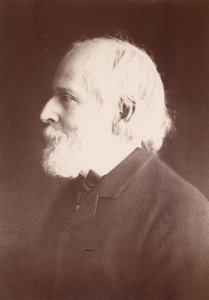
William Trost Richards
1833 - 1905 , États-Unis d'Amérique
L'essentiel de l'artiste
- Artistes Influents:
- Paul Weber
- Albert Bierstadt
- Date De Décès: 8 novembre 1905
- Date De Naissance: 14 novembre 1833
- Lieu De Naissance: Philadelphie, États-Unis
- Mouvement Artistique: Hudson River School
- Nationalité: Américaine
- Nom Complet: William Trost Richards
- Style Artistique: Réalisme méticuleux
- Œuvres Notables: ['Lago Avernus']
Articles connexes
William Trost Richards: Luminism, Spirituality & the American Landscape Tradition
Explore the captivating landscapes of William Trost Richards, a master of Luminism associated with both the Hudson River School & American Pre-Raphaelite movements. Discover his spiritual connection to nature and lasting influence on American art.
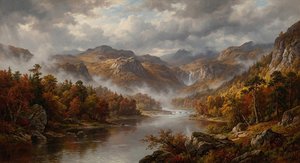
L'École du fleuve Hudson : 10 chefs-d'œuvre incontournables pour sublimer votre intérieur
Plongez dans l'univers grandiose de l'École du fleuve Hudson ! Découvrez 10 chefs-d'œuvre emblématiques de Thomas Cole, Frederic Church et Albert Bierstadt. Inspirez votre décoration intérieure avec ces paysages américains romantiques. Explorez la collection complète sur OriginalUniqueArt.com.

L'École du fleuve Hudson : Romantisme américain et exploration d'un paysage national
Explorez l'École du fleuve Hudson : un mouvement artistique américain majeur célébrant la nature et le sublime. Découvrez ses peintres emblématiques, son histoire et son héritage durable avec OriginalUniqueArt.
Capturing the American Spirit: A Journey Through Iconic Landscapes and the Legacy of the Hudson River School
Explore the profound beauty of American art history. From the Hudson River School to iconic landscapes, discover a curated journey through the masterpieces that defined a nation's spirit and the enduring legacy of American Romanticism.

Robert Spencer: Luminism, Narrative & the American Landscape Tradition
Explore the captivating world of Luminism & the Hudson River School with our expert analysis. Discover the history, artists, and enduring beauty of 19th-century American landscape painting. Find museum-quality reproductions at OriginalUniqueArt.


