

 Aperçu en situation
 Partager
 Partager
 Détails
 Guide imprimable

 Télécharger
 Articles similaires
 Radiographie
 Voir le diaporama
 Statistiques
Scene from The Tempest


 Afficher la suite
Giclées et impressions d'art
Impressions giclées ou sur toile de qualité musée, avec une production rapide et des finitions au choix. ( Acheter la peinture faite à la main Passer au format image numérique)




P118B €10

P118H €10

P118W €10

P438Z €10

P508JH €12

P508YH €12

P805H €10

P805Z €10

P919BZ €10

P919G €10

P919XJ €10

P959ZH €10

P968JZ €12

W106C €8

W218G €10

W218JH €8

W218Y €10

W307PJ €10

W316G €10

W316PJ €8

W316Y €10

W398PJ €8

W4111J €10

W500HY €15

W500JH €15

W692G €12

W849H €8

W940BG €15

W953PJ €8




Choisissez parmi nos formats prédéfinis qui respectent les proportions originales de l’œuvre.

Saisissez la largeur et la hauteur souhaitées pour qu'elles s'adaptent à votre cadre ou à votre mur. Une impression ne peut être que découpée, elle ne peut jamais être agrandie au-delà de l'image originale ; ainsi, un format de forme différente entraînera la perte d'une partie de l'image. Nous vous envoyons une maquette numérique pour approbation avant toute impression. L'image présentée sur cette page ne montre pas le recadrage réel — seule la maquette le permet.
Livraison dans le monde entier () en 2 semaines au lieu des 4/5 semaines habituelles. (23 octobre)

Livraison express gratuite dans le monde entier

Toile de lin de haute qualité

Assurance transport complète

Garantie de remboursement des droits de douane

Garantie de fidélité des couleurs

Garantie de retour de 100 jours (uniquement en cas de défaut)

Garantie de remboursement à 100%

Tarifs dégressifs sur quantité
 L'option verre n'est disponible que pour les dimensions inférieures à 110 cm.

Scene from The Tempest
Giclées et impressions d'art
Format de la reproduction
-


Prix total final
€ 70
A Celestial Encounter in the Earth's Depths
In the profound stillness of a subterranean world, William Trost Richards captures a moment of transcendent revelation in his 1850 masterpiece, Scene from The Tempest. This is not merely a landscape, but a dramatic biblical tableau that invites the viewer into a cavernous expanse of textured rock and ancient shadows. At the heart of this geological cathedral, a regal king, draped in heavy green robes and crowned in gold, stands in silent communion with a young woman clad in ethereal white. The composition is masterfully vertically oriented, pulling the eye upward through the dark, imposing walls of the cavern toward a radiant orb of light that pierces the gloom. This celestial glow serves as more than just a light source; it acts as a divine messenger, illuminating the central figures and casting long, dramatic shadows that breathe life into the rugged stone surroundings.
The painting is a breathtaking example of the Romantic tradition, yet it is infused with the scientific precision that would later earn Richards the moniker of the "Painter-Botanist." While many of his contemporaries in the Hudson River School sought to dramatize nature through theatrical exaggeration, Richards utilized chiaroscuro—the intense interplay between light and dark—to heighten the emotional weight of the narrative without sacrificing anatomical or geological accuracy. The visible brushstrokes add a palpable sense of texture to the scene, allowing the viewer to feel the roughness of the damp cave walls and the soft, flowing grace of the woman's garments. This meticulous technique creates an immersive experience, making the cavern feel like a tangible, breathing space.
Symbolism and the Spirit of Discovery
Beyond its striking visual impact, Scene from The Tempest is rich with symbolic resonance, making it a profound choice for collectors who value art with intellectual depth. The dark, labyrinthine cavern serves as a metaphor for the uncertainties and challenges of the human condition, representing the unknown depths of the soul or the hardships of life. Conversely, the radiant orb of light descending from above symbolizes hope, divine guidance, and the clarity of truth. The interaction between the king and the woman—a moment of revelation or blessing—suggests a bridge between the earthly and the divine, an idea that would have deeply resonated with the mid-19th-century audience.
For the interior designer or the discerning art lover, this piece offers a commanding presence. Its palette of deep blues, forest greens, earthy browns, and brilliant golds provides a sophisticated anchor for a room, capable of evoking both mystery and grandeur. Whether placed in a quiet study to inspire contemplation or as a focal point in a grand living space, this reproduction of Richards's work brings with it the weight of history and the beauty of scientific observation. It is an invitation to look closer, to find the light within the darkness, and to appreciate the meticulous craftsmanship of an artist who saw the divine in every geological detail.
Questions et réponses
Quelle ambiance "Scene from The Tempest" apporterait-elle à une pièce ?
L'atmosphère Romantic de «Scene from The Tempest» de William Trost Richards s'accorde parfaitement avec l'espace recommandé : un(e) Living Room.
Comment le mouvement et l'époque se rencontrent-ils dans «Scene from The Tempest» de William Trost Richards ?
Dans «Scene from The Tempest» de William Trost Richards, le mouvement Romanticism rencontre l'époque XIXe siècle.
Quelle émotion «Scene from The Tempest» de William Trost Richards dégage-t-il ?
Le ton émotionnel relevé pour «Scene from The Tempest» de William Trost Richards est Dramatic. Il résume le sentiment exprimé par l'œuvre.
Biographie de l'artiste
Premières années et formation
William Trost Richards, un artiste américain de paysages renommé, est né le 14 novembre 1833 à Philadelphie, en Pennsylvanie. Entre 1850 et 1855, il a étudié à temps partiel avec l'artiste allemand Paul Weber tout en travaillant comme concepteur et illustrateur de ferronnerie ornementale.Carrière artistique
Sa première exposition publique a eu lieu lors d’une exposition à New Bedford, dans le Massachusetts, organisée par l’artiste Albert Bierstadt en 1858. En 1862, il fut élu membre honoraire de la National Academy of Design et académicien en 1871. Richards passa six étés sur la côte est après son retour d'un voyage d'un an en Europe en 1866.Œuvres notables et style
Richards a produit de nombreuses vues aquarellées acclamées des White Mountains, dont plusieurs se trouvent aujourd’hui dans la collection du Metropolitan Museum of Art. Ses œuvres sont aujourd'hui présentées dans de nombreux musées américains importants, notamment la National Gallery, le Saint Louis Art Museum et le Smithsonian American Art Museum. Le style de Richards se caractérise par des rendus factuels méticuleux, rejetant l'approche romancée d'autres peintres de l’Hudson River School. Ses vues des White Mountains sont presque photographiques dans leur réalisme.Héritage
La fille de William Trost Richards, Anna Richards Brewster, est également devenue peintre. Les œuvres de Richards se trouvent dans divers musées, notamment ceux mentionnés ci-dessus et le musée Thyssen-Bornemisza ainsi que le Crystal Bridges Museum of American Art.- Voir la peinture de Richards "Lago Avernus" sur OriginalUniqueArt.com
- Découvrez d'autres œuvres de William Trost Richards sur OriginalUniqueArt.com
- En savoir plus sur William Trost Richards sur Wikipédia
- 14 novembre 1833 : né à Philadelphie, Pennsylvanie
- 1862 : élu membre honoraire de la National Academy of Design
- 1871 : élu académicien
- 8 novembre 1905 : décédé à Newport, Rhode Island
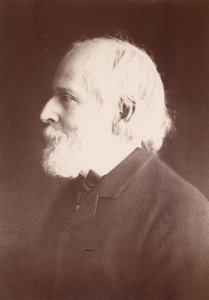
William Trost Richards
1833 - 1905 , États-Unis d'Amérique
En bref
- Artistes Influents:
- Paul Weber
- Albert Bierstadt
- Date De Décès: 8 novembre 1905
- Date De Naissance: 14 novembre 1833
- Lieu De Naissance: Philadelphie, États-Unis
- Mouvement Artistique: Hudson River School
- Nationalité: Américaine
- Nom Complet: William Trost Richards
- Style Artistique: Réalisme méticuleux
- Œuvres Notables: ['Lago Avernus']
Articles connexes

Romantic Realism: The Masterful Fusion of Raw Emotion and Hyper-Realistic Detail for the Modern Collector
Discover the captivating world of Romantic Realism. Explore how master artists blend raw emotion with hyper-realistic detail to create timeless, museum-quality oil paintings perfect for sophisticated modern collectors and luxury home interiors.
William Trost Richards: Luminism, Spirituality & the American Landscape Tradition
Explore the captivating landscapes of William Trost Richards, a master of Luminism associated with both the Hudson River School & American Pre-Raphaelite movements. Discover his spiritual connection to nature and lasting influence on American art.

L'Huile sur Toile : Exploration Historique et Technique d'un Médium Artistique Intemporel
Explorez l'histoire fascinante de la peinture à l'huile, des techniques ancestrales aux maîtres flamands comme Van Eyck. Découvrez les secrets des pigments, liants et glacis pour comprendre cet art intemporel.

The Enduring Legacy of Oil on Canvas: Technique, History & Aesthetic Impact
Explore the rich history & techniques of oil painting – from Renaissance masters to Impressionism. Discover pigments, layering methods, and why this timeless medium endures. Expert insights for artists & art enthusiasts.

10 chefs-d'œuvre du Réalisme Romantique qui capturent l'âme humaine
Plongez dans l'émotion du Réalisme Romantique. Explorez 10 chefs-d'œuvre iconiques, de Constable à Homer, mêlant vérité et passion. Trouvez l'inspiration pour votre décor avec nos reproductions de qualité musée sur OriginalUniqueArt.com. Découvrez toute la collection en ligne.
