

 Aperçu en situation
 Partager
 Partager
 Détails
 Guide imprimable

 Télécharger
 Articles similaires
 Radiographie
 Voir le diaporama
 Statistiques
Path Through the Mountains


 Afficher la suite
Reproduction à l'huile faite à la main
Huile sur toile peinte à la main, avec cadre et dimensions personnalisés, réalisée sur commande par nos artistes. ( Passer au format impression Passer au format image numérique)




P118B €10

P118H €10

P118W €10

P438Z €10

P508JH €12

P508YH €12

P805H €10

P805Z €10

P919BZ €10

P919G €10

P919XJ €10

P959ZH €10

P968JZ €12

W106C €8

W218G €10

W218JH €8

W218Y €10

W307PJ €10

W316G €10

W316PJ €8

W316Y €10

W398PJ €8

W4111J €10

W500HY €15

W500JH €15

W692G €12

W849H €8

W940BG €15

W953PJ €8




Choisissez parmi nos formats prédéfinis qui respectent les proportions originales de l’œuvre.

Saisissez la largeur et la hauteur souhaitées, pour s'adapter à votre cadre ou à votre mur. Cette œuvre est peinte à la main ; ainsi, pour un format de forme différente, l'artiste peut peindre un peu plus autour du tableau ou réduire légèrement les bords — c'est vous qui choisissez. Nous vous envoyons une maquette numérique pour approbation avant que la peinture ne commence. L'image présentée sur cette page ne reflète pas le résultat réel — seule la maquette le fait.
Après la commande, l’équipe OriginalUniqueArt.com contactera le client par e-mail pour recueillir ses instructions et lui fournira une maquette d’aperçu
Livraison dans le monde entier () en 3 à 4 semaines au lieu des 5 semaines habituelles. (21 octobre). Aucun compromis sur la qualité.

Livraison express gratuite dans le monde entier

Toile de lin de haute qualité

Assurance transport complète

Garantie de remboursement des droits de douane

Garantie de fidélité des couleurs

Garantie de retour de 100 jours (uniquement en cas de défaut)

Garantie de remboursement à 100%

Tarifs dégressifs sur quantité
 L'option verre n'est disponible que pour les dimensions inférieures à 110 cm.

Path Through the Mountains
Technique de reproduction
Format de la reproduction
-


Prix total final
€ 262
A Symphony of Stone and Sky
In the mid-19th century, as the American landscape was being explored both physically and artistically, William Trost Richards captured a moment of profound stillness in his 1858 masterpiece, Path Through the Mountains. This breathtaking oil on canvas serves as more than just a depiction of geography; it is an invitation into a sanctuary of natural perfection. The viewer is immediately drawn into a world where snow-capped peaks pierce a serene sky, their jagged silhouettes softened by the ethereal light of a high-altitude afternoon. A winding river, acting as a silver thread through the valley, guides the eye past ancient trees and through rugged terrain, creating a composition that feels both expansive and intimately contained.
Richards, a pivotal figure associated with the Hudson River School, brings a level of scientific precision to this work that distinguishes it from the more overtly dramatic works of his contemporaries. While many artists of the era sought to provoke awe through turbulent storms or exaggerated shadows, Richards utilized a technique rooted in meticulous observation. His brushwork, though expressive enough to capture the texture of granite and the softness of drifting snow, maintains a clarity that borders on the photographic. This delicate balance between realism and romanticism allows the painting to breathe, offering a sense of depth that makes the mountain range appear to stretch infinitely toward the horizon.
The Harmony of the Natural Order
Beyond its technical brilliance, Path Through the Mountains carries a deep symbolic resonance. The composition is a study in harmony, where the permanence of the mountains meets the transient flow of the river. To the discerning collector or interior designer, this piece offers a sense of enduring tranquility. The inclusion of the valley floor—lush with life and anchored by steady trees—serves as a metaphor for the human connection to the earth, suggesting that even amidst the grand and intimidating scale of nature, there exists a path of peace and stability.
For those looking to elevate a living space or a professional gallery, a high-quality reproduction of this work provides an immediate focal point of sophistication. The cool tones of the snow and the deep, earthy hues of the forest create a calming atmosphere, making it an ideal selection for rooms designed for reflection and quietude. Owning a hand-painted tribute to Richards' vision is not merely about decorating a wall; it is about bringing a piece of American art history into the modern home, preserving the spirit of the 19th-century landscape movement for generations to come.
Questions et réponses
Quelle pièce s'accorde avec les couleurs de «Path Through the Mountains» de William Trost Richards ?
Les couleurs Neutrals de «Path Through the Mountains» de William Trost Richards s'accordent parfaitement avec l'espace recommandé : une Living Room.
L'œuvre « Path Through the Mountains » dispose-t-elle d'un aperçu en réalité augmentée ?
La page Aperçu RA de «Path Through the Mountains» de William Trost Richards utilise la réalité augmentée pour visualiser l'œuvre dans votre propre espace, à partir d'un appareil compatible.
Quelle est la luminance de «Path Through the Mountains» de William Trost Richards ?
«Path Through the Mountains» de William Trost Richards présente une luminance de Gentle Luminance. La luminance décrit la quantité de lumière que les couleurs semblent réfléchir.
Biographie de l'artiste
Premières années et formation
William Trost Richards, un artiste américain de paysages renommé, est né le 14 novembre 1833 à Philadelphie, en Pennsylvanie. Entre 1850 et 1855, il a étudié à temps partiel avec l'artiste allemand Paul Weber tout en travaillant comme concepteur et illustrateur de ferronnerie ornementale.Carrière artistique
Sa première exposition publique a eu lieu lors d’une exposition à New Bedford, dans le Massachusetts, organisée par l’artiste Albert Bierstadt en 1858. En 1862, il fut élu membre honoraire de la National Academy of Design et académicien en 1871. Richards passa six étés sur la côte est après son retour d'un voyage d'un an en Europe en 1866.Œuvres notables et style
Richards a produit de nombreuses vues aquarellées acclamées des White Mountains, dont plusieurs se trouvent aujourd’hui dans la collection du Metropolitan Museum of Art. Ses œuvres sont aujourd'hui présentées dans de nombreux musées américains importants, notamment la National Gallery, le Saint Louis Art Museum et le Smithsonian American Art Museum. Le style de Richards se caractérise par des rendus factuels méticuleux, rejetant l'approche romancée d'autres peintres de l’Hudson River School. Ses vues des White Mountains sont presque photographiques dans leur réalisme.Héritage
La fille de William Trost Richards, Anna Richards Brewster, est également devenue peintre. Les œuvres de Richards se trouvent dans divers musées, notamment ceux mentionnés ci-dessus et le musée Thyssen-Bornemisza ainsi que le Crystal Bridges Museum of American Art.- Voir la peinture de Richards "Lago Avernus" sur OriginalUniqueArt.com
- Découvrez d'autres œuvres de William Trost Richards sur OriginalUniqueArt.com
- En savoir plus sur William Trost Richards sur Wikipédia
- 14 novembre 1833 : né à Philadelphie, Pennsylvanie
- 1862 : élu membre honoraire de la National Academy of Design
- 1871 : élu académicien
- 8 novembre 1905 : décédé à Newport, Rhode Island
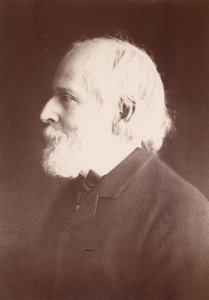
William Trost Richards
1833 - 1905 , États-Unis d'Amérique
En bref
- Artistes Influents:
- Paul Weber
- Albert Bierstadt
- Date De Décès: 8 novembre 1905
- Date De Naissance: 14 novembre 1833
- Lieu De Naissance: Philadelphie, États-Unis
- Mouvement Artistique: Hudson River School
- Nationalité: Américaine
- Nom Complet: William Trost Richards
- Style Artistique: Réalisme méticuleux
- Œuvres Notables: ['Lago Avernus']
Articles connexes

Wild & Untamed: The High-Impact Energy of American Romanticism and the Hudson River School
Experience the raw power of American Romanticism. Explore the high-impact energy of the Hudson River School through premium, hand-painted oil reproductions that capture the sublime beauty and untamed spirit of the American wilderness for discerning collectors.
Capturing the American Spirit: A Journey Through Iconic Landscapes and the Legacy of the Hudson River School
Explore the profound beauty of American art history. From the Hudson River School to iconic landscapes, discover a curated journey through the masterpieces that defined a nation's spirit and the enduring legacy of American Romanticism.
L'École du fleuve Hudson : 10 chefs-d'œuvre incontournables pour sublimer votre intérieur
Plongez dans l'univers grandiose de l'École du fleuve Hudson ! Découvrez 10 chefs-d'œuvre emblématiques de Thomas Cole, Frederic Church et Albert Bierstadt. Inspirez votre décoration intérieure avec ces paysages américains romantiques. Explorez la collection complète sur OriginalUniqueArt.com.
L'École du fleuve Hudson : Romantisme américain et exploration d'un paysage national
Explorez l'École du fleuve Hudson : un mouvement artistique américain majeur célébrant la nature et le sublime. Découvrez ses peintres emblématiques, son histoire et son héritage durable avec OriginalUniqueArt.
Capturing the Light: A Journey Through the Soul of American Impressionism and the Hudson River School
Explore the luminous beauty of American Impressionism and the Hudson River School. Discover a curated journey through light, landscape, and history, celebrating the enduring legacy of masters through exquisite, hand-painted oil reproductions for the discerning art lover.
