

 Aperçu en situation
 Envoyer
 Partager
 Détails de l'œuvre

 Télécharger
 Articles similaires
 Radiographie
 Diaporama
 Statistiques
For Sunday's Dinner


 Lire la suite
Reproduction à l'huile faite à la main
Huile sur toile peinte à la main, avec cadre et dimensions personnalisés, réalisée sur commande par nos artistes. ( Passer au format impression Passer à l'image numérique)




P118B $10

P118H $10

P118W $10

P438Z $10

P508JH $12

P508YH $12

P805H $10

P805Z $10

P919BZ $10

P919G $10

P919XJ $10

P959ZH $10

P968JZ $12

W106C $8

W218G $10

W218JH $8

W218Y $10

W307PJ $10

W316G $10

W316PJ $8

W316Y $10

W398PJ $8

W4111J $10

W500HY $15

W500JH $15

W692G $12

W849H $8

W940BG $15

W953PJ $8




Choisissez parmi nos formats prédéfinis qui respectent les proportions originales de l’œuvre.

Vous pouvez saisir vos propres dimensions pour l'adapter à un cadre ou à un espace spécifique. Si la taille sélectionnée ne correspond pas aux proportions de l'image d'origine, nous recadrerons l'œuvre ou prolongerons la peinture avec des éléments peints à la main supplémentaires. Une maquette numérique vous sera envoyée pour approbation avant le début de la production.
Veuillez noter que l'aperçu à l'écran ne reflète pas le recadrage ou l'extension réels. Seule la maquette montrera fidèlement la composition finale.
Bien que des tailles personnalisées soient disponibles, nous vous recommandons de sélectionner une dimension dans la liste prédéfinie afin de préserver les proportions d'origine.
Après la commande, l’équipe OriginalUniqueArt.com contactera le client par e-mail pour recueillir ses instructions et lui fournira une maquette d’aperçu
Livraison dans le monde entier () en 3 à 4 semaines au lieu des 5 semaines habituelles. (11 septembre). Aucun compromis sur la qualité.

Livraison express gratuite dans le monde entier

Toile de lin de haute qualité

Assurance transport complète

Garantie de remboursement des droits de douane

Garantie de fidélité des couleurs

Garantie de retour de 100 jours (uniquement en cas de défaut)

Garantie de remboursement à 100%

Tarifs dégressifs sur quantité
 L'option verre n'est disponible que pour les dimensions inférieures à 110 cm.

For Sunday's Dinner
Technique de reproduction
Format de la reproduction
-


Prix total final
$ 300
William Michael Harnett: The Illusionist of Everyday Life
William Michael Harnett (1848 – 1892) stands as a singular figure in American art history, celebrated for his masterful trompe-l'œil paintings that elevate the mundane into breathtaking illusions. Born in Clonakilty, County Cork, Ireland, Harnett’s early life was marked by emigration to Philadelphia shortly after his birth, shaping him into an artist deeply rooted in both European tradition and burgeoning American realism. His formative years were spent honing skills in engraving design on table silver – a craft that instilled precision and attention to detail – alongside pursuing formal artistic training at institutions like the Pennsylvania Academy of Fine Arts and Cooper Union. This dual influence—the meticulous craftsmanship of engraving combined with the burgeoning aesthetic ideals of Impressionism—would profoundly shape Harnett’s distinctive visual language.- Early Training & Technique: Harnett’s dedication to mastering technique began with night classes at Penn and NYAD, where he absorbed influences from luminaries like Raphael Peale Jr., who pioneered tabletop still life in America. This influence is particularly evident in his early works, characterized by a painstaking rendering of texture and surface detail—a hallmark of American Realism that sought to capture the tangible world with uncompromising accuracy. Harnett’s meticulous approach extended beyond mere observation; he actively manipulated light and shadow to create convincing illusions of depth and dimensionality, mirroring techniques employed by Dutch masters during the Baroque period.
For Sunday's Dinner: A Study in Illusion
“For Sunday’s Dinner” exemplifies Harnett’s unparalleled skill as a trompe-l'œil painter—a technique that deliberately deceives the eye by presenting an image that appears to exist beyond its physical boundaries. Painted in 1888, this unsettling still life depicts a dead rooster hanging upside down from the ceiling by its feet against a dark, textured background resembling aged wood paneling. The composition is centered around the rooster, which dominates the frame with its vivid coloration contrasting sharply with the somber backdrop. Harnett’s masterful manipulation of perspective and color creates a palpable sense of unease, prompting viewers to question what they perceive as “real.”
- Composition & Color Palette: The painting employs a central and symmetrical composition, drawing immediate attention to the suspended rooster. The vertical orientation emphasizes the bird’s hanging posture. The background consists of dark wooden planks with ornate metal hinges and corner pieces, providing a sense of enclosure and adding visual interest without distracting from the main subject. Harnett utilizes a warm color palette dominated by yellows, oranges, and browns in the rooster’s plumage, juxtaposed against deep, muted browns and blacks of the background. Subtle highlights suggest light reflecting off the feathers and metal hardware—a deliberate tactic designed to heighten realism and reinforce the illusion of depth.
Symbolism & Emotional Impact
Beyond its technical brilliance, “For Sunday’s Dinner” carries significant symbolic weight. The image evokes themes of life, death, and consumption – confronting viewers with the unsettling reality that beauty can coexist alongside decay. Harnett's choice to depict a deceased animal—a common motif in Victorian art—underscores the inevitability of mortality while simultaneously referencing the ritualistic preparation for sustenance. The title itself is deliberately ironic, highlighting the juxtaposition between domestic tranquility and morbid contemplation.
- Style & Technique: Harnett’s style is rooted in American Realism, characterized by meticulous detail and a focus on everyday objects. He employed oil paint on canvas to achieve a high degree of verisimilitude—a painstaking process that involved layering thin glazes of pigment to build up tonal variations and create luminous surfaces. The artist's unwavering commitment to capturing the materiality of his subjects—the rough texture of wood grain, the metallic sheen of hinges—is testament to Harnett’s profound understanding of artistic principles and his desire to engage viewers on a visceral level.
Historical Context & Legacy
Harnett's work emerged during a period of significant cultural change in America, as Impressionism gained traction alongside the rise of industrialization and urbanization. Unlike many artists of his time who sought to glorify heroic narratives or idealized landscapes, Harnett turned his gaze inward—focusing on seemingly insignificant objects and scenes—to explore profound philosophical questions about existence and perception. His enduring influence can be seen in subsequent generations of American painters who embraced trompe-l'œil as a means of challenging conventional notions of representation and inviting viewers to actively participate in the artistic experience.
- Further Research: Harnett’s fascination with illusion extended beyond painting into other mediums, including engraving design on table silver—a craft that instilled precision and attention to detail. Explore William Michael Harnett’s stunning trompe-l'œil still lifes of everyday objects – a unique American style inspired by Dutch masters. Discover his legacy! For Sunday's Dinner
Additional Resources
Explore William Michael Harnett’s artistic journey through biographical accounts and critical analyses—illuminating the intellectual currents that shaped his vision and solidified his place as a pivotal figure in American art history.
Biographie de l'artiste
William Michael Harnett : L'Illusionniste de la Vie Quotidienne
William Michael Harnett (1848 – 1892) s'impose comme une figure singulière de l'histoire de l'art américain, célébré pour ses peintures trompe-l'œil magistrales qui transfigurent le banal en illusions époustouflentes. Né à Clonakilty, dans le comté de Cork, en Irlande, sa jeunesse fut marquée par l'émigration vers Philadelphie peu après sa naissance, façonnant un artiste profondément ancré tant dans la tradition européenne que dans le réalisme américain naissant. Ses années formatrices furent consacrées à perfectionner l'art de la gravure sur l'orfèvrerie — un métier qui lui inculqua une précision et une attention méticuleuses aux détails — tout en poursuivant une formation artistique officielle au sein d'institutions prestigieuses telles que la Pennsylvania Academy of Fine Arts et le Cooper Union.- Formation Initiale et Technique : Le dévouement de Harnett à la maîtrise technique débuta par des cours du soir à la Penn et au NYAD, où il absorba les influences de figures lumineuses telles que Raphael Peale Jr., pionnier de la nature morte de table en Amérique. Cette influence est palpable dans le style distinctif de Harnett, qui marque une rupture délibérée avec les conventions académiques de l'époque.
- La Vision Trompe-l’œil : La véritable révélation de Harnett survint avec son adoption du trompe-l’œil, une technique empruntée aux maîtres hollandais du XVIIe siècle comme Pieter Claesz. Contra unlike les représentations traditionnelles qui aspirent à une restitution fidèle, le trompe-l'œil cherche à tromper l'œil, créant une illusion de profondeur et de dimensionnalité sur une surface plane. Harnett maniait avec brio la perspective, l'ombrage et la texture pour accomplir cet exploit étonnant.
Œuvres Notables et Style Artistique
L'œuvre de Harnett se caractérise par un intérêt immuable pour les objets du quotidien — pipe, journal, sachet de tabac, violon, pomme, bouteille de vin — présentés avec un niveau de réalisme extraordinaire, presque hallucinatoire. Ses peintures ne sont pas de simples représentations ; elles sont des invitations à résoudre une énigme perceptive. Son cycle « After the Hunt » (Après la chasse), un quatuor de toiles illustrant l'équipement de chasse et le gibier, en est l'exemple parfait. Le rendu méticuleux de Harnett capture chaque nuance de texture et de lumière, exploitant les limites mêmes du trompe-l'œil pour en décupler l'impact. La faible profondeur de champ de ces tableaux est cruciale : le moindre mouvement du spectateur vient rompre l'illusion, soulignant ainsi le génie de Harnett dans la manipulation de la perception visuelle.- La série « After the Hunt » : Cette série illustre parfaitement la technique de Harnett, démontrant sa capacité à utiliser des artifices optiques pour créer une illusion de profondeur convaincante dans un espace restreint.
- Thèmes Récurrents : Ses motifs récurrents incluent les instruments (particulièrement les violons), les sachets de tabac et les compositions de fruits méticuleusement disposés — des objets qui témoignent à la fois des intérêts personnels de l'artiste et de son dialogue avec les précédents artistiques.
Reconnaissance et Héritage
Le travail de Harnett a reçu un immense éloge de son vivant et continue de résonner auprès du public contemporain. Des musées tels que l'Albright-Knox Art Gallery, l'American Museum of Natural History et le Metropolitan Museum of Art exposent fièrement ses peintures, garantissant la pérennité de sa vision à travers les générations. L'influence de Harnett dépasse la simple imitation stylistique ; il a défendu une nouvelle approche du réalisme, privilégiant la profondeur illusionniste plutôt que la simple exactitude de surface. Son héritage est gravé dans l'œuvre des artistes qui lui ont succédé, notamment Jefferson David Chalfant, dont la technique du trompe-l’œil doit énormément à la vision pionnière de Harnett.Pour Aller Plus Loin
Pour approfondir votre découverte du parcours artistique de William Michael Harnett et explorer ses peintures captivantes, visitez OriginalUniqueArt.com pour obtenir des informations détaillées sur sa vie et son œuvre. Pensez également à explorer les collections d'institutions telles que la Residenz à Munich et le Philadelphia Museum of Art pour expérimenter l'art de Harnett de manière directe.
William Michael Harnett
1848 - 1892 , Irlande
En bref
- Artistic Movement Or Style: Trompe l’œil peinture
- Artists Or Movements Influenced By This Artist: ['Réalisme américain']
- Artists Who Influenced This Artist:
- Raphaël Peale
- Pieter Claesz
- Date Of Birth: August 10, 1848
- Full Name: William Michael Harnett
- Nationality: Irlandais-Américain
- Notable Artworks:
- Après la chasse
- L'ancien violon
- Place Of Birth: Clonakilty, Ireland
Articles similaires

Réalisme Américain : 10 Chefs-d'œuvre Incontournables pour une Déco Inspirée
Plongez au cœur du Réalisme Américain avec 10 chefs-d'œuvre d'Edward Hopper, Andrew Wyeth et plus. Découvrez l'histoire et les techniques de ces artistes emblématiques. Reproductions de tableaux de qualité musée sur OriginalUniqueArt.com !
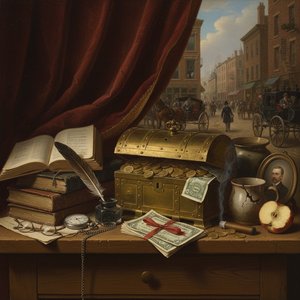
William Michael Harnett: Still Life, Realism & the American Pursuit of Materiality
Explore the captivating still lifes of William Michael Harnett, a master of American realism and trompe l'oeil painting. Discover his technique, legacy & the cultural context behind his iconic works.
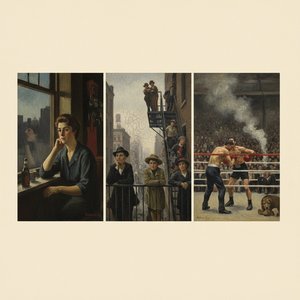
Le Réalisme Américain du XXe siècle : Un commentaire social et artistique poignant
Explorez le Réalisme Américain du XXe siècle : de l'Ashcan School à Hopper. Analyse approfondie des artistes, techniques et l'impact social de ce mouvement artistique puissant. Découvrez son héritage sur OriginalUniqueArt.

The Unvarnished Truth: A Cultural Journey Through the Soul of American Realism
Explore the profound beauty of American Realism. From the Ashcan School's urban grit to intimate portraits, discover how artists captured the authentic soul of a nation through unvarnished truth and masterful observation.
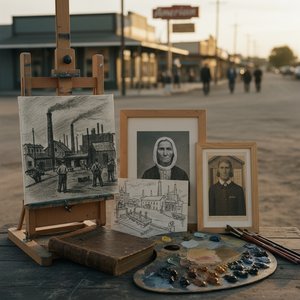
American Realism: Capturing the Raw Soul of a Nation Through the Lens of Art History
Explore the profound depth of American Realism. From the gritty Ashcan School to poignant social landscapes, discover how masters captured the raw soul of a nation through evocative oil paintings and timeless art history.


