

 Aperçu en situation
 Partager
 Partager
 Détails

 Télécharger
 Articles similaires
 Radiographie
 Voir le diaporama
 Statistiques
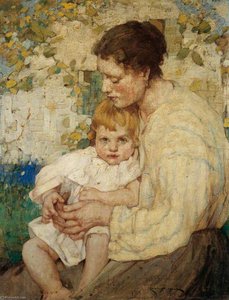
Poverty
 102.0 x 82.0 cm
 Afficher la suite
Giclées et impressions d'art
Impressions giclées ou sur toile de qualité musée, avec une production rapide et des finitions au choix. ( Acheter la peinture faite à la main Passer au format image numérique)




































Choisissez parmi nos formats prédéfinis qui respectent les proportions originales de l’œuvre.

Vous pouvez saisir vos propres dimensions pour vous adapter à un cadre ou à un espace spécifique. Si la taille sélectionnée ne correspond pas aux proportions de l'image originale, nous recadrerons l'œuvre ou étendrons l'image avec une bordure en miroir ou une couleur unie. Une maquette numérique vous sera envoyée pour approbation avant le début de la production.
Veuillez noter que l'aperçu à l'écran ne reflète pas le recadrage ou l'extension réelle. Seule la maquette montrera avec précision la composition finale.
Bien que des tailles personnalisées soient disponibles, nous vous recommandons de choisir une dimension dans la liste prédéfinie afin de préserver les proportions originales.
Livraison dans le monde entier () en 2 semaines au lieu des 4/5 semaines habituelles. (12 septembre)

Livraison express gratuite dans le monde entier

Toile de lin de haute qualité

Assurance transport complète

Garantie de remboursement des droits de douane

Garantie de fidélité des couleurs

Garantie de retour de 100 jours (uniquement en cas de défaut)

Garantie de remboursement à 100%

Tarifs dégressifs sur quantité
 L'option verre n'est disponible que pour les dimensions inférieures à 110 cm.

Poverty
Giclées et impressions d'art
Format de la reproduction
-


Prix total final
$ 80
Biographie de l'artiste
William Lee Hankey: A Painter of English Landscapes and Human Stories
Born in Chester, England, in 1869, William Lee Hankey (1869–1952) emerged as a significant figure in late nineteenth and early twentieth-century British art. Initially trained at the Chester School of Art and later refining his skills at the Royal College of Art in London and in Paris, Hankey’s artistic journey was marked by a deep engagement with both traditional landscape painting and a burgeoning interest in capturing the lives of ordinary people – particularly within the context of rural England. His work reflects a fascinating blend of influences, from the meticulous realism of Jules Bastien-Lepage to the evocative atmosphere of French Impressionism, resulting in a distinctive style characterized by sensitivity, detail, and a subtle emotional resonance.
Hankey’s early career was shaped by his family's artistic heritage. His grandfather, Henry Hobson, and James Hardy were both accomplished artists, instilling within him a strong appreciation for the visual arts from an early age. This familial connection fueled his own ambition to pursue painting professionally. He began exhibiting at the Royal Academy in 1896, quickly establishing himself as a competent landscape painter and portraitist. His initial subjects often focused on idyllic rural scenes – rolling fields, quaint villages, and portraits of families engaged in everyday activities. However, it was his later work that truly distinguished him, particularly his poignant depictions of the social impact of war and displacement.
The Influence of Paris and a Shift Towards Social Commentary
Hankey’s time spent studying art in Paris proved transformative. He encountered the Impressionist movement firsthand, absorbing its emphasis on capturing fleeting moments of light and atmosphere. This influence is evident in his later landscapes, which gained a looser, more atmospheric quality compared to his earlier, more rigidly realistic works. He was particularly drawn to the work of Jules Bastien-Lepage, whose focus on rustic subjects and a sentimental style resonated with Hankey’s own desire to portray the dignity and beauty of rural life. This admiration for Bastien-Lepage is visible in the emotional depth and narrative quality of many of his paintings.
A pivotal moment in Hankey's artistic development occurred during World War I. Witnessing the devastation caused by the German invasion of France and Belgium, he shifted his focus from idyllic landscapes to documenting the plight of refugees – displaced families struggling to survive amidst the chaos and uncertainty. This marked a significant departure from his earlier work and demonstrated a newfound commitment to social commentary. His series of etchings depicting these scenes, particularly “The Refugees,” became remarkably powerful, offering a stark contrast to the romanticized depictions of war prevalent at the time. These prints were not merely illustrations; they conveyed a deep sense of empathy for those affected by conflict.
Miniature Portraits and Royal Patronage
Beyond his landscapes and etchings, Hankey was also highly regarded as a miniature portraitist. He possessed an exceptional talent for capturing the likenesses of prominent figures, including members of the British aristocracy. His miniature portraits were characterized by their exquisite detail, delicate brushwork, and subtle use of color. He gained considerable recognition for his work on Lady Elizabeth Bowes-Lyon, later Queen Elizabeth the Queen Mother, painting her repeatedly throughout her childhood and young adulthood. These portraits are not simply representations of beauty; they capture a sense of personality and grace, reflecting the subject’s inner qualities.
The portrait of Lady Elizabeth, painted in 1907 and incorporating elements from a Velázquez-inspired dress design by her mother, stands as a particularly notable example of Hankey's skill. It exemplifies his ability to combine technical mastery with artistic sensitivity, creating an image that is both aesthetically pleasing and emotionally resonant. The portrait was presented as a wedding gift to Prince Albert, Duke of York, later King George VI, solidifying Hankey’s position within the highest echelons of British society.
Legacy and Recognition
William Lee Hankey's artistic legacy extends beyond his individual works. He played an active role in the art world, serving as president of the London Sketch Club and contributing to the Royal Society of Painters in Watercolors. His work is held in numerous public and private collections across Britain and internationally, including the Royal Collection and the Auckland Art Gallery. Hankey’s ability to seamlessly blend traditional techniques with a growing awareness of social issues cemented his place as a significant figure in late Victorian and Edwardian British art – an artist who captured both the beauty of the English countryside and the human stories within it.
He died in London in 1952, leaving behind a body of work that continues to be admired for its technical skill, emotional depth, and enduring relevance. His paintings and prints offer a valuable glimpse into a bygone era, reminding us of the power of art to illuminate both the beauty of the world around us and the complexities of human experience.
william lee hankey
1869 - 1952
En bref
- Artistic Movement Or Style: Impressionism, Pastoral
- Artists Or Movements Influenced By This Artist:
- Newlyn School
- Royal Academy
- Artists Who Influenced This Artist: ['Jules Bastien-Lepage']
- Date Of Birth: 1869
- Date Of Death: 1952
- Full Name: William Lee Hankey
- Nationality: British
- Notable Artworks:
- Loading Mussels, Honfleur
- Ellaline Terriss as Bluebell
- Place Of Birth: Chester, England