

 Aperçu en situation
 Partager
 Partager
 Détails
 Guide imprimable

 Télécharger
 Articles similaires
 Radiographie
 Voir le diaporama
 Statistiques
Orpaillage
 Huile sur toile
- Art mural
 1854
1854- XIXe siècle
 64.0 x 76.0 cm
 Crocker Art Museum
 Afficher la suite
L’œuvre d'art présentée sur cette page est protégée par le droit d'auteur, ce qui signifie que nous ne pouvons légalement créer ou vendre de reproduction identique. Cette protection est appliquée en vertu d'accords internationaux tels que la Convention de Berne et par les lois nationales, notamment celles énoncées par le Loi américaine sur le droit d'auteur - Titre 17.
En tant qu'alternative respectueuse et légale, nous proposons des œuvres d'art personnalisées, peintes à la main et inspirées de l'original. Nos artistes talentueux et professionnels étudient avec soin le style, l'ambiance et l'essence artistique de l'œuvre originale pour créer une pièce nouvelle et unique qui évoque la même émotion — tout en restant une création originale en soi.
Cette méthode est pleinement conforme aux réglementations sur le droit d'auteur car elle ne repose pas sur la copie ou la duplication de l'œuvre protégée. Il s'agit plutôt d'une réinterprétation créative — une nouvelle peinture qui s'inspire de l'original sans pour autant lui être identique.
Reproduction à l'huile faite à la main
Huile sur toile peinte à la main, avec cadre et dimensions personnalisés, réalisée sur commande par nos artistes. ( Passer au format impression Passer au format image numérique)




P118B €10

P118H €10

P118W €10

P438Z €10

P508JH €12

P508YH €12

P805H €10

P805Z €10

P919BZ €10

P919G €10

P919XJ €10

P959ZH €10

P968JZ €12

W106C €8

W218G €10

W218JH €8

W218Y €10

W307PJ €10

W316G €10

W316PJ €8

W316Y €10

W398PJ €8

W4111J €10

W500HY €15

W500JH €15

W692G €12

W849H €8

W940BG €15

W953PJ €8




Choisissez parmi nos formats prédéfinis qui respectent les proportions originales de l’œuvre.

Saisissez la largeur et la hauteur souhaitées, pour s'adapter à votre cadre ou à votre mur. Cette œuvre est peinte à la main ; ainsi, pour un format de forme différente, l'artiste peut peindre un peu plus autour du tableau ou réduire légèrement les bords — c'est vous qui choisissez. Nous vous envoyons une maquette numérique pour approbation avant que la peinture ne commence. L'image présentée sur cette page ne reflète pas le résultat réel — seule la maquette le fait.
Après la commande, l’équipe OriginalUniqueArt.com contactera le client par e-mail pour recueillir ses instructions et lui fournira une maquette d’aperçu
Livraison dans le monde entier () en 3 à 4 semaines au lieu des 5 semaines habituelles. (24 octobre). Aucun compromis sur la qualité.

Livraison express gratuite dans le monde entier

Toile de lin de haute qualité

Assurance transport complète

Garantie de remboursement des droits de douane

Garantie de fidélité des couleurs

Garantie de retour de 100 jours (uniquement en cas de défaut)

Garantie de remboursement à 100%

Tarifs dégressifs sur quantité
 L'option verre n'est disponible que pour les dimensions inférieures à 110 cm.

Orpaillage
Technique de reproduction
Format de la reproduction
-


Prix total final
€ 264
A Moment Captured in the Gold Fields
Step closer to observe the quiet intensity of this scene from 1854. In Placer Mining, we find ourselves on a California hillside during the height of the gold rush, witnessing a group of men engaged in the grueling, rhythmic labor of extraction. The composition centers on the Long Tom, a wooden sluice box stretching several feet through the dirt. You can almost hear the steady flow of water from the flume as it washes over the earth. Two men are positioned at the top, shoveling soil into the apparatus, while the heavier particles—the gold and sand—slowly drift downward to settle against the riffles. It is a scene defined by collective effort and the singular focus required to find fortune in the silt.
The figures are distributed with a careful balance across the landscape. Some men kneel in the dirt, while others stand or sit, their bodies angled toward the work at hand. There is a notable variety in their appearance; notice how each man wears a different style of hat, a small detail that suggests a diverse gathering of individuals brought together by a common purpose. A pickaxe rests near the middle-right, and shovels are placed strategically throughout the foreground and center, grounding the activity in the physical tools of the era.
Technique and Historical Presence
The artist employs an academic foundation to render this historical moment with remarkable precision. The handling of the figures is skilled, creating a sense of movement that feels natural rather than staged. There is a meticulous attention to the actual mechanics of the mining process, from the way the water moves through the wooden box to the texture of the excavated hillside. This level of detail suggests an intimate familiarity with the methods used by prospectors during this period.
The palette remains grounded in the earth tones of the landscape—browns, greens, and muted hues that reflect the dusty reality of the mining site. Through these colors, the painting conveys the weight of the work and the grit of the environment. The atmosphere is one of determination. There is no grand drama here, only the steady, repetitive motion of men searching through the earth, capturing a specific chapter of California history through the lens of honest, physical toil.
Questions et réponses
Quel est le niveau de contraste dans «Orpaillage» de William Chadwick ?
Le contraste clair-obscur de « Orpaillage » est évalué à Équilibré. Le contraste décrit l'intensité de la différence entre les zones claires et les zones sombres.
Qui a créé « Orpaillage » et en quelle année ?
L'auteur de « Orpaillage » est William Chadwick, et l'œuvre date de 1854.
L'œuvre « Orpaillage » de William Chadwick est-elle dans le domaine public, et pourquoi ?
«Orpaillage» de William Chadwick est dans le toujours protégé par le droit d'auteur. La durée du droit d'auteur court à partir du décès de l'artiste, survenu en 1962.
Biographie de l'artiste
William Chadwick (1879 – 1962): A Quiet Observer of New England Landscapes
William Chadwick was a British-born American Impressionist painter who spent most of his artistic life in Holyoke, Massachusetts, establishing himself as a prominent figure within the Lyme Art Association and contributing significantly to the visual culture of early 20th century New England. Born in Worcestershire, England, Chadwick emigrated to America in 1884, drawn by the burgeoning artistic community centered around Thomas Cole’s Mount Holyoke Landscape School – an environment that profoundly shaped his aesthetic sensibilities.- Early Life & Education: Chadwick received a formal education at Marlborough College and subsequently pursued studies at Worcester Polytechnic Institute before embarking on a solo artistic journey.
- Move to Lyme Art Association: Recognizing the importance of collaborative artistic endeavors, Chadwick joined the Lyme Art Association in 1906, where he honed his skills alongside fellow Impressionists like Cole and Frederic Church. This association fostered an appreciation for tonal landscapes and atmospheric perspective – techniques that would become hallmarks of his oeuvre.
- Notable Paintings: Chadwick’s artistic output encompassed a diverse range of subjects, primarily focusing on serene depictions of New England scenery—particularly coastal vistas and wooded landscapes bathed in soft light. Pieces such as “Untitled (835)” and “Untitled (754)” exemplify his masterful command of color and brushwork, capturing the essence of fleeting moments within nature.
Technique & Artistic Style: Impressionistic Vision
Chadwick’s artistic style aligns closely with Impressionism, prioritizing observation and capturing the subjective experience of light and color rather than striving for photographic realism. He employed loose brushstrokes—often applied in rapid succession—to convey the ephemeral qualities of a scene, mirroring the fleeting effects of sunlight on foliage and water surfaces. Chadwick's palette favored muted hues – predominantly greens, blues, and browns – creating harmonious compositions that evoke tranquility and contemplation. The artist’s meticulous attention to detail, combined with his expressive handling of pigment, distinguishes him as a key contributor to the Impressionist movement in America.- Color Theory: Chadwick embraced color theory principles championed by Monet and Renoir, utilizing complementary colors to heighten visual impact and creating tonal gradations that simulate atmospheric haze.
- Brushwork & Texture: His brushstrokes were deliberately varied—some bold and assertive, others delicate and subtle—resulting in textured surfaces that conveyed the materiality of the landscape.
Influence & Legacy
Chadwick’s work resonated deeply with contemporaries who admired his ability to convey emotion through visual representation. He served as an inspiration for younger artists emerging from the Mount Holyoke School, fostering a tradition of tonal landscapes that persisted throughout the early decades of the 20th century. Chadwick's paintings continue to be studied and appreciated today, representing not only a beautiful record of New England’s natural beauty but also embodying the core tenets of Impressionist art – prioritizing feeling over factual accuracy and celebrating the transformative power of light. His contribution to American Art History is undeniable.Further Exploration
For more information about William Chadwick's life and artistic achievements, consult resources such as:
William Chadwick
1879 - 1962
En bref
- Artistic Movement Or Style: Realist
- Artists Or Movements Influenced By This Artist: ['Impressionism']
- Artists Who Influenced This Artist: ['Thomas Cole']
- Date Of Birth: 1879
- Date Of Death: 1962
- Full Name: William Chadwick
- Nationality: American
- Notable Artworks:
- Untitled (835)
- Untitled (754)
- Place Of Birth: Holyoke, Massachusetts
Articles connexes

Gold Leaf & Gilding: The Master Craft of Byzantine and Renaissance Art
Explore the sacred art of gold leaf and gilding in Byzantine and Renaissance masterpieces. Discover the techniques of goldbeating, the symbolism of divine light, and how these luminous textures continue to inspire museum-quality hand-painted reproductions today.

Gilded Elegance: How Gold Background Artworks Transform Luxury Interiors with Timeless Radiance
Discover how gold background artworks infuse luxury interiors with timeless radiance. Explore the artistry of gold leaf, from Byzantine traditions to modern impasto textures, and learn to curate a sophisticated home with premium, hand-painted gilded masterpieces.
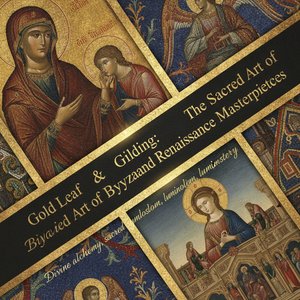
Gold Leaf & Gilding: The Sacred Art of Byzantine and Renaissance Masterpieces
Explore the profound history of gold leaf and gilding in Byzantine and Renaissance art. Discover how this sacred technique transformed religious iconography into celestial phenomena through light, symbolism, and unparalleled craftsmanship.

Golden Glow: How to Use Metallic Gold Artworks to Elevate Your Home Decor with Timeless Luxury
Discover how to elevate your home with the timeless elegance of metallic gold artworks. From sculptural metal pieces to gilded oil paintings, learn expert interior design tips for integrating luxurious gold accents into your space with sophistication and grace.

The Magic of Gold Leaf: Unveiling the Sacred Art of Byzantine & Renaissance Gilding
Explore the transcendent beauty of gold leaf in Byzantine and Renaissance art. Discover how ancient gilding techniques created a celestial glow that continues to inspire luxury interiors and fine art collectors today.