- Accueil

- Reproduction de peinture à l'huile
- william carse
- Sweeps Having a Fight

 Preview
 Partager
 Partager
 Détails de l'œuvre

 Télécharger
 Articles similaires
 Radiographie
 Diaporama
Sweeps Having a Fight
 27.0 x 37.0 cm
 Armley Mills
 Afficher la suite
Reproduction à l'huile faite à la main
Huile sur toile peinte à la main, avec cadre et dimensions personnalisés, réalisée sur commande par nos artistes. ( Switch to Print Switch to Image)




































Choisissez parmi nos formats prédéfinis qui respectent les proportions originales de l’œuvre.

Vous pouvez saisir vos propres dimensions pour l'adapter à un cadre ou à un espace spécifique. Si la taille sélectionnée ne correspond pas aux proportions de l'image d'origine, nous recadrerons l'œuvre ou prolongerons la peinture avec des éléments peints à la main supplémentaires. Une maquette numérique vous sera envoyée pour approbation avant le début de la production.
Veuillez noter que l'aperçu à l'écran ne reflète pas le recadrage ou l'extension réels. Seule la maquette montrera fidèlement la composition finale.
Bien que des tailles personnalisées soient disponibles, nous vous recommandons de sélectionner une dimension dans la liste prédéfinie afin de préserver les proportions d'origine.
Après la commande, l’équipe OriginalUniqueArt.com contactera le client par e-mail pour obtenir ses instructions et lui fournira une maquette d’aperçu.
Livraison dans le monde entier () en 3 à 4 semaines au lieu des 5 semaines habituelles. (28 juillet). Aucune concession sur la qualité.

Livraison express gratuite dans le monde entier

Toile de lin de haute qualité

Assurance transport complète

Garantie de remboursement des frais de douane

Garantie de fidélité des couleurs

Politique de retour de 60 jours (uniquement en cas de défaut)

Garantie de remboursement à 100%

Réduction sur les achats groupés
 L'option verre n'est disponible que pour les dimensions inférieures à 110 cm.

Sweeps Having a Fight
Technique de reproduction
Format de reproduction
-


Prix total final
$ 300
Biographie de l'artiste
William Carse (1800–1845): Bridging Romanticism and Observation
William Carse (1800–1845) stands as a pivotal figure in Scottish art history, embodying the spirit of Romanticism while simultaneously grounding his artistic vision in meticulous observation of the natural world. Born in Edinburgh to Alexander Carse, a painter himself, William’s early exposure to artistic practice undoubtedly shaped his sensibilities and propelled him toward a career dedicated to capturing the beauty and drama of Scotland's landscapes and rural life. Despite limited biographical details surviving from his lifetime—primarily gleaned from contemporary accounts and scholarly research—his impact on Victorian painting remains undeniable.- Early Influences: Carse’s formative years coincided with the ascendancy of Paulus Potter, whose depictions of livestock rendered in a strikingly realistic style exerted considerable influence over Carse's artistic approach. This fascination with animal subjects would permeate his oeuvre, establishing him as one of Scotland’s foremost painters of animals.
- Edinburgh Training: He studied at the Trustees Drawing Academy of Edinburgh under David Allan, absorbing Allan’s mastery of tonal painting and furthering his technical skills. Allan's emphasis on capturing atmospheric effects—particularly light and shadow—served as a crucial catalyst for Carse’s artistic development.
A Landscape Painter Defined: Potterian Style and Atmospheric Rendering
Carse’s distinctive style is characterized by an unwavering commitment to portraying Scottish landscapes with unparalleled accuracy and emotional resonance. He meticulously rendered the textures of heather moorland, the contours of hillsides, and the shimmering surfaces of lochs—all infused with a palpable sense of atmosphere. This stylistic hallmark aligns seamlessly with Potter's aesthetic principles, prioritizing tonal gradation and subtle color harmonies over conventional illusionistic techniques. Critics noted Carse’s ability to convey “the spirit of place,” capturing not merely visual appearances but also the intangible qualities that define Scotland’s character.- Notable Landscapes: Among his most celebrated works are depictions of Glenriddell House and its surrounding estate, meticulously rendered with painstaking detail—a testament to Carse's dedication to realism.
- Technique: He employed a technique rooted in Potter’s method, utilizing thin layers of paint applied in graduated tones to achieve luminous effects and conveying the mood of the scene through subtle color variations.
Public Recognition and Legacy: Leeds Gallery Acquisition
William Carse achieved considerable acclaim during his lifetime, securing commissions from prominent patrons and exhibiting extensively at prestigious venues such as the Royal Academy and the British Institution. His paintings garnered critical praise for their artistic merit and emotional depth—a reflection of his profound engagement with the Romantic movement’s core tenets. Perhaps most enduringly, Carse's legacy resides in the Leeds Gallery’s acquisition of “The Shepherdess,” a masterpiece that exemplifies his signature style and remains a cornerstone of Scottish art history. This painting is considered to be one of Scotland’s finest landscapes and continues to inspire admiration for its masterful execution and evocative portrayal of rural life.Influence on Subsequent Artists
Carse's artistic vision profoundly impacted subsequent generations of Scottish painters, establishing him as a pivotal figure in the Romantic tradition. His meticulous observation of nature—combined with his unwavering devotion to tonal painting—served as an inspiration for artists striving to capture the sublime beauty of Scotland’s landscapes. He helped solidify Potterian style as a dominant aesthetic within Scottish art and cemented Carse's place as one of Scotland’s most important landscape painters.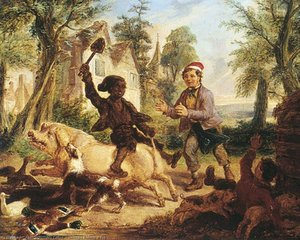
william carse
1800 - 1845
En bref
- Artistic Movement Or Style: Paulus Potter Style
- Artists Or Movements Influenced By This Artist: ['Romanticism']
- Artists Who Influenced This Artist: ['David Allan']
- Date Of Death: 1845
- Full Name: William Carse
- Nationality: Scottish
- Notable Artworks:
- Leith Scene
- Glenriddell
- Place Of Birth: Edinburgh, Scotland

