
 Aperçu en situation
 Envoyer
 Partager
 Détails de l'œuvre

 Télécharger
 Articles similaires
 Radiographie
 Diaporama
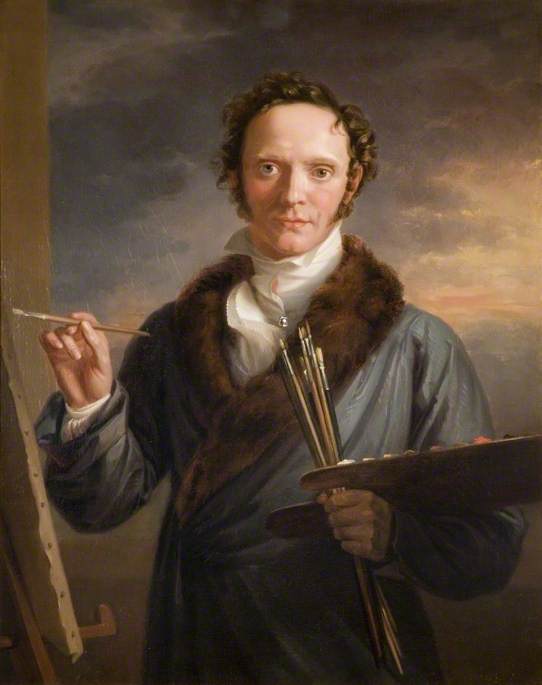
Self Portrait
 1814
1814 92.0 x 71.0 cm
 Lire la suite
Reproduction à l'huile faite à la main
Huile sur toile peinte à la main, avec cadre et dimensions personnalisés, réalisée sur commande par nos artistes. ( Commander l'impression Télécharger l'image haute résolution)




































Choisissez parmi nos formats prédéfinis qui respectent les proportions originales de l’œuvre.

Vous pouvez saisir vos propres dimensions pour l'adapter à un cadre ou à un espace spécifique. Si la taille sélectionnée ne correspond pas aux proportions de l'image d'origine, nous recadrerons l'œuvre ou prolongerons la peinture avec des éléments peints à la main supplémentaires. Une maquette numérique vous sera envoyée pour approbation avant le début de la production.
Veuillez noter que l'aperçu à l'écran ne reflète pas le recadrage ou l'extension réels. Seule la maquette montrera fidèlement la composition finale.
Bien que des tailles personnalisées soient disponibles, nous vous recommandons de sélectionner une dimension dans la liste prédéfinie afin de préserver les proportions d'origine.
Après la commande, l’équipe OriginalUniqueArt.com contactera le client par e-mail pour recueillir ses instructions et lui fournira une maquette d’aperçu
Livraison dans le monde entier () en 3 à 4 semaines au lieu des 5 semaines habituelles. (14 août). Aucun compromis sur la qualité.

Livraison express gratuite dans le monde entier

Toile de lin de qualité supérieure

Assurance transport complète

Garantie de remboursement des droits de douane

Garantie de fidélité des couleurs

Politique de retour de 60 jours (uniquement en cas de défaut)

Garantie de remboursement à 100%

Offre de tarifs dégressifs
 L'option verre n'est disponible que pour les dimensions inférieures à 110 cm.

Self Portrait
Technique de reproduction
Format de la reproduction
-


Prix total
$ 300
Biographie de l'artiste
William Armfield Hobday: A Portraitist Caught Between Glamour and Ruin
William Armfield Hobday (1771 – 17 February 1831) stands as a fascinating figure in the annals of British art history—a painter who achieved considerable renown during his time, yet whose legacy is shadowed by financial instability and ultimately, premature demise. Born into a prosperous Birmingham spoon manufacturing family, Hobday possessed an innate talent for drawing from a young age, propelling him towards London where he pursued formal artistic training at the Royal Academy schools alongside William Reynolds—a connection that would prove influential in shaping his stylistic sensibilities. Hobday’s early career focused on miniature painting and watercolour portraits, establishing himself near the Middlesex Hospital and quickly gaining recognition amongst London society. His clientele included prominent figures like royalty and the Rothschild family, securing commissions that showcased his meticulous technique and ability to capture likenesses with remarkable accuracy. Reynolds' influence is palpable in Hobday’s compositions—particularly his use of chiaroscuro, a dramatic interplay of light and shadow—creating depth and emotion within his subjects. This stylistic approach reflects the broader artistic trends of the Regency era, characterized by elegance and refined observation. He mastered the art of capturing subtle expressions and conveying inner character with unparalleled sensitivity – a hallmark of Reynolds’ own oeuvre. Hobday’s ambition extended beyond portraiture; he envisioned grander projects like panoramas – ambitious theatrical representations of landscapes – aiming to capitalize on public fascination with spectacle. The “Poecilorama,” an exhibition at the Egyptian Hall in London, represented a bold gamble that unfortunately ended in ruin. Despite attracting considerable patronage from leading artists and intellectuals, including Reynolds himself, the venture proved commercially disastrous, plunging Hobday into crippling debt and ultimately triggering his bankruptcy. This audacious undertaking underscored the risks inherent in pursuing artistic innovation alongside commercial viability—a lesson learned at considerable personal cost. Despite setbacks, Hobday persevered, relocating to Bristol where he continued to paint portraits of officers embarking for the Peninsular War—a period marked by patriotic fervor and artistic experimentation. He secured lucrative commissions during this time, yet his extravagant lifestyle consistently undermined his financial stability. Hobday’s meticulous attention to detail—evident in his landscapes as well as his portraits—demonstrated a dedication to craft that transcended mere technical proficiency; it reflected a profound engagement with the subject matter and an aspiration to convey its essence. He secured commissions from influential figures, including Nathan Mayer Rothschild – a wealthy financier who recognized Hobday’s talent – to depict a family group at the considerable sum of £1,000 guineas. However, this patronage couldn't stave off inevitable decline; Hobday succumbed to illness on February 17th, 1831, leaving behind a body of work that reflects both artistic brilliance and personal tragedy. Hobday’s oeuvre comprises approximately 250 paintings—primarily portraits and miniatures—demonstrating his mastery of watercolor and oil mediums. His subjects spanned across social strata, from nobility to merchants and artists, reflecting the diverse interests of Victorian society. While Hobday's fame peaked during his lifetime, his work has endured as a testament to the artistic spirit of the Regency period and continues to be studied by art historians today. He remains an artist whose story serves as a poignant reminder that even the most accomplished creative endeavors can be undone by circumstance—a cautionary tale interwoven with the beauty of meticulously rendered portraits.
William Armfield Hobday
1771 - 1831 , Angleterre
L'essentiel de l'artiste
- Artistic Movement Or Style: Portraiture
- Artists Or Movements Influenced By This Artist: Romanticisme
- Artists Who Influenced This Artist: William Reynolds
- Date Of Birth: 1771
- Date Of Death: 1831
- Full Name: William Armfield Hobday
- Nationality: Anglais
- Notable Artworks:
- Mr Mills
- Famille Rothschild
- Place Of Birth: Birmingham, Angleterre

