 Aperçu en situation
 Envoyer
 Partager
 Détails de l'œuvre
 Guide
Guide

 Télécharger l'image
 Articles similaires
 Radiographie
 Diaporama
 Q&A
Q&A Statistiques
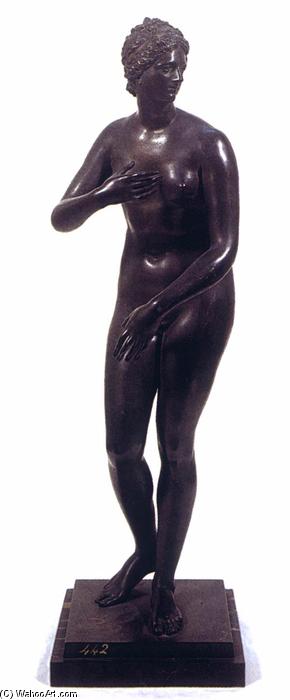
Venus


 Lire la suite
Obtenez un fichier prêt pour l'impression qui dépasse de loin la qualité de l'aperçu web. Chaque image numérique que nous proposons est issue d'un fichier maître haute résolution de notre base de données — mesurant généralement entre 5 000 et 15 000 pixels de large — vous permettant ainsi d'imprimer en grand format, de recadrer avec précision ou de reproduire les détails les plus fins en toute confiance.
Aucun fichier ne quitte notre studio sans être retouché. Un expert numérique vérifie la colorimétrie par rapport à l'œuvre originale et la corrige si nécessaire, puis améliore la clarté et les détails à l'aide d'outils de retouche professionnels — tout en restant toujours fidèle au coup de pinceau et au style de l'artiste. Le résultat est une image qui ressemble au tableau, et non à un simple scan filtré.
Validez avant de finaliser : notre expert vous envoie l'image par e-mail sous 72 heures pour examen. Non satisfait ? Demandez des améliorations ou des corrections, ou demandez un remboursement si la qualité ne répond pas à vos attentes.
C'est une qualité sur laquelle s'appuient éditeurs, studios de création, galeries et ateliers d'impression.
Image numérique
Téléchargez un fichier haute résolution pour votre usage personnel, l'impression et vos projets créatifs. ( Passer au format impression Commander la reproduction peinte à la main)
Inclus avec chaque commande d'image numérique
Livraison numérique experte, garantie.
En choisissant OriginalUniqueArt.com, vous n'obtenez pas seulement une simple image : vous recevez une œuvre numérique sublimée avec professionnalisme, conçue avec précision et accompagnée d'une garantie de satisfaction. Voici tout ce qui accompagne automatiquement votre commande :

Envoi rapide par e-mail
Votre fichier d'image numérique haute résolution vous sera envoyé par e-mail sous 72 heures après votre commande — prêt à un usage immédiat.

Fichier numérique optimisé par l'IA
Votre œuvre d'art bénéficie d'une optimisation professionnelle grâce à des outils d'IA avancés et une retouche manuelle, garantissant un niveau maximal de détail, de clarté et de fidélité chromatique.

Réexpédition gratuite à vie
Vous avez accidentellement supprimé ou perdu votre fichier ? Pas d'inquiétude — nous vous le renverrons gratuitement, quand vous le souhaitez.

Aucuns frais de douane — À jamais
Profitez de votre œuvre d'art instantanément sans frais de douane ni de livraison — les téléchargements numériques sont toujours exonérés de taxes.

Garantie de fidélité des couleurs
Nous garantissons que votre image numérique reproduit les couleurs de l'original aussi fidèlement que possible grâce à des outils professionnels et une gestion rigoureuse des couleurs.

Garantie de satisfaction 100 jours
Si vous n'êtes pas satisfait de votre image numérique, nous la retoucherons ou vous rembourserons 100% sous 100 jours — sans poser de questions.

Garantie de remboursement à 100%
Pas satisfait ? Obtenez un remboursement intégral dans les 100 jours suivant la réception de votre fichier numérique — sans aucune question posée.

Réductions sur les commandes groupées
Achetez 3 images, économisez 10% - Achetez 5, économisez 15% - Achetez 10+, économisez 20%. Idéal pour les projets créatifs, les galeries et les agences.
Biographie de l'artiste
A Sculptor of Whimsy: The Life and Art of Valerio Cioli
Valerio Cioli, a name perhaps less celebrated than his Renaissance contemporaries yet profoundly influential in the development of Florentine sculpture, flourished during the latter half of the 16th century. Born in Florence in 1529 and passing away in 1599, Cioli’s career unfolded against a backdrop of artistic innovation and the powerful patronage of the Medici court. While details regarding his early training remain somewhat elusive, it is understood he immersed himself in the sculptural traditions of the city, absorbing the lessons of masters like Michelangelo – though his path would diverge significantly from the High Renaissance ideals of classical perfection. Cioli’s art wasn't about imposing grandeur; it was about playful observation, a touch of irony, and an embrace of the unconventional. He often worked collaboratively with his brother Giovanni Simone Cioli, making disentangling individual contributions to certain projects a challenge for modern scholars. However, Valerio’s distinctive style – characterized by dynamic movement, expressive faces, and a penchant for depicting everyday life – consistently shines through.The Boboli Gardens: A Stage for Cioli's Imagination
Cioli’s enduring legacy is inextricably linked to the Giardino di Boboli, the magnificent Florentine garden commissioned by Cosimo I de’ Medici. It was within this expansive landscape that he created some of his most iconic works, transforming the space into a veritable theater of sculpture. The centerpiece, and arguably his masterpiece, is the Fontana del Bacchino (1560). This fountain isn't merely decorative; it’s a witty commentary on court life. It depicts Pietro Barbino, a dwarf in Cosimo I’s service, ironically nicknamed Morgante – after the giant from Luigi Pulci’s epic poem – portrayed nude and reclining upon a tortoise as a drunken Bacchus. The sculpture is a fascinating blend of humor and social observation, capturing both the absurdity and the vulnerability of its subject. The fountain's playful spirit, far removed from the solemnity of earlier Renaissance fountains, established Cioli’s reputation for whimsical baroque themes. Further enriching the Boboli Gardens are two additional sculptures attributed to Valerio (in collaboration with his brother): Uomo che vanga (Digging Man) and Uomo che scarica il secchio in un tino (Man Emptying a Bucket into a Vat). These figures, depicting laborers engaged in simple tasks, represent an early interest in portraying the lives of ordinary people – a departure from the traditional focus on mythological or religious subjects.Beyond Boboli: A Diverse Oeuvre
While the Boboli Gardens remain central to his fame, Cioli’s artistic output extended beyond these commissioned works. He demonstrated versatility and skill in various sculptural mediums and styles. A notable example is his Satyr with a Flask, now housed in the Museo del Bargello. This sculpture showcases his ability to render anatomical detail and imbue classical motifs with a sense of lively energy. Perhaps one of his most significant, though less frequently discussed, achievements was his contribution to the tomb of Michelangelo Buonarroti in the Basilica di Santa Croce. Cioli sculpted personifications of Painting, Sculpture, and Architecture – allegorical figures intended to honor the multifaceted genius of the Renaissance master. This commission underscores the esteem in which Cioli was held by his contemporaries; he was entrusted with a task of immense symbolic importance, paying tribute to one of history’s greatest artists. He also collaborated with Giovanni Vincenzo Casali on the statue of San Giovanni Evangelista for the Chapel of San Luca in the Annunziata, further demonstrating his collaborative spirit and willingness to engage in large-scale projects.Influences and Artistic Development
Cioli’s artistic development was shaped by a complex interplay of influences. The legacy of Michelangelo is undeniable – evident in his understanding of anatomy and dynamic composition. However, he consciously moved away from the High Renaissance emphasis on idealized forms, embracing instead a more naturalistic and expressive style. The Mannerist movement, with its elongated figures and dramatic poses, also left its mark on his work. But what truly sets Cioli apart is his unique ability to infuse his sculptures with humor, irony, and a sense of playful observation. He wasn’t simply replicating classical models or adhering to established conventions; he was creating something new – a distinctly baroque sensibility that anticipated the artistic trends of the 17th century. His fascination with everyday life, as evidenced in the Boboli sculptures depicting laborers, reflects a growing interest in realism and social commentary during the Renaissance period.Historical Significance and Lasting Legacy
Valerio Cioli’s historical significance lies not in revolutionizing sculpture but in subtly shifting its direction. He bridged the gap between the High Renaissance and the Baroque, paving the way for artists who would embrace dynamism, emotion, and theatricality. His work challenged traditional notions of beauty and decorum, introducing a new level of wit and irony into Florentine art. The Fontana del Bacchino, in particular, remains a powerful symbol of Medici patronage and the complex social dynamics of the Renaissance court. While often overshadowed by more celebrated figures, Cioli’s sculptures continue to captivate audiences with their playful spirit, expressive faces, and enduring charm. He stands as a testament to the power of observation, the importance of individuality, and the enduring appeal of art that dares to be both beautiful and thought-provoking.
Valerio Cioli
1529 - 1599
En bref
- Full Name: Valerio Cioli
- Nationality: Italian
- Date Of Birth: 1529
- Date Of Death: 1599
- Place Of Birth: Settignano
- Notable Artworks:
- Fontana del Bacchino
- Uomo che vanga
- Satyr with a flask
- Artistic Movement Or Style: Baroque
- Artists Who Influenced This Artist: ['Michelangelo Buonarroti']
- Artists Or Movements Influenced By This Artist: ['Giovanni Simone Cioli']