
 Aperçu en situation
 Partager
 Partager
 Détails
 Guide imprimable

 Télécharger
 Articles similaires
 Radiographie
 Voir le diaporama
 Statistiques
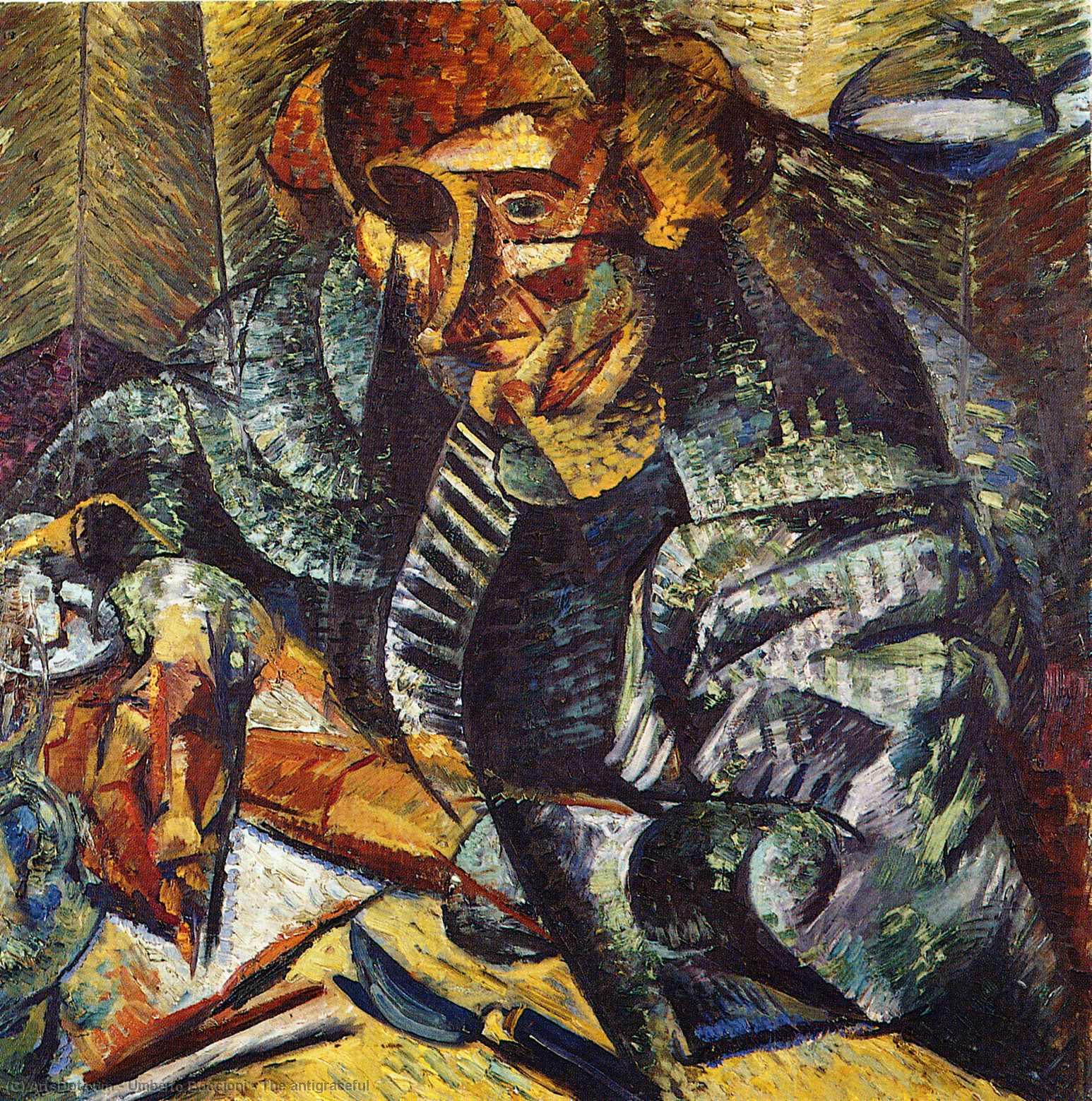
La antigraceful
 Acrylique sur toile
- Art mural
- Cubism
 1912
1912- Moderne
 80.0 x 80.0 cm
 Afficher la suite
Reproduction à l'huile faite à la main
Huile sur toile peinte à la main, avec cadre et dimensions personnalisés, réalisée sur commande par nos artistes. ( Passer au format impression Passer au format image numérique)




P118B €10

P118H €10

P118W €10

P438Z €10

P508JH €12

P508YH €12

P805H €10

P805Z €10

P919BZ €10

P919G €10

P919XJ €10

P959ZH €10

P968JZ €12

W106C €8

W218G €10

W218JH €8

W218Y €10

W307PJ €10

W316G €10

W316PJ €8

W316Y €10

W398PJ €8

W4111J €10

W500HY €15

W500JH €15

W692G €12

W849H €8

W940BG €15

W953PJ €8




Choisissez parmi nos formats prédéfinis qui respectent les proportions originales de l’œuvre.

Vous pouvez saisir vos propres dimensions pour l'adapter à un cadre ou à un espace spécifique. Si la taille sélectionnée ne correspond pas aux proportions de l'image d'origine, nous recadrerons l'œuvre ou prolongerons la peinture avec des éléments peints à la main supplémentaires. Une maquette numérique vous sera envoyée pour approbation avant le début de la production.
Veuillez noter que l'aperçu à l'écran ne reflète pas le recadrage ou l'extension réels. Seule la maquette montrera fidèlement la composition finale.
Bien que des tailles personnalisées soient disponibles, nous vous recommandons de sélectionner une dimension dans la liste prédéfinie afin de préserver les proportions d'origine.
Après la commande, l’équipe OriginalUniqueArt.com contactera le client par e-mail pour recueillir ses instructions et lui fournira une maquette d’aperçu
Livraison dans le monde entier () en 3 à 4 semaines au lieu des 5 semaines habituelles. (8 octobre). Aucun compromis sur la qualité.

Livraison express gratuite dans le monde entier

Toile de lin de haute qualité

Assurance transport complète

Garantie de remboursement des droits de douane

Garantie de fidélité des couleurs

Garantie de retour de 100 jours (uniquement en cas de défaut)

Garantie de remboursement à 100%

Tarifs dégressifs sur quantité
 L'option verre n'est disponible que pour les dimensions inférieures à 110 cm.

La antigraceful
Technique de reproduction
Format de la reproduction
-


Prix total final
€ 258
A Rejection of Grace: Unveiling Boccioni’s ‘Antigraceful’
Umberto Boccioni's 1912 work, *The antigraceful*, is not merely a portrait; it’s a manifesto rendered in paint. A defiant gesture against the established artistic conventions of its time, this piece embodies the core tenets of Futurism – a movement obsessed with dynamism, technology, and the rejection of the past. Rather than seeking to capture conventional beauty, Boccioni aimed to dissect and reconstruct form, presenting a vision that was deliberately unsettling yet profoundly modern. The painting depicts his mother, Cecilia Forlani, but it’s not a sentimental tribute; instead, it's an intellectual exploration of how perception itself can be fragmented and reassembled.
The Birth of a New Aesthetic
To understand *The antigraceful*, one must consider the artistic climate of early 20th-century Italy. Boccioni, alongside artists like Giacomo Balla and Carlo Carrà, felt stifled by the academic traditions that dominated the art world. They sought to break free from these constraints, embracing a new aesthetic inspired by the speed and energy of modern life – the automobile, the factory, the bustling city streets. This fascination with motion is subtly present even in this seemingly static portrait; the fractured planes and angular forms suggest an underlying sense of restlessness, as if Cecilia Forlani herself is caught within a whirlwind of change. The influence of Paul Cézanne and, notably, Pablo Picasso’s early Cubist experiments are visible here, but Boccioni wasn't simply imitating these artists. He was adapting their techniques to express the unique spirit of Italian Futurism – a desire not just to depict reality, but to *dynamize* it.
Deconstructing Form and Emotion
The technique employed in *The antigraceful* is crucial to its impact. Boccioni abandons traditional modeling and shading, opting instead for a fractured composition built from intersecting planes of color. This deliberate distortion isn’t arbitrary; it's intended to convey the subject’s inner life – her thoughts, emotions, and experiences – as a complex interplay of forces. The painting doesn’t offer a single, fixed perspective; rather, it presents multiple viewpoints simultaneously, challenging the viewer to actively participate in constructing meaning. The muted palette, dominated by earthy tones with subtle accents of blue and yellow, further enhances the sense of introspection and psychological depth. It's a far cry from the idealized portraits of previous generations, offering instead a raw and honest portrayal of human experience. The title itself – *Antigraceful* – is a deliberate provocation, signaling Boccioni’s rejection of conventional notions of beauty and harmony.
A Lasting Legacy
Though his life was tragically cut short by war in 1916, Umberto Boccioni left an indelible mark on the history of art. *The antigraceful* remains a powerful testament to his artistic vision – a bold declaration of independence from tradition and a pioneering exploration of new ways of seeing and representing the world. Today, this work continues to resonate with audiences, inspiring artists and captivating collectors alike. A reproduction of *The antigraceful* isn’t just an acquisition; it’s an invitation to engage with a pivotal moment in art history – a moment when the very foundations of artistic expression were being challenged and redefined.
Artwork Information
- Title: The antigraceful
- Artist: Umberto Boccioni
- Year: 1912
- Size: 80 x 80 cm
- Medium: Gesso
Additional Research
- The antigraceful: A Futurist Portrait of Cecilia Forlani
- Futurism and Its Influence on Boccioni’s Art
- Pablo Picasso and the Genesis of Cubism
- Cecilia Forlani Boccioni: The Subject Matter of *Antigraceful*
Photo Description
The painting is a portrait of Cecilia Forlani, Umberto Boccioni’s mother. It exemplifies Futurist principles through its fractured composition and deliberate distortion—a radical departure from academic conventions.
Boccioni utilizes Cubist techniques to dismantle traditional representation, presenting multiple viewpoints simultaneously. The muted palette contributes to the painting's contemplative mood.
Questions et réponses
À quel âge Umberto Boccioni a-t-il créé « La antigraceful » ?
Lorsque « La antigraceful » a été créé en 1912, Umberto Boccioni — né(e) en 1882 — était âgé(e) de 30 ans.
Que représente « La antigraceful » ?
Les thèmes présents dans «La antigraceful» de Umberto Boccioni incluent futurism, portrait, cubism, motherhood, deconstruction, dynamism, color palette, geometric forms. Ensemble, ils résument le sujet de l'œuvre.
Qui est l'artiste derrière « La antigraceful » ?
« La antigraceful » a été créé par Umberto Boccioni. Les informations présentes sur cette page décrivent l'œuvre originale de Umberto Boccioni.
Quelle est la forme de «La antigraceful» de Umberto Boccioni et quelles sont ses dimensions ?
Le format de « La antigraceful » est Format carré, et l'original mesure 80 x 80 cm. Ces deux informations sont utiles lors de la planification d'une reproduction.
Quel artiste et quel style se cachent derrière « La antigraceful » ?
Derrière « La antigraceful » se trouvent Umberto Boccioni et le mouvement Cubism.
Quelle est la date de création de «La antigraceful» de Umberto Boccioni ?
«La antigraceful» de Umberto Boccioni a été créé en 1912.
Quelle nuance dominante traverse «La antigraceful» de Umberto Boccioni ?
La teinte dominante de «La antigraceful» de Umberto Boccioni est Gamme de jaunes dorés. Cette teinte constitue la tonalité de fond de la palette.
Biographie de l'artiste
enfance et formation
umberto boccioni, un peintre et sculpteur italien clé, est né le 19 octobre 1882 à Réggio Calabria, en Italie. Le travail de son père dans la fonction publique a entraîné des déménagements fréquents à travers l'Italie, influençant la vie de Boccioni au début. À 15 ans, il s’est installé à Catane, en Sicile, où il a terminé sa scolarité. Il a ensuite déménagé à Rome pour étudier à l’Accademia di Belle Arti di Roma, à la scuola libera del nudo et sous la direction de Giovanni Mataloni, un artiste de affiches à style liberty.Le mouvement futuriste
L’approche innovante de Boccioni en matière de forme et de déconstruction de la masse a eu un impact significatif sur le monde de l'art. Il est devenu le principal théoriste du mouvement futuriste, signant le Manifeste dei Pittori Futuristi ("Manifeste des peintres futuristes") en 1910. Ses œuvres sont conservées dans de nombreux musées d'art publics, notamment une rétrospective importante au Metropolitan Museum of Art à New York en 1988.Œuvres notables et héritage
- Dynamisme d'un corps humain (futurisme, huile sur toile), une peinture présentant le style unique de Boccioni.
- Formes dimensionnelles d'un cheval (40 x 40 cm, futurisme, huile sur toile), une autre illustration de son approche innovante de la forme.
- Formes uniques de continuité dans l'espace (futurisme, bronze), une sculpture démontrant sa déconstruction de la masse solide.
Liens pertinents depuis OriginalUniqueArt.com
- Peinture par 'umberto boccioni' | umberto boccioni:dynamisme d'un corps humain (futurisme,huile sur toile,)
- Peinture par 'umberto boccioni' | umberto boccioni:formes dimensionnelles d'un cheval (40 x 40 cm,futurisme,huile sur toile,)
- Peinture par 'umberto boccioni' | umberto boccioni:lanceurs (futurisme,huile sur toile,)
Wikipédia : umberto boccioni
umberto boccioni, un peintre et sculpteur italien influent. Il a contribué à façonner l'esthétique révolutionnaire du mouvement futuriste en tant que l'un de ses principaux figures. Note : cet article est une traduction de l'italien, mais pour des fins d'analyse, il a été traduit en anglais. La question originale était en italien.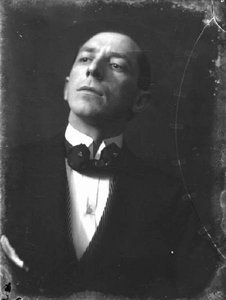
Umberto Boccioni
1882 - 1916 , Italie
En bref
- Artistes Influents:
- Giovanni Mataloni
- Giacomo Balla
- Date De Décès: 1916
- Date De Naissance: 19 octobre 1882
- Influences Artistiques:
- Constructivisme
- Expressionnisme abstrait
- Lieu De Naissance: Reggio Calabria, Italie
- Mouvement Artistique: Futurisme
- Nationalité: Italienne
- Nom Complet: Umberto Boccioni
- Oeuvres Notables:
- Dynamisme d'un corps humain
- Formes uniques dans l'espace
- La Ville qui s'élève
- Dynamisme d'un cycliste
Articles similaires

Les 10 Chefs-d'œuvre en Bronze qui ont Révolutionné l'Art : Collection OriginalUniqueArt
Plongez dans l'univers fascinant des 10 chefs-d'œuvre en bronze qui ont marqué l'histoire de l'art. Découvrez Rodin, Degas et les secrets de ces sculptures iconiques. Reproductions d'art exceptionnelles sur OriginalUniqueArt.com – Explorez la collection !

Umberto Boccioni : Dynamisme Futuriste et Évolution Sculpturale – Une Analyse Approfondie
Explorez l'univers révolutionnaire d'Umberto Boccioni et du Futurisme italien. Analyse approfondie de ses sculptures emblématiques, son héritage artistique et conseils pour collectionner ses œuvres. Découvrez OriginalUniqueArt.

The Enduring Form: Exploring Themes & Techniques in Sculpture Across Historical Periods
Explore the rich history of sculpture from ancient masterpieces to contemporary innovations. Discover key techniques, influential artists & investment potential for discerning art collectors.

Les 10 Chefs-d'œuvre Bronzes Qui Ont Révolutionné la Sculpture | OriginalUniqueArt
Plongez dans l'univers fascinant des 10 sculptures en bronze les plus emblématiques de l'histoire de l'art. Rodin, Degas et autres maîtres révélés ! Découvrez leur histoire, leurs techniques et trouvez l'œuvre parfaite pour sublimer votre intérieur sur OriginalUniqueArt.com.

The Enduring Form: Sculpture Across History, Technique & Emotional Resonance
Explore the rich history of sculpture with OriginalUniqueArt. Discover key techniques, influential artists & investment potential for discerning collectors. Expert insights into valuing and collecting timeless masterpieces.


