- Accueil

- Reproduction de peinture à l'huile
- Titian
- Carring of the Cross
 Commander l'impression Acheter l'image haute résolution
 Partager
 Partager
 Détails de l'œuvre
 Ajouter aux favoris

 Télécharger
 Articles similaires
 Radiographie
 Diaporama
Carring of the Cross

 Afficher la suite
Reproduction à l'huile faite à la main
Huile sur toile peinte à la main, avec cadre et dimensions personnalisés, réalisée sur commande par nos artistes.




P118B $10

P118H $10

P118W $10

P438Z $10

P508JH $12

P508YH $12

P805H $10

P805Z $10

P919BZ $10

P919G $10

P919XJ $10

P959ZH $10

P968JZ $12

W106C $8

W218G $10

W218JH $8

W218Y $10

W307PJ $10

W316G $10

W316PJ $8

W316Y $10

W398PJ $8

W4111J $10

W500HY $15

W500JH $15

W692G $12

W849H $8

W940BG $15

W953PJ $8




Choisissez parmi nos formats prédéfinis qui respectent les proportions originales de l’œuvre.

Vous pouvez saisir vos propres dimensions pour l'adapter à un cadre ou à un espace spécifique. Si la taille sélectionnée ne correspond pas aux proportions de l'image d'origine, nous recadrerons l'œuvre ou prolongerons la peinture avec des éléments peints à la main supplémentaires. Une maquette numérique vous sera envoyée pour approbation avant le début de la production.
Veuillez noter que l'aperçu à l'écran ne reflète pas le recadrage ou l'extension réels. Seule la maquette montrera fidèlement la composition finale.
Bien que des tailles personnalisées soient disponibles, nous vous recommandons de sélectionner une dimension dans la liste prédéfinie afin de préserver les proportions d'origine.
Après la commande, l’équipe OriginalUniqueArt.com contactera le client par e-mail pour obtenir ses instructions et lui fournira une maquette d’aperçu.
Livraison dans le monde entier () en 3 à 4 semaines au lieu des 5 semaines habituelles. (16 juillet). Aucune concession sur la qualité.

Livraison express gratuite dans le monde entier

Toile de lin de haute qualité

Assurance transport complète

Garantie de remboursement des frais de douane

Garantie de fidélité des couleurs

Politique de retour de 60 jours (uniquement en cas de défaut)

Garantie de remboursement à 100%

Réduction sur les achats groupés
 L'option verre n'est disponible que pour les dimensions inférieures à 110 cm.

Carring of the Cross
Technique de reproduction
Format de reproduction
-


Prix total final
-
Description de l'œuvre
The Weight of Faith: A Deep Dive into Titian's "Carrying of the Cross"
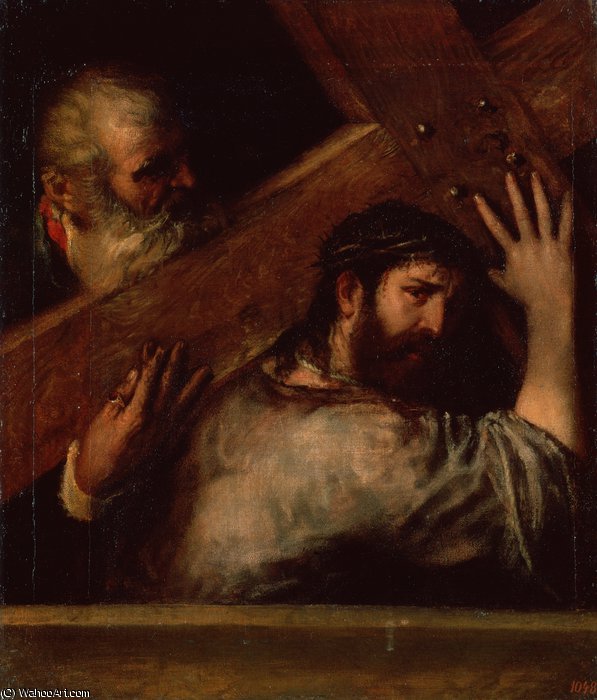
Tiziano Vecellio – known universally as Titian – was not merely an artist; he was a revolutionary, a master of color who fundamentally altered the course of Western painting. His “Carrying of the Cross,” a scene steeped in religious drama and rendered with breathtaking realism, offers a profound meditation on suffering, faith, and humanity’s enduring struggle. Painted during his prolific career spanning from 1490 to 1576, this oil-on-panel masterpiece exemplifies Titian's signature style – bold color palettes, dynamic compositions, and an unparalleled ability to imbue his figures with palpable emotion.
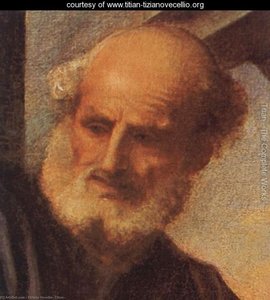
- Subject Matter: The painting depicts a pivotal moment from the Passion of Christ – Jesus carrying the cross towards Calvary, accompanied by two men who bear the burden alongside him. This wasn’t simply a depiction of a biblical event; it was an exploration of human compassion and sacrifice.
- Composition & Technique: Titian expertly utilizes a pyramidal composition, drawing the viewer's eye directly to Jesus at the apex. The figures are rendered with meticulous detail – the textures of their clothing, the strained muscles of Jesus’ body, the expressions of anguish and determination on their faces – all contribute to an incredibly immersive experience. The use of oil paint allowed for layering and blending, creating a luminosity that was revolutionary for its time.
A Renaissance Master at Work: Exploring Titian's Artistic Vision
Titian’s genius lay in his ability to translate the emotional weight of the scene onto canvas. He wasn't interested in idealized beauty; instead, he embraced a raw, almost brutal realism that reflected the harsh realities of life and faith. The men assisting Jesus are not presented as heroic figures but rather as ordinary individuals grappling with an extraordinary task – their faces etched with weariness and sorrow. This honesty is what elevates the painting beyond mere religious iconography.
The color palette, characteristic of Titian’s work, is rich and vibrant, dominated by deep reds, blues, and browns. These colors aren't used for decorative effect; they are strategically employed to heighten the drama and evoke a sense of both suffering and spiritual intensity. The light plays a crucial role, illuminating Jesus’ body and casting dramatic shadows that emphasize his vulnerability.
Symbolism and Historical Context
"Carrying of the Cross" was created during a period of intense religious fervor in Venice – a city deeply rooted in Catholic tradition. The painting reflects the profound piety of the era, but it also transcends mere devotional imagery. The act of carrying the cross itself is laden with symbolic meaning: it represents sacrifice, redemption, and the ultimate demonstration of love.
Titian’s influence extended far beyond Venice. His work profoundly impacted generations of artists, including Rubens and Rembrandt, who admired his mastery of color and composition. The painting's enduring appeal lies in its ability to resonate with viewers across time – a timeless meditation on human suffering and the promise of salvation.
Handcrafted Reproductions: Bringing Titian’s Masterpiece Home
OriginalUniqueArt offers meticulously crafted, hand-painted reproductions of “Carrying of the Cross,” allowing you to experience the power and beauty of this iconic artwork in your own space. Each reproduction is created by skilled artisans who painstakingly recreate Titian's techniques, ensuring an authentic representation of this masterpiece. Whether for a grand salon or a smaller study, a hand-painted reproduction offers a unique opportunity to connect with one of the greatest works of the Renaissance.
Biographie de l'artiste
Tiziano Vecellio: The Venetian Titan
Tiziano Vecellio, universally known as Titian, stands as a monumental figure of the Italian Renaissance—perhaps its most celebrated colorist and a master who redefined the possibilities of oil painting. Born around 1490 in Pieve di Cadore, nestled amidst the dramatic landscapes of the Venetian Alps, his journey from humble beginnings to international acclaim is a testament to prodigious talent and an unwavering dedication to artistic innovation. The exact date of Titian’s birth remains elusive, debated among scholars, but contemporary sources and his early stylistic development converge on estimates between 1488 and 1490.
His father, Gregorio Vecellio, was a military man—a profession that instilled in young Tiziano a disciplined spirit and an appreciation for observation. Lucia, his mother, nurtured him with affection and fostered his artistic inclinations. Recognizing their sons’ potential, the family orchestrated Tiziano’s apprenticeship with Sebastiano Zuccato, a renowned mosaicist—a decision that would irrevocably steer him toward mastering one of Venice’s most prestigious crafts.
Giovanni Bellini, Titian’s elder brother and mentor, further honed his artistic skills. Under Bellini’s guidance, Tiziano absorbed the principles of Venetian painting—characterized by a harmonious blend of realism and spirituality—and developed a distinctive style marked by luminous colors and subtle tonal gradations. This formative period cemented Bellini's influence on Titian's aesthetic sensibilities.
Early Artistic Development & Giorgione’s Influence
The encounter with Giorgione proved pivotal in shaping Tiziano’s artistic trajectory. Like Bellini, Giorgione had trained under Giovanni Bellini—establishing a lineage of Venetian artists committed to exploring innovative visual languages. Together, they embarked on ambitious projects, notably the decoration of the Fondaco dei Tedeschi—a bustling trading post frequented by German merchants—where their collaboration yielded masterpieces that epitomized the Venetian Renaissance.
Giorgione’s distinctive style—characterized by hazy atmospheric effects and muted palettes—challenged conventional artistic conventions. Tiziano embraced Giorgione’s aesthetic principles, incorporating similar techniques into his own paintings. *A Man with a Quilted Sleeve*, completed around 1509, exemplifies this stylistic fusion—demonstrating Tiziano’s burgeoning talent for portraiture while simultaneously reflecting Giorgione’s ethereal vision.
Venetian Mastery & Expanding Horizons
Titian swiftly ascended to prominence within Venice’s artistic milieu. He secured commissions from influential patrons—including Alfonso I d’Este and Cardinal Giovanni Grimani—and established himself as one of the foremost painters of his era. His reputation for capturing psychological depth and rendering textures with remarkable accuracy quickly garnered acclaim.
Among his most celebrated achievements were the frescoes adorning Santa Maria Gloriosa dei Frari—a monumental undertaking that showcased Tiziano’s mastery of color and composition. The ambitious project cemented his position as a leading figure in Venetian painting and solidified his legacy as an innovator who pushed the boundaries of artistic expression.
Beyond Venice, Titian cultivated relationships with artists across Europe—including Peter Paul Rubens and Rembrandt—who recognized him as a beacon of artistic excellence. His influence extended far beyond his lifetime, shaping the stylistic sensibilities of subsequent generations of painters and cementing his place among the titans of Western art history.
A Legacy Illuminated
Titian died in Venice in 1576—leaving behind an unparalleled oeuvre that continues to captivate audiences worldwide. His paintings reside in museums spanning continents—from the Galleria Palatina in Florence to the Prado Museum in Madrid and the National Gallery in London—serving as enduring reminders of his artistic genius.
To gaze upon a Titian is to immerse oneself in a realm of luminous color, masterful brushwork, and profound psychological insight. He remains an unsurpassed exemplar of Renaissance artistry—a painter who transformed the visual language of his time and bequeathed to posterity a legacy of beauty and innovation that continues to inspire awe and admiration.

Titian
1490 - 1576 , Italie
En bref
- Artistic Movement Or Style: Renaissance, Venise
- Artists Or Movements Influenced By This Artist:
- Rubens
- Delacroix
- Artists Who Influenced This Artist:
- Giovanni Bellini
- Giorgione
- Date Of Birth: c. 1490
- Date Of Death: 1576
- Full Name: Tiziano Vecellio
- Nationality: Italien
- Notable Artworks:
- La Schiavona
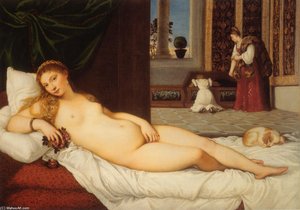
- Venus Urbino
- Place Of Birth: Pieve di Cadore, Italie
Articles connexes

Lumière et Innovation : L'Art de la Renaissance Vénitienne (1430–1580) – Un Éclat Unique
Explorez l'éclat unique de la Renaissance vénitienne (1430–1580). Découvrez Titien, Tintoret et Bellini, les maîtres du 'colorito'. Expertise art & collectionneurs. Reproduction tableaux sur OriginalUniqueArt.
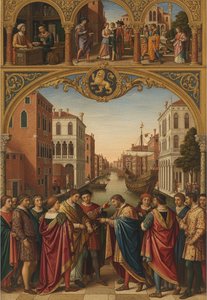
Vittore Carpaccio: Venetian Renaissance Narrative & the Poetics of Detail
Explore the captivating world of Vittore Carpaccio, a master storyteller of the Venetian Renaissance. Discover his intricate details, narrative cycles like 'The Legend of St. Ursula,' and unique artistic style.
De la Photographie Instantanée au Portrait d'Atelier : La Renaissance Moderne de l'Effigie en Peinture à l'Huile
Redécouvrez l'art du portrait à l'huile ! Commandez une œuvre unique, réalisée par des artistes experts. Immortalisez votre ressemblance avec finesse et émotion. Conseils personnalisés & qualité garantie.
Top 10 Chefs-d'œuvre à l'Huile : L'Art qui a Révolutionné le Décor Intérieur
Plongez dans l'histoire de 10 chefs-d'œuvre à l'huile qui ont révolutionné l'art : Monet, Van Gogh, Rembrandt et plus. Découvrez les techniques, les émotions et trouvez l'inspiration déco sur ! Explorez la collection.
L'Huile sur Bois : Histoire d'une Technique, Support et Impact Esthétique
Explorez l'histoire fascinante de la peinture à l'huile sur bois ! Découvrez les techniques des maîtres flamands, l'impact esthétique et les défis de la conservation. Expertise OriginalUniqueArt.