

 Aperçu en situation
 Partager
 Partager
 Détails

 Télécharger
 Articles similaires
 Radiographie
 Voir le diaporama
 Statistiques
Annunciation
 Acrylique
- Art mural
- Renaissance Colorism
 1535
1535 166.0 x 266.0 cm
 Scuola Grande di San Rocco
 Afficher la suite
Giclées et impressions d'art
Impressions giclées ou sur toile de qualité musée, avec une production rapide et des finitions au choix. ( Acheter la peinture faite à la main Passer au format image numérique)




P118B $10

P118H $10

P118W $10

P438Z $10

P508JH $12

P508YH $12

P805H $10

P805Z $10

P919BZ $10

P919G $10

P919XJ $10

P959ZH $10

P968JZ $12

W106C $8

W218G $10

W218JH $8

W218Y $10

W307PJ $10

W316G $10

W316PJ $8

W316Y $10

W398PJ $8

W4111J $10

W500HY $15

W500JH $15

W692G $12

W849H $8

W940BG $15

W953PJ $8




Choisissez parmi nos formats prédéfinis qui respectent les proportions originales de l’œuvre.

Vous pouvez saisir vos propres dimensions pour vous adapter à un cadre ou à un espace spécifique. Si la taille sélectionnée ne correspond pas aux proportions de l'image originale, nous recadrerons l'œuvre ou étendrons l'image avec une bordure en miroir ou une couleur unie. Une maquette numérique vous sera envoyée pour approbation avant le début de la production.
Veuillez noter que l'aperçu à l'écran ne reflète pas le recadrage ou l'extension réelle. Seule la maquette montrera avec précision la composition finale.
Bien que des tailles personnalisées soient disponibles, nous vous recommandons de choisir une dimension dans la liste prédéfinie afin de préserver les proportions originales.
Livraison dans le monde entier () en 2 semaines au lieu des 4/5 semaines habituelles. (12 septembre)

Livraison express gratuite dans le monde entier

Toile de lin de haute qualité

Assurance transport complète

Garantie de remboursement des droits de douane

Garantie de fidélité des couleurs

Garantie de retour de 100 jours (uniquement en cas de défaut)

Garantie de remboursement à 100%

Tarifs dégressifs sur quantité
 L'option verre n'est disponible que pour les dimensions inférieures à 110 cm.

Annunciation
Giclées et impressions d'art
Format de la reproduction
-


Prix total final
$ 80
A Symphony in Color: Exploring Titian’s “The Annunciation”
Tiziano Vecellio, universally known as Titian, wasn't merely a painter; he was an architect of visual sensation—a titan who reshaped the very language of color and cemented his place as arguably the greatest artist of the Venetian Renaissance. Born around 1490 in Pieve di Cadore, nestled amongst the majestic peaks of the Dolomites, Titian’s ascent from provincial obscurity to international renown embodies the spirit of artistic ambition and unparalleled mastery. While biographical details remain somewhat elusive—scholars debate his precise birthdate and familial origins—his prodigious talent was recognized early on by his father, Gregorio Vecellio, a military officer who instilled in him a disciplined approach to observation and artistic endeavor. This formative influence would prove crucial as young Titian apprenticed under Andrea Mantegna in Verona, absorbing the principles of classical perspective and humanist idealism that defined the era’s intellectual landscape.- The Commission & Context: “The Annunciation” emerged from a significant cultural moment—a concerted effort by the D'Anna family to adorn their chapels within Venice’s Basilica di San Salvador with monumental paintings reflecting their piety and prestige. Alongside “The Transfiguration,” which served as the chapel’s altar piece, and “The Crucifixion,” now housed in the Church of San Domenico, Ancona, this ambitious project underscored Venice's position as a leading artistic center during the High Renaissance.
- A Pivotal Scene: The painting depicts the biblical narrative of Mary receiving the divine messenger Gabriel, announcing her conception of Jesus Christ—a cornerstone of Christian theology and a motif revisited countless times throughout art history. This moment transcends mere storytelling; it embodies themes of humility, faith, and divine grace.
Stylistic Innovation: Titian’s Venetian Flair
Titian's artistic style distinguishes itself from its contemporaries through a deliberate embrace of looseness and spontaneity—a characteristic that would become synonymous with his oeuvre. Departing from the rigid conventions of earlier Renaissance painters, he favored a technique known as “alla maniera veneziana,” prioritizing atmospheric perspective and luminous color palettes over meticulous detail. This approach wasn’t simply stylistic preference; it reflected Titian's profound understanding of how light interacts with pigment—a skill honed through tireless experimentation and observation of nature. The brushstrokes themselves are visible, conveying movement and dynamism rather than striving for photographic realism. Subtle tonal gradations create depth and luminosity, immersing the viewer in a realm of ethereal beauty.Color as Emotion: Titian’s Palette Speaks Volumes
Titian's mastery of color is arguably his most celebrated achievement—a feat that continues to inspire artists today. He employed pigments with astonishing precision, layering hues to achieve unparalleled vibrancy and nuance. The dominant colors in “The Annunciation”—warm reds, golds, and blues—are not merely decorative; they are imbued with symbolic significance. Red represents divine passion and royalty, mirroring Mary’s acceptance of God's will. Gold symbolizes holiness and illumination, highlighting Gabriel’s radiant aura and conveying the spiritual grandeur of the scene. Blues evoke serenity and contemplation, reflecting Mary’s inner peace as she receives the momentous news.Legacy & Enduring Influence
“The Annunciation” remains a testament to Titian's enduring legacy—a painting that continues to captivate audiences centuries after its creation. Its placement within San Salvador underscores Venice’s cultural heritage and serves as a beacon of Renaissance artistic excellence. More importantly, Titian’s innovative techniques and expressive color palette profoundly impacted subsequent generations of painters, establishing him as the undisputed father of Venetian colorism and shaping the trajectory of Western art history. Reproductions of this masterpiece offer collectors and interior designers alike an opportunity to experience firsthand the sublime beauty and emotional depth that define Titian's artistic genius—a timeless reminder of the transformative power of visual artistry.Biographie de l'artiste
Tiziano Vecellio: The Venetian Titan
Tiziano Vecellio, universally known as Titian, stands as a monumental figure of the Italian Renaissance—perhaps its most celebrated colorist and a master who redefined the possibilities of oil painting. Born around 1490 in Pieve di Cadore, nestled amidst the dramatic landscapes of the Venetian Alps, his journey from humble beginnings to international acclaim is a testament to prodigious talent and an unwavering dedication to artistic innovation. The exact date of Titian’s birth remains elusive, debated among scholars, but contemporary sources and his early stylistic development converge on estimates between 1488 and 1490.
His father, Gregorio Vecellio, was a military man—a profession that instilled in young Tiziano a disciplined spirit and an appreciation for observation. Lucia, his mother, nurtured him with affection and fostered his artistic inclinations. Recognizing their sons’ potential, the family orchestrated Tiziano’s apprenticeship with Sebastiano Zuccato, a renowned mosaicist—a decision that would irrevocably steer him toward mastering one of Venice’s most prestigious crafts.
Giovanni Bellini, Titian’s elder brother and mentor, further honed his artistic skills. Under Bellini’s guidance, Tiziano absorbed the principles of Venetian painting—characterized by a harmonious blend of realism and spirituality—and developed a distinctive style marked by luminous colors and subtle tonal gradations. This formative period cemented Bellini's influence on Titian's aesthetic sensibilities.
Early Artistic Development & Giorgione’s Influence
The encounter with Giorgione proved pivotal in shaping Tiziano’s artistic trajectory. Like Bellini, Giorgione had trained under Giovanni Bellini—establishing a lineage of Venetian artists committed to exploring innovative visual languages. Together, they embarked on ambitious projects, notably the decoration of the Fondaco dei Tedeschi—a bustling trading post frequented by German merchants—where their collaboration yielded masterpieces that epitomized the Venetian Renaissance.
Giorgione’s distinctive style—characterized by hazy atmospheric effects and muted palettes—challenged conventional artistic conventions. Tiziano embraced Giorgione’s aesthetic principles, incorporating similar techniques into his own paintings. *A Man with a Quilted Sleeve*, completed around 1509, exemplifies this stylistic fusion—demonstrating Tiziano’s burgeoning talent for portraiture while simultaneously reflecting Giorgione’s ethereal vision.
Venetian Mastery & Expanding Horizons
Titian swiftly ascended to prominence within Venice’s artistic milieu. He secured commissions from influential patrons—including Alfonso I d’Este and Cardinal Giovanni Grimani—and established himself as one of the foremost painters of his era. His reputation for capturing psychological depth and rendering textures with remarkable accuracy quickly garnered acclaim.
Among his most celebrated achievements were the frescoes adorning Santa Maria Gloriosa dei Frari—a monumental undertaking that showcased Tiziano’s mastery of color and composition. The ambitious project cemented his position as a leading figure in Venetian painting and solidified his legacy as an innovator who pushed the boundaries of artistic expression.
Beyond Venice, Titian cultivated relationships with artists across Europe—including Peter Paul Rubens and Rembrandt—who recognized him as a beacon of artistic excellence. His influence extended far beyond his lifetime, shaping the stylistic sensibilities of subsequent generations of painters and cementing his place among the titans of Western art history.
A Legacy Illuminated
Titian died in Venice in 1576—leaving behind an unparalleled oeuvre that continues to captivate audiences worldwide. His paintings reside in museums spanning continents—from the Galleria Palatina in Florence to the Prado Museum in Madrid and the National Gallery in London—serving as enduring reminders of his artistic genius.
To gaze upon a Titian is to immerse oneself in a realm of luminous color, masterful brushwork, and profound psychological insight. He remains an unsurpassed exemplar of Renaissance artistry—a painter who transformed the visual language of his time and bequeathed to posterity a legacy of beauty and innovation that continues to inspire awe and admiration.

Titian
1490 - 1576 , Italie
En bref
- Artistic Movement Or Style: Renaissance, Venise
- Artists Or Movements Influenced By This Artist:
- Rubens
- Delacroix
- Artists Who Influenced This Artist:
- Giovanni Bellini
- Giorgione
- Date Of Birth: c. 1490
- Date Of Death: 1576
- Full Name: Tiziano Vecellio
- Nationality: Italien
- Notable Artworks:
- La Schiavona
- Venus Urbino
- Place Of Birth: Pieve di Cadore, Italie
Articles similaires

Dante Gabriel Rossetti : Les 25 Œuvres Maîtresses du Préraphaélisme à Redécouvrir
Plongez dans l'univers fascinant de Dante Gabriel Rossetti ! Découvrez les 25 œuvres majeures du préraphaélisme : symbolisme, poésie et beauté victorienne. Reproductions d'art exceptionnelles sur OriginalUniqueArt.com.

L'Huile sur Toile : Exploration Historique et Technique d'un Médium Artistique Intemporel
Explorez l'histoire fascinante de la peinture à l'huile, des techniques ancestrales aux maîtres flamands comme Van Eyck. Découvrez les secrets des pigments, liants et glacis pour comprendre cet art intemporel.

The Enduring Legacy of Oil on Canvas: Technique, History & Aesthetic Impact
Explore the rich history & techniques of oil painting – from Renaissance masters to Impressionism. Discover pigments, layering methods, and why this timeless medium endures. Expert insights for artists & art enthusiasts.

The Enduring Power of Painting: A Historical & Contemporary Exploration of Form and Emotion
Explore the rich history & enduring techniques of oil painting with OriginalUniqueArt. Discover masterpieces, learn about art collecting, and find authentic handmade reproductions crafted by skilled artists.
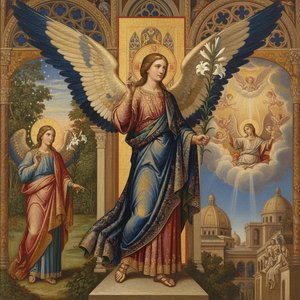
Divine Messengers: A Curated Guide to the Iconography of Angel Gabriel in Art History
Explore the profound beauty of Angel Gabriel in art history. From Renaissance masterpieces to Baroque splendor, our expert guide delves into the sacred iconography and timeless techniques of these divine messengers for the discerning art enthusiast.


