 Aperçu en situation
 Envoyer
 Partager
 Détails de l'œuvre

 Télécharger
 Articles similaires
 Radiographie
 Diaporama
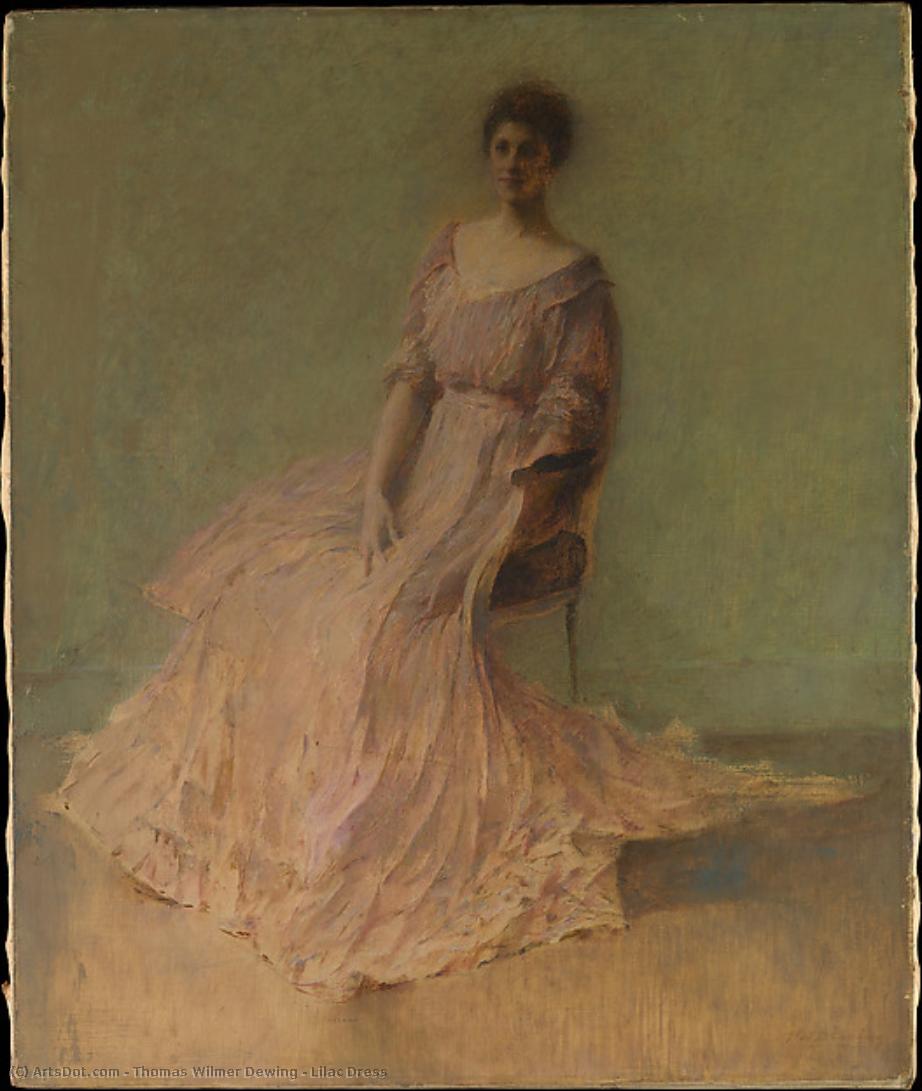
Lilac Dress
 Oil On Canvas
- WallArt
- American Tonalist Vision
 1919
1919 61.0 x 51.0 cm
 Metropolitan Museum of Art
 Lire la suite
Reproduction à l'huile faite à la main
Huile sur toile peinte à la main, avec cadre et dimensions personnalisés, réalisée sur commande par nos artistes. ( Commander l'impression Télécharger l'image haute résolution)




P118B $10

P118H $10

P118W $10

P438Z $10

P508JH $12

P508YH $12

P805H $10

P805Z $10

P919BZ $10

P919G $10

P919XJ $10

P959ZH $10

P968JZ $12

W106C $8

W218G $10

W218JH $8

W218Y $10

W307PJ $10

W316G $10

W316PJ $8

W316Y $10

W398PJ $8

W4111J $10

W500HY $15

W500JH $15

W692G $12

W849H $8

W940BG $15

W953PJ $8




Choisissez parmi nos formats prédéfinis qui respectent les proportions originales de l’œuvre.

Vous pouvez saisir vos propres dimensions pour l'adapter à un cadre ou à un espace spécifique. Si la taille sélectionnée ne correspond pas aux proportions de l'image d'origine, nous recadrerons l'œuvre ou prolongerons la peinture avec des éléments peints à la main supplémentaires. Une maquette numérique vous sera envoyée pour approbation avant le début de la production.
Veuillez noter que l'aperçu à l'écran ne reflète pas le recadrage ou l'extension réels. Seule la maquette montrera fidèlement la composition finale.
Bien que des tailles personnalisées soient disponibles, nous vous recommandons de sélectionner une dimension dans la liste prédéfinie afin de préserver les proportions d'origine.
Après la commande, l’équipe OriginalUniqueArt.com contactera le client par e-mail pour recueillir ses instructions et lui fournira une maquette d’aperçu
Livraison dans le monde entier () en 3 à 4 semaines au lieu des 5 semaines habituelles. (18 août). Aucun compromis sur la qualité.

Livraison express gratuite dans le monde entier

Toile de lin de qualité supérieure

Assurance transport complète

Garantie de remboursement des droits de douane

Garantie de fidélité des couleurs

Politique de retour de 60 jours (uniquement en cas de défaut)

Garantie de remboursement à 100%

Offre de tarifs dégressifs
 L'option verre n'est disponible que pour les dimensions inférieures à 110 cm.

Lilac Dress
Technique de reproduction
Format de la reproduction
-


Prix total
$ 300
Description de l'œuvre
Lilac Dress: A Portrait of Delicate Beauty Amidst Moodiness
Thomas Wilmer Dewing’s “Lilac Dress” (1919) stands as a quintessential example of tonalist painting—a movement deeply rooted in English Aestheticism that championed subtle color palettes and atmospheric effects over dramatic realism. This captivating portrait captures a woman seated gracefully on a chair, gazing off-camera with an expression of quiet contemplation. The scene unfolds within a softly lit interior, dominated by a pale green wall and two unassuming chairs – one positioned centrally, the other subtly to the right—creating a harmonious backdrop that enhances the painting’s contemplative mood.- Subject Matter: Dewing's focus on aristocratic women aligns with the Aesthetic movement’s fascination for idealized femininity and psychological depth. The woman depicted embodies serenity and introspection, reflecting the prevalent Victorian ideals of feminine virtue and inner life.
- Style & Technique: Dewing meticulously employs tonalist techniques—characterized by muted hues and blended brushstrokes—to achieve a velvety surface texture and convey an emotional resonance that transcends mere visual representation. He skillfully captures light and shadow, imbuing the scene with a palpable sense of stillness and tranquility.
- Color Palette: The dominant lilac hue of the dress is juxtaposed against the muted green wall, creating a harmonious color scheme that contributes to the painting’s overall atmosphere. Dewing's masterful use of color subtly underscores the woman’s inner state—a quiet contemplation mirroring the delicate beauty of the floral motif.
- Historical Context: Created during the early 20th century, “Lilac Dress” reflects the broader cultural preoccupation with psychological realism and the exploration of feminine emotion within the framework of Aesthetic ideals. It embodies a reaction against Impressionism’s fleeting impressions of light and color, favoring instead a more contemplative approach to artistic expression.
- Symbolism: The lilac flower itself carries symbolic connotations of mourning and remembrance—a poignant reminder of Victorian sensibilities regarding death and loss—yet it is presented with grace and elegance, symbolizing beauty amidst melancholy. Dewing’s deliberate choice reinforces the painting's emotional core.
Detailed Examination: Composition & Brushwork
Dewing’s compositional choices are equally noteworthy. The woman’s gaze directs the viewer’s attention outwards, suggesting a preoccupation with thoughts and feelings beyond the immediate visual field—a hallmark of tonalist portraiture. Furthermore, Dewing's brushstrokes are remarkably delicate and blended, creating an illusion of luminous softness that envelops the figure and the surrounding space. These subtle marks contribute to the painting’s ethereal quality, mirroring the moodiness inherent in the genre.The Influence of Gustave Boulanger & Jules Lefebvre
Dewing's artistic training under Gustave Boulanger and Jules Lefebvre at the Académie Julian profoundly shaped his stylistic sensibilities. Boulanger championed a monumental style reminiscent of classical sculpture—a deliberate contrast to Impressionism’s fragmented perspectives—while Lefebvre emphasized tonal harmonies and atmospheric effects. Dewing skillfully assimilated these influences, resulting in a painting that embodies both grandeur and intimacy simultaneously.A Legacy of Quiet Elegance
“Lilac Dress” remains an enduring testament to Thomas Wilmer Dewing's artistic vision—a celebration of feminine beauty tempered by melancholy and imbued with profound psychological depth. Its subtle color palette, meticulous brushwork, and contemplative composition continue to inspire admiration and resonate with viewers seeking art that transcends mere visual spectacle. Reproductions of this masterpiece offer a captivating glimpse into the aesthetic sensibilities of the early 20th century—a period defined by its exploration of inner life and its appreciation for understated elegance.Biographie de l'artiste
Premières années et formation
Thomas Wilmer Dewing, peintre américain, est né le 4 mai 1851 à Boston, Massachusetts. Son parcours artistique a commencé par un apprentissage de lithographe, qui l'a ensuite conduit à l’Académie Julian prestigieuse à Paris, où il a étudié sous la direction de Gustave Boulanger et Jules Lefebvre à partir de 1887.Style artistique et œuvres notables
Le style artistique de Dewing se caractérise par ses peintures tonalistes, un genre profondément enraciné dans l'esthétisme anglais. Ses sujets préférés étaient les femmes aristocratiques, souvent représentées dans des environnements mélancoliques et oniriques, jouant de la musique ou s’engageant dans des activités introspectives.- Femme en noir : portrait de Maria Oakey Dewing (1887), une huile sur panneau poignante, met en valeur sa femme, elle-même peintre accomplie ayant reçu une formation artistique formelle étendue.
- Dame en or (1912), aujourd'hui au Brooklyn Museum, exemplifie sa maîtrise dans la capture de l’essence de ses sujets.
Enseignement et associations
Dewing était un membre fondateur des Dix Peintres Américains en 1898 et a enseigné à l’Art Students League of New York. Son association avec la Society of Landscape Painters, fondée en 1899, a renforcé sa position au sein du mouvement tonaliste.Héritage et collections
- La Freer Gallery of Art de Smithsonian Institution possède une salle dédiée aux œuvres de Dewing.
- Des collectionneurs notables incluent John Gellatly et Charles Lang Freer.
Vie ultérieure et décès
La production artistique de Dewing a diminué après 1920. Il est décédé à New York le 5 novembre 1938, laissant derrière lui un héritage de portraits captivants et éthérés qui continuent d’intriguer les passionnés d'art.Œuvres clés et collections disponibles pour reproduction chez OriginalUniqueArt
- La robe blanche
- Femme en noir : portrait de Maria Oakey Dewing
- Dame en or

Thomas Wilmer Dewing
1851 - 1938 , États-Unis d'Amérique
L'essentiel de l'artiste
- Artistic Movement Or Style: Tonalisme, Esthétisme
- Artists Who Influenced This Artist:
- Gustave Boulanger
- Jules Lefebvre
- Date Of Birth: 4 mai 1851
- Date Of Death: 5 novembre 1938
- Full Name: Thomas Wilmer Dewing
- Nationality: Américain
- Notable Artworks:
- Woman in black
- Lady in gold
- The white dress
- Place Of Birth: Boston, États-Unis
Articles connexes

Thomas Wilmer Dewing: Atmospheric Landscapes & the American Tonalist Vision
Explore the captivating world of Thomas Wilmer Dewing, a leading figure in American Tonalism. Discover his evocative paintings, artistic influences, and legacy with OriginalUniqueArt.

Grant Wood & American Regionalism: Identity, Myth & the Rural Landscape
Explore the world of Grant Wood & American Regionalism with OriginalUniqueArt. Discover the symbolism behind 'American Gothic', recurring themes, and the movement's lasting impact on art history. High-quality reproductions available.

Le Régionalisme Américain : Identité, Espace et Commentaire Social dans la Peinture du XXe Siècle
Explorez le régionalisme américain : un mouvement artistique majeur du XXe siècle capturant l'identité rurale et les réalités sociales de l'Amérique. Analyse approfondie, artistes clés & héritage durable sur OriginalUniqueArt.

Réalisme Américain : 10 Chefs-d'œuvre Incontournables pour une Déco Inspirée
Plongez au cœur du Réalisme Américain avec 10 chefs-d'œuvre d'Edward Hopper, Andrew Wyeth et plus. Découvrez l'histoire et les techniques de ces artistes emblématiques. Reproductions de tableaux de qualité musée sur OriginalUniqueArt.com !
Échos de la terre : Le régionalisme américain et l'identité entre les deux guerres
Explorez le régionalisme américain et le réalisme entre les deux guerres : artistes emblématiques, thèmes clés et l'impact durable de ce mouvement sur l'art. Analyse approfondie par OriginalUniqueArt.