

 Aperçu en situation
 Envoyer
 Partager
 Détails de l'œuvre
 Guide
Guide

 Télécharger l'image
 Articles similaires
 Radiographie
 Diaporama
 Statistiques
Pigs at a Trough


 Lire la suite
Giclées et impressions d'art
Impressions giclées ou sur toile de qualité musée, avec une production rapide et des finitions au choix. ( Commander la reproduction peinte à la main Passer au format numérique)




P118B €10

P118H €10

P118W €10

P438Z €10

P508JH €12

P508YH €12

P805H €10

P805Z €10

P919BZ €10

P919G €10

P919XJ €10

P959ZH €10

P968JZ €12

W106C €8

W218G €10

W218JH €8

W218Y €10

W307PJ €10

W316G €10

W316PJ €8

W316Y €10

W398PJ €8

W4111J €10

W500HY €15

W500JH €15

W692G €12

W849H €8

W940BG €15

W953PJ €8




Choisissez parmi nos formats prédéfinis qui respectent les proportions originales de l’œuvre.

Saisissez la largeur et la hauteur souhaitées pour qu'elles s'adaptent à votre cadre ou à votre mur. Une impression peut être recadrée, mais jamais agrandie au-delà de l'image originale ; ainsi, un format de forme différente entraînera la perte d'une partie de l'image. Nous vous envoyons une maquette numérique pour approbation avant toute impression. L'image présentée sur cette page ne montre pas le recadrage réel — seule la maquette le permet.
Livraison dans le monde entier () en 2 semaines au lieu des 4/5 semaines habituelles. (25 octobre)

Livraison express gratuite dans le monde entier

Toile de lin de qualité supérieure

Assurance transport complète

Garantie de remboursement des droits de douane

Garantie de fidélité des couleurs

Politique de retour de 100 jours (uniquement en cas de défaut)

Garantie de remboursement à 100%

Offre de tarifs dégressifs
 L'option verre n'est disponible que pour les dimensions inférieures à 110 cm.

Pigs at a Trough
Giclées et impressions d'art
Format de la reproduction
-


Prix total
€ 70
A Rustic Revelry: Thomas Rowlandson’s “Pigs at a Trough”
Thomas Rowlandson's "Pigs at a Trough," painted circa 1790, isn’t merely a depiction of farmyard animals; it’s a vibrant snapshot of Georgian England brimming with social commentary and delightfully mischievous humor. This small yet powerfully evocative work, now housed within the Yale Center for British Art, offers a glimpse into a world where satire and observation intertwined seamlessly, revealing both the pleasures and absurdities of everyday life.
Rowlandson, a master caricaturist renowned for his biting political illustrations and intimate portrayals of human folly, employed a remarkably direct technique here. The scene unfolds with an almost palpable immediacy – we’re not observing from a distance but rather immersed within the muddy chaos of the trough. His pen and ink lines are bold and confident, capturing the physicality of the pigs with remarkable accuracy; their plump bodies, bristly coats, and greedy postures practically leap off the cream-laid paper. The brown wash adds depth and texture, emphasizing the damp earth and the glistening sheen of the water. Notice how Rowlandson skillfully uses light and shadow to define each animal, creating a sense of three-dimensionality that belies the painting’s diminutive size.
A Scene Steeped in Social Observation
“Pigs at a Trough” is more than just a charming pastoral scene; it's a subtle critique of societal values. Rowlandson was known for his sharp wit and willingness to expose hypocrisy, and this painting is no exception. The image subtly alludes to the extravagance and excess prevalent in Georgian society – a stark contrast to the simple, almost primal act of foraging for food. The abundance of pigs suggests a commentary on resourcefulness and perhaps even a gentle mockery of those who indulged in unnecessary displays of wealth. It’s a reminder that beneath the veneer of refinement, there often lay a deeper current of practicality and, occasionally, a touch of desperation.
Echoes of Folklore and Myth
The image resonates with elements of folklore and myth, particularly the enduring legend of “pig-faced women.” While not explicitly depicted here, the scene evokes the story of a noblewoman cursed to appear as a pig after rejecting a beggar. This tale, popular in England and Ireland during the 18th century, speaks to anxieties about social status, beauty standards, and the consequences of arrogance. Rowlandson’s painting subtly taps into this cultural memory, suggesting a connection between earthly abundance and potential misfortune – a reminder that even the most seemingly prosperous life can be fraught with unexpected challenges.
A Timeless Appeal
“Pigs at a Trough” endures as a testament to Rowlandson’s artistic genius and his keen understanding of human nature. Its playful composition, vibrant colors, and subtle social commentary combine to create an image that is both entertaining and thought-provoking. It's a painting that invites us to pause, observe, and perhaps even question the values we hold dear. Reproductions of this delightful work continue to captivate audiences today, offering a window into a bygone era and reminding us of the enduring power of humor and satire.
Questions et réponses
«Pigs at a Trough» de Thomas Rowlandson fait-il partie des œuvres Satirical Caricature les plus recherchées ?
« Pigs at a Trough » est répertorié comme étant Recognized parmi les œuvres du Satirical Caricature dans le catalogue.
Quelle est la saturation des couleurs de «Pigs at a Trough» de Thomas Rowlandson ?
Les couleurs de «Pigs at a Trough» de Thomas Rowlandson présentent une saturation Subtle Color. La saturation indique si les couleurs sont vives ou atténuées.
Existe-t-il des œuvres similaires à « Pigs at a Trough » ?
Les œuvres similaires à « Pigs at a Trough » sont répertoriées sur la page Œuvres similaires de l'œuvre.
Biographie de l'artiste
Première vie et éducation
Thomas Rowlandson, un artiste et caricaturiste anglais renommé, est né le 13 juillet 1756, dans Old Jewry, City of London. Il a été baptisé le 23 juillet 1757 à St Mary Colechurch, Londres, de William et Mary Rowlandson. Sa vie précoce fut marquée par les difficultés financières de son père, ce qui amena la famille à déménager à Richmond, dans le North Yorkshire, en 1759.Formation artistique et premières œuvres
Rowlandson a reçu sa formation artistique à l'école du Dr Barvis à Soho Square, où il a perfectionné ses compétences en dessin aux côtés de camarades de classe notables comme Richard Burke, fils du politicien Edmund Burke. Ses premiers travaux, caractérisés par des personnages humoristiques, se trouvaient souvent dans les marges de ses cahiers scolaires. Après avoir terminé ses études, Rowlandson est devenu étudiant à la Royal Academy en 1772, où il a passé six ans à développer son art, dont deux ans d'études à Paris sous Jean-Baptiste Pigalle. Cette période a jeté les bases de son succès futur en tant que caricaturiste et artiste.Œuvres notables et collaborations
Les collaborations de Rowlandson avec l'éditeur Rudolph Ackermann ont conduit à la création de plusieurs œuvres populaires, notamment :- The Schoolmaster’s Tour (1809), une série de planches avec des vers illustratifs du Dr William Combe.
- The Tour of Dr. Syntax in Search of the Picturesque (1812), qui a atteint sa cinquième édition en 1813.
- Dr. Syntax in Search of Consolation (1820) et The Third Tour of Dr. Syntax in Search of a Wife (1821).
Influences, développement et importance historique
Rowlandson a été influencé par des artistes tels que William Hogarth, dont il admirait l'utilisation de la satire sociale dans ses œuvres. Son propre style s'est développé pour inclure une observation aiguë de la vie quotidienne, en particulier les aspects comiques et parfois grossiers de la société anglaise. Il était un chroniqueur perspicace des mœurs de son époque, dépeignant avec humour et critique les classes sociales, les modes et les travers humains. Son travail a contribué à façonner le genre de la caricature politique et sociale en Angleterre, influençant les générations d'artistes qui ont suivi. Rowlandson était un maître du dessin rapide et expressif, capable de capturer l'essence d'un personnage ou d'une scène avec quelques traits habiles. Son art est une fenêtre précieuse sur la vie au XVIIIe et XIXe siècles en Angleterre.Collections muséales et héritage
Les œuvres de Rowlandson se trouvent dans diverses collections muséales, dont celles de OriginalUniqueArt.com, qui présente une vaste collection de ses œuvres d'art. Parmi les pièces notables figurent :- Hengar House the Seat of Matthw Mitchell [sic] Esqr., Cornwall (1812), vendu aux enchères Sotheby's en 1959.
- Glorious Defeat of the Dutch Navy Octr 10 1797, by Admirals Lord Duncan and Sir Richard Onslow (1797).

Thomas Rowlandson
1756 - 1827 , Royaume-Uni
L'essentiel de l'artiste
- Artistic Movement Or Style: Caricaturiste, artiste satirique
- Artists Or Movements Influenced By This Artist:
- Samuel Henry Gordon Alken
- William Hogarth
- Artists Who Influenced This Artist: ['Jean-Baptiste Pigalle']
- Date Of Birth: 13 juillet 1756
- Date Of Death: 1827
- Full Name: Thomas Rowlandson
- Nationality: Britannique
- Notable Artworks:
- The Schoolmaster's Tour
- Tour of Dr. Syntax
- Dr. Syntax in Search...
- Glorious Defeat of Dutch Navy
- Place Of Birth (City And Country): Londres, Royaume-Uni
Articles connexes
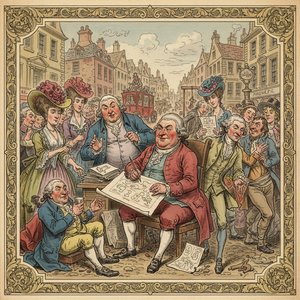
Thomas Rowlandson: Satire, Society & the Art of Caricature in Georgian England
Explore the witty world of Thomas Rowlandson, master Georgian caricaturist! Discover his satirical prints & insightful social commentary on 18th-century England. Learn about his life, techniques, and enduring influence.

The Enduring Legacy of Fine Art Prints: Technique, History & Aesthetic Impact
Explore the rich history & techniques of fine art prints. Discover investment potential, assess authenticity, and learn how to preserve your collection with expert guidance. Trusted insights for discerning collectors.

Giclée Prints: Archival Quality & Aesthetic Nuances for the Discerning Collector
Explore the world of giclée prints with OriginalUniqueArt. Learn about archival quality, aesthetic nuances & investment potential. Expert guidance for discerning art collectors seeking museum-quality reproductions and lasting value.
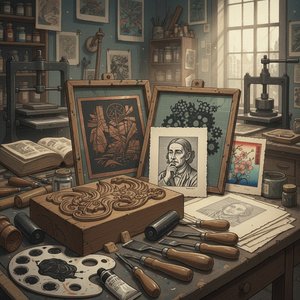
The Enduring Legacy of Printmaking: Techniques, Themes & Artistic Innovation Across Centuries
Explore the rich history of printmaking with OriginalUniqueArt. Discover techniques from intaglio to lithography, learn about collecting valuable prints & find museum-quality reproductions. Expert insights for art enthusiasts and collectors.

Echoes of Time: Exploring the Enduring Appeal & Historical Context of Vintage Art Prints
Explore the captivating world of vintage art prints! Discover their history, collecting tips & enduring appeal. Expert insights on chromolithography and building a legacy collection with OriginalUniqueArt.


