

 Aperçu en situation
 Partager
 Partager
 Détails
 Guide imprimable

 Télécharger
 Articles similaires
 Radiographie
 Voir le diaporama
 Statistiques
Joseph Banks


 Afficher la suite
Giclées et impressions d'art
Impressions giclées ou sur toile de qualité musée, avec une production rapide et des finitions au choix. ( Acheter la peinture faite à la main Passer au format image numérique)




P118B €10

P118H €10

P118W €10

P438Z €10

P508JH €12

P508YH €12

P805H €10

P805Z €10

P919BZ €10

P919G €10

P919XJ €10

P959ZH €10

P968JZ €12

W106C €8

W218G €10

W218JH €8

W218Y €10

W307PJ €10

W316G €10

W316PJ €8

W316Y €10

W398PJ €8

W4111J €10

W500HY €15

W500JH €15

W692G €12

W849H €8

W940BG €15

W953PJ €8




Choisissez parmi nos formats prédéfinis qui respectent les proportions originales de l’œuvre.

Saisissez la largeur et la hauteur souhaitées pour qu'elles s'adaptent à votre cadre ou à votre mur. Une impression ne peut être que découpée, elle ne peut jamais être agrandie au-delà de l'image originale ; ainsi, un format de forme différente entraînera la perte d'une partie de l'image. Nous vous envoyons une maquette numérique pour approbation avant toute impression. L'image présentée sur cette page ne montre pas le recadrage réel — seule la maquette le permet.
Livraison dans le monde entier () en 2 semaines au lieu des 4/5 semaines habituelles. (24 octobre)

Livraison express gratuite dans le monde entier

Toile de lin de haute qualité

Assurance transport complète

Garantie de remboursement des droits de douane

Garantie de fidélité des couleurs

Garantie de retour de 100 jours (uniquement en cas de défaut)

Garantie de remboursement à 100%

Tarifs dégressifs sur quantité
 L'option verre n'est disponible que pour les dimensions inférieures à 110 cm.

Joseph Banks
Giclées et impressions d'art
Format de la reproduction
-


Prix total final
€ 70
A Portrait of Scientific Grandeur: Joseph Banks by Thomas Phillips
Thomas Phillips’s “Portrait of Joseph Banks” is more than simply a likeness; it's a meticulously crafted tableau of scientific ambition, colonial aspiration, and the burgeoning confidence of the British Enlightenment. Completed in 1809, this remarkable painting captures Sir Joseph Banks – a man who profoundly shaped our understanding of the natural world – at the apex of his influence as President of the Royal Society and a key figure in Captain James Cook’s groundbreaking voyages. The image isn't merely a representation of a man; it’s an embodiment of a nation’s expanding horizons, a visual testament to the era’s fervent belief in exploration and discovery.
The composition immediately draws the eye to Banks himself, seated with dignified composure within the opulent confines of the Royal Society's Presidential chair. The chair, adorned with its coat of arms – a potent symbol of authority and scientific prestige – anchors him firmly within his position of leadership. His posture is one of quiet strength, yet there’s an undeniable air of intellectual curiosity about him; his gaze, directed directly at the viewer, invites engagement and suggests a mind constantly engaged in observation and analysis. The subtle tilt of his head, combined with the slight downward cast of his eyes, hints at a contemplative nature, a man deeply immersed in the intricacies of the natural world.
The Language of Detail: Technique and Style
Phillips’s mastery lies not just in capturing Banks's likeness but in rendering the textures and nuances of his attire and surroundings with astonishing precision. The painting is executed in the style of English portraiture prevalent during the early 19th century, characterized by a refined elegance and an emphasis on realistic detail. The use of oil paints allows for a remarkable depth of color and shading, creating a sense of three-dimensionality that brings the scene to life. Note the meticulous rendering of Banks’s coat – the rich fabric, the subtle sheen of the buttons, the intricate embroidery—each element contributing to an overall impression of wealth, status, and scholarly dedication.
The background is equally significant. The marble fireplace, with its lion's head motif, speaks to the grandeur of the Royal Society’s headquarters. The inclusion of a manuscript detailing botanical discoveries – a clear reference to Banks’s life’s work – subtly reinforces his scientific credentials. Even the placement of the mace cushion and inkstand, symbols of authority and intellectual pursuit, are carefully considered, adding layers of meaning to the composition.
A Symbol of Colonial Ambition
“Portrait of Joseph Banks” is inextricably linked to the era’s colonial ambitions. Banks's role in Cook’s voyages was pivotal in establishing British presence in Australia and shaping early scientific understanding of the Pacific region. The painting, therefore, can be interpreted as a visual endorsement of this expansionist policy. Banks’s confident demeanor and association with the Royal Society project an image of British intellectual superiority—a narrative designed to justify colonial endeavors.
However, it's crucial to acknowledge the complexities inherent in this interpretation. While the painting undoubtedly celebrates British scientific achievement, it also reflects the ethical dilemmas associated with colonialism. Banks’s legacy is one of both remarkable discovery and complicity in a system that profoundly impacted Indigenous populations. Considering these historical nuances adds depth and resonance to our understanding of the artwork.
Emotional Resonance and Lasting Legacy
Beyond its historical context, “Portrait of Joseph Banks” possesses a powerful emotional resonance. The painting evokes a sense of intellectual curiosity, quiet determination, and the enduring human desire to explore and understand the world around us. Banks’s gaze invites viewers to share in his passion for knowledge and his belief in the transformative power of scientific discovery.
Reproductions of this iconic portrait continue to captivate audiences today, serving as a reminder of a pivotal figure in the history of science and exploration. It stands not just as a beautiful work of art but as a window into a fascinating era—an era defined by both remarkable progress and profound ethical challenges.
Questions et réponses
Quelle couleur ressort le plus dans « Joseph Banks » ?
Espresso (#443225) est la couleur dominante de «Joseph Banks» de Thomas Phillips.
À quelle étape de la carrière de Thomas Phillips « Joseph Banks » appartient-elle ?
« Joseph Banks » représente la période Early Maturity de Thomas Phillips.
Quelle place occupe « Joseph Banks » parmi les thèmes récurrents de Thomas Phillips ?
Les thèmes récurrents de Thomas Phillips incluent neoclassical ideals, scientific observation, british colonial ambitions, exploration, royal society patronage, prestige, portraiture’s social commentary”, banks's legacy ; « Joseph Banks » se concentre sur portraiture, naturalism, botany, science, exploration, society, british art.
Biographie de l'artiste
Première Vie et Formation
Thomas Phillips, un peintre portraitiste et de sujets anglais important, est né à Dudley, dans le Worcestershire, le 18 octobre 1770. Son parcours artistique a commencé par l'apprentissage de la peinture sur verre à Birmingham sous la direction de Francis Eginton. En 1790, Phillips visita Londres où il rencontra Benjamin West qui lui ouvrit les portes du monde de l’art.Carrière Artistique et Œuvres Notables
Les premiers travaux de Phillips incluaient la peinture des vitraux de la chapelle Saint-Georges au château de Windsor. Il devint étudiant à la Royal Academy en 1791, exposant ses talents lors de diverses expositions :- Lion attaquant un cheval (non attribué à Phillips, mais un exemple notable de romantisme) - Cette peinture, bien que non réalisée par Phillips, représente le style de l'époque. (Plus sur Lion attaquant un cheval)
- La mort de Talbot, comte de Shrewsbury, à la bataille de Castillon, Ruth et Naomi, et Élie restaurant le fils de la veuve (1792-1795) - Ces premiers travaux démontrent la polyvalence de Phillips.
- Vénus et Adonis (1808) - Cette peinture, présentée comme son œuvre diplômante, est considérée comme l'une de ses meilleures créations en dehors de l’Expulsion du Paradis.
Héritage et Vie Ultérieure
Phillips fut élu académicien royal en 1808. Il continua à peindre des figures notables, notamment le prince de Galles, la marquise de Stafford et lord Thurlow. Ses contributions à l'exposition de la Royal Academy en 1809 inclurent un portrait de Sir Joseph Banks, gravé par Niccolo Schiavonetti. Les dernières années de Phillips furent marquées par son élection au poste de professeur de peinture à la Royal Academy en 1825, succédant à Henry Fuseli. Il démissionna en 1832 et publia ses conférences sur l'histoire et les principes de la peinture en 1833.Mentions Notables et Style Artistique
Le travail de Phillips se caractérise par son souci du détail et son réalisme, reflétant les influences de son époque. Ses sujets comportaient souvent une iconographie complexe, avec un accent sur la peinture narrative et les petits portraits.- Œuvres clés : Portrait de Mme Charles Schreiber (1912) - Bien que non réalisé par Phillips, cette œuvre illustre le style de ses contemporains. (Plus sur Portrait de Mme Charles Schreiber)
- Mouvement artistique : peinture néerlandaise primitive, qui a influencé le développement de l'art de la Renaissance du Nord.
- Collections de musées : La Royal Academy of Arts, Londres (https://OriginalUniqueArt.com/@/royal-academy-of-arts)
Conclusion
L’héritage de Thomas Phillips témoigne de son dévouement au monde de l'art. À travers son œuvre, nous observons l'évolution des styles artistiques et l'influence de ses contemporains sur le développement des techniques de peinture modernes. (Plus sur Thomas Phillips)
Thomas Phillips
1770 - 1845 , Royaume-Uni
En bref
- Artistes Influents:
- Benjamin West
- Henry Fuseli
- Date De Naissance: 18 octobre 1770
- Lieu De Naissance: Dudley, Royaume-Uni
- Mouvement Artistique: Romantisme
- Mouvements Influencés: ['Peinture netherlandaise primitive']
- Nationalité: Britannique
- Nom Complet: Thomas Phillips
- Œuvres Notables:
- Lion attaquant un cheval
- Mort de Talbot, comte de Shrewsbury
- Ruth et Naomi
- Élijah restaurant le fils de la veuve
- Vénus et Adonis
- Portrait de Mme Charles Schreiber
Articles connexes

Sir Thomas Lawrence: Portraiture, Power & Regency Society's Aesthetics
Explore the captivating world of Sir Thomas Lawrence, Regency England's premier portraitist. Discover his artistic techniques, powerful representations of society, and enduring legacy. Expert insights for discerning art collectors.

Thomas Phillips: Portraiture, Patronage & the Rise of Victorian Society Art
Explore the life & work of Thomas Phillips (1770-1845), a leading Victorian portrait painter renowned for his captivating portrayals of Britain's 'men of genius'. Discover his artistic journey, patronage, and lasting legacy.
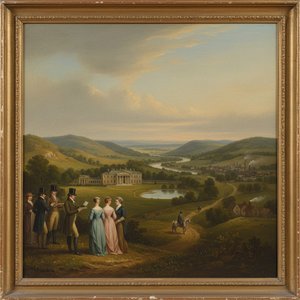
Thomas Barker of Bath: Landscape Painting & Societal Reflection in Early 19th-Century England
Explore the life & work of Thomas Barker of Bath, a key figure in 19th-century English Romanticism. Discover his Parisian success, iconic paintings like 'The Bride of Death', and lasting artistic legacy. Learn more at OriginalUniqueArt.

Majesty on Canvas: A Definitive Guide to Iconic Royal Portraits Through Art History
Explore the profound history of royal portraiture. From Baroque grandeur to Victorian elegance, discover how master artists captured power and lineage on canvas through the timeless medium of oil painting.

Sir Francis Grant: Portraiture, Patronage & Victorian Society
Explore the life & work of Sir Francis Grant, a leading Victorian portraitist. Discover his aristocratic clientele, role at the Royal Academy, and enduring artistic legacy. Learn about art patronage in 19th-century Britain.